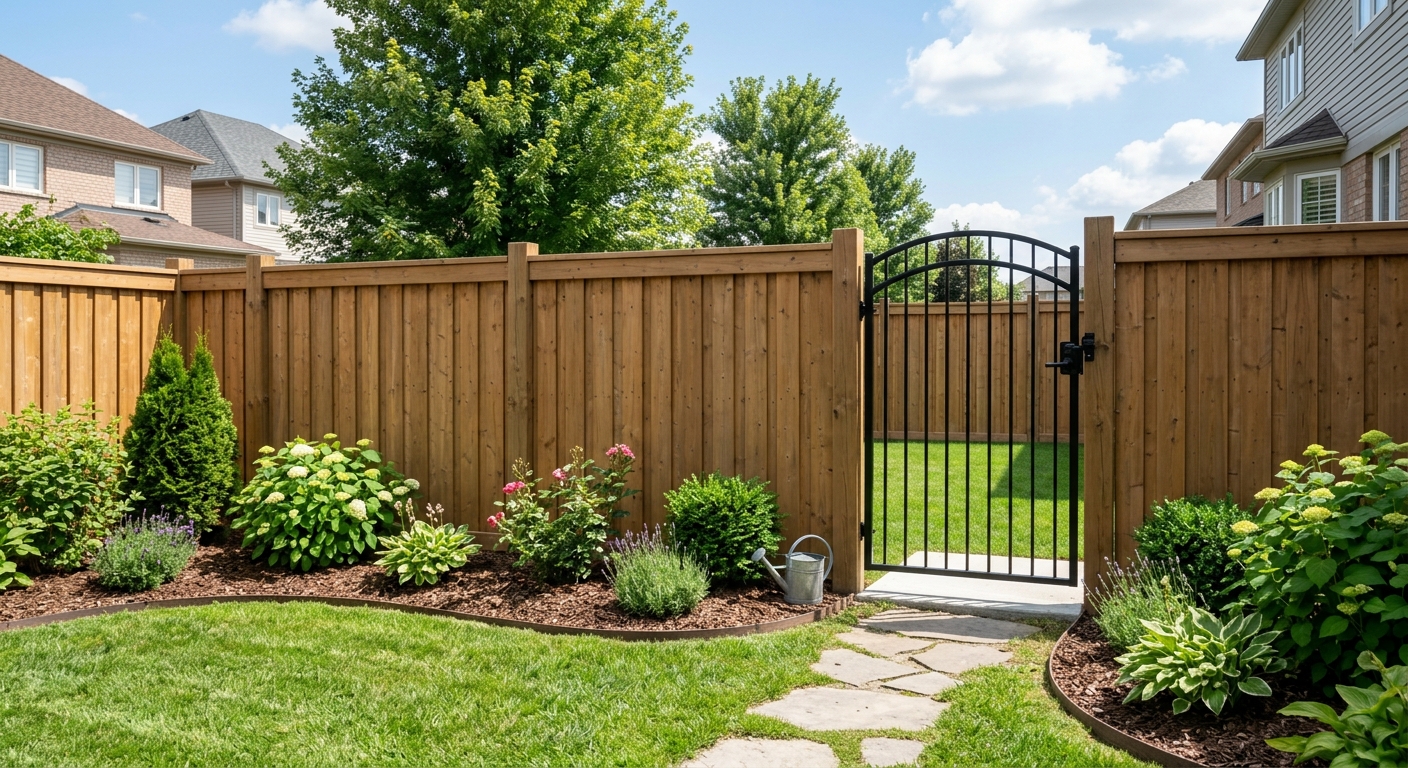
Fencing options and costs in New Dundee
In New Dundee, choosing the right fence starts with balancing privacy, upkeep, and the reality of Southern Ontario winters. With a small community population of 1,174 residents (Statistics Canada, 2021 Census), demand is steady rather than frantic, which is good for homeowners: fewer last-minute rushes and more predictable scheduling. Still, in the Toronto economic region, most fencing work clusters around areas with more detached homes and yard boundaries—each one is a potential customer for privacy upgrades. A common spot where we see repeat demand is the residential lanes and backyard lot lines around the Main Street area, where older fence lines often need replacement after freeze-thaw seasons.
Toronto-area costs are shaped heavily by climate and local building practice. Frost heave is the big driver: posts are typically set deeper (often about 3.5–4 ft minimum for 6–8 ft privacy fences, depending on soil and footing design) using concrete-set posts instead of simple driven posts. That raises labour time and ready-mix costs, but it’s what keeps gates from sagging and panels from leaning after several winters. Wind also matters for taller solid fences—proper post size, spacing, and hardware prevent racking and uplift, even if we’re not dealing with prairie-level exposure.
To make comparisons easier, here are realistic cost and performance ranges by material, assuming typical residential installations in the New Dundee/greater Toronto market.
| Material |
Lifespan |
Maintenance |
Privacy Rating |
Price per Linear Foot |
| Pressure-treated pine (standard wood) |
10–15 years |
Stain/paint every 2–3 years; fastener checks |
High (solid boards) |
$65 – $120 |
| Cedar (natural rot resistance) |
15–20 years |
Stain or seal every 2–4 years; occasional board replacement |
High (solid boards) |
$80 – $135 |
| Vinyl / PVC (no-maintenance) |
20–30 years |
Wash as needed; check posts and caps periodically |
High (solid vinyl panels) |
$75 – $130 |
| Chain-link (galvanized steel) |
20–35 years |
Occasional tension/hardware adjustments |
Low to medium (privacy screen optional) |
$45 – $85 |
| Aluminum ornamental |
25–40 years |
Wash occasionally; inspect hinges/latches |
Low to medium |
$90 – $160 |
| Composite / recycled material |
20–30 years |
Minimal washing; inspect for warping at extremes |
High (solid styles) |
$100 – $165 |
Prices are estimates only and vary by project scope, site access and material selection.
What affects the price of fencing in New Dundee
In the New Dundee area (with the broader Toronto economic region setting the pricing tone), two fencing quotes for what looks like the “same fence” can easily diverge by 30–50%. The reason is that installed fencing cost isn’t just material—it’s post depth, soil conditions, how many corners/gates you have, and whether the contractor is building to long-term frost stability with concrete-set posts. In Southern Ontario, even though we’re not seeing the same extreme exposure as some prairie or coastal regions, freeze-thaw cycles and mixed soils still punish under-built footings. That’s why many local bids land at different totals once they account for labour hours and ready-mix supply.
Concrete examples from New Dundee jobs: a 6 ft wood privacy fence in heavier clay often needs deeper holes and more concrete because clay holds frost differently than sandy fill—so the same linear run can cost more even with identical board counts. Conversely, a shorter run with good access and straight runs may reduce labour and equipment time, bringing the project closer to the low end of wood ($65–$120 per linear foot) or chain-link ($45–$85 per linear foot) bands. Another common cost swing: replacing an old fence line that’s tangled into mature shrubs and buried footings can add demo time and disposal fees, pushing you toward the higher end of the vinyl/PVC range ($75–$130) due to extended crew hours.
Under Toronto best practice, the frost line depth typically drives how deep posts are set—often around 4–6 inches below the design frost depth, which can mean roughly 1.5–2.0 m into the ground. That translates to longer posts and more excavation, and in turn, higher material and concrete costs. Wind also influences post size and spacing for solid privacy fences; tighter spacing and sturdier posts cost more up front but reduce racking after snow and wind load cycles.
| Price Factor |
Why It Matters |
Cost Impact |
| Fence length in linear feet |
Every additional foot adds posts, rails, hardware, and labour |
High (primary driver) |
| Post depth required |
Frost line requirements dictate hole depth and minimum embedment |
High (longer posts + more concrete) |
| Post setting method |
Concrete-set posts resist heaving better than gravel packs or simple driving |
Medium to high |
| Material choice |
Vinyl/PVC, cedar, and chain-link have different install complexity and replacement needs |
Medium (shifts total by material) |
| Gate count and type |
Double gates require more framing, hinges, and alignment |
Medium to high |
| Grade and terrain |
Slopes need stepped panels or raked sections; rails may need custom fitting |
Medium |
| Old fence removal and disposal |
Extra labour for demolition, stump removal, and hauling |
Medium |
| Permit fees and survey / property line locate |
Proper setbacks and accurate line locate prevent costly rework |
Low to medium (depends on complexity) |
Permits & regulations in Ontario
In Ontario, fences above a height threshold often require a building permit. A common trigger is about 2.0 m (6.5 ft) at the rear and around 1.0–1.2 m (3–4 ft) near the front or corner, but the exact threshold can vary by municipality and fence location, so it’s smart to confirm before digging. Regardless of permit requirements, all fencing must respect property lines and municipal setback bylaws, especially where a fence sits near a lot corner or within a sightline area.
Before you install anything in New Dundee (and across Ontario), call for utility locates. In practice, that means using Ontario One Call so everyone knows where buried lines may be. If you don’t have a recent survey, obtain a property locate or confirm pin positions—fences built even a small distance over a line can lead to disputes that are expensive to fix.
Shared fence ownership is handled under provincial line-fences legislation principles, but how neighbours split costs depends on the specific situation and whether the fence is truly a shared boundary.
Step-by-step contractor verification: (1) Ask for the contractor’s Ontario business/licensing details and confirm they match the registered name; (2) request a Certificate of Insurance for liability coverage and verify it’s active for the project dates; (3) confirm workers’ coverage—WSIB (WCB equivalent handling in Ontario) should be in place if workers are employed; and (4) keep copies of documents for your file. If a contractor can’t provide current insurance or can’t clearly explain coverage for labour, treat it as a red flag.
Work that typically DOES require a permit: taller fences above local thresholds, certain structural features, and any fence that may impact required sightlines or setbacks as defined by your municipality. Work that typically does NOT: like-for-like replacement of an existing fence within allowed height limits and setbacks (still confirm first).
Choosing the right fence material for New Dundee
In New Dundee, material choice should match your priorities: privacy, low maintenance, and long-term durability through freeze-thaw. Pressure-treated pine is usually the lowest upfront wood option, but it needs regular staining or sealing—typically every 2–3 years—to prevent grey weathering and to protect end-grain from moisture. Cedar naturally resists rot better than pine, and it often looks better longer, but it still benefits from periodic sealing and attention to hardware. Vinyl/PVC offers the easiest maintenance routine—wash-and-go—but in extreme cold it can become brittle if installed with inadequate post support or if panels are allowed to flex excessively. Chain-link is the longest-life budget choice for security, but it won’t give you privacy unless you add a privacy screen or grow-in solution. Aluminum ornamental fences are rust-resistant and clean-looking, but they provide only low to medium privacy because of open spacing.
Post depth is the Toronto-market equalizer. With frost line considerations in Southern Ontario, we generally plan for concrete-set posts and adequate embedment—often around the 42–48 inch frost line region plus additional depth to reduce heaving risk. That means the “cheapest” material isn’t always the cheapest installed cost: a wood fence with properly set posts can outlast a cheaper chain-link or poorly footed wood system that shifts in winter. Wind and snow load also matter for tall solid privacy fences—heavier framing and closer spacing help prevent racking.
Here’s where price differences become justified: moving from pressure-treated pine to cedar often costs more, but for a homeowner who wants a longer-looking finish without replacing boards every few years, that uplift can be worth it. If you’re comparing wood in the $65–$120 range to cedar closer to the higher end of that band, the real value is reduced early replacement and fewer maintenance compromises.
| Material |
Cold Tolerance |
Lifespan |
Annual Maintenance |
Best For |
Price Band |
| Pressure-treated pine |
Good when posts are properly embedded and hardware is rated for outdoor use |
10–15 years |
Light inspection; stain/seal every 2–3 years |
Budget-first privacy with acceptable upkeep |
$65 – $120 |
| Cedar |
Very good; handles moisture cycles better than pine |
15–20 years |
Inspect annually; seal every 2–4 years |
Appearance + privacy with less rot risk |
$80 – $135 |
| Vinyl / PVC |
Good; can crack if poorly supported in extreme cold |
20–30 years |
Wash as needed; check fasteners and posts |
Low maintenance privacy |
$75 – $130 |
| Chain-link |
Excellent; steel components tolerate cold well |
20–35 years |
Occasional tension/hardware checks |
Security and property definition |
$45 – $85 |
| Aluminum ornamental |
Excellent; no rust in Ontario cycles |
25–40 years |
Wash occasionally; inspect latch/hinges |
Attractive curb appeal with limited privacy |
$90 – $160 |
| Composite / recycled material |
Good; performance depends on quality installation and spacing |
20–30 years |
Minimal washing; periodic inspection |
Privacy with low maintenance |
$100 – $165 |
How to choose a fencing contractor in New Dundee
When hiring a fence contractor in Ontario, verification should be straightforward and documented. First, ask for proof of Ontario business registration/licensing details for the company and the specific job. Next, request liability insurance—your goal is a current Certificate of Insurance showing coverage for the contractor’s work and project dates. For workers on site, confirm workers’ compensation coverage (WSIB in Ontario): you want clear proof they’re registered and in good standing if they employ workers. Where to look: the contractor should provide documents directly, and you can also verify business presence through relevant Ontario online listings; for WSIB and insurance details, rely on the certificates and any clearance letters they supply for your specific project.
Get 2–3 itemised written quotes. You want a breakdown that separates labour, materials, post depth/embedment method, gate hardware, and any demolition/removal. Avoid “all-in” pricing unless the scope is described with enough detail to compare apples to apples. Read exclusions: is permit pulling included if required? Is disposal of old fencing included or billed separately? Are utility locates included in scheduling, or is the homeowner responsible? Ask about warranty terms separately: workmanship warranty length (how long they stand behind labour), product/manufacturer warranty (what the material covers), and whether warranties transfer if you sell the home.
Payment schedule matters. Never pay more than 10–15% upfront. Use a holdback until the project is complete and gates/lines are verified. In your written contract, confirm a start date and a realistic completion estimate, plus what weather conditions could affect scheduling.
- Verify Ontario licensing/business registration details match the quote and contract
- Request Certificate of Liability Insurance and confirm it’s valid for the project timeline
- Confirm WSIB coverage for any employees (don’t accept “we’re covered” without proof)
- Ask for an itemised quote: posts (size and embedment), rails, pickets/panels, gates, hardware
- Confirm post setting method (concrete-set vs gravel pack vs driven) and embedment depth assumptions
- Check whether utility locates (Ontario One Call) are included in their process and timing
- Clarify who handles permit pulling if required by height/placement
- Confirm whether old fence removal and hauling/disposal are included
- Ask how they handle sloped yards (stepped vs raked sections) and corner conditions
- Get warranty details in writing: workmanship + product, including transferability
- Use a realistic payment schedule: small deposit, holdback until final quality check
- Require start and completion dates (or a defined window) in the contract
Red flags we see in New Dundee: contractors who won’t provide insurance/WSIB documentation; quotes that ignore post depth or concrete setting; “no details” proposals that don’t itemise gates and hardware; refusal to put scope/warranty in writing; and requests for large upfront payments (above about 10–15%).
Frequently asked questions — fencing in New Dundee
Can I install a fence on a slope in New Dundee?
Yes, you can install a fence on a slope in New Dundee, but the method matters for both appearance and stability. In Ontario’s frost-and-thaw conditions, posts still need proper embedment, so we don’t “cheat” by setting one end shallow. For slopes, the usual best practice is stepped panels (each section changes height) or raked sections (continuous angle), depending on the material and your aesthetic goals. Solid wood or vinyl privacy fences often look best with stepped designs because rails and panels stay aligned. Plan for hardware that prevents racking when snow load and wind pressure act on taller sections. If your quote didn’t mention stepped/raked layout, ask how they’ll build it and whether posts will be concrete-set for the entire run.
What is the most weather-resistant fence for New Dundee's climate?
For New Dundee and the wider Toronto region, the most weather-resistant options are usually those with both durable materials and correct frost-stable post installation. Vinyl/PVC and aluminum ornamental perform well because they resist rot and rust, and they don’t rely on frequent staining. That said, a “high-end” material won’t help much if posts are under-embedded. For tall privacy fencing, we typically plan concrete-set posts to help prevent heaving during winter cycles. If you want the best balance of long-term performance and maintenance, vinyl/PVC is often the most convenient—while cedar can be excellent if you’re willing to maintain finishes. Cost-wise, vinyl is commonly in the $75–$130 per linear foot band in this market, whereas aluminum often lands closer to $90–$160 depending on height and gate complexity.
How do I prevent wood fence rot in New Dundee?
Wood rot prevention in Ontario starts with installation details, not just the wood species. In New Dundee, we focus on keeping moisture from staying trapped around posts and boards. That means proper pressure-treated stock, correct post depth, and using concrete-set posts rather than letting posts sit in conditions that promote freeze-thaw movement. We also pay attention to end-grain protection, board overlap, and spacing so water can drain instead of pooling. Hardware matters too: use exterior-rated fasteners and don’t mix incompatible metals that can accelerate corrosion. Finally, plan a maintenance rhythm—staining or sealing pressure-treated pine about every 2–3 years helps reduce grey weathering and moisture absorption. If you’re comparing options, cedar costs more than basic pine but offers better natural rot resistance, which can lower the frequency of patch repairs for many homeowners.
What is the cost per linear foot for fencing in New Dundee?
In New Dundee, your cost per linear foot typically falls within the Toronto-region price bands depending on material and how the job is built for frost stability. For example, wood privacy installations commonly price in the $65–$120 per linear foot range, while vinyl/PVC privacy often sits around $75–$130 per linear foot. Chain-link tends to be the lowest in the $45–$85 per linear foot band. If you’re choosing a decorative aluminum fence, it’s usually higher, commonly $90–$160 per linear foot depending on height and gate count. Keep in mind that the “per foot” number changes if you have more gates, sloped ground requiring stepped/raked layout, or if old fence removal and disposal are included. For accurate budgeting, request an itemised quote with post depth and setting method clearly stated.
Should I repair or replace my old fence in New Dundee?
Often you can repair, but after several Ontario winters, the decision usually comes down to post stability and how far rot or movement has travelled. If your fence posts are still firm (no wobble), boards are mostly intact, and damage is limited to a few rails or sections, repair can be cost-effective. However, if posts have shifted from freeze-thaw or the fence has leaning sections near corners or gates, replacing the affected run—and sometimes the full line—is usually the smarter long-term move. Repairs on a fence with failing footing can look good initially but frequently return as the structure continues to move. For tall privacy fences, gate sagging and racking are strong indicators that post setting method needs upgrading (often moving to concrete-set posts to reduce heaving risk). If your current fence is well past its expected lifespan—especially pressure-treated pine showing widespread end-grain failure—replacement frequently offers the best value over time.
How do I handle a fence dispute with a neighbour in Ontario?
Fence disputes in Ontario are common, and the most successful approach is documentation plus a calm process. Start by confirming the property line using survey pins or a property line locate, rather than relying on “where it looks right.” In New Dundee, if you’re replacing or modifying a boundary fence, that verification prevents expensive rework. Next, put everything in writing: photos, dates of issues (leaning, height, encroachment concerns), and copies of any measurements. If your fence affects setbacks or exceeds height limits, check municipal requirements and permit triggers. For shared fences, Ontario line-fences principles can apply, but the exact cost-sharing often depends on the situation and local facts. If you can’t resolve it informally, consider mediation or legal advice—especially where encroachment or safety hazards are involved. Meanwhile, avoid unilateral construction changes until you’ve confirmed the boundary and your required approvals.