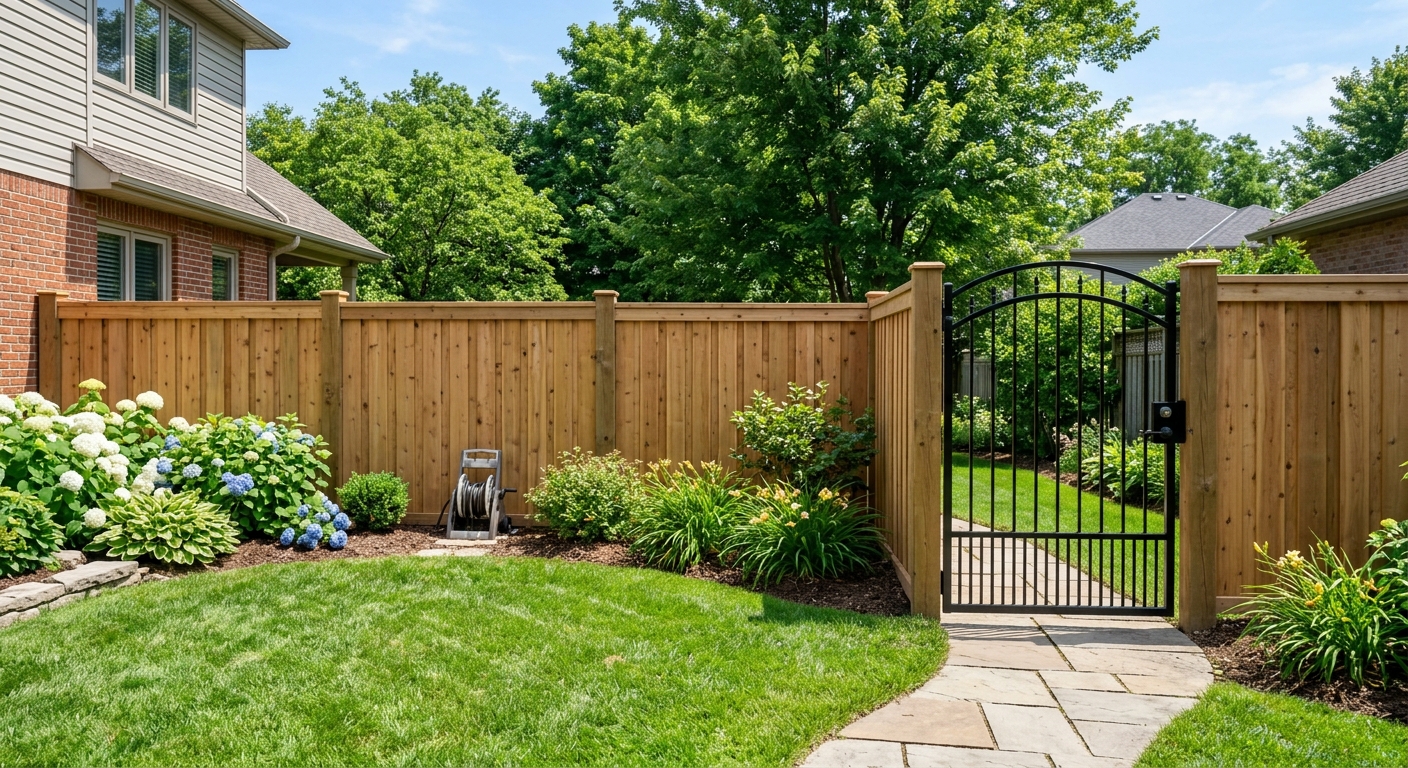
Fencing options and costs in Taylor-Massey
In Taylor-Massey, the right fence choice comes down to how much privacy you want, how often you’re willing to maintain it, and how your soil and winter freeze affect post stability. With a population of 15,683 residents (Statistics Canada, 2021 Census), the neighbourhood has a steady stream of family home upgrades—each new backyard project is a chance to improve comfort, pet safety, and curb appeal. Demand is also shaped by the area’s strong mix of established homes; in mature Toronto neighbourhoods, many fences are replaced to refresh aging posts and panels after years of salt, freeze-thaw, and wind-driven rain.
In the Toronto economic region, pricing is heavily influenced by frost depth and how deep posts must be set. The frost line is commonly planned around 42"–48", so most privacy fences need concrete-set posts set roughly 3.5–4 feet deep to reduce frost heave. Taller solid fences (wood or vinyl) also require heavier posts and closer spacing to resist racking, especially near open lots or busy streets where gusts can hit hard. Contractors in areas such as the Taylor Creek / East side pockets of Taylor-Massey often stay busy during the spring and early summer install window, when homeowners are rolling out privacy upgrades before autumn weather.
Below are typical installed cost bands you’ll see for common materials in Taylor-Massey, then we’ll break down why two quotes can differ by 30–50% for the same-looking fence.
| Material |
Lifespan |
Maintenance |
Privacy Rating |
Price per Linear Foot |
| Pressure-treated pine (standard wood) |
10–15 years |
Stain/seal every 2–3 years to reduce greying |
High (solid boards) |
$65–$120 |
| Cedar (natural rot resistance) |
15–25 years |
Light staining/cleaning every 2–4 years |
High (solid boards) |
$75–$130 |
| Vinyl / PVC (no-maintenance) |
20–30 years |
Occasional wash only; inspect posts after extreme cold |
High (solid pickets/panels) |
$75–$130 |
| Chain-link (galvanized steel) |
20–35 years |
Rinse as needed; tension checks |
Low–Medium (visual line-of-sight) |
$45–$85 |
| Aluminum ornamental |
25–40 years |
Wash annually; repaint only if damaged |
Low–Medium (decorative/open) |
$90–$160 |
| Composite / recycled material |
20–30 years |
Minimal; periodic cleaning and fastener checks |
High (board-style systems) |
$85–$145 |
Prices are estimates only and vary by project scope, site access and material selection.
What affects the price of fencing in Taylor-Massey
In the Toronto economic region, it’s common to see fencing quotes vary by 30–50% even when neighbours describe the “same fence.” The biggest reason is that the cost drivers aren’t always visible in the yard: how deep posts must be set for frost protection, whether concrete is used, how much hardware is required for gates, and what labour is needed for slope, old fence removal, and disposal. Availability also matters; in Taylor-Massey, crews often concentrate installs during late spring to early fall, so scheduling and access can shift pricing.
Here’s the frost-and-winter reality that drives many Ontario costs. While contractors may design around a 42"–48" frost line, the fence doesn’t just sit on the surface—posts must be set about 4–6 inches below the design frost depth to prevent heaving. In practical terms, that usually means 1.5–2.0 m into the ground, which increases hole depth, post length, and ready-mix/concrete labour. In cold weather, heavier solid privacy fences also need sturdier posts and tighter spacing for wind and snow load effects (not the extreme prairie-style exposure, but enough to rack tall panels). By contrast, pressure-treated wood can be a lower material starting point, while vinyl or cedar often shifts the budget toward longer-lasting components.
Two typical Taylor-Massey examples: (1) a 6–8 ft privacy fence with concrete-set posts often lands in the broader wood/vinyl bands of $65–$120 per linear foot depending on grade and gate count; (2) a smaller, chain-link run on mostly flat ground can stay closer to $45–$85 per linear foot because post holes are simpler and the system is more forgiving. The same yard, but with a slope that requires stepped panels or added hardware, can push costs up quickly.
| Price Factor |
Why It Matters |
Cost Impact |
| Fence length in linear feet — the primary cost driver |
Labour and materials scale directly with total run |
High (often the largest line item) |
| Post depth required — frost line determines post length and hole depth |
Deeper holes mean more excavation and longer posts |
Medium–High |
| Post setting method — concrete vs. gravel pack vs. driven posts |
Concrete-set posts improve long-term stability in clay/mixed soils |
Medium–High |
| Material choice — vinyl vs. cedar vs. chain-link |
Different material prices and different hardware/spacers |
Medium–High |
| Gate count and type — walk-through vs. drive-through (double) |
Gates add hinges, latches, braces, and often stronger posts |
High per gate |
| Grade and terrain — sloped yards require stepped or raked panels |
Extra labour to keep spacing and alignment consistent |
Medium |
| Old fence removal and disposal |
Demolition, haul-away, and potential ground repairs |
Medium–High |
| Permit fees and survey / property line locate |
Some fence heights require permits and accurate locating prevents disputes |
Low–Medium (but important) |
Permits & regulations in Ontario
In Ontario, fences above typical height thresholds often require a building permit—most commonly when the fence is around 2.0 m (6.5 ft) at the rear, and roughly 1.0–1.2 m (3–4 ft) at the front or corner. Exact requirements can vary depending on location and setbacks, so for Taylor-Massey homeowners the safest approach is to confirm with the City’s permitting process before any post holes are dug. Regardless of permit status, fences must respect property lines and municipal setback rules.
Before digging, always arrange utility locates through Ontario One Call to mark buried services. Then, if you haven’t fenced there before (or you’re replacing a fence that might be off-line), get a survey or at least a professional locate of your pins so you don’t build on a neighbour’s property. Shared fence situations are also governed by provincial line-fences rules—who maintains what can depend on whether the fence is shared and how it was established.
What typically DOES require a permit: new fences and any replacement that keeps or exceeds common height thresholds (especially in front/corner areas), plus changes that can affect safety, visibility, or setbacks. What typically does NOT: like-for-like, below-threshold height replacements on the same alignment (though you still must confirm exact height and location).
To verify your contractor, ask for: (1) Ontario business/contractor credentials via the relevant online sources (search the contractor name and business details); (2) liability insurance certificate of insurance (COI) showing adequate coverage for property damage and bodily injury; and (3) proof of WSIB coverage (or the applicable clearance letter/registration status). Only proceed once you have these documents in writing.
Choosing the right fence material for Taylor-Massey
Choosing a fence in Taylor-Massey is easiest when you match material performance to how you use your yard: privacy needs for backyards, how often you want to clean or stain, and how important long-term stability is in freeze-thaw conditions. With Ontario winters and a frost line commonly planned at about 42"–48", your posts matter as much as the cladding. Most privacy fences perform best with concrete-set posts set deep enough to avoid frost heave, especially for 6–8 ft solid styles.
Pressure-treated pine is the budget-friendly option, but it typically greys and weathers if you skip staining—plan on staining/sealing about every 2–3 years. Cedar offers better natural rot resistance and a nicer look as it ages, but it still needs maintenance to preserve the appearance. Vinyl/PVC is a strong low-maintenance choice, but in extreme cold you can see panel warping or cracking if the system is underbuilt—so proper post sizing, spacing, and correct installation are key. Chain-link has the longest life for the least money and is great for keeping pets in, but it provides limited privacy unless you add screening. Aluminum ornamental gives an attractive, rust-resistant look, yet it’s not a privacy solution. Composite or recycled board systems can provide privacy with low upkeep, though they generally cost more upfront.
In this market, the price gap can be justified. For example, moving from wood at roughly $65–$120 per linear foot to vinyl often increases upfront cost (often near the $75–$130 range), but you may save on recurring staining and touch-ups over a decade—especially if you’d rather spend your weekends on the patio than on fence maintenance. Just remember: regardless of material, Toronto-area frost depth and wind-driven racking are why correct post depth and concrete setting are so frequently recommended.
| Material |
Cold Tolerance |
Lifespan |
Annual Maintenance |
Best For |
Price Band |
| Pressure-treated pine |
Good (if properly sealed and posted deep) |
10–15 years |
Stain/seal every 2–3 years (wash as needed) |
Budget privacy with planned upkeep |
$65–$120 |
| Cedar |
Good (rot-resistant in wet/snow cycles) |
15–25 years |
Light clean/stain every 2–4 years |
Natural look with medium effort |
$75–$130 |
| Vinyl / PVC |
Very good (install quality matters in extreme cold) |
20–30 years |
Occasional wash; inspect posts after hard winters |
Low maintenance and strong privacy |
$75–$130 |
| Chain-link |
Excellent (steel + coating) |
20–35 years |
Rinse and tension checks |
Pet containment and perimeter security |
$45–$85 |
| Aluminum ornamental |
Very good (no rust cycle) |
25–40 years |
Wash annually; spot-fix paint if needed |
Front-yard curb appeal |
$90–$160 |
| Composite / recycled |
Good (performance depends on system design) |
20–30 years |
Minimal cleaning; fastener checks |
Privacy with reduced maintenance |
$85–$145 |
How to choose a fencing contractor in Taylor-Massey
When you hire a fencing contractor in Taylor-Massey, verification is what separates a smooth install from a problem job. Start by confirming Ontario coverage and status: ask for a certificate of insurance (liability coverage suited to fencing work), and proof of WSIB registration or a clearance letter where applicable. For licensing, confirm the business information using official Ontario sources and ensure the contractor’s details match the quote and invoices. If they won’t provide documentation promptly, treat that as a major warning sign—fence builds involve excavation, vehicle access, and potential impacts to adjacent property.
Next, get 2–3 itemised written quotes (not a lump sum). You want a breakdown that shows labour, materials, post depth approach (typical frost-depth concrete setting for privacy fences), gate hardware, and any disposal charges. Read the scope carefully: confirm what’s excluded (existing fence removal, uneven grade adjustments, concrete supply, permit pull, survey/locate). Also ask about permits—who handles them and what happens if the permit process changes your start date.
Warranty matters too. Look for a workmanship warranty that’s clearly stated (often 1–2 years minimum depending on the contractor) and a separate manufacturer warranty for the fence product. Ask whether warranties are transferable if you sell your home.
Payment schedule should be controlled: never pay more than 10–15% upfront for materials and booking, and hold back funds until the job is complete and final adjustments are done. Finally, require a start date and completion estimate in writing, since Taylor-Massey spring weather can affect concrete curing and scheduling.
- Provide COI and WSIB clearance/registration proof before signing
- Use an itemised quote: posts, concrete, rails, boards/pickets, hardware, labour
- Clarify post depth and setting method (concrete-set for most 6–8 ft privacy fences)
- Confirm gate count, swing direction, latch type, and bracing included
- Check whether old fence removal and disposal is included
- Ask how they handle slopes (stepped vs. raked panels) and uneven ground
- Confirm utility locate responsibility (Ontario One Call booking)
- Verify permit responsibility if the height threshold triggers a permit
- Get a clear materials list (brand/type of wood/vinyl, board thickness, post size)
- Ask about corrosion treatment/hardware grade for metal components
- Confirm warranty length for workmanship and product, and whether it’s transferable
- Set a payment schedule with a meaningful holdback until completion
Red flags I see in Taylor-Massey include: quotes that don’t specify post depth or concrete setting for tall fences; “cash only” terms or missing insurance/WSIB documentation; vague scopes that omit gate hardware and disposal; refusing to put the start/completion dates in writing; and offering unrealistically low pricing in the $65–$120 wood/vinyl range without explaining what’s cut.
Frequently asked questions — fencing in Taylor-Massey
Do I need a permit to build a fence in Ontario?
In Ontario, many fences do require a permit depending on height and location. A common guideline is that rear fences around 2.0 m (6.5 ft) may trigger a permit, while front/corner fences around 1.0–1.2 m (3–4 ft) can also require it. For Taylor-Massey homeowners, the key is your fence’s height plus where it sits relative to front/corner lot lines and setbacks. Before any post holes are dug, confirm requirements with the City’s permitting process and make sure utility locates are done through Ontario One Call. Also, build on your side of the property line—if you’re unsure, get a survey or locate your pins to prevent encroachment disputes. A reputable contractor should tell you whether permits apply in your specific layout.
How long does a wood fence last in Taylor-Massey?
In Taylor-Massey, a properly installed wood fence can last roughly 10–15 years for standard pressure-treated pine, and about 15–25 years for cedar, assuming good post depth and regular maintenance. Ontario’s freeze-thaw cycle is hard on shallow foundations: that’s why posts are typically set deep enough (often 1.5–2.0 m) to reduce frost heave, using concrete-set posts for most 6–8 ft privacy fences. Maintenance also matters—pressure-treated pine usually needs staining/sealing every 2–3 years to limit greying and surface checks. If you want to budget, wood privacy projects commonly land in the $65–$120 per linear foot range depending on gate count, slope, and whether old fence removal is included.
Who owns and maintains a shared fence?
Shared fence ownership and maintenance in Ontario depends on whether the fence is considered a boundary/shared structure and how it was established. Provincial line-fences legislation generally governs disputes and responsibilities between neighbours, but the practical details can vary by situation. In Taylor-Massey, I often see confusion when an older fence was installed without clear locate work or when only one neighbour was paying over time. If the fence is on the property line, neighbours may share maintenance responsibilities; if it’s entirely on one property, that owner typically handles it. The best approach is to identify your boundary (survey/locate), document the condition, and keep written agreements if you’re replacing a shared section. If a contractor is planning work near the line, ensure the quote references the exact alignment so you don’t inherit a property-line dispute.
How do I find my property line before fencing?
Before you install any fence posts in Taylor-Massey, confirm the property line using the most accurate information available. The safest route is a survey that shows your pins and boundary markers. If you don’t have a recent survey, have your pins located—this helps avoid building even a foot off line, which can lead to neighbour disputes and costly rework. Even when an existing fence “looks right,” fences are sometimes set for convenience rather than the true line, especially on older lots. Also check setbacks tied to your fence location (front vs. rear/corner) because that affects permit needs. A professional fencing contractor should be willing to work from your survey or pins locate results and include that clarity in the scope. This matters whether your project is aiming for a wood privacy option in the $65–$120 band or a chain-link perimeter in the $45–$85 band.
What's the most low-maintenance fence?
For low maintenance in Ontario, vinyl/PVC is usually the easiest option: it doesn’t require staining and typically only needs an occasional wash. Aluminum ornamental can also be low maintenance, but it’s not a privacy fence. Chain-link is low maintenance too, especially if you’re focused on security rather than privacy. In Taylor-Massey’s winter climate, however, “low maintenance” depends on installation quality—vinyl systems still need correct post spacing and solid post setting to handle racking from wind and the freeze-thaw movement in the ground. If you want a low-maintenance privacy fence, vinyl commonly sits around the $75–$130 per linear foot range, depending on height, gate count, and yard access. Ask installers how they plan concrete-set posts and hardware strength for tall panels.
How tall can my fence be in Taylor-Massey?
Fence height rules can vary by location (rear vs. front/corner) and lot configuration, and Ontario’s permit thresholds often reference common maximums like 2.0 m (6.5 ft) in the rear and about 1.0–1.2 m (3–4 ft) in the front or corner. In Taylor-Massey, I advise homeowners to treat height as a “check first” item: measure from finished grade, confirm the fence’s placement, and determine whether a permit is required before you order materials. Taller solid fences—6–8 ft privacy styles—also need stronger post sizing and closer spacing to resist wind loads and snow build effects. That’s part of why a tall wood or vinyl privacy fence often costs more per linear foot than shorter runs. If you’re staying within the lower, front/corner threshold, your budget may land closer to the $45–$85 chain-link range when privacy is not the goal.