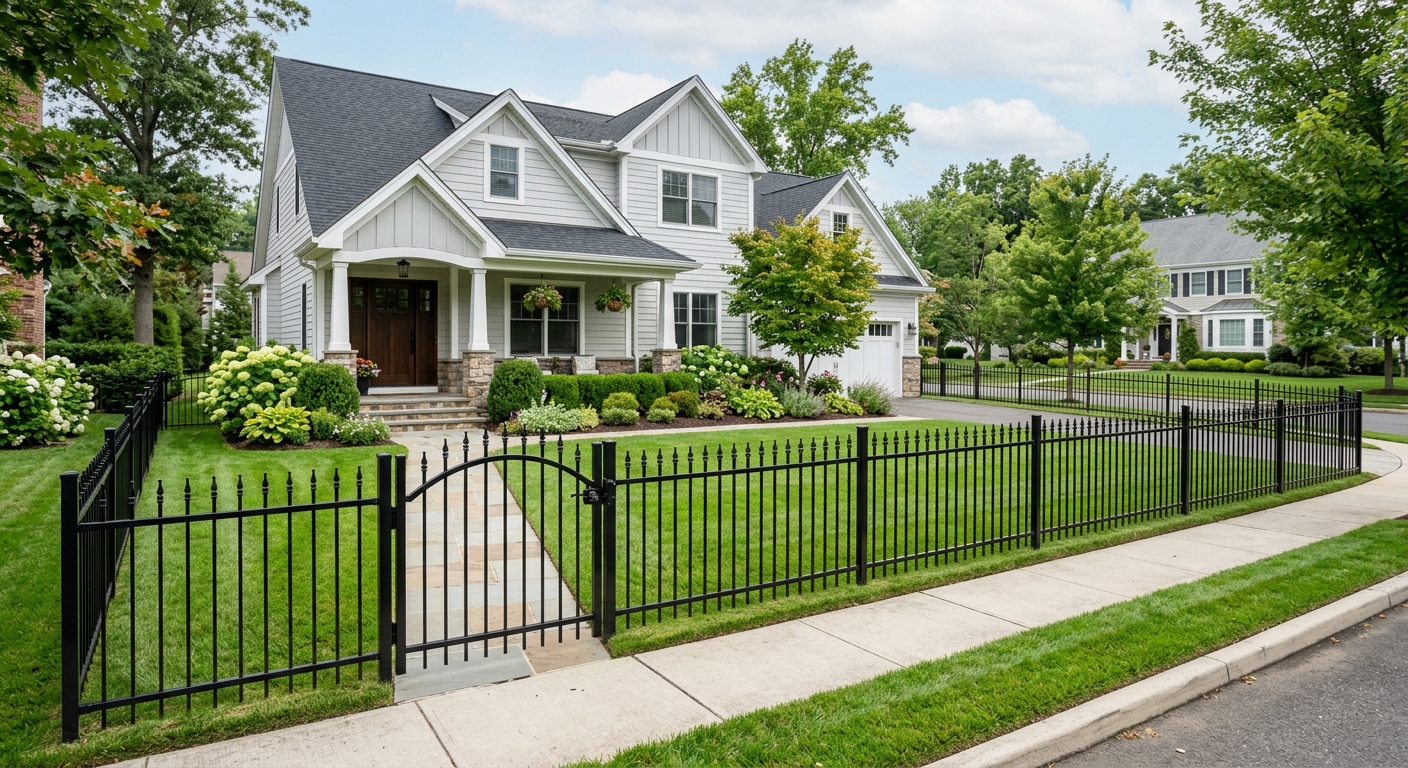
Fencing options and costs in Port Elgin
Port Elgin is a popular place to put down roots, and with a population of 7,862 (Statistics Canada, 2021 Census), steady residential building and cottage-to-year-round conversions keep fencing demand consistent. In most neighbourhoods, every detached home lot is effectively a “future fence site,” since owners often upgrade yards as plants mature, driveways expand, or privacy becomes more important. Stratford–Bruce Peninsula lots also tend to be a mix of established and newer properties, so you’ll see everything from backyard repairs to full perimeter replacements after windstorms or aging boards. That matters because a fence quote isn’t just materials—it’s labour, foundation depth, and how the ground behaves in winter.
In Port Elgin, the frost line is a primary cost driver. Even when the visible fence is only a couple of metres tall, posts must be set deep enough to stay below the winter frost line and avoid heaving, particularly where clay and mixed soils are present. Typical installations on similar Southern Ontario ground conditions set posts roughly 0.9–1.2 m (3–4 ft) deep, often with concrete footings. That extra excavation time and longer posts add both material and labour cost, especially on longer runs and perimeter fences around open yards. Wind exposure is usually less extreme than prairie settings, but open field edges and near-Lake Huron lots can still require tighter spacing and sturdier hardware—raising cost moderately for wood, vinyl, and privacy systems.
Fence trade demand is especially noticeable around the growing residential pockets near the downtown/harbour-side areas and the west-end residential streets where lots are less sheltered. From there, homeowners typically compare low-upkeep privacy options against budget wood or long-life chain-link—so the table below breaks down typical lifespan, maintenance, privacy, and per-linear-foot pricing for the most common choices.
| Material |
Lifespan |
Maintenance |
Privacy Rating |
Price per Linear Foot |
| Pressure-treated pine (standard wood) |
10–15 years |
Stain/seal every 2–3 years |
8/10 |
$55–$85 |
| Cedar (natural rot resistance) |
15–25 years |
Light stain every 3–4 years |
9/10 |
$75–$105 |
| Vinyl / PVC (no-maintenance) |
20–30 years |
Rinse only; occasional repairs |
9/10 |
$75–$115 |
| Chain-link (galvanized steel) |
20–35 years |
Occasional tensioning / replace links |
2/10 |
$35–$55 |
| Aluminum ornamental |
25–40 years |
Wash every 1–2 years |
4/10 |
$90–$150 |
| Composite / recycled material |
20–30 years |
Minimal cleaning; inspect boards |
9/10 |
$80–$125 |
Prices are estimates only and vary by project scope, site access and material selection.
What affects the price of fencing in Port Elgin
In Port Elgin and across the Stratford–Bruce Peninsula region, two quotes for the “same” fence can land 30–50% apart because the job is never truly identical: ground conditions, post depth, panel layout, and wind-loading all change what it takes to build a fence that lasts. The biggest difference I see between homeowners’ expectations and contractors’ pricing is how frost protection changes the real foundation work. In Ontario, contractors typically set posts 4–6 inches below the design frost depth, which translates into deeper holes and longer posts—often roughly 1.5–2.0 m into the ground depending on soil and design. That depth drives labour time, hauling, concrete quantities, and sometimes additional steel reinforcement in higher-load areas.
Wind exposure affects spacing and hardware. While Port Elgin isn’t exposed like the Prairies, open lots near shoreline corridors and farm-field edges can still experience enough steady wind to justify closer post spacing and sturdier rails, particularly for privacy wood and vinyl fences that act like solid panels. In contrast, sheltered urban backyards with mature tree lines can sometimes use more standard spacing without paying for reinforcement.
Concrete examples from Port Elgin: (1) A full backyard privacy fence on a sloped lot near the lake can require stepped rails and more labour hours, pushing the project toward the vinyl/private range (for example, vinyl projects commonly land around $75–$115 per linear foot). (2) A straight chain-link boundary on firm, less mixed soil can stay closer to the chain-link band of $35–$55, because posts can be lighter and the overall footprint is faster. (3) A wood fence replacing older posts in clay with wet pockets often costs more because the excavation widens and concrete setting becomes non-negotiable for alignment and long-term stability.
Finally, local housing turnover and property layouts matter. As older fences are removed or re-aligned to recent property line clarifications, disposal and post replacement can turn a “small” repair into a full replacement—adding hundreds to thousands in extra groundwork and materials.
| Price Factor |
Why It Matters |
Cost Impact |
| Fence length in linear feet — the primary cost driver |
Every foot adds posts, rails, fasteners, and labour time |
High (largest driver; can swing total by thousands) |
| Post depth required — frost line determines post length and hole depth |
Deeper posts prevent heaving and future lean |
Medium-High (more excavation, longer posts, more concrete) |
| Post setting method — concrete vs. gravel pack vs. driven posts |
Concrete adds material and labour but improves stability |
Medium (often the difference between basic and frost-proof installs) |
| Material choice — vinyl vs. cedar vs. chain-link |
Different material costs and rail/post requirements |
High (can shift the project between wood, vinyl, and chain-link bands) |
| Gate count and type — walk-through vs. drive-through (double) |
Gates require extra framing, hardware, and heavier posts |
Medium-High (one drive-through gate can add major cost) |
| Grade and terrain — sloped yards require stepped or raked panels |
More layout time; possible custom cutting and adjustments |
Medium (labour increases even with same materials) |
| Old fence removal and disposal |
Disposal fees and time to break down existing materials |
Medium (can turn into a larger demo and haul-out job) |
| Permit fees and survey / property line locate |
Some fence heights require permitting; locating avoids rework |
Low-Medium (depends on scope; survey prevents expensive mistakes) |
Permits & regulations in Ontario
In Ontario, fence rules are typically enforced through municipal requirements, but the common homeowner threshold is that fences above certain heights—often around 2.0 m (6.5 ft) at the rear and about 1.0–1.2 m (3–4 ft) in the front or at corners—can require a building permit. The exact threshold and location-based rules can vary by municipality and zoning, so for Port Elgin you should confirm with the local permitting office before ordering materials. All fencing must respect property lines and any required setbacks tied to zoning. If your fence is near an easement, drainage feature, or corner sightline, the municipality may add restrictions.
Before digging any post hole, call for utility locates using Ontario One Call. That locate step is essential—hitting buried services is costly and unsafe. If you’re uncertain about property pins or boundary lines, obtain a survey or at least have your property pins located so the fence doesn’t encroach. Shared fence ownership is handled through Ontario’s line-fences framework: often the fence maintenance responsibility is shared when boundaries are involved, but the exact agreement and circumstances matter.
How to verify contractor capability: ask for proof of Ontario licensing where applicable for the type of work, and request a certificate of insurance (liability) showing coverage limits, plus confirmation they carry WSIB/WCB coverage for their workers. Homeowners can also check licensing or status through provincial online resources and then cross-check the certificate details for validity dates. Step-by-step, collect: (1) itemised quote, (2) proof of insurance, (3) WSIB/WCB coverage confirmation, (4) workmanship warranty terms, and (5) permit responsibility in writing (who pulls it if required).
Choosing the right fence material for Port Elgin
The best fence material in Port Elgin depends on what you care about most: privacy, low maintenance, budget, or long lifespan. Pressure-treated pine is the budget-friendly option, but it typically needs staining or sealing every 2–3 years to reduce greying and weathering. Cedar offers better natural rot resistance and a more attractive look, but it still benefits from periodic maintenance to keep colour and durability. Vinyl/PVC gives homeowners the “set it and forget it” lifestyle—no staining—but in extreme cold it can become brittle if installed poorly or if rails aren’t aligned properly. Chain-link is often the lowest upfront cost and can last a long time, yet it provides little privacy unless you add slats or a privacy screen. Aluminum ornamental looks clean and won’t rust, and it holds up well against Ontario moisture, but it’s more for boundary definition than privacy.
Across the Stratford–Bruce Peninsula region, frost protection drives post-depth choices. With a seasonal freeze and Ontario frost line commonly around 1.2 m (4 ft), posts are typically set deep and many installations use concrete-set posts for stability and to prevent heaving. For heavier, solid-panel systems—wood privacy, vinyl privacy, and taller ornamental styles—concrete-set posts are the safer approach where soils are clay-heavy or mixed. Wind and snow load also matter: solid panels catch more wind, so contractors often tighten post spacing and use stronger rails to reduce sway.
Here’s a practical value example: if your backyard upgrade is moving you from a basic pressure-treated pine option to a vinyl privacy fence, the upfront cost difference can be meaningful—often shifting you into the vinyl band of $75–$115 rather than a wood band of $55–$85. That gap can be justified when you want minimal annual effort, plan to stay long-term, or don’t want to re-stain near the shoreline where weathering is relentless.
| Material |
Cold Tolerance |
Lifespan |
Annual Maintenance |
Best For |
Price Band |
| Pressure-treated pine |
Good (handle winters well with proper finish) |
10–15 years |
Low-mid: 1 inspection; stain every 2–3 years |
Budget privacy and traditional look |
$55–$85 |
| Cedar |
Good (natural rot resistance improves resilience) |
15–25 years |
Low: inspect; stain/light seal every 3–4 years |
Premium look with manageable upkeep |
$75–$105 |
| Vinyl / PVC |
Moderate to good (avoid impact and ensure alignment) |
20–30 years |
Very low: rinse and quick hardware checks |
Low-maintenance privacy |
$75–$115 |
| Chain-link |
Good (galvanized resists corrosion) |
20–35 years |
Low: periodic tension check and patching |
Security and long lifespan on a budget |
$35–$55 |
| Aluminum ornamental |
Good (powder-coated; handles freeze-thaw) |
25–40 years |
Very low: wash and inspect fittings |
Decorative boundaries with easy upkeep |
$90–$150 |
| Composite / recycled |
Good (stable boards when installed correctly) |
20–30 years |
Low: cleanings; inspect boards after impacts |
Privacy with wood-like appearance and reduced upkeep |
$80–$125 |
How to choose a fencing contractor in Port Elgin
Choosing the right contractor in Port Elgin starts with proof you can verify. First, confirm Ontario insurance: ask for a certificate of liability insurance and ensure it covers fencing-related work and includes the correct legal entity name. Next, verify WSIB/WCB coverage for their workers—request a clearance letter or direct confirmation (many contractors can provide documentation quickly). For licensing, ask whether their scope triggers any Ontario licensing requirements and check online through provincial resources where contractor/business credentials are listed. If anything is unclear, a reputable contractor will answer without hesitation and in writing.
Then get 2–3 itemised written quotes. You want a breakdown that separates labour, materials, post type/setting method (concrete-set vs. alternative), rail configuration, gate framing, and disposal. Avoid lump-sum quotes that don’t describe how posts will be set for frost protection. Read the scope carefully: what’s included for permit pulls (if required), what’s included for hydro/vs. other utility locate coordination, and whether removal/disposal of the old fence is part of the price. Make sure the quote states how the fence will be laid out relative to your property line—ideally after locate/survey—so you’re not paying for rework.
Warranty matters in our climate. Ask for (1) a workmanship warranty (how long they stand behind installation), (2) product/manufacturer warranty terms, and (3) whether the warranty is transferable to future owners. For payment, use a staged schedule—never more than 10–15% upfront—and hold back a portion until the job is complete and cleaned up. Finally, insist on a written timeline with a start date and an estimated completion window.
- Provide certificate of liability insurance before any work starts.
- Provide WSIB/WCB clearance or equivalent coverage documentation.
- Show a written scope that specifies post depth and setting method for frost protection.
- Confirm who pulls permits and whether permit fees are included in the quote.
- Use an itemised quote: materials, labour hours, hardware, and gates separately.
- Confirm disposal/recycling of removed fencing is included or priced separately.
- Verify gate hardware quality (hinges/latches) and whether gate posts are upgraded.
- Ask how they handle slopes: stepped vs. raked installation details.
- Request a layout method for property lines (pins/survey/locates) to avoid encroachment.
- Get workmanship warranty length in writing (and what it covers).
- Confirm payment terms: limit upfront deposit and hold back until completion.
- Ask about schedule contingencies (weather delays, concrete cure times) and include them.
Red flags I see around Port Elgin: vague quotes with no post-depth or setting-method details, promises to “avoid concrete” on boundary privacy fences without explaining frost-heave risk, no proof of WSIB/WCB or missing insurance dates on certificates, refusal to specify what’s included for disposal/permit responsibility, and pushing large upfront payments instead of a staged schedule.
Frequently asked questions — fencing in Port Elgin
Who owns and maintains a shared fence?
In Ontario, shared fence responsibility is typically guided by provincial line-fences principles and the specific circumstances at the boundary. Practically, the “who maintains it” question depends on whether the fence is on the shared boundary, whether it was historically agreed as a shared structure, and whether the neighbours consented to upgrades. If you’re replacing only one section of a boundary fence, it’s smart to confirm in writing what portion each side is responsible for before work starts—especially if your contractor is pricing concrete-set posts and frost-depth footings that may last 15–30 years. For example, if you’re considering vinyl privacy in the $75–$115 band, you want clarity up front because upgrades can be costly and not everyone shares the same replacement timeline (Statistics Canada, 2021 Census). If your neighbour disputes responsibility, consult your municipality’s bylaw office and consider getting legal advice.
How do I find my property line before fencing?
Before digging post holes in Port Elgin, you should verify where the property line actually is. Start with your deed and any survey documents you may have received when you bought the home. If you don’t have a recent survey, a common approach is to have property pins located by locating your corners and pins, or hire a surveyor to confirm the boundary. This matters because fence mistakes are expensive—relocating posts after concrete is set can cost far more than doing the locate first. Also request a utility locate through Ontario One Call before any digging, even if you think the boundary is clear. If your fence height triggers permitting requirements, accurate boundaries become even more important for compliance. Contractors should be willing to discuss the layout method in writing so you know how they’ll keep the fence on your side.
What's the most low-maintenance fence?
For many Port Elgin homeowners, vinyl/PVC privacy fences are the lowest maintenance overall: they don’t need staining, and you typically only do light rinsing plus occasional hardware checks. A pressure-treated pine fence can be affordable at the wood band of $55–$85, but it usually needs staining or sealing every 2–3 years to stay looking good and reduce weathering. Cedar is “lower smell, higher beauty” but still benefits from periodic finishing—especially in humid cycles near Lake Huron. Chain-link is low-maintenance in a different way: it’s generally durable, but it won’t give you privacy without adding slats or screens. If you want low effort and privacy, vinyl or composite are usually the best fit, particularly when posts are installed at frost-protected depths so the fence stays straight after freeze-thaw seasons.
How tall can my fence be in Port Elgin?
In Ontario municipalities like Port Elgin, fence height limits commonly differ by location on the property—front/corner fences are often restricted compared with rear fences. As a general guideline homeowners use: rear fences are commonly limited around 2.0 m (6.5 ft), while front or corner-area fences may be around 1.0–1.2 m (3–4 ft). If you plan a higher privacy fence, it may require a permit depending on zoning and exact location. The safest approach is to confirm your zoning and the municipal fencing bylaw rules with the permitting office before ordering materials, because the “height threshold” can trigger approvals and inspections. A good contractor will ask where the fence is going, how tall it will be on each section, and whether it’s near a corner or sightline. This is where quotes can change—permit pull responsibility and layout revisions often affect total cost.
Should fence posts be set in concrete here?
In Port Elgin, concrete-set posts are often recommended for long-term stability because frost protection is a major driver of fence performance in Southern Ontario. With seasonal freeze, posts typically need to be set roughly 4–6 inches below design frost depth to reduce heaving risk. Practically, that often means posts set about 0.9–1.2 m (3–4 ft) deep, and in many residential builds you’ll see concrete footings for added alignment and resistance to lateral loads. Whether you must use concrete depends on soil conditions, fence height, and wind-loading at your site. If you’re installing a solid-panel privacy system (wood, vinyl, or composite) or your yard has mixed soils or clay pockets, concrete is usually the safer choice. If a contractor offers an “all-gravel” or shallow method for a privacy fence without explaining how they’ll prevent frost heaving, that’s a concern—because repairs after a winter season can cost close to the original install range (for example, vinyl privacy often sits in the $75–$115 band).
What's the best fence for privacy?
For privacy in Port Elgin, the best choices are usually solid-panel wood (especially cedar or pressure-treated pine), vinyl/PVC privacy, and composite-style privacy fences. The trade-off is maintenance, cold performance, and how the fence handles frost and wind. Vinyl privacy is popular because it’s low-maintenance and durable, commonly priced in the $75–$115 band, while pressure-treated pine can be closer to $55–$85 for a more budget-friendly privacy fence. Cedar provides excellent visual appeal and rot resistance, often landing between wood and vinyl pricing. For privacy, the build details matter as much as the material: full pickets or tightly spaced boards, proper post spacing, and properly set posts below the frost depth. If your yard is open to wind—common near lake-facing stretches or less-sheltered areas—ask your contractor about sturdier rails and hardware to prevent sagging or sway.