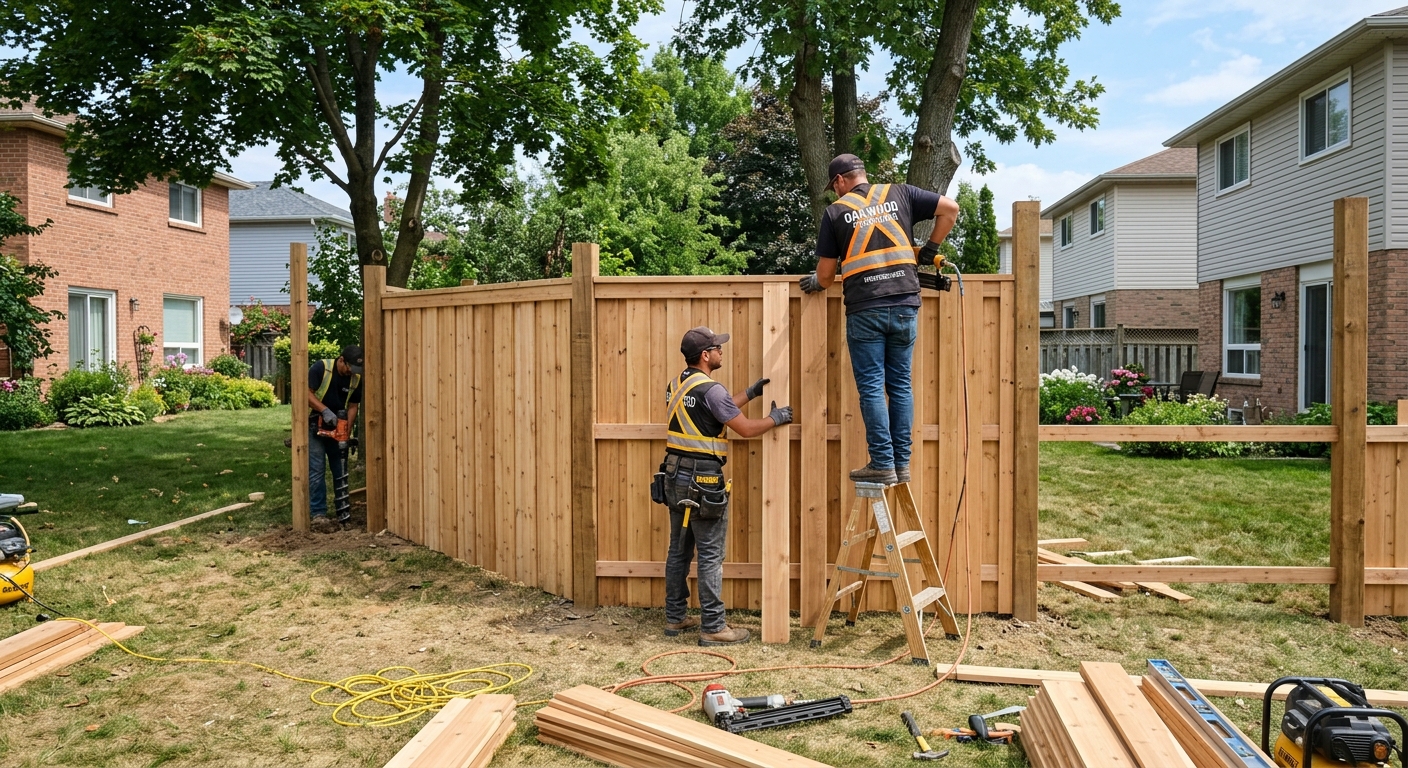
Fencing options and costs in Runnymede-Bloor West Village
In Runnymede-Bloor West Village, your fence is usually more than a boundary—it’s a daily backdrop for privacy, pets, and street-facing curb appeal. With a population of 10,070 (Statistics Canada, 2021 Census), and many homes tightly spaced in the neighbourhood, fencing demand stays steady and contractor scheduling can fill up quickly. The local housing mix also supports frequent backyard projects: detached homes and family lots tend to drive longer fence runs (including side-yards and rear privacy), which is why many quotes in the area are designed around property-line access and panel layout rather than “one-size-fits-all” estimates.
Toronto’s cost profile is shaped by Southern Ontario frost conditions and common soil types (including clay and mixed fill). In practice, contractors typically set posts around 42"–48" below the frost line equivalent, which often means concrete-set posts and deeper holes for 6–8 ft privacy fences. That extra labour and ready-mix cost is one reason fencing can swing upward even when material choice looks similar on paper. Another driver is wind and racking risk: while the GTA isn’t the Prairies, solid panels still need correct post size and spacing to resist uplift and sway, especially near open corners and busier streets.
If you’re around the Runnymede Road corridor and side-street lanes—where lots can feel more exposed to seasonal gusts—taller privacy fences and gate work are particularly common. Next, use the comparison table to narrow down options before you request an itemised quote.
| Material |
Lifespan |
Maintenance |
Privacy Rating |
Price per Linear Foot |
| Pressure-treated pine (standard wood) |
8–15 years |
Stain/seal every 2–3 years |
High (solid board) |
$65–$120 |
| Cedar (natural rot resistance) |
12–20 years |
Seal/stain every 2–3 years |
High (solid board) |
$85–$145 |
| Vinyl / PVC (no-maintenance) |
20–30 years |
Occasional wash; no staining |
High (solid or board-on-board) |
$75–$130 |
| Chain-link (galvanized steel) |
15–25 years |
Minimal; rinse/repair clips |
Low–Medium (visibility) |
$45–$85 |
| Aluminum ornamental |
25–40 years |
Minimal (wash as needed) |
Low–Medium (open pickets) |
$90–$160 |
| Composite / recycled material |
20–30 years |
Low; clean and inspect hardware |
High (solid styles) |
$110–$180 |
Prices are estimates only and vary by project scope, site access and material selection.
What affects the price of fencing in Runnymede-Bloor West Village
In Runnymede-Bloor West Village and across the Toronto region, you can see the same basic fence idea priced 30–50% differently because quotes respond to real job conditions: how many linear feet you need, how hard the site is to access, and how deep/secure posts must be in Toronto soils. Even when homeowners compare the “materials” line, the biggest swings usually come from foundation work (post depth and setting), panel design (wind resistance), and extras like gates, demolition, and disposal.
Post depth is the most practical Toronto-specific driver. Contractors plan around the frost line (commonly taken at about 42"–48" in Southern Ontario), and best practice is to set posts deep enough to prevent frost heave—often meaning about 1.5–2.0 m into the ground for many privacy installs. That translates into longer posts, deeper auger work, and more concrete, which pushes you toward concrete-set posts rather than simple gravel packing.
Concrete examples from how I see costs play out in this neighbourhood: (1) A 6 ft backyard privacy fence on a flat lot may price closer to the lower end of the wood band, but the moment you add wider gates and deeper post holes for heavier panels, costs climb toward the mid-to-upper range. (2) If your yard has damp clay spots where holes stay saturated, contractors often increase concrete quantity or adjust footing strategy, raising labour and material use. (3) If you choose cedar or vinyl, the purchase price rises—but the long-term “annual hassle” can still make it worthwhile compared to pressure-treated pine that needs more frequent staining.
Because labour availability and winter shutdown planning can also affect start dates, it’s smart to lock in an itemised quote early—especially for taller solid fences where spacing and hardware matter for racking control.
| Price Factor |
Why It Matters |
Cost Impact |
| Fence length in linear feet |
Most materials and labour scale directly with length. |
Major driver; smallest estimate errors compound over distance. |
| Post depth required |
Frost line determines hole depth and post length to prevent heaving. |
Often adds significant labour and concrete; can shift the quote band. |
| Post setting method |
Concrete vs. gravel pack vs. driven posts changes stability in freeze/thaw cycles. |
Concrete-set posts typically cost more but reduce long-term movement. |
| Material choice |
Vinyl/cedar cost more upfront; chain-link costs less but offers less privacy. |
Can separate wood vs. vinyl by roughly $10–$30/linear foot depending on design. |
| Gate count and type |
Gates require stronger frames, hinges, latches, and often additional posts. |
Each gate can add a noticeable lump sum even on a short fence run. |
| Grade and terrain |
Slopes need stepped or raked panels; hardware layouts change. |
More labour and additional material cut/fit time. |
| Old fence removal and disposal |
Demolition, hauling, and any buried posts affect schedule and disposal costs. |
Can add cost quickly if posts are concreted or difficult to extract. |
| Permit fees and survey / property line locate |
Toronto-area requirements and pin locating reduce encroachment risk. |
Usually a smaller portion, but still meaningful for larger projects. |
Permits & regulations in Ontario
In Ontario, fences can fall into permit territory when you’re above common height thresholds—often around 2.0 m (6.5 ft) at the rear and about 1.0–1.2 m (3–4 ft) at the front or corner, though exact requirements depend on location and local bylaws. For Runnymede-Bloor West Village homeowners, the safest approach is to confirm your fence plan before digging: measure height at the property line, and check whether your specific location is treated like a corner lot. Regardless of permit status, all fences must stay within property lines and follow municipal setback rules.
Before any post holes are dug, call for utility locates through Ontario One Call. This is non-negotiable—missing a line can turn a routine install into a major safety and cost issue. If there’s any dispute about where the line is, obtain a survey or have property pins located so you don’t build on a neighbour’s side. Shared fence ownership rules generally fall under Ontario’s line-fences framework, which is why documentation and clear agreements matter.
What typically requires a permit: building/altering a fence over the local height threshold, especially in front/corner areas, and any project that triggers municipal review. What typically does not: like-for-like fence repairs below threshold heights and short, low boundary replacements—assuming setbacks and property line location are unchanged.
To verify a contractor in Ontario, check (1) the business licence and trade eligibility via the relevant provincial/municipal listings if applicable, (2) liability insurance certificate naming you/your address where required, and (3) WSIB coverage confirmation (clearance letter or active coverage details). Ask for the certificate before work starts, and keep copies with your contract.
Choosing the right fence material for Runnymede-Bloor West Village
Choosing fence material in Runnymede-Bloor West Village is about matching your priority—privacy, low maintenance, or upfront budget—to Toronto’s freeze/thaw cycle and typical yard conditions. Pressure-treated pine is the most budget-friendly option, but it usually needs staining/sealing every 2–3 years to slow grey weathering and surface checks. Cedar looks great and resists rot naturally, yet it still benefits from periodic sealing, especially where snow drifts keep boards wet longer. Vinyl/PVC is the “set it and forget it” choice: no staining, easy cleaning, and strong colour stability—though in extreme cold it can get brittle if hardware isn’t installed correctly and if panels are not supported well. Chain-link lasts long and stays economical, but it offers little privacy unless you add privacy slats or a screen. Aluminum ornamental is long-lived and rust-resistant, but it’s primarily for visibility control and aesthetics rather than solid privacy.
Toronto’s frost conditions matter for every material because post performance is the foundation. With Southern Ontario frost at about 42"–48", many installs require concrete-set posts set deep enough to prevent heaving, commonly around 1.5–2.0 m depending on your exact post height and local conditions. That’s why wood, vinyl, and composite all cost more when you go from short boundary fencing to full-height privacy panels: heavier loads need stronger posts and closer spacing to reduce racking.
Where the price difference is justified: for a typical backyard privacy run, vinyl/PVC often sits in the $75–$130 band per linear foot, while pressure-treated pine commonly lands in the $65–$120 range. If you expect to maintain the fence properly, pine can be a sensible spend. But if you’d rather avoid repeat staining and want steadier long-term appearance, vinyl’s higher upfront cost can make sense—especially in winter-damp areas where wood can wear faster.
| Material |
Cold Tolerance |
Lifespan |
Annual Maintenance |
Best For |
Price Band |
| Pressure-treated pine |
Good, with proper sealing and hardware |
8–15 years |
Low-to-moderate (prep + stain/inspect every 2–3 years) |
Best budget privacy with a maintenance plan |
$65–$120 |
| Cedar |
Good to very good in freeze/thaw cycles |
12–20 years |
Low-to-moderate (seal/stain every 2–3 years) |
Appearance + rot resistance |
$85–$145 |
| Vinyl / PVC |
Very good when installed with correct support |
20–30 years |
Very low (wash and inspect fasteners) |
Low maintenance privacy |
$75–$130 |
| Chain-link |
Excellent |
15–25 years |
Very low (spot repairs as needed) |
Security + airflow |
$45–$85 |
| Aluminum ornamental |
Excellent |
25–40 years |
Very low (occasional wash) |
Decorative perimeter with longevity |
$90–$160 |
| Composite / recycled |
Good (requires correct spacing and fastening) |
20–30 years |
Low (clean + inspect hardware) |
Rot-free privacy look |
$110–$180 |
How to choose a fencing contractor in Runnymede-Bloor West Village
When you hire a fencing contractor in Runnymede-Bloor West Village, start by verifying the basics: Ontario licensing/registration (as required for the business), liability insurance, and WSIB coverage. How to check: ask for a copy of their current certificate of insurance and confirm it covers fencing work at your address; verify WSIB status via a recent coverage letter or clearance-style documentation, not just a verbal “we’re covered.” If they won’t provide documents, that’s a fast “no” for me.
Next, demand 2–3 itemised written quotes—not a lump sum. You want a labour/material breakdown showing post depth and setting method, number of line posts, panel style, gate frame construction, and whether concrete and auger time are included. Make sure the scope clarifies what’s excluded: permit pull responsibilities, any survey/property locate fees, disposal and hauling, and whether buried wood and embedded posts are expected to be removed and replaced.
Warranty matters too. Ask for the workmanship warranty length (how long they cover labour) and the manufacturer/product warranty for materials (and whether it’s transferable to future owners—helpful if you sell). For payment, never pay more than 10–15% upfront; keep a holdback until the fence is complete and inspected. Finally, get a written start date and completion window so you’re not guessing mid-project.
- Request proof of liability insurance with your address listed if your insurer requires it.
- Verify WSIB coverage documentation before work starts.
- Confirm post depth and setting method in writing (concrete-set vs alternatives).
- Ensure quotes list the number of posts and approximate spacing for tall privacy fences.
- Ask whether demolition and disposal are included and where debris will be hauled.
- Confirm gate hardware brand/type and whether hinges are rated for tall, solid gates.
- Check if survey/property line locate is required or recommended for your lot.
- Make sure the quote includes any required permits or clearly states who pulls them.
- Get a workmanship warranty term in plain language.
- Confirm payment schedule and keep retainage/holdback until completion.
- Ask for photos of similar Toronto-area installs (post setting detail especially).
- Require a written schedule: start date, material lead time, and estimated finish date.
Common red flags I see with fencing contractors in Runnymede-Bloor West Village include: vague quotes that don’t state post depth or concrete setting; refusing to provide insurance/WSIB paperwork; “we’ll figure it out later” language around property lines and permits; pricing that seems too low because it omits demolition/disposal or under-specifies gates; and pressure for a large upfront deposit beyond 10–15% without a detailed contract scope.
Frequently asked questions — fencing in Runnymede-Bloor West Village
Can I install a fence on a slope in Runnymede-Bloor West Village?
Yes, you can install fencing on a slope in Runnymede-Bloor West Village, but the best method depends on how much the grade changes across the run. Contractors typically use either stepped panels (each section changes height independently) or raked panels (one continuous slope angle), and the decision is often guided by your fence style and local height measurement points. For privacy fences, stepped layouts help keep the solid boards from leaving wide gaps. Either way, the post depth still needs to be planned around Toronto’s frost conditions, so you shouldn’t simply “shorten posts” on the downhill side—post holes must remain deep enough to avoid heaving. If you have a steep yard, itemise the quote so it specifies how many extra adjustments/cuts are included.
What is the most weather-resistant fence for Runnymede-Bloor West Village's climate?
For Toronto’s freeze/thaw winters, the most weather-resistant “overall” choice is often vinyl/PVC or aluminum, provided the system is installed with correct post support and good hardware. Vinyl/PVC generally holds up well because it doesn’t rot or require staining, and aluminum doesn’t rust like steel can. For solid privacy where wind-driven racking is a concern, vinyl or cedar with correctly sized posts and concrete-set foundations tends to perform better long-term than minimal hardware wood builds. In local terms, you’ll often see vinyl/PVC in the $75–$130 range per linear foot, while aluminum ornamental is commonly $90–$160. Chain-link is also durable, but it won’t give privacy without slats or additions.
How do I prevent wood fence rot in Runnymede-Bloor West Village?
Wood rot prevention is mainly about keeping water away from the timber and ensuring the fence has stable, frost-safe support. In Runnymede-Bloor West Village, the most important step is proper post installation: posts should be set in a way that resists movement in freeze/thaw cycles—often using concrete-set posts rather than gravel-only approaches when frost depth requirements are in play. Then focus on details: use treated lumber rated for ground contact where applicable, maintain the bottom rail clearance so boards aren’t sitting in damp debris, and stain/seal on schedule (pressure-treated usually needs attention every 2–3 years). Finally, check hardware and fasteners; corrosion and loose pickets trap moisture. If you’re seeing soft boards near the base, plan for sections replacement rather than just patching.
What is the cost per linear foot for fencing in Runnymede-Bloor West Village?
Typical installed fencing costs in this Toronto neighbourhood usually fall within the same local price bands used across the GTA. As a quick guide: pressure-treated wood often lands around $65–$120 per linear foot, vinyl/PVC around $75–$130, chain-link around $45–$85, and aluminum/metal around $90–$160. Your final number depends heavily on the practical factors contractors face here—especially post depth and concrete setting requirements tied to Ontario’s frost line and the stability needs for 6–8 ft privacy fences. Gates, demolition, and sloped terrain can move the effective cost upward even if your material unit price looks similar.
Should I repair or replace my old fence in Runnymede-Bloor West Village?
In Runnymede-Bloor West Village, the decision usually comes down to whether the fence’s posts and framework are still solid. If posts are leaning, the fence has significant racking, or you’re seeing widespread rot near the base rails, replacing is typically more cost-effective than repeated patchwork—especially because the underlying issue is often foundation movement from freeze/thaw and improper post setting. Repair can make sense when damage is limited to a few panels, missing pickets, or minor hardware issues, and when post alignment is still good. Ask contractors to inspect and confirm whether the line posts can be reused or whether removal is needed. A practical way to compare is to request two itemised options: “repair limited sections” vs “full replacement,” so you can see how labour and disposal compare.
How do I handle a fence dispute with a neighbour in Ontario?
Fence disputes are common in older Toronto neighbourhoods because property lines and shared boundary expectations aren’t always clear. In Ontario, you should start by confirming the location of your property line: if pins/survey aren’t clear, get a survey or have property pins located before any changes. Document everything—photos, measurements, and any prior agreements—then communicate calmly and in writing with your neighbour about what needs to change and where. If the dispute involves permit/height issues or where a new fence would sit, verify requirements before installing anything. For shared-fence contexts, Ontario’s line-fences framework is typically referenced, but the practical path is usually to agree on ownership responsibilities and maintenance before construction. A good contractor can also help by providing a clear layout plan so your fence doesn’t drift across the line.