Fencing options and costs in Cabbagetown-South St.James Town
Cabbagetown-South St.James Town is a neighbourhood where homeowners value tidy frontages and secure backyards, and that directly drives demand for new fence installs, replacements, and gate work. With a local population of 11,669 (Statistics Canada, 2021 Census), there’s a steady mix of older lots and active renovations—each boundary line is essentially “real estate” that needs protection from dogs, foot traffic, and winter weather. In this area, fence pricing is especially shaped by Toronto’s freeze-thaw cycles: frost heave risk and wet soil conditions mean posts usually can’t be treated like they’re on “easy ground,” particularly for privacy fences in the 6–8 ft range. Most contractors also see frequent scheduling pressure because the Toronto market has ongoing housing turnover and backyard upgrades.
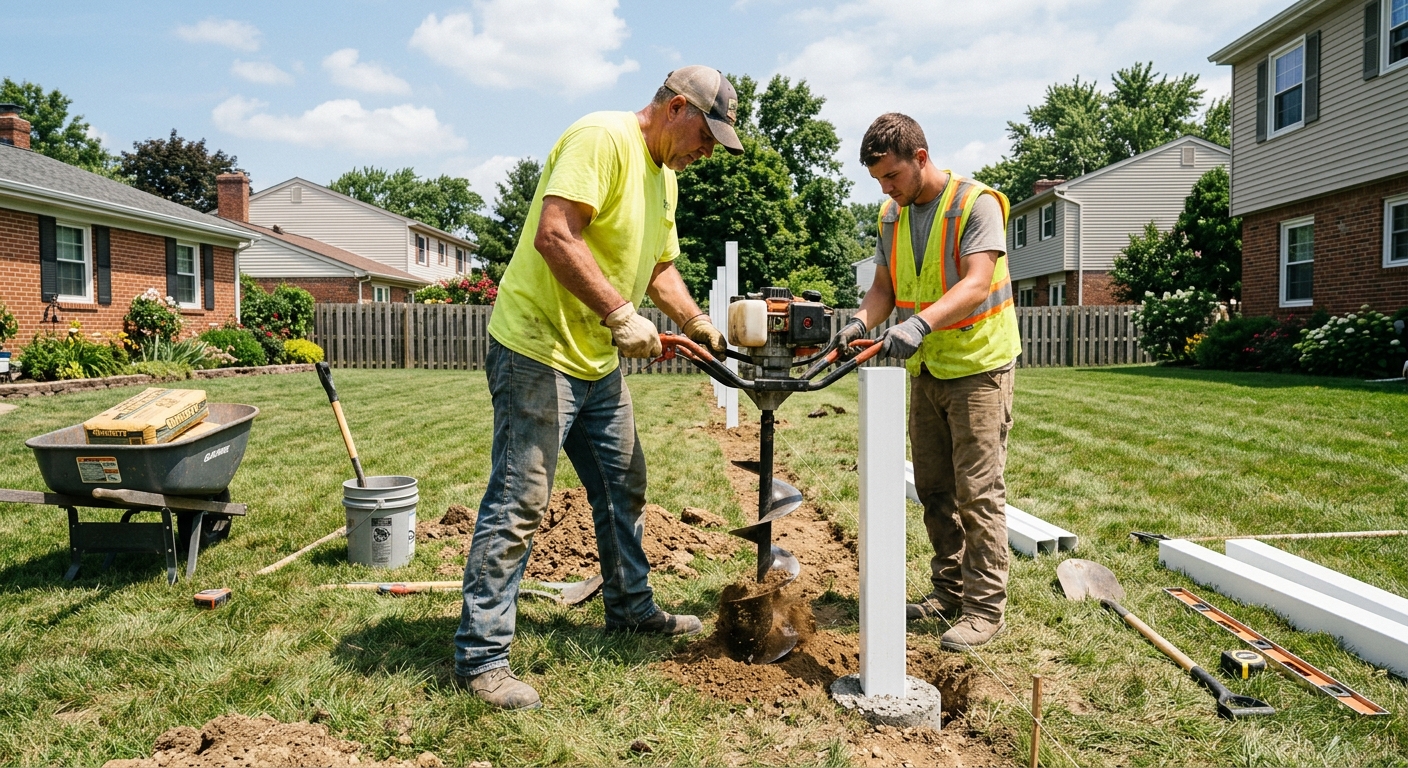
In practice, the frost line in Southern Ontario is commonly estimated around 42"–48", so post holes and post lengths are planned accordingly. For taller solid fences, concrete-set posts and closer hardware detailing are common to resist racking and uplift during wind events. This is why two quotes for the “same length” of fencing can differ meaningfully—depth, footing, and material choice add real labour and ready-mix costs.
If you’re in the area around Gerrard–Parliament or the pocket of older homes near Wellesley/ Carlton approaches, you’ll typically see faster turnaround requests for rear privacy fences and side-gate repairs. Use the comparison below to understand what tends to fit your goals and what you should budget before we talk details like gate count, demolition, and site access.
| Material |
Lifespan |
Maintenance |
Privacy Rating |
Price per Linear Foot |
Price Range |
| Pressure-treated pine (standard wood) |
10–15 years |
Stain/seal every 2–3 years |
High (solid panels) |
$65–$120 |
$1,450–$3,200 |
| Cedar (natural rot resistance) |
15–20 years |
Re-seal/stain every 2–4 years |
High (solid panels) |
$75–$135 |
$1,750–$3,900 |
| Vinyl / PVC (no-maintenance) |
20–30 years |
Occasional wash; no staining |
High (solid styles) |
$75–$130 |
$2,000–$4,600 |
| Chain-link (galvanized steel) |
25–30 years |
Minimal; rinse as needed |
Low (open visibility) |
$45–$85 |
$1,000–$2,300 |
| Aluminum ornamental |
20–35 years |
Minimal; wash yearly |
Medium (decorative pickets) |
$90–$160 |
$2,200–$4,900 |
| Composite / recycled material |
20–30 years |
Low; no staining |
High (solid styles) |
$85–$140 |
$2,100–$5,000 |
Prices are estimates only and vary by project scope, site access and material selection.
What affects the price of fencing in Cabbagetown-South St.James Town
In Cabbagetown-South St.James Town, it’s common to see fencing quotes for the “same-looking” project vary by 30–50% across Toronto and Ontario. The biggest reason isn’t just material—it’s how the contractor accounts for Toronto’s ground conditions, frost depth planning, and the practical realities of working in an established neighbourhood (tree roots, tight side yards, and frequent gate/repair add-ons). When concrete set-up, post length, and hardware spec change, your labour time and material costs change with it.
Toronto’s freeze-thaw cycle affects post depth. While frost line is often cited around 42"–48", best practice is to set posts about 4–6 inches below the design frost depth to reduce heaving. In cold Ontario conditions, that usually means posts are set roughly 1.5–2.0 m into the ground, and for 6–8 ft fences you’re typically buying longer posts plus more concrete for each footing—especially where the soil is clay-heavy or mixed. Concrete-set posts are therefore common, not optional, if you want long-term stability.
Concrete examples: (1) If your yard has clay/mixed soils and requires deeper excavations, you’ll pay more for concrete and disposal, pushing a pressure-treated wood fence toward the higher end of the $65–$120/linear foot band. (2) If your run includes multiple gates or requires stepped panels along a slope, you’ll add labour even if the total linear footage looks modest—an aluminum ornamental run that starts near $90–$160/linear foot can climb quickly once you include custom angles and gate framing. (3) If your current fence is already failing and needs full demolition before install, removal can add cost and schedule time.
| Price Factor |
Why It Matters |
Cost Impact |
| Fence length in linear feet |
Labour and materials scale directly with each foot installed. |
Largest driver; typically majority of total. |
| Post depth required — frost line determines post length and hole depth |
Deeper holes mean more excavation, longer posts, and stability. |
Can add material + labour; often a major swing. |
| Post setting method — concrete vs. gravel pack vs. driven posts |
Concrete-set reduces heaving and increases long-term hold. |
Concrete generally costs more upfront than driven posts. |
| Material choice — vinyl vs. cedar vs. chain-link |
Different costs for boards, rails, fittings, and lifespan. |
Switching materials can move you across price bands. |
| Gate count and type — walk-through vs. drive-through (double) |
Gates require heavier framing, hinges, latches, and alignment work. |
Each gate can add a noticeable fixed-cost increase. |
| Grade and terrain — sloped yards require stepped or raked panels |
More measuring, customized panel cuts, and sometimes extra rails. |
Often increases labour even when footage is similar. |
| Old fence removal and disposal |
Demolition takes time and may require hauling. |
Can add substantial cost on tight-access properties. |
| Permit fees and survey / property line locate |
Required documentation impacts scheduling and compliance. |
Usually a smaller portion, but can affect total. |
Permits & regulations in Ontario
In Ontario, fences above a height threshold often require a building permit. As a practical rule of thumb used in many municipalities, fences around 2.0 m (6.5 ft) at the rear and about 1.0–1.2 m (3–4 ft) at the front or corner are more likely to trigger permit requirements—especially if you’re installing solid privacy panels. Regardless of height, your fence must stay within property lines and comply with municipal setback bylaws.
Before any post hole digging, call for utility locates through Ontario One Call. Even small fence projects can hit buried services when lots are older—common in Cabbagetown-South St.James Town with established infrastructure. Also consider obtaining a survey or property line locate (your property pins) so you can avoid encroachment disputes with neighbours. Shared fence ownership rules are governed by Ontario’s line-fences legislation, and neighbour expectations matter on maintenance and replacement timing.
What typically DOES require a permit: installing or replacing a fence that exceeds local height thresholds, building a major fence structure, or changing a fence in a way that affects compliance with bylaws. What typically does NOT: small repairs to existing sections at or below height limits, like replacing a few boards or rails in the same footprint (but verify locally if you’re unsure).
To verify a contractor in Ontario, ask for (1) their Ontario licence/registration number where applicable, (2) current certificate of insurance showing liability coverage, and (3) WSIB coverage (or the applicable coverage proof). Look for these documents in their email/estimate package and confirm coverage details match the company name on the project contract; a legitimate fencing contractor will provide certificates quickly and clearly.
Choosing the right fence material for Cabbagetown-South St.James Town
Choosing the right fence material in Cabbagetown-South St.James Town comes down to privacy needs, maintenance tolerance, and how your yard handles Toronto’s winter moisture and freeze-thaw. Pressure-treated pine is the budget-friendly option, but it typically needs staining or sealing every 2–3 years to slow grey weathering and keep the boards looking good. Cedar offers better natural rot resistance and an attractive grain, yet it still benefits from periodic staining to maintain colour and reduce surface cracking. Vinyl/PVC is the low-maintenance favourite—no staining and easy cleaning—but it can become brittle if installed incorrectly or exposed to severe cold at stressed points, so proper post spacing and hardware alignment matter. Chain-link has the lowest upfront cost and the longest “structural” life, but it offers minimal privacy unless you add slats or vines. Aluminum ornamental fencing looks polished, won’t rust, and has mid-range pricing, but it’s not a true privacy solution.
Post depth and setting are where Toronto’s climate becomes non-negotiable. For frost planning, posts are usually set deeper—commonly about 1.5–2.0 m into the ground for taller fences—so concrete-set posts are often recommended for 6–8 ft privacy fences. That extra stability helps resist racking in wind and keeps panels from shifting after freeze-thaw.
Where the dollar difference is worth it: moving from pressure-treated pine to cedar often makes sense when you care about appearance and want fewer aesthetic touch-ups. For example, if a typical wood privacy run lands around the $65–$120/linear foot band, cedar can bring you closer to the upper part of the range; the extra cost is justified if you plan to keep the fence long-term and prefer better weathering performance.
| Material |
Cold Tolerance |
Lifespan |
Annual Maintenance |
Best For |
Price Band |
| Pressure-treated pine |
Good when properly sealed; fasteners must be weather-rated |
10–15 years |
Seasonal inspection; stain/seal every 2–3 years |
Budget privacy with acceptable upkeep |
$65–$120 |
| Cedar |
Very good; stable grain holds up well in freeze-thaw |
15–20 years |
Light wash; stain/seal every 2–4 years |
Attractive privacy with reduced rot risk |
$75–$135 |
| Vinyl / PVC |
Good; needs correct expansion gap and solid post spacing |
20–30 years |
Minimal wash; no staining |
Low maintenance privacy |
$75–$130 |
| Chain-link |
Excellent with galvanized steel |
25–30 years |
Occasional rinse; straighten bent sections |
Security with open sightlines |
$45–$85 |
| Aluminum ornamental |
Excellent; non-rusting powder coating |
20–35 years |
Yearly wash; no painting usually required |
Front-yard curb appeal and security |
$90–$160 |
| Composite / recycled |
Good; less swelling than some woods |
20–30 years |
Low; occasional wash |
Long-life privacy with minimal upkeep |
$85–$140 |
How to choose a fencing contractor in Cabbagetown-South St.James Town
Start by verifying coverage and compliance because fencing is full of jobsite risks—digging, lifting, cutting, and working near utilities. In Ontario, ask for: (1) their Ontario business/licence details (as applicable for the work they’re performing), (2) liability insurance certificate (you should see coverage limits and the insured legal name), and (3) WSIB coverage proof (or the appropriate proof of coverage). You can check the WSIB status with the number shown on the certificate, and you should request the certificate before any work begins. For licensing and good standing, ask for the official registration info and search the contractor’s name through the relevant online business registry where available. A reliable fencing contractor will provide these documents without pushing you to “just sign first.”
Next, get 2–3 itemised written quotes. You want a breakdown that separates labour, materials, post depth/footings, rails, fencing panels, gate hardware, and demolition/disposal. Avoid lump-sum-only pricing where the scope is vague. Confirm what’s excluded: are old fence boards hauled away, are damaged landscaping areas restored, and is permit pulling included (if required due to height thresholds)? Warranty matters: ask for a clear workmanship warranty period and a product/manufacturer warranty. Also ask whether the warranty is transferable if you sell your home.
Payment schedule should be controlled—never pay more than about 10–15% upfront. Hold back the remainder until the job is complete, posts are aligned, gates swing correctly, and debris is removed. Finally, demand dates in writing: a start date and an estimated completion window help prevent “indefinite delays” during busy Toronto seasons.
- Ask for a certificate of liability insurance and confirm the company name matches the contract.
- Request WSIB clearance/coverage proof before work begins.
- Verify the permit handling: who pulls it, and what’s included in the price.
- Get a post-depth plan that references frost-set practice for Southern Ontario.
- Ensure quotes list footing method (concrete-set vs gravel pack vs driven).
- Confirm gate hardware type: hinges, latch quality, and whether it’s reinforced framing.
- Check material grading: pressure-treated grade, cedar grade, vinyl thickness, and coatings.
- Ask about rail spacing and panel spacing to reduce racking in wind.
- Confirm disposal: is demolition and hauling included or extra?
- Review site prep: topsoil/stone removal around post holes and restoration expectations.
- Get everything itemised—labour, materials, hardware, and any access charges.
- Clarify warranty terms and start date (usually after substantial completion).
In Cabbagetown-South St.James Town, watch for red flags such as: (1) a quote that doesn’t specify post depth or footing method, (2) “cash-only” payment requests or no insurance/WSIB proof, (3) vague scope language like “fence supply & install” without gate/hardware details, (4) pushing a large upfront payment beyond 10–15%, and (5) ignoring Ontario One Call/utility locate requirements before digging.
Frequently asked questions — fencing in Cabbagetown-South St.James Town
How long does a wood fence last in Cabbagetown-South St.James Town?
In Cabbagetown-South St.James Town, wood fence life depends heavily on whether posts are properly frost-set and how the boards are finished. Pressure-treated pine typically lasts about 10–15 years when installed with correct spacing, treated fasteners, and a realistic staining/sealing schedule every 2–3 years. Cedar often lasts about 15–20 years because it resists rot better, but it still benefits from periodic maintenance to prevent colour fade and surface cracking. Toronto’s freeze-thaw cycle and wet soils can accelerate issues if posts are set too shallow or without concrete set-up. If you’re comparing budgets, note that wood projects often land roughly in the $1,450–$3,200 range for many typical runs, and that quality footing work is what keeps that investment from failing early.
Who owns and maintains a shared fence?
Shared fence ownership in Ontario is commonly handled under line-fences principles, but the exact responsibilities can vary depending on your situation and any existing agreements between neighbours. Practically, you should treat a shared fence as a joint asset: the common expectation is shared responsibility for major repairs or replacement when the fence is serving both properties. That said, many disputes happen when only one side replaces boards without clarifying ownership and cost. In Cabbagetown-South St.James Town—where older lot lines can create awkward alignments—get clarity in writing about what portion is shared, what “repair” means, and whether replacement is being funded by one party or shared. A good contractor will help document the condition before work and provide photos and measurements for both sides.
How do I find my property line before fencing?
The safest approach is to confirm your property pins or locate your boundaries through a survey process before installing fence posts. In Ontario, many homeowners in Cabbagetown-South St.James Town assume the fence line is already “correct,” but older neighbourhoods can have drifted fences, swapped markers, or historic misplacements. Start by finding existing property pins/corners (often marked by survey markers) or using your survey plan paperwork if you have it. If you don’t, order a property line locate/survey to avoid encroachment. Also consider how gates will swing and how close you’ll be to neighbouring structures. Once you know where you’re building, schedule utility locates (Ontario One Call) before digging so you don’t compromise services during post excavation.
What's the most low-maintenance fence?
For most Ontario homeowners, vinyl/PVC or composite/recycled fencing is the closest thing to “set it and forget it.” Vinyl generally requires only occasional washing and minimal hardware checks, and it doesn’t need staining like wood. Composite can be similarly low maintenance, especially compared with untreated or poorly finished wood. Chain-link is also low maintenance structurally—galvanized steel is long-lived—but it won’t provide privacy unless you add slats or screening. If your priority is privacy plus reduced upkeep, vinyl/PVC solid styles are usually the most convenient, and they typically sit around the $2,000–$4,600 installed range for many standard runs depending on access, post depth, and gate count. If you want, I can help you pick a style that won’t trap snow or strain in winter winds.
How tall can my fence be in Cabbagetown-South St.James Town?
Fence height limits in Ontario depend on your location and municipal bylaw rules, but as a guideline, fences at the rear that reach around 2.0 m (6.5 ft) often raise permit requirements, while front/corner fences around 1.0–1.2 m (3–4 ft) are typically more closely monitored. In Cabbagetown-South St.James Town, many homeowners choose 6–8 ft privacy fences because they work well for backyard space, but you should plan for compliance and possible permits if you’re exceeding typical thresholds. Your contractor should confirm the design relative to property line setbacks and height caps before construction begins. Even when a permit isn’t required, staying within the property line is critical—especially where older fences may not align perfectly with current pins.
Should fence posts be set in concrete here?
In southern Ontario, including Cabbagetown-South St.James Town, concrete-set posts are often recommended for long-term stability—especially for 6–8 ft privacy fences and where soils are clay-rich or mixed. The reason is frost heave risk: posts generally need to be set deeper to sit below the design frost zone so water expansion during freeze-thaw doesn’t lift panels. Best practice usually aims for setting depth about 4–6 inches below the design frost depth, which commonly works out to roughly 1.5–2.0 m of depth. Driven posts or shallow/gravel-only methods can be cheaper initially, but they’re more prone to movement in freeze-thaw cycles. This is why many Toronto projects shift into the higher end of the wood or vinyl bands (for example, wood often ranges around $1,450–$3,200 installed), because proper footings cost time and concrete—but they protect your fence from premature leaning.