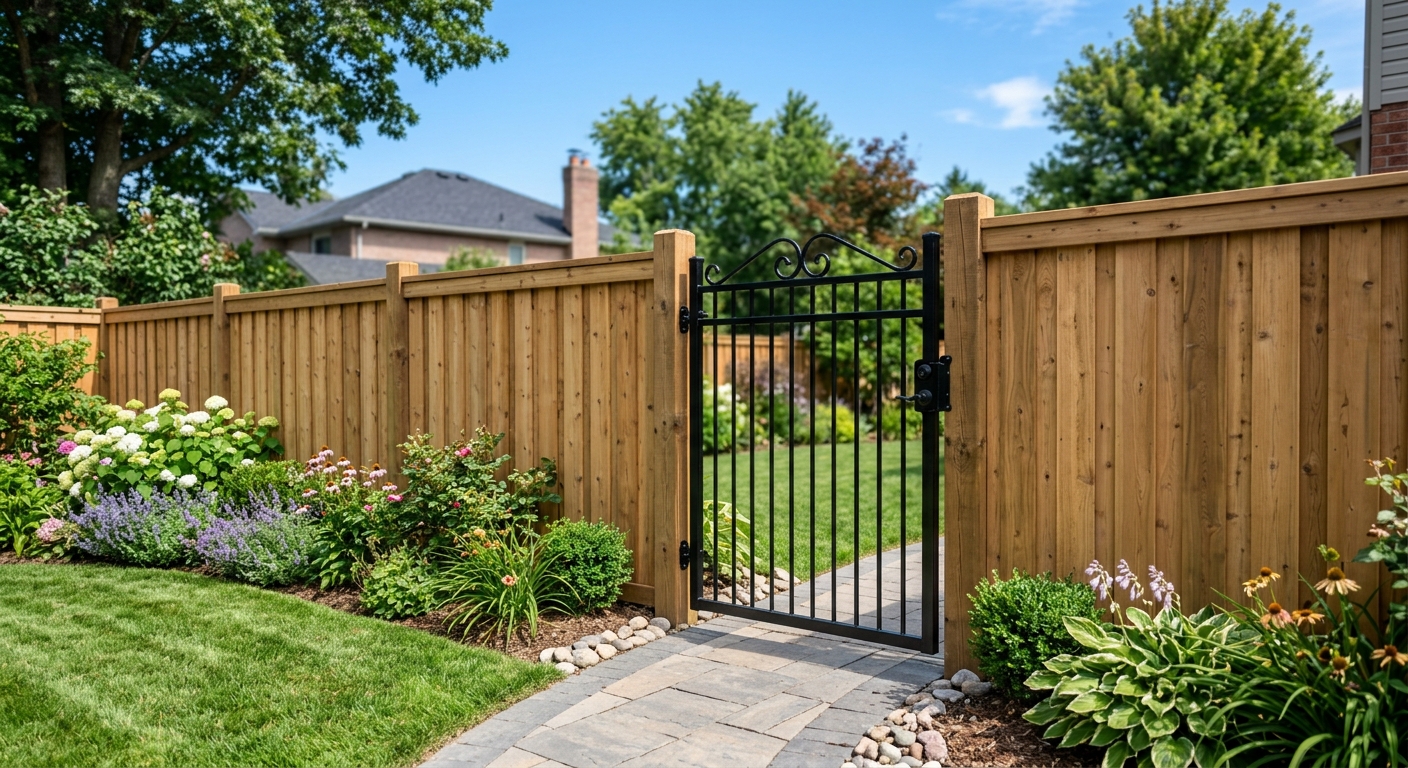
Fencing options and costs in Kingston
In Kingston, choosing a fence is often tied to how you live at home—whether it’s protecting kids and pets, adding curb appeal, or creating privacy on a busy street. Kingston’s housing profile includes 48.0% single-detached dwellings (Statistics Canada, 2021 Census), and that matters because each detached property is a potential fencing project. The demand is also steady because 52.7% of homes were built before 1981 (Statistics Canada, 2021 Census), and older lots frequently have aging fence lines that need replacement rather than touch-ups.
Local costs in the Kingston–Pembroke area are shaped by Ontario’s frost penetration and by ground conditions common along the St. Lawrence and Bay of Quinte. Frost line depth typically means posts should be set deep—often 36–48 inches—to reduce heaving, which increases labour and concrete use. In clay/silty soils that hold water, freeze–thaw movement can be more noticeable, so many contractors specify deeper augered holes plus concrete-set posts on structural runs and gate sections. Wind exposure near Lake Ontario can also affect design choices; for taller privacy fences, contractors may tighten post spacing or upgrade posts to handle gusts.
Fencing is especially busy in areas with consistent infill and mature neighbourhood turn-over such as Westboro Village and around Kingston’s west end, where homeowners commonly upgrade front and backyard lines to improve appearance and privacy. With those local drivers in mind, the table below gives typical cost and performance expectations for the most common materials—so you can compare options before requesting itemised quotes.
| Material |
Lifespan |
Maintenance |
Privacy Rating |
Price per Linear Foot |
| Pressure-treated pine (standard wood) |
10–15 years |
Stain/seal every 2–3 years |
6.5/10 |
$55–$95 |
| Cedar (natural rot resistance) |
15–25 years |
Light stain every 2–4 years |
7.5/10 |
$70–$110 |
| Vinyl / PVC (no-maintenance) |
20–30 years |
Rinse only; occasional washing |
8.5/10 |
$90–$140 |
| Chain-link (galvanized steel) |
20–35 years |
Minimal; inspect tension/posts |
2.5/10 |
$40–$80 |
| Aluminum ornamental |
25–40 years |
Occasional cleaning; no rust |
4/10 |
$80–$160 |
| Composite / recycled material |
20–30 years |
Rinse; no staining |
8/10 |
$95–$150 |
Prices are estimates only and vary by project scope, site access and material selection.
What affects the price of fencing in Kingston
Even for the “same” fence style, Kingston–Pembroke quotes can differ by 30–50% once you account for how deep posts must be set, how difficult the ground is, and what upgrades are needed for wind and freeze–thaw conditions. Across Ontario, labour and material supply also vary by season and availability, and contractors price risk differently when access is tight or rock is encountered.
In this region, frost line depth is a primary driver. Posts are typically set about 4–6 inches below the design frost depth to reduce heaving, which often translates to roughly 1.2 m (4 ft) of frost penetration and post holes commonly set 1.5–2.0 m into the ground. That depth requires longer posts, deeper augering, and typically more concrete—pushing wood and vinyl projects upward toward the mid-to-upper ends of local ranges (for example, wood often lands around $55–$95 per linear foot, while vinyl can start higher).
Wind exposure also matters. While Kingston isn’t as extreme as exposed Prairie sites, gusts near the lake and Bay of Quinte can affect tall privacy fences (6–8 ft). Contractors may tighten post spacing or upsize posts, which increases labour and material.
Concrete examples from Kingston jobs: (1) a backyard install on damp clay often needs deeper auger holes and more concrete at each post, raising the per-foot cost; (2) a front-line fence near driveways with limited machine access may require hand-digging around landscaping, increasing labour; (3) replacing an older fence section where the posts are still solid can reduce demo/disposal cost, whereas rotted posts often mean full removal and more new foundations. Housing age plays a role too—many pre-1981 yards have fence lines that weren’t built for modern frost-depth expectations, so replacement can add concrete and post length, not just boards.
| Price Factor |
Why It Matters |
Cost Impact |
| Fence length in linear feet |
Everything scales with perimeter; materials and labour are length-based. |
High (most projects) |
| Post depth required |
Frost line dictates hole depth and post length to limit heaving. |
High (often 1.5–2.0 m set) |
| Post setting method |
Concrete-set posts cost more than gravel pack, but perform better in clay/silt. |
Medium to high |
| Material choice |
Vinyl/PVC and cedar cost more upfront than chain-link or standard wood. |
Medium to high |
| Gate count and type |
Drive-through/double gates require stronger hardware and structural posts. |
Medium to high |
| Grade and terrain |
Slopes require stepped or raked panels and more labour to align tops. |
Medium |
| Old fence removal and disposal |
Demo time, hauling, and sorting affect cost. |
Medium |
| Permit fees and survey / property line locate |
Locates and administrative items can be required depending on height and location. |
Low to medium |
Permits & regulations in Ontario
In Ontario, fences may require a building permit when they exceed common height thresholds—often around 2.0 m (6.5 ft) at the rear and 1.0–1.2 m (3–4 ft) at the front or corner. Requirements can vary based on location and lot conditions, so it’s best to confirm with Kingston-area municipal guidelines before you order materials.
Regardless of permit needs, fences must respect property lines and applicable setback rules. Before digging any post holes, homeowners should arrange utility locates through Ontario One Call (often arranged by the contractor, but you should confirm it’s done). Also, get a survey or a locate of your property pins if stakes/markers aren’t clear—fence disputes are typically about exact placement, not appearance.
Shared fence ownership is addressed by provincial line-fences legislation, so the “right answer” can depend on whether the fence is considered a shared boundary and how the agreement is handled.
What typically DOES require a permit: new fence installs or replacements that exceed local height thresholds (commonly around 2.0 m at the rear, depending on placement). What typically does NOT: minor repairs, like replacing a few boards, caps, or hardware on an existing fence that remains within the same height and footprint—though you should still check locally if you’re changing the structure significantly.
To verify your contractor in Kingston, ask for: (1) their Ontario business registration information and any applicable fencing/contracting registration they hold; (2) proof of liability insurance (request a current certificate of insurance showing the insured company name and coverage); and (3) confirmation of WSIB/WCB coverage if applicable. You can then cross-check: certificates for current dates, insurance limits, and clear company identification; for coverage status, look for a clearance letter or equivalent documentation provided by the contractor for the project.
Choosing the right fence material for Kingston
Choosing the right fence material in Kingston is less about trends and more about matching the material to your priorities—privacy, low maintenance, budget, and lifespan—while handling Ontario’s freeze–thaw cycle and seasonal wind. Kingston’s older housing stock is common (52.7% built before 1981), and many lots previously had fences that didn’t account for modern expectations around deep post support in cold weather.
Pressure-treated pine is the budget-friendly option, but it typically needs staining or sealing every 2–3 years to prevent greying and early surface breakdown from moisture. Cedar offers better natural rot resistance and an attractive finish, yet it still needs periodic maintenance to keep colour and reduce warping at fast-draining/slow-draining transitions. Vinyl/PVC delivers the lowest day-to-day work—usually just occasional rinsing—but it can be more expensive upfront and can become brittle if the product quality or installation is poor in extreme cold. Chain-link is usually the longest-life budget solution, but it won’t provide meaningful privacy unless you add slats or screening. Aluminum ornamental resists rust and looks great, though it provides more visual openness than privacy panels.
For Kingston–Pembroke, post depth is the part that often decides whether the fence lasts, regardless of material. Because frost penetration is commonly treated at about 1.2 m, posts often go roughly 36–48 inches down (or deeper depending on design), and many structural sections plus gates are concrete-set for stability in clay/silty, water-holding soils. Where wind loading is a factor—especially for 6–8 ft privacy fences—contractors may tighten spacing and reinforce posts.
Here’s a practical dollar example: if you can build a standard pressure-treated wood privacy fence around $55–$95 per linear foot, but vinyl tends to run closer to the higher bands (often $90–$140 per linear foot), the price difference is usually justified when you want to avoid staining for decades and plan to keep the fence long-term. If you’re cost-sensitive and okay with maintenance, wood or cedar can make more sense; if you want “set it and forget it,” vinyl or composite is typically worth the premium.
| Material |
Cold Tolerance |
Lifespan |
Annual Maintenance |
Best For |
Price Band |
| Pressure-treated pine |
Good with proper staining |
10–15 years |
1–2 inspections; stain/seal every 2–3 years |
Lowest upfront cost for privacy |
$55–$95 |
| Cedar |
Very good (naturally resistant) |
15–25 years |
1 inspection; light stain every 2–4 years |
Better appearance with moderate maintenance |
$70–$110 |
| Vinyl / PVC |
Good; avoid poor installation |
20–30 years |
Rinse/wash as needed (often 0–1 times/year) |
Low-maintenance privacy |
$90–$140 |
| Chain-link |
Excellent |
20–35 years |
Inspect tension and posts occasionally |
Security on a budget; pets |
$40–$80 |
| Aluminum ornamental |
Excellent |
25–40 years |
Wash as needed; check hardware |
Front curb appeal and boundary definition |
$80–$160 |
| Composite / recycled |
Good; depends on manufacturer |
20–30 years |
Rinse as needed |
Privacy with minimal upkeep |
$95–$150 |
How to choose a fencing contractor in Kingston
Choosing a contractor in Kingston should start with verification. First, confirm the business is properly registered in Ontario and that the contractor can provide a current certificate of liability insurance naming the correct legal entity. Next, ask for proof of WSIB/WCB coverage (or a clearance letter if applicable). Don’t accept “we’re covered” verbally—request documents and check dates before work begins. Also ensure they include their company name, project address, and coverage limits on the insurance paperwork.
Second, get 2–3 itemised written quotes. The best estimates break labour and materials down separately: post excavation and setting method, concrete quantities (if used), hardware, rails/pickets, gates, and disposal. Avoid lump-sum quotes that don’t explain exclusions. Read the scope carefully: does the quote include permit pulling (if required), utility locate coordination, and disposal/hauling of the old fence? If grading is involved, confirm whether the fence will be stepped or raked and how the top line will be aligned.
Third, check warranty terms. Ask for (1) a workmanship warranty (how long they stand behind post setting, alignment, and gate function), (2) the manufacturer warranty for materials, and (3) whether the warranty transfers to you if you sell the home.
Fourth, payment schedule matters. Never pay more than about 10–15% upfront. Use a holdback until the job is complete and inspected. Finally, require a written timeline with a start date and an estimated completion date so delays are documented.
- Insurance certificate matches the contractor’s legal name
- Clear WSIB/WCB coverage proof for the project
- Itemised labour + materials (no “all-in” opacity)
- Post depth and setting method stated (concrete vs. gravel pack)
- Gate construction details and hardware grade listed
- Disposal/hauling included or explicitly excluded
- Utility locate responsibility confirmed
- Permit pulling included (or cost and responsibility clarified)
- Warranty length for workmanship and product stated in writing
- Payment schedule capped at 10–15% upfront; holdback included
- Site conditions addressed: slope plan (stepped/raked) and accessibility
- Start and completion dates written into the contract
Red flags I commonly see in Kingston fencing projects include: contractors refusing to provide insurance/coverage documents, quotes that don’t specify post setting depth or concrete usage, “cheap” bids that omit gate reinforcement and later add change orders, pressure to pay a large deposit upfront, and vague scopes that don’t mention disposal, permits, or utility locates.
Frequently asked questions — fencing in Kingston
Can I install a fence on a slope in Kingston?
Yes, you can install on a slope in Kingston, but the details determine whether it looks good and performs through winter. With Kingston–Pembroke freeze–thaw conditions, posts still need to be set deep enough to reduce heaving, even when the yard grades away from the house. Contractors typically use stepped panels (stair-step down with consistent post spacing) or raked panels (continuous slope) depending on the fence type and how you want the top line to appear. For taller privacy fences near lake-gust zones, aligning posts carefully matters so the panels don’t rack when wind loads hit. If you’re comparing materials, note that slope labour can push costs upward regardless of whether you’re in wood (often $55–$95) or vinyl (often $90–$140)—because installation time increases more than material cost.
What is the most weather-resistant fence for Kingston's climate?
In Kingston’s Ontario climate, the most weather-resistant options are typically chain-link (for longevity and low sensitivity to moisture) and aluminum ornamental (for rust resistance). That said, “weather-resistant” also depends on how well the fence is installed—especially post depth and post setting method in cold, water-holding soils near the St. Lawrence/Bay of Quinte. Chain-link can perform extremely well for decades because galvanized steel tolerates moisture and winter cycling. Aluminum also handles snow and rain cleanly without rotting. If you want privacy with top weather resistance, vinyl/PVC can be strong in cold when installed correctly, but your quote should specify proper post depth and structural support on gates. Wood and cedar are workable and attractive, but they rely more on periodic maintenance to resist greying and surface breakdown—budgeted every 2–3 years for pressure-treated pine.
How do I prevent wood fence rot in Kingston?
Wood rot prevention in Kingston starts below ground: posts must be set correctly to reduce freeze–thaw movement. Avoid leaving posts too shallow or setting them inconsistently—rot often begins at the base where moisture and soil contact linger during thaw periods. Use a fence design that allows good drainage, and ensure boards aren’t tightly trapped against wet ground or landscaping fabric. For pressure-treated pine, plan on staining/sealing every 2–3 years to protect the wood from moisture cycling and surface greying. Cedar resists rot better, but it still benefits from a maintenance schedule, particularly on shaded sides where moisture stays longer. If you’re budgeting, remember that wood rot prevention is partly labour and preparation; that’s why a cheap quote that omits concrete-set posts in structural sections can end up costing more after a couple winters. Comparing price bands helps—standard wood often falls around $55–$95 while cedar can be higher, closer to $70–$110.
What is the cost per linear foot for fencing in Kingston?
In Kingston, fencing cost per linear foot depends on material and how much foundation work the job needs. For budget planning, installed wood typically clusters around $55–$95 per linear foot, vinyl/PVC often lands around $90–$140, and chain-link is frequently about $40–$80. Aluminum ornamental is commonly higher—around $80–$160. These ranges reflect Kingston’s frost-depth-driven post work (deeper holes and longer posts) and the reality that clay/silty soils can increase freeze–thaw movement. Taller privacy fences in wind-exposed areas can also require extra structural labour. The most accurate way to forecast your total is an itemised quote that includes post depth, concrete quantities, gate hardware, and removal/disposal if needed.
Should I repair or replace my old fence in Kingston?
Often, you can repair if the posts are solid, the fence line is square, and the rot is limited to a few boards or rails. But in Kingston, many older fences—especially those built before modern frost-depth practices—fail at the post line due to heaving or moisture pooling at the base. If you see leaning sections, loose posts, repeated board rot near ground level, or gates that no longer latch properly, replacement is usually the practical option. Replacement also gives you a chance to improve alignment, add structural post reinforcement where gates sit, and choose a material matched to your maintenance tolerance. If you’re comparing options, repair may keep costs near the low end, but a full replacement often aligns with the installed per-foot bands: wood commonly around $55–$95, cedar higher, and vinyl closer to $90–$140. A contractor should be able to assess whether posts are salvageable and explain your likely service life after either choice.
How do I handle a fence dispute with a neighbour in Ontario?
Fence disputes are common in Ontario because the disagreement is usually about exact location, shared-boundary expectations, or maintenance responsibility. Start by confirming the property line: if you don’t have clear survey markers, request a survey or a property pin locate before making changes. Next, document the current condition with photos and measure relative to known boundaries where possible. In Ontario, shared fence ownership is governed by provincial line-fences legislation, so it’s important to treat the fence as a potential shared boundary rather than an individual “right” to build wherever you prefer. If the issue relates to height or setbacks, review municipal fence guidance as well. Try to resolve it in writing first—offer a practical compromise (like matching height/material) and agree on responsibility for repairs. If you need to proceed, involve a surveyor and keep your contractor’s work aligned to the verified boundary to avoid repeating the dispute.