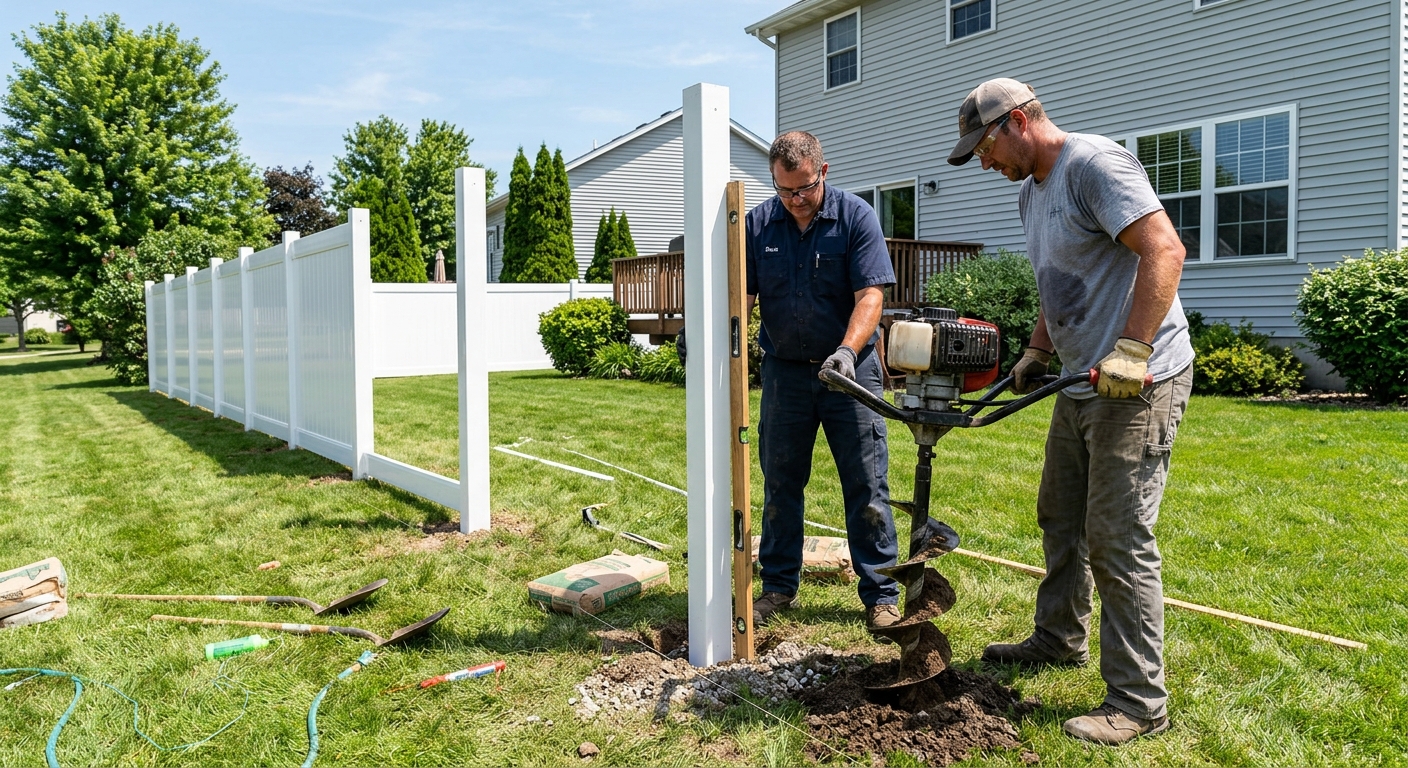
Fencing options and costs in Pioneer Park
Pioneer Park, Ontario is a fence-friendly neighbourhood where homeowners often treat their boundary lines like part of the home’s comfort—especially around backyards and side yards. With a population of 9,108 (Statistics Canada, 2021 Census), demand is steady for everything from privacy panels to light ornamental borders, and that matters because each fence line is measured, built, and installed with local site conditions in mind. In practical terms, Pioneer Park’s housing stock means many properties are detached or semi-detached in established streets, so people are often upgrading aging fences rather than building from scratch. That’s why contractors in the Toronto economic region stay busy with replacement runs, not just new builds.
Toronto-area climate is the biggest cost-shaper you’ll feel in your quote. Southern Ontario’s frost line is commonly treated as about 42"–48", which pushes most fence postholes deeper (often 3.5–4 feet) to resist frost heave—particularly for 6–8 ft privacy fences. Add in clay and mixed soils, and you’ll see many crews recommend concrete-set posts instead of driven posts. That increases labour time and ready-mix costs, but it’s the difference between a fence that looks straight after winter and one that “drifts” at the base.
In Pioneer Park, trade activity is especially strong along well-used residential streets with longer property lines—think frequent side-yard upgrades where access is tight and replacement hardware matters. Below is a straightforward comparison of common materials so you can anchor your budget before you request itemised quotes.
| Material |
Lifespan |
Maintenance |
Privacy Rating |
Price per Linear Foot |
| Pressure-treated pine (standard wood) |
10–15 years |
Stain/seal every 2–3 years; inspect posts annually |
High (good solid pickets/boards) |
$65–$120 |
| Cedar (natural rot resistance) |
15–20 years |
Light staining or clear seal every 2–4 years |
High (solid boards) |
$75–$130 |
| Vinyl / PVC (no-maintenance) |
20–30 years |
Rinse yearly; no painting or sealing |
High (solid panel styles) |
$75–$130 |
| Chain-link (galvanized steel) |
20–30 years |
Occasional rinse; tighten hardware as needed |
Low to Medium (limited privacy) |
$45–$85 |
| Aluminum ornamental |
25–40 years |
Rinse; occasional touch-up at hardware (rare) |
Low to Medium (decorative/open sightlines) |
$90–$160 |
| Composite / recycled material |
20–30 years |
Low; periodic cleaning |
Medium to High (depends on panel design) |
$95–$155 |
Prices are estimates only and vary by project scope, site access and material selection.
What affects the price of fencing in Pioneer Park
In Pioneer Park, you’ll see the same basic fence idea priced 30–50% differently across the Toronto region. That gap isn’t just brand name—quotes swing based on how deep posts must be set for winter stability, how crews stage materials on your street, and whether the contractor is building for long-term racking resistance (wind loads) rather than “getting it up fast.” In a market where demand stays consistent (population 9,108; Statistics Canada, 2021 Census), availability of crews can also tighten around peak replacement seasons, which influences labour rates and lead times.
For Southern Ontario, the frost line is commonly treated as 42"–48". Best practice typically means setting posts about 4–6 inches below design frost depth, which often works out to roughly 1.5–2.0 m into the ground. Once you go that deep, you’re usually moving from quick-driven posts to concrete-set posts—more digging, longer posts, and ready-mix costs that can push the job toward the upper end of the Toronto price bands (for wood, that often means closer to the $65–$120 range; for vinyl privacy styles, closer to $75–$130).
Cost examples that show up frequently in Pioneer Park: (1) a 50 linear foot privacy fence on a clay mix often requires wider postholes and more concrete than the same layout on loam, raising your per-foot cost; (2) a corner yard exposed to prevailing winds can require heavier post sizes and closer spacing, which increases materials and labour; (3) a “simple” chain-link run can get more expensive when demolition and disposal are included—old posts that are concreted-in take extra time to remove.
Bottom line: local climate + local ground conditions explain more than most homeowners expect—especially for 6–8 ft panels, where frost movement and wind racking combine.
| Price Factor |
Why It Matters |
Cost Impact |
| Fence length in linear feet |
More run length = more posts, rails, pickets/panels and labour |
Highest driver; often the majority of your total |
| Post depth required |
Frost line determines hole depth and post length for winter stability |
Concrete-set posts can add noticeable cost vs shallow settings |
| Post setting method |
Concrete vs gravel pack vs driven posts affects movement and longevity |
Concrete generally increases labour and ready-mix usage |
| Material choice |
Vinyl, cedar, chain-link and aluminum have different assembly times and hardware needs |
Can shift you between $45–$85, $65–$120, $75–$130, or $90–$160 bands |
| Gate count and type |
Gates require heavier frames, hinges/locks and extra alignment time |
One walk-through adds cost; drive-through/double gates cost more |
| Grade and terrain |
Slopes require stepped/raked panels or adjusters to keep top lines straight |
Extra measuring, special cuts and added labour |
| Old fence removal and disposal |
Removal time varies by how posts were installed (concrete vs driven) |
Demolition/disposal can materially increase total project price |
| Permit fees and survey / property line locate |
Some heights and locations require approvals; accurate lines prevent rework |
Typically a smaller line item, but avoids costly corrections |
Permits & regulations in Ontario
In Ontario, a fence may require a building permit if it exceeds common height thresholds—often about 2.0 m (6.5 ft) at the rear and around 1.0–1.2 m (3–4 ft) at the front or corners, though exact rules can vary by municipal bylaw and location. Regardless of permit needs, fences must stay within your property line and follow municipal setback requirements. Before any digging, you should also arrange utility locates through Ontario One Call to mark underground services. This step is non-negotiable because a posthole placed into an unmarked line can turn into both safety and cost issues fast.
To avoid encroachment disputes in Pioneer Park, confirm your property pins or get a survey/locate before installing. If a fence is shared, line-fences responsibilities are also governed by provincial line-fences legislation, which can affect who pays for repairs and rebuilds.
Permit “does require” examples in practice: fence builds or replacements that clearly exceed typical height limits, fences that need site-specific approval due to location, or projects tied to structures/complex lot conditions. “Typically does not require” examples: short, standard privacy or boundary fences under local thresholds, and minor repairs like replacing damaged boards on an existing fence (still confirm if you’re changing height or moving the line).
When verifying a contractor in Ontario, check (1) licensing/registration for the trade they claim (look for the contractor details on the relevant provincial registry or business listing), (2) liability insurance—ask for a current certificate of insurance naming you as additional insured if applicable, and (3) WSIB coverage (or WCB coverage where relevant). Request the certificate and clearance confirmation, then verify dates and amounts match your contract scope.
Choosing the right fence material for Pioneer Park
Picking the right fence material in Pioneer Park is mostly about matching your priorities—privacy, low maintenance, budget, and lifespan—to Ontario’s real-world freeze-thaw cycles. Pressure-treated pine is usually the budget choice, but it’s not “set and forget”: to prevent grey weathering and premature wear, plan on staining or sealing every 2–3 years. Cedar costs more upfront, but it naturally resists rot and typically looks better for longer, though it still benefits from periodic sealing. Vinyl/PVC gives low-maintenance convenience and strong privacy in solid panel styles; however, in extreme cold snaps it can become brittle—quality installation and correct post hardware help reduce cracking risk.
Chain-link is the lowest-cost route for secure boundary coverage and long service life, but it offers limited privacy unless you add slats or grow-in screening. Aluminum ornamental fences are excellent for appearance and rust resistance and can be a good mid-range option when you want a tidy look without heavy maintenance, though they’re not privacy-forward.
Because Toronto’s frost line is commonly treated at about 42"–48", post depth matters as much as material. For privacy fences, concrete-set posts are typically recommended to resist frost heave and keep panels from leaning. Wind and snow load don’t usually reach Prairie extremes in the GTA, but solid boards still catch wind, so proper post size, spacing, and good bracing help prevent racking.
A common “dollar justification” example: if a cedar privacy fence comes in at roughly the $75–$130 band while pressure-treated pine lands closer to $65–$120, paying the premium can make sense when you expect 15–20 years rather than frequent re-staining and earlier board replacement. If you want maximum longevity and minimum seasonal work, vinyl often earns its higher upfront price over time—provided you’re installing with correct post depth and hardware.
| Material |
Cold Tolerance |
Lifespan |
Annual Maintenance |
Best For |
Price Band |
| Pressure-treated pine |
Good; wood expands/contracts with freeze-thaw |
10–15 years |
Inspect; re-stain/seal every 2–3 years |
Budget privacy and straightforward installs |
$65–$120 |
| Cedar |
Good; better rot resistance through Ontario winters |
15–20 years |
Inspect; seal lightly every 2–4 years |
Better appearance with moderate maintenance |
$75–$130 |
| Vinyl / PVC |
Good; can be brittle in extreme cold if misinstalled |
20–30 years |
Low—rinse and check hardware seasonally |
Low-maintenance privacy |
$75–$130 |
| Chain-link |
Excellent; galvanized hardware handles winter |
20–30 years |
Low—tighten/bracket checks as needed |
Security on a budget |
$45–$85 |
| Aluminum ornamental |
Excellent; coated metal withstands freeze-thaw |
25–40 years |
Very low—rinse and check fittings |
Curb appeal and boundaries without rust |
$90–$160 |
| Composite / recycled |
Good; stable in cold when installed correctly |
20–30 years |
Low—cleaning and occasional hardware checks |
Privacy with reduced upkeep |
$95–$155 |
How to choose a fencing contractor in Pioneer Park
Choosing the right fencing contractor in Pioneer Park starts with documentation, because the winter stability of your fence depends on how posts are set and how hardware is installed—not just the visual finish. In Ontario, verify three things: (1) Ontario trade/contractor credentials for the work they’re performing (confirm the business information matches what you’re contracting); (2) liability insurance—ask for a certificate of insurance and review the coverage limits and expiry date; and (3) WSIB coverage (where applicable) so you’re not exposed if a worker is injured on your property. Request certificates before work begins, not after. If they won’t provide paperwork, that’s a red flag.
Next, get 2–3 itemised written quotes. “Itemised” should mean a breakdown of labour and materials, not a single lump sum. Ask whether the quote includes posthole digging to frost depth, concrete quantities, gate hardware, bracing, and disposal of the old fence. For permits, confirm who handles the permit pull (or if it’s not required for your height) and whether property line locating or survey confirmation is included.
Warranty matters too: insist on a workmanship warranty length in writing and clarify the difference between workmanship vs manufacturer warranties on materials. Ask whether warranties are transferable to subsequent owners. For payment, keep upfront deposits to about 10–15% and use a holdback until the fence is complete and inspected. Finally, confirm a start date and an estimated completion timeline in the written proposal so you can plan around delivery and weather.
- Ask for proof of liability insurance before signing.
- Verify WSIB coverage and keep a copy of certificates.
- Request itemised quotes with labour + materials listed separately.
- Confirm post depth plan tied to frost considerations (concrete-set where recommended).
- Ask whether old fence removal and disposal are included.
- Confirm gate hardware quality (hinges, latches, reinforcement).
- Review how they handle sloped grades (stepped vs raked panels).
- Check their cleanup plan and who hauls debris away.
- Ask about weather policy and whether delays adjust timelines in writing.
- Get warranty terms in writing, including workmanship start/end dates.
- Set a payment schedule: small deposit, progress payment, final holdback.
- Ensure the contract includes dimensions, materials, height, and layout.
Common red flags in Pioneer Park include: (1) quoting without discussing frost-depth post setting, (2) offering a “lowest price” without itemised labour/material breakdown, (3) starting work before you’ve had a written scope and confirmed property line location, (4) refusing to provide insurance/WSIB clearance, and (5) giving only a verbal timeline or warranty you can’t reference later.
Frequently asked questions — fencing in Pioneer Park
How do I handle a fence dispute with a neighbour in Ontario?
In Pioneer Park (and across Ontario), start by confirming the facts: your property line or fence line should be verified using your survey pins or a property locate—because disputes often come down to who built where. If the fence is shared, Ontario’s line-fences rules can influence responsibilities for repairs and rebuilds, but you’ll still want documentation. Next, communicate in writing (a simple email or letter) and keep photos from all sides. If you can’t agree, consider mediation or getting an independent measurement before replacing anything. Avoid tearing down first—replacing a fence on the wrong line can become expensive quickly, especially when posts are set deep for frost stability. Finally, if a contractor is involved, make sure the scope clearly states exact location, height, and materials before work begins.
What fence style offers the best wind resistance in Pioneer Park?
For Ontario conditions in Pioneer Park, privacy fences with solid panels do resist well when they’re built for wind—meaning correct post depth, proper post sizing, and tighter spacing. The GTA doesn’t get the extreme, sustained winds you’d see on the Prairies, but solid boards still catch gusts and can rack. That’s why contractors often recommend concrete-set posts for 6–8 ft privacy styles to keep the base from shifting during freeze-thaw. Hardware and bracing matter: use proper rails, secure fasteners, and gate reinforcement so the fence behaves like a system rather than isolated posts. If you need maximum wind performance on a budget, chain-link has more “air through” and can feel less wind-stressed, typically priced around the $45–$85 range, but it won’t deliver the privacy you get from solid panels.
How much does a fence cost in Pioneer Park?
In Pioneer Park, fence pricing is usually discussed in per-linear-foot terms, then adjusted for gates, removal, access, and post setting. For Toronto-area projects, typical installed bands are: wood fencing about $65–$120 per linear foot, vinyl/PVC about $75–$130, chain-link about $45–$85, and aluminum/metal about $90–$160. The biggest cost swings come from fence length and how deep posts must be set for frost stability—Southern Ontario commonly treats the frost line at about 42"–48", which pushes deeper holes and often concrete-set posts. If your scope includes old fence removal and disposal, budget more because concrete-set old posts can take longer to remove. With a population of 9,108 (Statistics Canada, 2021 Census), demand is steady, so getting 2–3 itemised quotes helps you separate fair pricing from overly aggressive assumptions.
How deep should fence posts be for Pioneer Park's frost?
For Pioneer Park and much of Southern Ontario, the common frost line assumption is about 42"–48". Best practice is usually to set fence posts about 4–6 inches below the design frost depth to prevent frost heave and keep the fence from leaning after winter. In practical terms, that often translates to roughly 3.5–4 feet of hole depth for privacy fences in clay/mixed soils—especially for 6–8 ft runs. Many Toronto contractors recommend concrete-set posts because it stabilizes the post at depth and reduces movement over time. The exact depth can vary by soil type and your fence height, so a proper site assessment is key. Always ask your contractor to explain their post-depth plan and whether concrete is included.
Wood vs vinyl vs aluminum fence — which is best?
“Best” depends on what you value most. Wood (pressure-treated pine) is often the budget-friendly choice, typically within the $65–$120 band, but it needs planned maintenance—staining or sealing every 2–3 years to reduce weathering and extend service life. Cedar is similar in look but generally offers better rot resistance; it often lands around the $75–$130 band with slightly more longevity, still with periodic maintenance. Vinyl/PVC is usually the lowest-maintenance privacy option (commonly $75–$130) and resists rot, though extreme cold can make improper installation more likely to show cracking—quality hardware and correct post depth help. Aluminum ornamental fencing, often $90–$160, is rust-resistant and low upkeep, but it typically won’t provide privacy like solid wood/vinyl. For Pioneer Park’s winter stability needs, the post depth and setting method matter at least as much as the material.
Do I need a permit to build a fence in Ontario?
In Ontario, a permit can be required depending on the fence height and where it’s located (rear vs front/corner). Common guidance in Ontario often puts thresholds around 2.0 m (6.5 ft) for rear areas and about 1.0–1.2 m (3–4 ft) for front or corners, but municipal bylaws can affect the exact requirement—so you should confirm for Pioneer Park with the applicable municipal rules. The safest approach is to ask your contractor to state clearly whether a permit is required for your planned height and location before work begins. Regardless of permitting, you must respect property lines and setbacks, and you should arrange utility locates before digging postholes. If you’re going from a short existing fence to a tall privacy fence, that height change is the moment permits become more likely.