Fencing options and costs in Lakefield
In Lakefield, choosing the right fence is mostly about balancing privacy and curb appeal with the realities of Ontario winters. With a 2021 population of 2,753 (Statistics Canada, 2021 Census), the town may feel small, but fencing demand still clusters around growing residential streets and busy waterfront properties where homeowners want clean sightlines and secure yards. In the Lakefield market, each detached home is effectively a potential customer, which is why contractor availability and scheduling can tighten during peak spring installs.
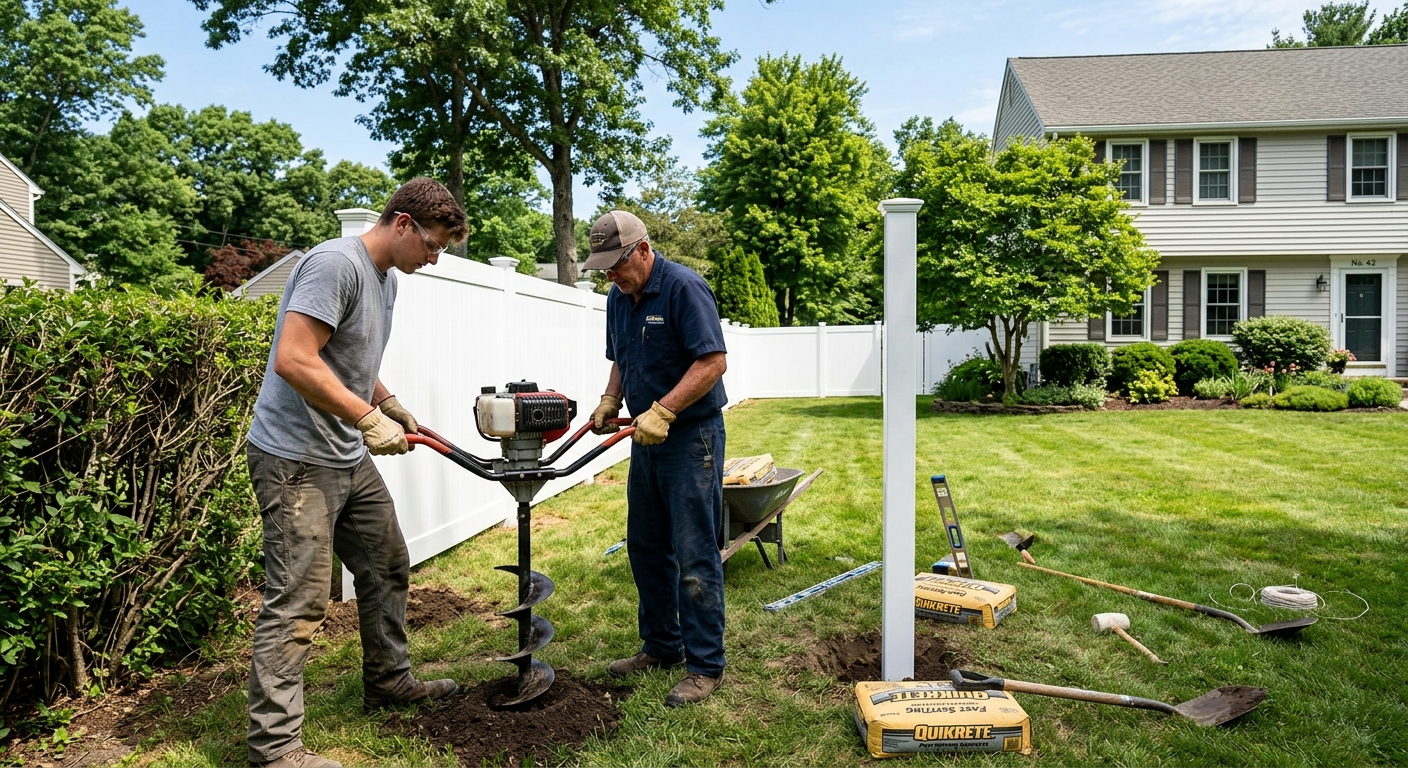
In the Toronto economic region, pricing is shaped by frost and soil conditions. Local best practice typically sets posts about 42"–48" below ground for frost protection, and most contractors still plan for concrete-set posts on clay and mixed soils—especially for 6–8 ft privacy fences. That extra digging, labour time, and ready-mix cost is why a “basic” fence price can move quickly once you go taller or add gates. In Lakefield, the area around Young Street and the waterfront-side neighbourhoods often see higher demand for privacy styles because properties are more exposed to neighbour visibility and seasonal activity. If you’re comparing options, the table below gives a practical cost range and performance expectations so you can align materials to your priorities.
| Material |
Lifespan |
Maintenance |
Privacy Rating |
Price per Linear Foot |
Price Range |
| Pressure-treated pine (standard wood) |
10–15 years |
Stain/seal every 2–3 years |
High (privacy panels possible) |
$12–$20 |
$65 – $120 |
| Cedar (natural rot resistance) |
15–25 years |
Light stain/seal every 3–4 years |
High (solid board or close spacing) |
$15–$26 |
$75 – $130 |
| Vinyl / PVC (no-maintenance) |
20–30 years |
Rinse only; occasional cleaning |
High (solid privacy styles) |
$18–$28 |
$75 – $130 |
| Chain-link (galvanized steel) |
25–40 years |
Minimal; occasional cleaning/tension checks |
Low to Medium (privacy mesh optional) |
$10–$18 |
$45 – $85 |
| Aluminum ornamental |
25–40 years |
Minimal; wash when needed |
Low to Medium (decorative spacing) |
$15–$32 |
$90 – $160 |
| Composite / recycled material |
20–30 years |
Minimal; occasional wash |
High (solid boards possible) |
$17–$30 |
$90 – $160 |
Prices are estimates only and vary by project scope, site access and material selection.
What affects the price of fencing in Lakefield
In Lakefield, it’s common to see the same fence type priced differently—often by 30–50%—because Toronto-area labour rates, material logistics, and how contractors handle the ground conditions can vary a lot. A “like-for-like” quote can turn into a higher total when posts must be set deeper, gates are added, or removal and disposal are included. Even when materials are similar, the installation approach matters: Toronto’s winter frost and soil mix (including clay) pushes many crews toward concrete-set posts to prevent long-term movement.
The frost line in Southern Ontario is commonly planned around 42"–48", and posts are usually set about 4–6 inches below that design depth to reduce frost heave. In practical terms, that often means 1.5–2.0 m of post embedment, longer posts, deeper holes, and more concrete. Those changes can move a privacy fence from a “wood budget” feel toward a “mid-range” total—even before you add gates. Wind isn’t as extreme as the Prairies, but tall solid sections can rack in gusts, so installers may reduce post spacing and increase hardware. As a rough comparison, builders often target the $65 – $120 band for standard wood installs and the $75 – $130 band when switching to vinyl or cedar, mainly because of post quality, pickets/rails, and extended installation time.
Concrete examples from Lakefield-area work: (1) If your yard is compacted or clay-heavy, concrete-set posts and rework of a softened excavation can add time and ready-mix. (2) If you need stepped/raked panels to follow a sloped grade, extra framing and material waste can raise the cost. (3) If an old fence is leaning into the property line, removal and hauling can add labour that doesn’t show up on material-only estimates.
| Price Factor |
Why It Matters |
Cost Impact |
| Fence length in linear feet |
Most pricing scales directly with linear footage, including rails, pickets/panels and hardware. |
High (often the biggest variable) |
| Post depth required |
Frost protection dictates embedment, which affects post length, hole size, and concrete quantity. |
High (can shift total materially) |
| Post setting method |
Concrete vs. gravel pack vs. driven posts changes labour time and long-term stability. |
Medium to High |
| Material choice |
Vinyl/cedar often cost more up front but reduce maintenance; chain-link is typically lower. |
Medium |
| Gate count and type |
Gates require heavier frames, hinges, latches and often extra bracing. |
Medium to High (one gate can noticeably move the quote) |
| Grade and terrain |
Slopes require stepped or raked layouts, increasing cut labour and waste. |
Medium |
| Old fence removal and disposal |
Demolition, hauling, and dump fees add labour and vehicle time. |
Medium |
| Permit fees and survey / property line locate |
Some projects need permits and certified boundary confirmation to avoid encroachment disputes. |
Low to Medium (but important if required) |
Permits & regulations in Ontario
In Ontario, fences above a height threshold—typically around 2.0 m (6.5 ft) at the rear and about 1.0–1.2 m (3–4 ft) at the front or corner—often trigger a building permit requirement, depending on the location and local bylaw rules. Even when a permit is not required, all fences must respect property lines and municipal setback requirements. Before you dig any post holes, you should arrange utility locates through Ontario One Call (and follow the markings on-site) to protect service lines. For projects in Lakefield, it’s also smart to have a survey or at least a property pin locate completed, because fence disputes frequently begin when a fence is installed a few inches off the boundary.
Shared fence ownership and responsibilities are generally handled under Ontario line-fences principles—meaning neighbour communications matter, particularly for boundary fences and repairs. If you’re considering demolition of an existing fence and replacing it in the same location and height, that may not require a permit, but if you’re changing height, moving the fence closer to a street, or installing a taller privacy barrier, permits are more likely.
To verify contractor readiness, ask for three things and check them directly: (1) Ontario licensing/registrations where applicable—look up the contractor’s status via the relevant online registry resources; (2) liability insurance—request a current Certificate of Insurance showing fencing work coverage; and (3) proof of WSIB/WCB coverage—confirm the clearance status and policy details on the certificate. A reputable fencing contractor will share documents before starting, not after you sign.
Choosing the right fence material for Lakefield
Choosing a fencing material in Lakefield comes down to how you want the fence to perform across Ontario freeze–thaw cycles, summer moisture, and occasional strong wind gusts. Pressure-treated pine is the most budget-friendly way into a privacy fence, but it typically needs staining or sealing every 2–3 years to slow grey weathering and protect the surface. Cedar is a step up: it naturally resists rot and tends to look better longer, though it still benefits from periodic maintenance to keep colour and reduce surface checking. Vinyl/PVC offers the “set it and forget it” experience, but in extreme cold it can become brittle if the system isn’t installed correctly with proper rails and spacing. Chain-link is long-lived and economical, but it won’t deliver privacy unless you add slats or a privacy screen. Aluminum ornamental is rust-resistant and low maintenance, yet it’s mainly for decorative security, not full privacy.
For frost protection, Toronto-area best practice usually means concrete-set posts rather than simple driven posts for privacy fences. With embedment tied to the design frost depth (commonly planned around 42"–48"), your post depth often drives the real labour and material differences more than the fence face does. The wind effect matters too: solid 6–8 ft panels often need heavier posts or closer spacing so the fence doesn’t rack over seasons.
Here’s a practical dollar example: if you compare a standard pressure-treated wood privacy fence in the $65 – $120 band to vinyl in the $75 – $130 band, the vinyl premium is usually justified if you want to avoid recurring staining and reduce maintenance time during Lakefield’s busy spring and fall seasons—especially when your yard is difficult to access with ladders and staining equipment.
| Material |
Cold Tolerance |
Lifespan |
Annual Maintenance |
Best For |
Price Band |
| Pressure-treated pine |
Good (needs surface protection) |
10–15 years |
1–2 light checks; plan stain/seal every 2–3 years |
Budget privacy with traditional look |
$65–$120 |
| Cedar |
Good (resists rot) |
15–25 years |
1 seasonal clean; stain/seal every 3–4 years |
Premium natural appearance |
$75–$130 |
| Vinyl / PVC |
Very good with correct installation |
20–30 years |
Rinse/clean as needed; no staining |
Low-maintenance privacy |
$75–$130 |
| Chain-link |
Excellent (no rot) |
25–40 years |
Occasional tension/hardware checks |
Security on a tight budget |
$45–$85 |
| Aluminum ornamental |
Excellent (no rust) |
25–40 years |
Wash once or twice per year |
Decorative security |
$90–$160 |
| Composite / recycled |
Good (installed with proper spacing) |
20–30 years |
Rinse/spot clean as needed |
Modern privacy with minimal upkeep |
$90–$160 |
How to choose a fencing contractor in Lakefield
Start by verifying the contractor’s Ontario compliance and jobsite protections. Ask for (1) Ontario licensing/registration details where applicable—then confirm them via the relevant online registry resources; (2) liability insurance—request a current Certificate of Insurance that clearly covers fencing installation work; and (3) WSIB/WCB coverage—obtain confirmation that the contractor is in good standing. You should see these documents before any work begins, not after.
Next, get 2–3 itemised written quotes. The best quotes break down labour and materials separately (posts, rails, panels/pickets, gates, hardware, concrete/setting material, and disposal). Avoid lump-sum pricing that doesn’t state how post depth and setting will be handled, especially for privacy fences where Toronto-region frost rules typically demand concrete-set posts and deep holes. Read the scope carefully: confirm what’s included for permit pull (if needed), utility locate coordination, old fence removal, grading adjustments, and debris disposal.
For warranty, ask for both workmanship and product/manufacturer warranties. Confirm the workmanship warranty length, whether it covers labour only or includes parts, and if the manufacturer warranty is transferable to future owners.
On payment terms, never pay more than 10–15% upfront. Hold back a portion until the fence is complete, gates operate properly, and the site cleanup is done. Finally, ask for a written start date and an estimated completion window that matches your access conditions (especially if you have limited driveway width or landscaping that needs protection).
- Request itemised quotes with post depth and setting method stated in writing.
- Confirm privacy height targets and whether panels will be solid/close-boarded or spaced.
- Ask for the fence layout plan and who is responsible for string lines and measurements.
- Verify Ontario insurance with the COI and policy expiry date.
- Provide proof of WSIB/WCB coverage or clearance documentation.
- Check warranty terms in writing (labour vs product; transferability).
- Confirm whether concrete setting, brackets, and hardware are stainless/galvanized where required.
- Clarify how gates will be reinforced and which hinges/latches are included.
- Ask who pulls permits (and what you pay for, if applicable).
- Confirm utility locate scheduling and protection around marked lines.
- Make disposal and hauling included (or priced separately) before signing.
- Use a payment schedule with a final holdback until walk-through approval.
Red flags to watch for in Lakefield: (1) quotes that do not specify post embedment depth or setting method; (2) refusal to provide insurance/WSIB/WCB documentation; (3) lowball pricing that skips old fence removal or disposal; (4) vague warranty language like “warranty applies” without durations; and (5) requests for large upfront deposits beyond 10–15% without a clear schedule.
Frequently asked questions — fencing in Lakefield
What is the most weather-resistant fence for Lakefield's climate?
For Lakefield’s Ontario freeze–thaw winters, the most weather-resistant choices are typically cedar (for appearance plus rot resistance) and vinyl/PVC (for low moisture absorption). Chain-link is also extremely durable because it doesn’t rot, though it won’t provide privacy by itself. What often matters as much as the face material is how the posts are installed: privacy fences usually need concrete-set posts below the frost line planning depth (commonly around 42"–48"), especially on clay and mixed soils. That deep, stable base helps the fence resist sagging and racking after seasonal ground movement. In cost terms, vinyl/PVC privacy often lands in the $75 – $130 band, while chain-link security fencing is commonly closer to the $45 – $85 band.
How do I prevent wood fence rot in Lakefield?
Wood rot prevention in Lakefield starts with preventing moisture at the highest-risk points: post bottoms, contact with soil, and trapped water on horizontal members. Ask your contractor to use properly rated pressure-treated wood (or cedar where appropriate) and to keep the fence off wet ground where possible. Most importantly, use a frost-protected footing method: concrete-set posts help reduce movement that creates gaps and wicking. Avoid “driven-only” posts for taller privacy fences on local soils, because movement over winters can shorten the lifespan. Also, keep up with staining or sealing—pressure-treated pine typically needs attention every 2–3 years to limit grey weathering and surface breakdown. If your budget is tight, plan for maintenance rather than assuming a wood fence is maintenance-free.
What is the cost per linear foot for fencing in Lakefield?
In Lakefield, pricing is commonly discussed both as a per-linear-foot value and as an installed project range, because gates, access, and post depth can shift the total. As a practical homeowner reference, standard wood installations often fall into the $65 – $120 band, while vinyl/PVC privacy and cedar usually land around $75 – $130. Chain-link typically comes in closer to $45 – $85, and aluminum ornamental is often in the $90 – $160 range. Per-linear-foot numbers vary by height, rail configuration, and how many gates you have, but the best approach is to request itemised quotes so you can see labour, materials, concrete setting, and removal/disposal separated.
Should I repair or replace my old fence in Lakefield?
Repair is usually worth it when the posts are solid and aligned, and the damage is limited to rails, pickets, or a single panel section. Replace when you see extensive leaning, multiple rotted posts, widespread rot at the ground line, or sagging caused by post movement after winters. In Lakefield/Ontario, small problems can worsen quickly if water is getting into post holes or if the fence has pulled out of square due to frost heave. A good contractor can assess whether the framing can be patched while keeping stable footings. If your existing fence is already installed without concrete-set posts and you’re planning a taller privacy upgrade, replacement often performs better long-term. If you do replace, include removal and disposal in the quote to avoid surprise costs.
How do I handle a fence dispute with a neighbour in Ontario?
If there’s a fence dispute in Lakefield, start by confirming the facts: property line location and fence height. Ontario generally treats boundary fences and shared responsibilities under line-fences principles, but the practical first step is to verify where the boundary actually is—preferably with survey pins or a survey locate before any further work. Communicate in writing and keep photos and measurement notes. Avoid moving the fence without boundary confirmation, because even a small offset can trigger ongoing conflict. If you need to install or replace fencing near a boundary, ask the contractor to document measurements and post locations. If the dispute remains unresolved, consult local municipal resources and consider mediation or legal advice. A clear written contract and itemised quote also protect you if responsibilities are later questioned.
What fence style offers the best wind resistance in Lakefield?
Wind performance in Lakefield is strongly influenced by openness and rigidity. For the most wind-stable results, choose designs that reduce “sail” effect while staying secure—good examples are aluminum ornamental or chain-link with the right tensioning, because they allow wind to pass through. For full privacy, solid fences can still perform well, but they must be engineered for the load: heavier posts, closer post spacing, and solid bracing/hardware are key. Taller solid wood or vinyl fences (common for privacy) should also be installed with frost-protected concrete-set posts so the fence doesn’t rack as the ground freezes and thaws. If you’re aiming for privacy and wind resistance, ask about a configuration that balances openness with screening rather than a completely flat, high-surface barrier.