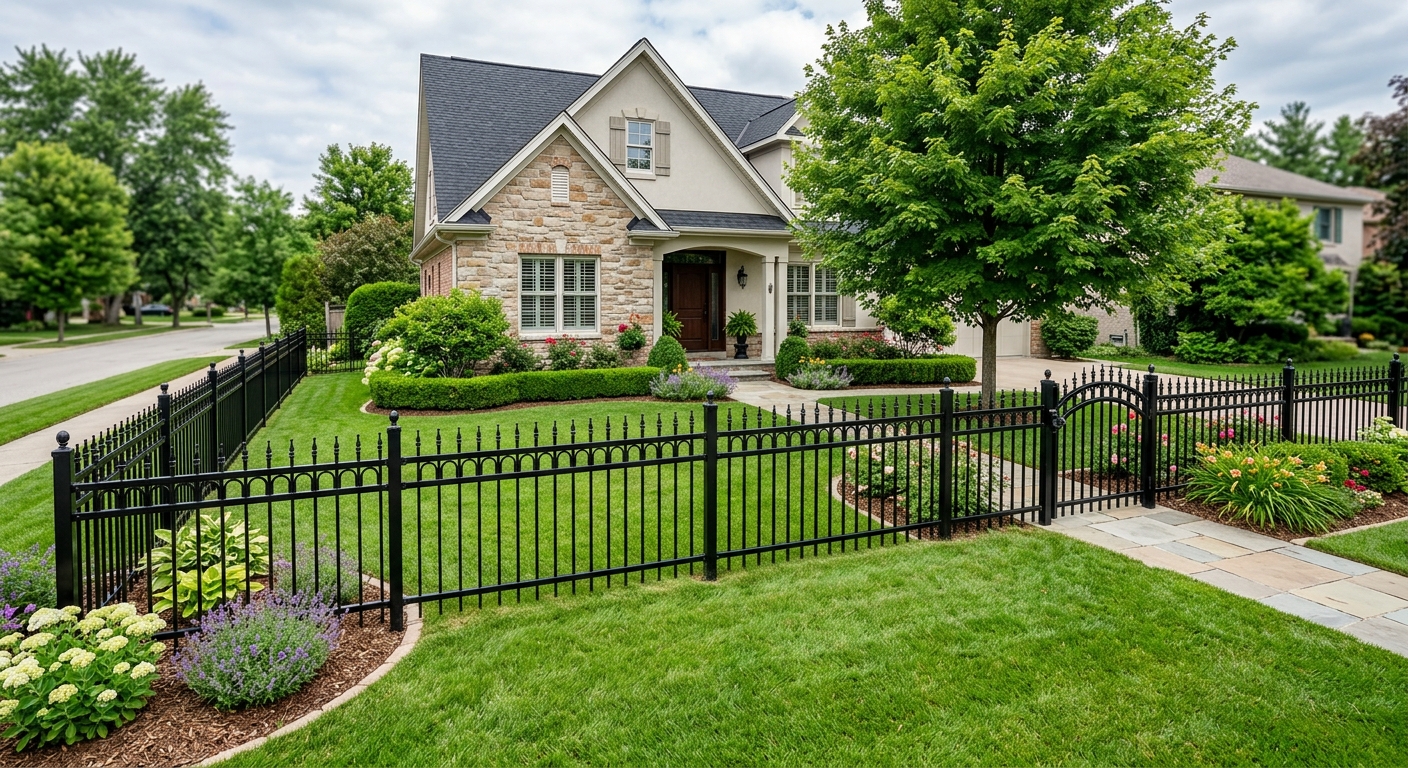
Fencing options and costs in Woodstock
Woodstock homeowners have real choices when it comes to fencing—especially given the local housing mix. With about 57.5% of dwellings being single-detached homes and homeownership sitting at 65.2% of households, there’s steady demand for both privacy fencing and yard boundary protection. Median household income is around $82,000 (Statistics Canada, 2021 Census), so most projects are planned around durability and predictable maintenance rather than “upgrade everything at once.”
In the London, Ontario area, pricing is shaped by freeze-thaw conditions. Fence posts need to be set below the local frost depth to reduce heaving, and that means longer posts, deeper digging, and often concrete setting in heavier or wetter soils. On top of that, yard access in neighbourhoods like Eastwood and Westwood can add labour time—tight gates, driveways, and mature landscaping all affect material handling and how efficiently a crew can dig and set posts. When you add gates (especially double-drive styles) and whether you need old fence removal, the same fence style can land in different price bands fast.
To compare common options at a glance, use the table below as a realistic Woodstock baseline—then we can dial pricing in once we know your length, gate count, soil conditions, and desired lifespan.
| Material |
Lifespan |
Maintenance |
Privacy Rating |
Price per Linear Foot |
| Pressure-treated pine (standard wood) |
10–15 years |
Stain/seal every 2–3 years |
High (solid board) |
$20–$35 |
| Cedar (natural rot resistance) |
15–25 years |
Light stain/finish as needed (typically every 3–4 years) |
High (solid board) |
$28–$45 |
| Vinyl / PVC (no-maintenance) |
20–30 years |
Minimal (rinse/clean; occasional panel fixes) |
Medium to High |
$25–$45 |
| Chain-link (galvanized steel) |
25–40 years |
Low (wash; tighten hardware) |
Low (open mesh) |
$15–$25 |
| Aluminum ornamental |
25–40 years |
Low (wash; touch up if needed) |
Low to Medium (open) |
$30–$55 |
| Composite / recycled material |
20–30 years |
Very low (clean; inspect posts) |
High (solid boards) |
$28–$50 |
Prices are estimates only and vary by project scope, site access and material selection.
What affects the price of fencing in Woodstock
In Woodstock (and across the wider London region), you can see the same basic fencing plan quoted 30–50% apart. The swing usually comes down to how crews handle the frost-depth reality—how deep posts are set, what soil you have, and whether concrete setting is required—plus practical jobsite factors like access, disposal, and whether gates are involved. Even two yards with identical “linear feet” can cost differently if one needs stepped panels for a slope or the other has clay-heavy ground that holds water and expands during freeze-thaw cycles.
Here’s the key: frost line depth drives post depth. In southern Ontario, fence posts are often buried about 3 feet deep, and many local guides treat 2.5 to 3 feet as a practical minimum. In colder winters, we typically plan for deeper embeds and longer posts so the bottom is below the frost action zone. That often means more excavation time, longer materials, and in many cases concrete setting to stabilize posts and reduce heaving.
Local examples from Woodstock jobs: (1) yards with heavier clay tend to require more concrete setting and careful spoil removal because holes “hold” water—labour increases; (2) older properties near busy streets often have limited side-yard access, slowing down digging and material staging; (3) if your fence line follows a slight grade change, stepped or raked panel layouts add labour and hardware. In budget planning, wood installs commonly land in the $40–$75 per linear foot range overall for wood fences, while vinyl/PVC projects often sit nearer $45–$80 depending on height, thickness, and post configuration.
| Price Factor |
Why It Matters |
Cost Impact |
| Fence length in linear feet |
Most costs scale directly with total run length (materials + labour). |
Very High |
| Post depth required |
Frost action determines hole depth to reduce heaving during freeze-thaw. |
High |
| Post setting method |
Concrete setting typically costs more than a gravel pack but improves stability in wet/heavy soil. |
High |
| Material choice |
Vinyl, cedar, chain-link, and aluminium have different material and hardware costs. |
High |
| Gate count and type |
Double drive gates and framed walk gates add hinges, latches, alignment time, and sometimes extra posts. |
High |
| Grade and terrain |
Slope needs stepped/raked panels, additional measurements, and more labour. |
Medium to High |
| Old fence removal and disposal |
Hauling, disassembly, and disposal fees add time and cost. |
Medium |
| Permit fees and survey / property line locate |
Boundary verification and any required documentation prevent costly rework. |
Low to Medium |
Permits & regulations in Ontario
In Ontario, fence rules generally hinge on height and where the fence is located relative to the street and property line. As a practical guideline, fences above roughly 2.0 m (6.5 ft) at the rear and about 1.0–1.2 m (3–4 ft) at the front or corner often require a building permit. Regardless of height, fences must respect property lines and any municipal setback requirements that apply to your lot and frontage.
Before any post hole is dug, call for utility locates through Ontario One Call. This is non-negotiable for homeowner safety and crew scheduling—nobody wants to hit buried services and delay a job. If you don’t already have clear boundary documentation, get a survey or at least a property pin locate so your new fence doesn’t encroach on a neighbour’s yard or utility easements.
Shared fence ownership is handled under Ontario’s line-fences framework, so if you’re building or repairing a fence that benefits both properties, there may be cost-sharing considerations. In terms of what does and doesn’t need a permit: typical straight replacement of a similar-height fence on the same line often avoids additional permitting, while building something materially taller, altering front/corner fence height, or changing fence location (especially near setbacks) is where permitting is commonly required.
To verify your contractor, ask for: (1) proof of Ontario business registration (as applicable) and any required trade licensing information they rely on; (2) a current certificate of insurance showing general liability and the right business name; and (3) proof of coverage/clearance for WSIB (Workers’ Safety and Insurance Board) if they have employees. Look for the certificate dates on the COI, request the clearance letter where relevant, and ensure the insured party matches the quote and contract.
Choosing the right fence material for Woodstock
Choosing a fence in Woodstock is mostly about matching material to the way you want your yard to perform through winter. Pressure-treated pine is the budget-friendly option up front, but it typically needs staining or sealing every 2–3 years to avoid grey weathering and surface breakdown. Cedar usually looks better and resists rot longer, yet it still benefits from periodic finish so it keeps its colour and resists moisture damage around post tops and rails. Vinyl/PVC is popular for low maintenance: once installed well, it’s typically wash-and-forget, but extreme cold snaps can cause cracking if posts aren’t set properly or if the system is underbuilt for frost movement. Chain-link is the longest-life value when you can live with low privacy, while aluminium ornamental provides a rust-resistant, attractive look at a mid-range cost.
Post depth matters in London-area soils. With frost-depth concerns, most installs here rely on posts buried about 3 feet (and sometimes deeper depending on conditions), with many projects using concrete setting where clay-heavy ground and moisture retention increase freeze-thaw movement. In wind-exposed runs, tighter framing and appropriate post spacing helps panels stay aligned through snow loads and seasonal movement.
Here’s a practical dollar example: if you’re comparing pressure-treated wood versus vinyl for the same privacy height, wood may fall around the wood fence range of $40–$75 overall (project pricing varies), while vinyl/PVC commonly lands closer to $45–$80. If you’re trying to minimize weekend maintenance and you want a longer service life, the vinyl premium can be justified—especially on fences that are hard to access for staining.
| Material |
Cold Tolerance |
Lifespan |
Annual Maintenance |
Best For |
Price Band |
| Pressure-treated pine |
Good if posts are set below frost action and top caps/drainage are done right |
10–15 years |
Inspect yearly; stain/seal every 2–3 years |
Lower upfront cost with planned maintenance |
$40–$75 |
| Cedar |
Good; performs well in wet/dry cycles when finished |
15–25 years |
Inspect yearly; finish typically every 3–4 years |
Natural look + better rot resistance |
$50–$90 |
| Vinyl / PVC |
Very good in cold if system is properly set and braced |
20–30 years |
Clean as needed; spot-fix hardware |
Low maintenance and long-term value |
$45–$80 |
| Chain-link |
Excellent; galvanized mesh tolerates Ontario winters well |
25–40 years |
Low; tighten/stretch hardware |
Security + budget + pet containment |
$25–$50 |
| Aluminum ornamental |
Excellent; powder coat resists salt-free winter wear |
25–40 years |
Low; wash off grime 1–2 times/year |
Attractive boundaries without rust |
$70–$120 |
| Composite / recycled |
Good; stable boards when installed on solid, deep-set posts |
20–30 years |
Very low; occasional cleaning |
Privacy + minimal upkeep |
$55–$95 |
How to choose a fencing contractor in Woodstock
When you hire a fencing contractor in Woodstock, verification matters just as much as price. Start with Ontario compliance: ask for a certificate of insurance (general liability) and confirm it’s current and matches the legal business name on the quote. If the contractor has employees, request proof of WSIB coverage/clearance and ensure it aligns with the work being quoted. Also confirm they are operating legitimately (business registration information) and that they provide written documentation rather than verbal assurances.
Next, get 2–3 itemised written quotes. You want line items for labour, posts and setting method (concrete vs. gravel pack), rails, pickets/panels, gate hardware, staining/sealing (if included), and disposal. Avoid lump sums that hide assumptions—especially for slope installs, gate framing, or utility clearance needs. Read the scope carefully: is permit pulling included (if required), and is old fence removal and haul-away in the price? If there’s no disposal allowance, you may pay twice via separate invoices.
Warranty should be specific: workmanship warranty length, what it covers (post movement, loose panels, hardware failures), and whether the manufacturer warranty on materials is separate. Ask if warranties are transferable if you sell your home. Payment schedule should be conservative: never more than about 10–15% upfront, and use a holdback until completion and final walkthrough. Finally, insist on a start date and a completion estimate in writing so winter weather won’t strand your project mid-build.
- Request a written quote with labour and materials broken out (not one global number).
- Confirm post setting method and depth plan for frost-heave risk.
- Ask how they handle clay-heavy or wet soil and whether concrete setting is included.
- Verify general liability insurance is active and request the COI before work starts.
- Confirm WSIB clearance/coverage if they have employees.
- Ensure disposal/removal of old fencing is explicitly included or excluded.
- Check if gate hardware supply and alignment are covered (walk-through and drive gates differ).
- Ask about slope handling: stepped vs. raked panels and how measurements are taken.
- Get confirmation of whether the fence line is based on a survey/property locate.
- Confirm warranty details: workmanship duration and material warranty terms.
- Use a payment schedule with only 10–15% upfront and a holdback at completion.
- Make sure the contract includes a start date and completion target.
In Woodstock, concrete red flags include: contractors who won’t show a current COI or WSIB information, quotes that omit post-setting details (depth and concrete vs. gravel), no written scope for gates and disposal, and promises like “we’ll guarantee it won’t move” without acknowledging frost action and soil conditions.
Frequently asked questions — fencing in Woodstock
Can I install a fence on a slope in Woodstock?
Yes—many Woodstock yards aren’t perfectly level, so sloped-fence layouts are common. The contractor typically uses stepped or raked panel methods so the fence looks straight and stays stable. The bigger concern than appearance is how the posts are set: even on a slope, each post hole still needs to be below frost action depth to reduce heaving during freeze-thaw cycles. That often means extra layout time and careful excavation so posts don’t end up shallow at the “low” end. If your quote is unusually low, it may be skipping this labour or assuming a simple straight-run installation.
When planning material choice, remember that wood can look great but requires finish maintenance (often every 2–3 years), while vinyl and composite systems are more forgiving on upkeep but still depend on deep, firm post set. If you’re budgeting, wood fence project pricing commonly lands within $40–$75 overall, and chain-link can be lower, depending on run length.
What is the most weather-resistant fence for Woodstock's climate?
For Woodstock’s Ontario winters, the “most weather-resistant” option usually depends on what you mean by weather: freeze-thaw movement, moisture, wind-driven snow, or rot. From a longevity and cold performance standpoint, vinyl/PVC, galvanized chain-link, and powder-coated aluminium tend to handle winter well because they don’t rot like untreated wood. However, vinyl’s long-term performance still depends on correct installation—posts must be set below frost action and the system needs proper bracing so panels aren’t stressed by soil movement. Cedar and pressure-treated pine can perform well too, but they require maintenance to keep moisture from degrading the wood.
If you want low maintenance and strong winter performance, vinyl/PVC is often the practical choice. In the London region market, vinyl/PVC projects commonly price around $45–$80, while chain-link often lands nearer $25–$50. If privacy is a must, chain-link may need privacy slats or an alternative material.
How do I prevent wood fence rot in Woodstock?
Wood rot is usually a moisture-management problem. To reduce rot in Woodstock, the two biggest factors are: (1) how the posts are set and (2) how water sheds from the fence system. Posts should be installed below frost action depth to reduce heaving that can crack the ground contact and create drainage issues around the base. When posts sit too shallow or aren’t stabilized in heavier, wetter soil, freeze-thaw movement can loosen them and allow moisture to linger around the bottom rails. That leads to faster deterioration.
For the wood itself, use pressure-treated lumber for the parts that contact moisture (and consider cedar for a better appearance and natural rot resistance). Apply a proper stain/seal schedule—pressure-treated wood often needs maintenance every 2–3 years, while cedar typically needs finish work every 3–4 years depending on sun exposure. Also, keep soil and mulch from piling against fence rails, and consider a gate/rail alignment check so gaps don’t trap water.
What is the cost per linear foot for fencing in Woodstock?
In Woodstock, fencing cost per linear foot depends on material, height, gate count, and post setting requirements for frost action. As a quick budgeting baseline for the London, Ontario region, wood installations typically fall around $40–$75 per linear foot. Vinyl/PVC commonly sits near $45–$80, chain-link often ranges about $25–$50, and aluminium ornamental can run roughly $70–$120. Your final price will be higher if the job includes old fence removal, multiple gates (especially drive gates), steep grading that needs stepped panels, or heavy clay that increases excavation and concrete setting time.
Because posts must be buried deep enough to prevent heaving during freeze-thaw cycles, the “cheap quote” risk is often missing post depth, concrete setting, or disposal. Always ask for an itemised breakdown, not just a per-foot number.
Should I repair or replace my old fence in Woodstock?
It’s often a good idea to repair when the fence line is mostly sound—posts are solid, rails aren’t extensively rotted, and damage is limited to a few bays or sections near gates where wear is common. Replace is usually the smarter option when you’re seeing widespread post looseness, significant rot at the base, repeated board failures, or leaning that indicates movement from frost action and ground conditions. In Woodstock’s climate, fences that were installed with shallow embeds may gradually loosen over winter cycles, meaning repairs can become “patchwork” that never fully stabilizes.
A practical approach: have a contractor inspect a representative section and estimate how many posts are beyond repair. If only 1–3 posts per run are compromised, you may reduce cost by re-setting or replacing those sections. If you’re dealing with many failing components, a full replacement may be closer to the best value long-term—especially if you plan concrete setting and deeper post embeds to prevent future heaving.
For budgeting, remember that wood fence replacement often aligns with $40–$75 overall, while vinyl/PVC can come in around $45–$80 depending on height and layout.
How do I handle a fence dispute with a neighbour in Ontario?
Fence disputes are common in Ontario, and the best approach is to keep things factual and documented. First, confirm your boundary: get a survey or a property-pin locate before moving forward, because “where everyone thinks the fence should be” is not enough when stakes are high. Next, review whether the fence is a shared boundary (line-fences rules can involve cost-sharing depending on circumstances). If Ontario permits apply due to height or location, don’t proceed without understanding local requirements.
When you talk to your neighbour, focus on solutions: agree on a layout that respects the property line and ensures stable post placement for frost movement. If damage is from a specific event, ask for written details from both sides. If you’re already in conflict, use a neutral, written scope of work from a contractor and consider mediation or legal advice rather than DIY “corrections” that could worsen encroachment issues.
In Woodstock, I also recommend keeping communication in writing and taking photos before any repairs—especially where old fence sections are shifted by freeze-thaw movement.