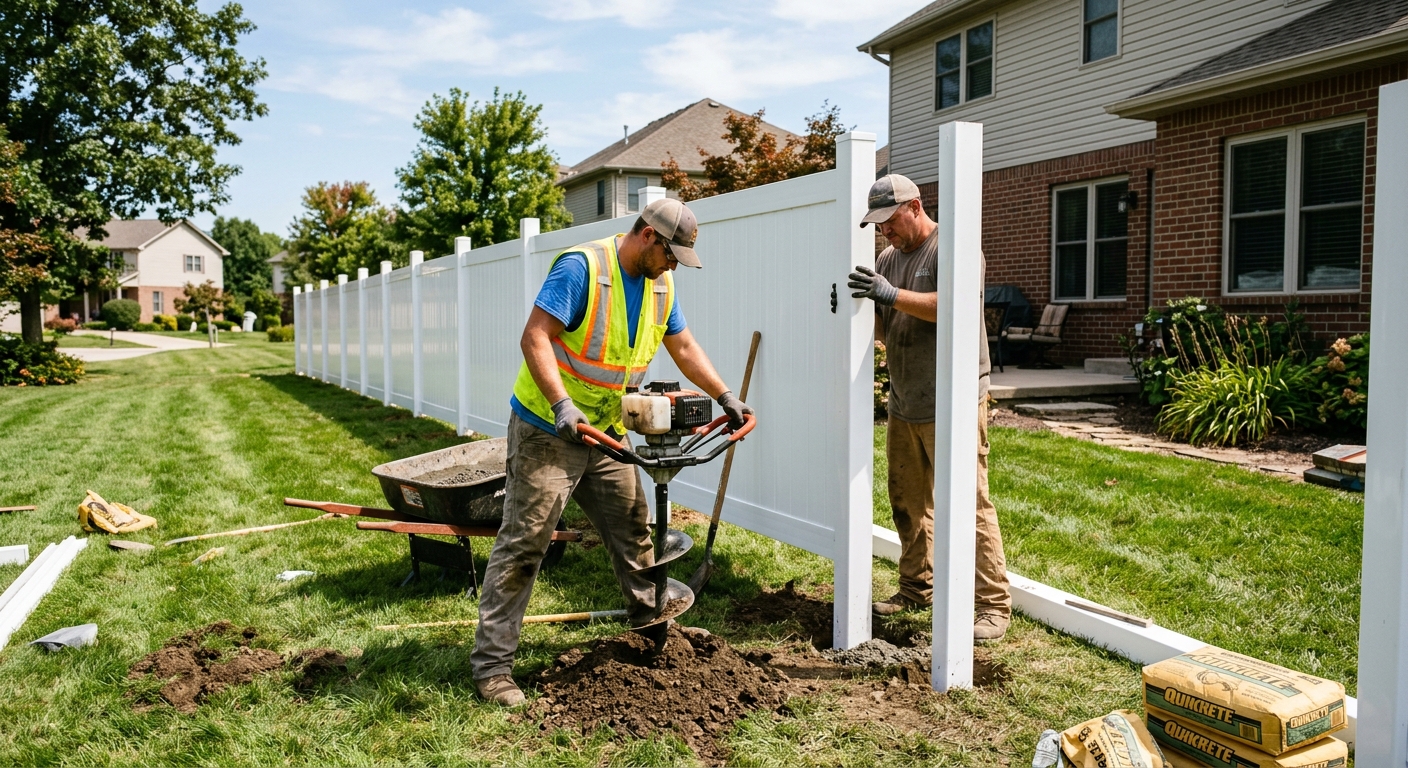
Fencing options and costs in Parry Sound
Parry Sound homeowners usually start with one big question: what will a new fence actually cost here? With 53.6% of local dwellings being single-detached homes and 59.8% of households owning (Statistics Canada, 2021 Census), demand is strongest where properties have side and backyard boundaries—exactly where fences see the most wear from weather, kids, pets, and snow-drift build-up. Another local reality is that 69.6% of homes were built before 1981 (Statistics Canada, 2021 Census), which often means older property layouts, mature trees close to lines, and more uneven ground where fencing requires extra labour for layout, levelling, and secure post spacing.
Costs in Parry Sound are shaped by Ontario winter performance, soil conditions, and contractor availability across the broader Northeast market. In this region, frost can push below the surface for extended periods, so posts must be set deep enough to reduce heaving and seasonal movement. At the same time, our lake-influenced winds can put extra strain on fence panels—especially tall privacy fences—so crews may tighten spacing and upsize hardware to keep fences straight after freeze-thaw cycles. That combination typically keeps wood and vinyl pricing above “cheap fence” expectations when the site needs proper concrete footings and careful alignment.
Where trade demand tends to be especially high is around downtown-adjacent residential pockets and shoreline properties—places such as Waubeek Street / the downtown core area, where lots are established and access for equipment can be tighter. From there, it’s an easy step into comparing materials side-by-side using current Parry Sound price bands.
| Material |
Lifespan |
Maintenance |
Privacy Rating |
Price per Linear Foot |
| Pressure-treated pine (standard wood) |
10–20 years |
Stain/seal every 2–3 years |
High (solid boards/rails) |
$80–$115 |
| Cedar (natural rot resistance) |
15–25 years |
Light staining every 2–4 years |
High (solid boards/rails) |
$95–$130 |
| Vinyl / PVC (no-maintenance) |
20–30 years |
Rinse as needed |
High (privacy styles available) |
$85–$140 |
| Chain-link (galvanized steel) |
25–40 years |
Occasional tension/patching |
Low to medium |
$55–$85 |
| Aluminum ornamental |
25–50 years |
Rinse/wash 1–2x per year |
Low to medium |
$95–$150 |
| Composite / recycled material |
25–35 years |
Minimal; wash and inspect annually |
High (solid panels) |
$110–$160 |
Prices are estimates only and vary by project scope, site access and material selection.
What affects the price of fencing in Parry Sound
Even when two neighbours request the same “6-foot privacy fence,” quotes across the Northeast and Ontario can vary by 30–50%. The biggest reason is that the fence isn’t just “materials”—it’s excavation depth, post spacing, hardware upgrades for wind, the number of gates, and how much time crews spend dealing with roots, slopes, and access. In older Parry Sound neighbourhoods with established lots and more mature landscaping, layout time alone can move a job up or down by hundreds.
Another major driver is frost protection. Frost line depth dictates how deep posts must be set—typically about 4–6 inches below the design frost depth—to prevent heaving. In colder Ontario winters, that commonly works out to posts going roughly 1.5–2.0 m into the ground, which means longer posts, more concrete, and sometimes belled holes to improve stability. If you’re comparing budget wood at the low end (say an $80–$115/linear foot band) versus cedar at the higher end (often closer to $95–$130/linear foot), the post-depth and setting details can be just as influential as the material itself.
Wind exposure also matters, particularly for privacy panels that act like sails when gusts are strong. When fencing has to resist racking, contractors may tighten post spacing or add bracing, which increases labour and sometimes shifts you toward chain-link or aluminum where appropriate. Concrete examples from Parry Sound that change the total: (1) a yard with soft, frost-susceptible soil usually increases concrete quantity and labour time; (2) a sloped lot may require stepped framing that adds time and off-cuts; (3) tight side-yard access near downtown homes can slow equipment, raising machine and labour hours. These are why the same length of fence can land in different price bands even if the finish looks similar on day one.
| Price Factor |
Why It Matters |
Cost Impact |
| Fence length in linear feet |
Everything scales with total run length, including posts, rails and labour hours. |
Largest driver; can change cost dramatically per foot. |
| Post depth required |
Frost protection determines hole depth, post length and concrete volume. |
Often adds significant material + excavation labour. |
| Post setting method |
Concrete vs gravel pack vs driven posts affects stability and longevity. |
Concrete setting usually costs more but reduces frost movement. |
| Material choice |
Vinyl and cedar typically cost more than chain-link; aluminum is mid-to-high. |
Shifts the job into higher or lower per-foot bands. |
| Gate count and type |
Gates require heavy hardware, reinforcement and extra framing. |
Double gates and heavier walk gates add notable labour. |
| Grade and terrain |
Slopes require raked or stepped sections to keep the fence level/plumb. |
Adds labour for layout, cutting and extra materials. |
| Old fence removal and disposal |
Demolition, hauling and disposal fees can be substantial. |
Can add time and dump costs to the estimate. |
| Permit fees and survey / property line locate |
Documentation and locating prevents encroachment and rework. |
May add a line item but prevents expensive disputes. |
Permits & regulations in Ontario
In Ontario, whether you need a permit often depends on fence height and location. As a practical guideline, fences above a height threshold—commonly around 2.0 m (6.5 ft) at the rear and 1.0–1.2 m (3–4 ft) at the front or corner—may require a building permit, and municipal setback rules can also apply. Even when a permit is not required, you must respect property lines and any applicable municipal bylaws for setbacks, sightlines near intersections, and corner visibility.
Before any digging, call for utility locates (Ontario One Call). That locate step is essential for post-hole excavation because damaged underground services can be dangerous and expensive. Also consider getting a survey or at least locating your property pins before you install—especially in older Parry Sound areas where fencing lines were often set decades ago and may not match the current lot boundary.
Shared fence ownership is addressed through Ontario line-fences principles. The key idea is that both property owners may share responsibility depending on how the fence is positioned and maintained.
Work that typically does require a permit: installing a fence over the common height thresholds and/or where municipal rules trigger permitting. Work that typically does not require a permit: replacing sections of an existing fence with the same height and footprint where it remains within bylaw limits.
To verify a contractor in Parry Sound, check: (1) an Ontario licensing/registration reference where applicable (ask for their business details and licence number), (2) their liability insurance certificate of insurance naming you as the certificate holder when appropriate, and (3) WSIB/WCB coverage—request the clearance letter or coverage proof and confirm the effective dates.
Choosing the right fence material for Parry Sound
Choosing a fence material in Parry Sound is mainly about matching your priorities—privacy, low maintenance, budget, and lifespan—to the way our winters and lake-influenced weather behave. Pressure-treated pine is usually the entry point. It’s a solid budget choice, but expect staining or sealing every 2–3 years to reduce grey weathering and help the surface resist rot. Cedar looks better over time and naturally resists rot, often holding up better in wet/damp seasons, though it still benefits from periodic staining for colour and longevity.
Vinyl/PVC is the “set it and forget it” option for many homeowners. It won’t need staining, but extreme cold can make some plastics more brittle if the system wasn’t installed correctly—proper post fastening, correct rail alignment, and realistic wind bracing all matter. Chain-link is the long-life, lowest-cost solution and can handle harsh freeze-thaw well, but it provides limited privacy unless you add slats or grow-through screening. Aluminum ornamental offers a clean, no-rust look and mid-to-long service life, though it’s typically decorative rather than fully private.
Post depth and setting method are just as important as material. Because frost can drive movement, posts often need to be set deep (roughly 4–6 inches below design frost depth) and many installs use concrete footings to reduce seasonal heaving. On windy runs, heavier solid privacy panels may require tighter spacing and stronger framing, which can narrow the price advantage of “cheapest material” options.
A practical dollar example: if pressure-treated pine lands around $80–$115 per linear foot, but cedar is closer to $95–$130 per linear foot, the premium can be worth it when you’re buying a longer-term boundary fence and want better appearance and rot resistance without jumping straight to vinyl. Conversely, if privacy isn’t essential, chain-link (often $55–$85 per linear foot) can be a smarter spend because you’re paying less for structure that will still survive winter well.
| Material |
Cold Tolerance |
Lifespan |
Annual Maintenance |
Best For |
Price Band |
| Pressure-treated pine |
Good if properly sealed and fastened |
10–20 years |
Inspect; re-stain/seal every 2–3 years |
Budget-focused privacy where you don’t mind upkeep |
$80–$115 |
| Cedar |
Very good; handles damp seasons well |
15–25 years |
Inspect; light staining every 2–4 years |
Attractive privacy with better natural resistance |
$95–$130 |
| Vinyl / PVC |
Good with correct installation and bracing |
20–30 years |
Rinse and inspect hardware annually |
Low-maintenance privacy and clean aesthetics |
$85–$140 |
| Chain-link |
Excellent for freeze-thaw durability |
25–40 years |
Inspect tension; occasional spot repairs |
Security fencing, pets, and long-run boundaries |
$55–$85 |
| Aluminum ornamental |
Excellent; no rust in wet winters |
25–50 years |
Rinse/ wash 1–2x per year |
Decorative front boundaries and durability |
$95–$150 |
| Composite / recycled |
Good; stable boards if installed per spec |
25–35 years |
Minimal washing; annual inspection |
Privacy with reduced maintenance expectations |
$110–$160 |
How to choose a fencing contractor in Parry Sound
Choosing the right contractor matters because fencing performance is mostly built into the details: layout, post setting depth, hardware selection, and workmanship that survives freeze-thaw. In Ontario, verify their coverage and credentials before you sign anything. For liability insurance, ask for a current certificate of insurance; confirm it covers fencing installation and is valid for the project period. For WSIB/WCB, request proof of clearance or coverage documentation and make sure the company name matches the quote. If they hesitate to provide these, move on—fencing mistakes can become expensive fast.
Next, get 2–3 itemised written quotes. Look for labour and materials separated (posts, rails, fasteners, concrete, gates, and any disposal). A lump-sum “estimate” without a breakdown makes it hard to compare and often hides add-ons like post-hole depth, rock removal, or fence removal. Read the scope carefully: is permit pulling included (if required), are utility locates included or confirmed by you, and is old fence disposal hauled away?
Warranty should be clear and written: confirm the workmanship warranty length (not just the product warranty), whether the manufacturer warranty is separate, and if the coverage is transferable to you as the homeowner. For payment, never pay more than 10–15% upfront; a holdback until the job is complete helps ensure quality punch-list items are finished. Finally, require the start date and completion estimate in writing so you have protection if weather slows the build.
- Request proof of WSIB/WCB coverage (clearance letter or equivalent) before scheduling.
- Ask for current liability insurance and verify dates and scope.
- Get an itemised quote listing posts, rails, fasteners, concrete, gates, and disposal.
- Confirm post-hole depth and footing method in writing for cold-weather stability.
- Check whether the quote includes utility locates and who contacts Ontario One Call.
- Confirm gate hardware type (hinges, latches, and reinforcement) and swing direction.
- Ask how they handle slopes (stepped vs raked) and what it costs if the grade changes.
- Clarify exclusions: rock, tree removal, damaged underground services, or hidden obstructions.
- Ensure there’s a workmanship warranty and that it’s not “best effort.”
- Agree on a payment schedule with only 10–15% upfront and a final holdback.
- Get the timeline in writing, including weather contingencies and site prep steps.
- Require final measurements and a layout plan before materials are ordered.
Red flags I see in Parry Sound: contractors who won’t put post depth in the contract, quotes that don’t break out labour vs materials, refusing to show WSIB/WCB or insurance documentation, asking for large upfront deposits, and vague warranty language that doesn’t specify workmanship terms.
Frequently asked questions — fencing in Parry Sound
How deep should fence posts be for Parry Sound's frost?
For Parry Sound, the practical rule is to set posts below the frost-affected zone to reduce heaving and seasonal movement. In most cold Ontario fence builds, that means digging roughly 4–6 inches below the design frost depth, which often works out to about 1.5–2.0 m depending on soil and lot conditions. Many reliable installs also use concrete-setting with proper footings (sometimes with belled holes) to improve stability during freeze-thaw. The depth requirement is a major reason fencing quotes can differ even when the fence height looks the same. If someone offers a cheaper “shallow post” install, expect more chance of wobble over a few winters.
Wood vs vinyl vs aluminum fence — which is best?
“Best” depends on whether you want maximum privacy, lowest upkeep, or a longer service life with minimal colour fading. Wood (pressure-treated pine or cedar) typically offers the most straightforward privacy builds, but wood requires periodic maintenance—staining/sealing every 2–3 years is common to keep it looking good. Vinyl/PVC is usually the low-maintenance privacy leader, while aluminum ornamental is more decorative and provides visibility rather than privacy. In Parry Sound, cold snaps and our long freeze-thaw seasons make proper post depth and hardware more important than material alone. For pricing: if you’re comparing vinyl at roughly $85–$140 per linear foot against pressure-treated pine at about $80–$115 per linear foot, the vinyl premium is usually easiest to justify when you want to avoid recurring staining.
Do I need a permit to build a fence in Ontario?
In Ontario, many fences can be built without a permit, but permits may apply when height thresholds and municipal rules are exceeded. A common guideline is fences over about 2.0 m (6.5 ft) at the rear and around 1.0–1.2 m (3–4 ft) at the front or corners may trigger permit requirements, and setbacks can also matter. In Parry Sound, always confirm with your municipality’s bylaw requirements before installation. Also note the utility-locate requirement: before any digging, call for locates through Ontario One Call to avoid damaging underground services. If a contractor says “no permits ever,” that’s a warning—your fence might still be subject to bylaw and permitting rules based on height and location.
How long does a wood fence last in Parry Sound?
With correct installation, wood fences in Parry Sound typically last about 10–20 years for pressure-treated pine and about 15–25 years for cedar. Actual lifespan depends heavily on post setting, concrete vs gravel backfill, and how often the boards are maintained. If posts are set too shallow for frost conditions, you’ll often see leaning and gaps sooner after several winters. If drainage is poor or boards are left unsealed, rot and fastener corrosion can accelerate during damp seasons. Homeowners sometimes assume maintenance is optional—yet quick re-staining every 2–3 years on pressure-treated pine can make a noticeable difference in appearance and durability. That’s also why cedar often costs more up front (often higher per-foot pricing), but can reduce the “keep up the maintenance” burden.
Who owns and maintains a shared fence?
In Ontario, shared fences are commonly governed by line-fences principles, but the exact responsibilities can vary depending on the fence location and how it functions for boundary separation. Practically, if a fence sits on or near the shared boundary, both neighbours may have duties related to maintenance, repairs, and costs—especially when the fence defines or protects both properties. The safest approach in Parry Sound is to confirm the layout with a survey or property-pin locate and document the existing fence agreement before replacing it. If you’re planning a full fence replacement, talk to your neighbour early about cost sharing, whether it’s “like-for-like” (same height/material) or an upgrade, and who will handle removal and disposal.
How do I find my property line before fencing?
Before you install, you need confidence that your fence is on your property line—not a guess based on old stakes or neighbour recollections. Start by locating your property pins or boundary markers; if you don’t have them or they’re unclear, order a survey or a professional property line locate. This matters because fences built even slightly over a boundary can trigger disputes and forced rework. In Parry Sound, where many homes are older, boundary evidence may be less obvious, so verifying pins is especially important. After you confirm the line, mark the fence run and gate locations, then plan post-hole locations accordingly. When you get quotes, ask contractors to account for the correct line and include how they’ll handle any small adjustments—so you don’t end up paying twice.