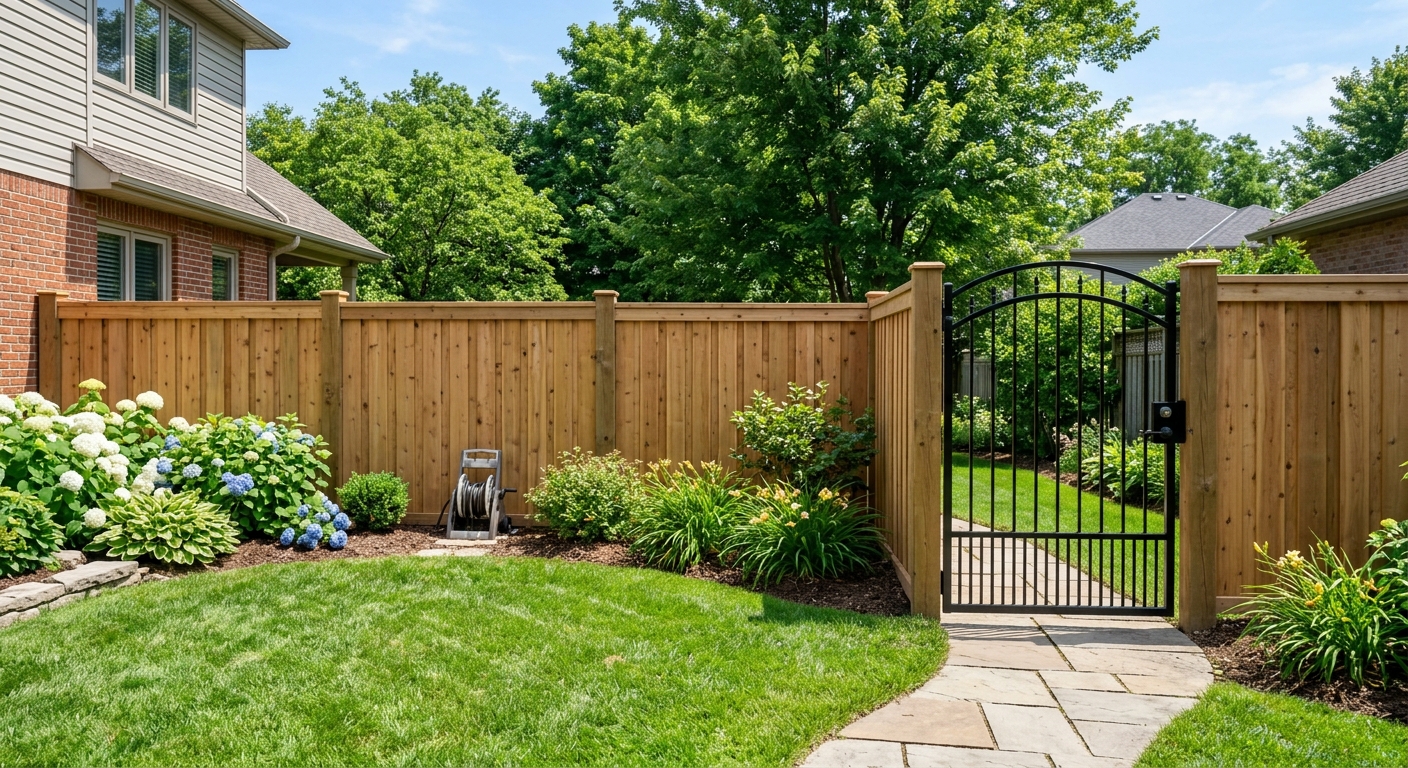
Fencing options and costs in Ajax
Fencing in Ajax, Ontario is a practical home upgrade for many neighbourhoods—especially where single-detached homes make up about 64.7% of dwellings (Statistics Canada, 2021 Census). With Ajax’s homeowner base (83.5% of households own), you’ll often see repeat business for property-boundary upgrades, back-yard privacy fences and gate work tied to seasonal use and growing families. The Toronto economic region also means contractors tend to stay busy year-round, but pricing still swings based on site conditions, scheduling, and material availability.
In Ajax, the biggest cost driver isn’t the fence style you choose—it’s how deep posts must be set for frost protection. In Southern Ontario, frost is commonly planned around a 42"–48" range, so many installs require concrete-set posts placed roughly 3.5–4 ft down (often deeper depending on soil and design). That adds labour time and ready-mix costs, particularly for taller 6–8 ft privacy fences. Solid panel fences also need enough post size and spacing to resist wind-induced racking, which is why heavier hardware and closer spacing are common around higher-exposure pockets of the GTA.
If you’re in areas like South Ajax—where lots are often older and yard renovations are frequent—you may notice more demand for concrete footings, gates, and fence replacement due to weathering and settlement over time. Below is a quick comparison of common material options and typical installed price bands, so you can match your budget to the level of privacy and upkeep you want before requesting an itemised quote.
| Material |
Lifespan |
Maintenance |
Privacy Rating |
Price per Linear Foot |
| Pressure-treated pine (standard wood) |
12–18 years |
Stain/seal every 2–3 years; inspect posts annually |
High (solid board designs) |
$65–$120 |
| Cedar (natural rot resistance) |
20–25 years |
Re-stain or protect every 3–4 years; fastener checks |
High (solid board designs) |
$75–$130 |
| Vinyl / PVC (no-maintenance) |
25–30 years |
Wash as needed; check rails in freeze-thaw seasons |
High (solid privacy styles) |
$75–$130 |
| Chain-link (galvanized steel) |
20–35 years |
Minimal; keep tensioned and touch-up at damage points |
Low–Medium (visibility through mesh) |
$45–$85 |
| Aluminum ornamental |
30–40 years |
Occasional wash; inspect latches and gates |
Low–Medium (open pickets) |
$90–$160 |
| Composite / recycled material |
20–30 years |
Very low; rinse and check hardware |
High (solid panels) |
$85–$145 |
Prices are estimates only and vary by project scope, site access and material selection.
What affects the price of fencing in Ajax
Even when homeowners in Ajax ask for “the same fence,” quotes can differ by 30–50% across the Toronto area because fencing is labour- and installation-method driven, not just material-driven. In practice, the gap often comes from post excavation depth, how posts are set (concrete vs. gravel pack vs. driven), the number of gates, and how much adjustment is needed for soil, slopes and property-line layout. The age of homes in the region also matters: in Ajax, 23.1% of homes were built before 1981 (Statistics Canada, 2021 Census), and older properties commonly have uneven lot lines, buried services, and fence remnants that add demo and re-marking time.
Toronto-area frost protection is a major reason costs climb in winter planning. If the design frost depth is roughly 42"–48", contractors typically set posts about 4–6 inches below the design frost line to help prevent frost heave. That often translates to 1.5–2.0 m into the ground, plus longer posts and more concrete in heavier 6–8 ft privacy fences. In addition, solid privacy fences must be built to handle wind loading; while the GTA isn’t as exposed as the Prairies, taller solid panels still need heavier posts and closer centres to resist racking and uplift.
Concrete examples that commonly raise costs in Ajax: (1) clay-heavy soil that needs extra excavation and careful backfill; (2) a gate on a slope requiring stepped framing and custom hinges; and (3) replacing sections where old posts have shifted, which can require re-location and added footing work. Conversely, trimming costs is possible when the line is straight, access is easy, and demolition is minimal—then you may stay closer to the lower end of the $45–$85 chain-link band or the $65–$120 wood band.
Below are the main pricing factors contractors should itemise so you can compare apples-to-apples across bids.
| Price Factor |
Why It Matters |
Cost Impact |
| Fence length in linear feet |
Most materials and labour scale directly with total run length. |
Largest driver; changes the baseline of any quote. |
| Post depth required |
Frost protection sets hole depth and post length. |
Deeper posts raise concrete, digging time, and waste. |
| Post setting method |
Concrete vs. gravel pack vs. driven posts affects stability. |
Concrete-set posts typically increase labour and material costs. |
| Material choice |
Vinyl/cedar/chain-link have different rail thickness and install complexity. |
Can swing you between mid-grade and premium installed pricing. |
| Gate count and type |
Hinges, latches and reinforced frames add labour and hardware. |
Each gate can add a noticeable fixed cost beyond linear fencing. |
| Grade and terrain |
Slope requires stepped or raked panels and additional framing. |
Increases cutting time and material off-cuts. |
| Old fence removal and disposal |
Scrap hauling, post extraction and site clean-up takes time. |
Often adds fees and may depend on accessibility. |
| Permit fees and survey / property line locate |
Locates and paperwork reduce boundary disputes. |
Usually smaller than materials, but can delay and add cost. |
Permits & regulations in Ontario
In Ontario, whether you need a permit for a fence often depends on height and location (rear yard versus front yard/corner). Many municipalities follow a practical threshold approach: fences above about 2.0 m (6.5 ft) in the rear yard and roughly 1.0–1.2 m (3–4 ft) at the front or corner often require a building permit. Even when a permit isn’t required, fences must be installed within the property line and respect municipal setback bylaws, including rules for corner lots.
Before you dig any post hole, you must arrange utility locates through Ontario One Call. This is non-negotiable—hitting buried service lines can create serious risk and unexpected costs. It’s also wise to obtain a survey or at least locate your property pins before installation, especially on older Ajax properties where previous boundary markers may have shifted. Shared fence ownership is governed by provincial line-fences legislation, so keep documentation and communicate in writing if a neighbour shares or relies on the fence location.
How to verify an Ontario contractor before you sign:
- Check licensing and business details via the appropriate Ontario online registry resources (for the contractor’s legal entity name).
- Request a certificate of liability insurance and confirm it matches the work location and has active coverage.
- Ask for proof of WSIB coverage (where applicable for the employer/worker setup) or provide the contractor’s status documentation; don’t accept “verbal confirmation.”
- Confirm they will pull permits when required and list who is responsible for permit fees on the quote.
Choosing the right fence material for Ajax
Choosing a fence material in Ajax comes down to matching priorities—privacy, low maintenance, budget, and lifespan—to how the Toronto area actually behaves seasonally. Pressure-treated pine is usually the most budget-friendly starting point, but it needs staining or sealing about every 2–3 years to slow grey weathering and protect the wood from freeze-thaw cycles. Cedar is more rot-resistant and looks better for longer, but it still needs periodic protection, especially where sprinkler overspray, damp shade, or snow storage keeps boards wet.
For the “set it and forget it” crowd, vinyl/PVC is a strong option: it typically requires no staining and minimal washing. The trade-off is higher upfront cost and the reality that materials and posts must be installed correctly to reduce stress in extreme cold. Chain-link is the longest-life, lowest-cost option for security and boundary definition, but it provides minimal privacy unless you add slats or plant screening. Aluminum ornamental is great for curb appeal and corrosion resistance, though it won’t block views the way a solid privacy board or privacy-screen style will.
In Ajax’s climate, post design matters as much as material. Because frost depth planning typically drives posts to be set around 3.5–4 ft (and often deeper depending on soil), most good installs rely on concrete-set posts for stability on privacy fences. That supports taller panel heights by helping reduce movement, which is critical for gate alignment and wind performance.
To see where price differences can be justified: if you’re deciding between wood around $65–$120 per linear foot and vinyl around $75–$130 per linear foot, vinyl can be cost-effective when you value consistent appearance over annual staining and want fewer maintenance interruptions around busy family schedules.
| Material |
Cold Tolerance |
Lifespan |
Annual Maintenance |
Best For |
Price Band |
| Pressure-treated pine |
Good with proper sealing; needs protection during freeze-thaw |
12–18 years |
Inspect yearly; stain/seal every 2–3 years |
Budget-focused privacy with routine upkeep |
$65–$120 |
| Cedar |
Good; naturally resists rot but still benefits from protection |
20–25 years |
Inspect yearly; re-stain or protect every 3–4 years |
Appearance + privacy with moderate maintenance |
$75–$130 |
| Vinyl / PVC |
Very good when installed with correct spacing and hardware |
25–30 years |
Wash as needed; check rails/hardware in winter |
Low maintenance privacy for Ajax homeowners |
$75–$130 |
| Chain-link |
Excellent corrosion resistance when properly galvanized |
20–35 years |
Minimal; tension checks and spot touch-ups |
Security + long service life on a tighter budget |
$45–$85 |
| Aluminum ornamental |
Excellent; non-rusting with proper powder coating |
30–40 years |
Occasional wash; check gate alignment |
Curb appeal with light visibility control |
$90–$160 |
| Composite / recycled |
Good; performs well with correct fastening and post design |
20–30 years |
Very low; rinse and hardware checks |
Privacy where you want less maintenance than wood |
$85–$145 |
How to choose a fencing contractor in Ajax
Choosing a fencing contractor in Ajax starts with verifying the essentials: Ontario business standing, liability insurance, and worker coverage (WSIB/WCB depending on the employer/worker situation). Ask for a certificate of liability insurance and make sure it’s current, covers fencing work, and lists the correct insured parties. For WSIB, request documentation that confirms coverage or applicable status for their employees/subcontractors—don’t rely on “we’ve always done it” answers. If the contractor is part of a larger construction crew, confirm they can provide the right paperwork for the specific job.
Next, get 2–3 itemised written quotes (not just a lump sum). A strong quote breaks down labour and materials (posts, rails, panels, gates, hardware, and finishes), and it clearly states post setting method and depth plan for frost stability. Read the scope for inclusions: is permit pulling included when required, is old fence demolition and disposal included, and are utility locate costs included or separately billed? Check warranty terms too—workmanship warranty length, product/manufacturer warranty, and whether warranties transfer if you sell the home.
Payment schedule matters. Never pay more than 10–15% upfront. Hold back a portion until the job is complete, gates are operating correctly, and the fence line is cleaned up and aligned. Timing should also be in writing: include a start date, estimated completion date, and what weather conditions could pause excavation or concrete work.
- Provide proof of insurance before quoting final costs.
- List exact fence height, panel spacing, and post size.
- State post depth and setting method (concrete vs. gravel pack).
- Confirm utility locate responsibility and scheduling.
- Include gate hardware grade and latch type in writing.
- Specify removal of old fence, including post extraction.
- Spell out disposal/haul-away fees and dump receipts approach.
- Clarify whether the quote includes permit pull (if required).
- Provide warranty length for workmanship and products separately.
- Show payment milestones tied to measurable completion steps.
- Include an itemised line for survey/locate if needed.
- Use a written schedule for concrete curing and gate adjustments.
In Ajax, red flags to watch for: a quote that won’t specify post depth or concrete-set footing details, pressure to pay a large deposit up front, vague scope text like “fence supplied and installed” with no heights or materials, refusal to provide insurance/coverage documents, and no clear plan for demolition/disposal or property line verification.
Frequently asked questions — fencing in Ajax
What is the most weather-resistant fence for Ajax's climate?
For Ajax (Ontario) weather durability, the most consistently weather-resistant options are typically vinyl/PVC privacy fences and well-built chain-link, provided posts are concrete-set to help prevent frost movement. Vinyl performs well through freeze-thaw cycles when installed with correct hardware and spacing, and it won’t rot like wood. Chain-link is also highly resilient against moisture and rot because it’s galvanized, though it won’t give you the privacy of solid boards. If you want maximum longevity with privacy, a quality vinyl privacy design often lands in the same broad band as many premium wood installs—around $75–$130 per linear foot depending on height, gate count and post requirements. Whatever you choose, the post depth and setting method are usually the deciding factor for long-term stability in Southern Ontario.
How do I prevent wood fence rot in Ajax?
To prevent wood rot in Ajax, focus on water management and post stability. First, make sure posts are concrete-set to reduce movement from frost heave; shifting posts leave gaps where water collects and accelerates rot. Second, choose boards and fasteners suited to treated wood use and corrosion conditions. Third, stain or seal on a regular schedule (often every 2–3 years for pressure-treated pine) so moisture doesn’t sit on the surface during damp spring and fall stretches. In shaded or low-spot yards, improve drainage and avoid placing sprinklers to directly wet the fence. Also, keep vegetation trimmed away from the boards so airflow can dry surfaces. If your budget is tight, pressure-treated can work, but it’s the most “maintenance-dependent” option compared to vinyl.
What is the cost per linear foot for fencing in Ajax?
In Ajax, fencing costs typically come in bands depending on material, height, gate count, and how posts are set for frost stability. For example, many homeowners fall into wood installation pricing around $65–$120 per linear foot, while vinyl/PVC privacy fences often sit in the broader $75–$130 per linear foot range. Chain-link usually starts lower, commonly around $45–$85 per linear foot, especially on straight runs with minimal gate work. Aluminum ornamental is usually higher, commonly around $90–$160 per linear foot. If your yard has a slope, requires extra footings, or needs demolition of an old fence, your per-foot pricing can skew toward the high end of the band.
Should I repair or replace my old fence in Ajax?
In Ajax, repair is often worth it when the fence posts are still solid and firmly set below the frost-influenced zone, with only sections suffering from board warping, loose fasteners, or minor damage. Replacement is usually the better value when you’re seeing multiple leaning posts, widespread base rot, repeated sagging rails, or problems with gate alignment (often linked to post movement). Another practical factor is disposal and labour: if an older fence has shifted significantly, it can take nearly as long to “patch” as to rebuild. For older properties (including many built before 1981 in the Ajax area), hidden settlement or buried remnants can complicate repairs. A contractor should evaluate post condition and setting method first—if posts have moved from frost effects, new concrete-set posts may be the most durable fix.
How do I handle a fence dispute with a neighbour in Ontario?
Fence disputes in Ontario are common, especially where the fence location is close to property lines. Start by confirming the exact boundary: a survey or property pin locate can prevent “it’s always been here” arguments. Keep communication calm and written—texts and emails help if the issue escalates. Because fence ownership and shared responsibilities can be governed by provincial line-fences legislation, you should understand whether your fence is truly on the boundary and what the neighbour’s role is. Also, check municipal rules before any work: height thresholds and setback requirements vary, and you must still call Ontario One Call for utility locates before digging. If an agreement can’t be reached, consult a professional mediator or seek legal advice on boundary and cost-sharing rather than starting demolition immediately.
What fence style offers the best wind resistance in Ajax?
In Ajax’s GTA climate, the best wind resistance usually comes from a properly engineered solid privacy fence using heavier post sizing and appropriate spacing—built to resist racking. Open styles like ornamental aluminum can catch wind through the pickets, but they typically experience less uplift because they create less resistance than a fully solid panel when installed with correct bracing. For solid fences, the key is design details: concrete-set posts to prevent movement, adequate post size, solid rails, and 6–8 ft spacing that suits your height and local exposure. Where yards have more exposure—like open corners or areas that channel wind—you may want a slightly more robust build than the minimum. For pricing, thicker hardware and closer post spacing can push you toward the higher end of common bands such as $65–$120 for wood or $75–$130 for vinyl depending on height and gate count.