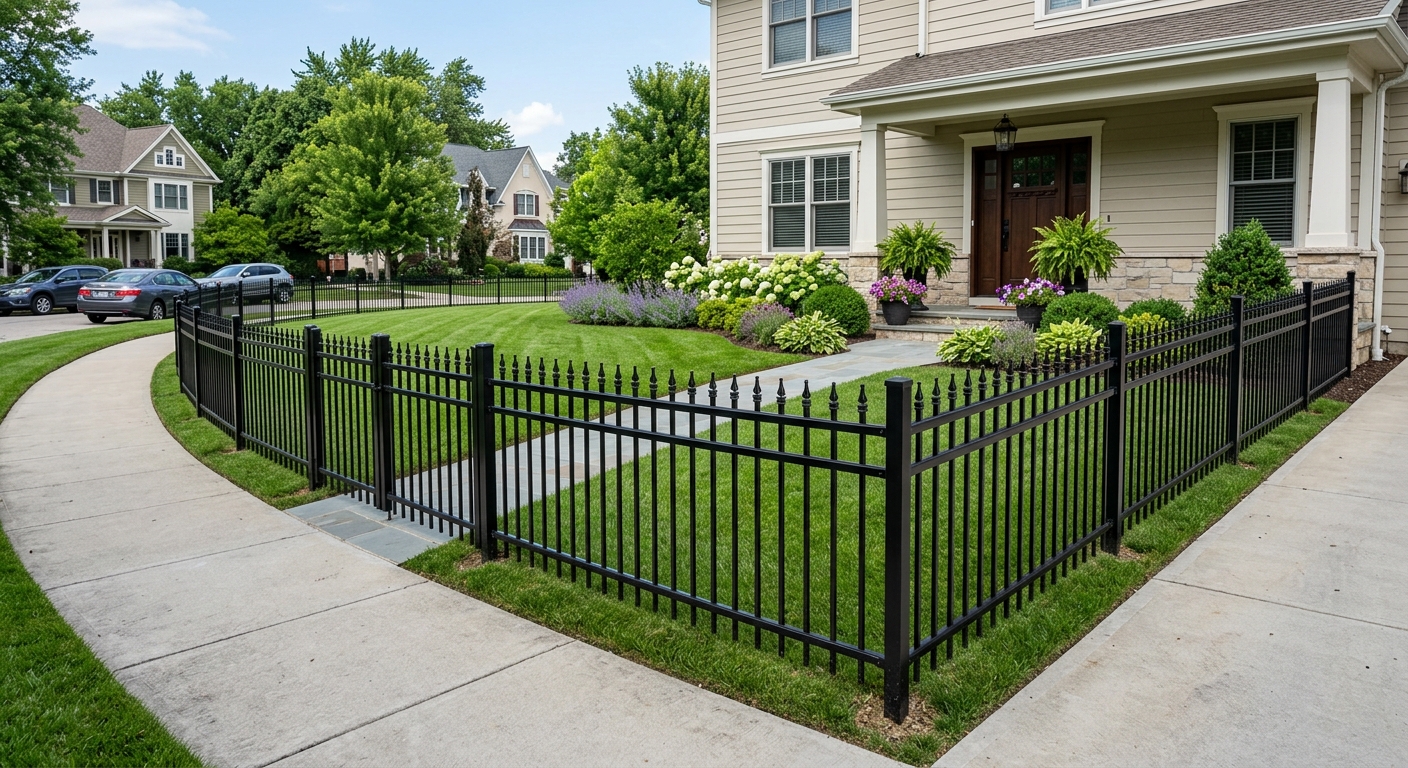
Fencing options and costs in Petawawa
Petawawa homeowners typically have strong reasons to invest in fencing—privacy, pets, and defining property edges—especially with a housing mix dominated by single-detached homes (70.4% of dwellings) and an ownership-heavy market (64.2% of households are homeowners) (Statistics Canada, 2021 Census). In practical terms, that means steady seasonal demand for both repairs and full fence replacements, with crews most booked around spring installs in areas like the West end and the Pembroke Road corridor where backyards are more accessible and lot lines are clearer.
In the Kingston–Pembroke economic region, pricing is pushed up or down by two local realities: frost depth and wind loading. Contractors commonly set posts below the design frost depth—about 36–48 inches (0.9–1.2 m) in Southern/Eastern Ontario practice—often requiring concrete-set posts and longer materials to reduce freeze–thaw heaving. Where soil holds water (common in clay/silty areas around the St. Lawrence influence), deeper auger holes and extra labour are typical, particularly for gates and structural sections. At the same time, areas exposed to stronger gusts near the Lake Ontario/Bay of Quinte zone can benefit from tighter post spacing or more open designs that reduce wind pressure, affecting both labour time and material selection.
Because Petawawa’s housing stock includes many homes built before 1981 (46.4%), older lots and existing fences often need removal and re-alignment before a new install, which can swing your total by a meaningful amount. Use the table below as a planning benchmark, then confirm your scope with an itemised quote.
| Material |
Lifespan |
Maintenance |
Privacy Rating |
Price per Linear Foot |
| Pressure-treated pine (standard wood) |
10–15 years |
Stain/seal every 2–3 years; fastener checks |
Medium–High |
$55 – $95 |
| Cedar (natural rot resistance) |
15–25 years |
Light staining or sealing every 2–3 years |
High |
$75 – $115 |
| Vinyl / PVC (no-maintenance) |
20–30 years |
Rinse occasionally; inspect for panel flex |
High |
$85 – $140 |
| Chain-link (galvanized steel) |
25–35 years |
Occasional wash; tension checks |
Low–Medium |
$40 – $80 |
| Aluminum ornamental |
25–40 years |
Rinse and spot-clean; no rust |
Low |
$95 – $160 |
| Composite / recycled material |
20–30 years |
Low maintenance; keep drainage clear |
High |
$90 – $155 |
Prices are estimates only and vary by project scope, site access and material selection.
What affects the price of fencing in Petawawa
In Petawawa and the broader Kingston–Pembroke economic region, two quotes for the same fence line can differ by 30–50% because the “hard costs” aren’t identical: post installation conditions, gate hardware, and whether contractors have to solve drainage and frost-heave risks. Ontario-wide, the labour market and current material pricing (lumber, PVC resin, and steel components) also influence how aggressive a contractor’s pricing needs to be to secure crews and equipment. When you compare wood versus vinyl or chain-link, remember that the ground conditions often matter as much as the panel type.
Frost line depth sets the post reality. Typical practice is to set posts about 4–6 inches below the design frost depth; in cold Ontario settings, that commonly means posts around 1.5–2.0 m into the ground, plus concrete setting for structural sections. That increases material length, labour time for augering, and concrete volume—so even a “mid-range” fence can price closer to the upper band. In windier scenarios, contractors may tighten post spacing and/or upsize posts and rails to reduce panel sway and fatigue. And while Petawawa isn’t coastal BC, the freeze–thaw cycle still punishes poorly treated wood: untreated surfaces weather quickly and can loosen boards if fasteners aren’t corrosion-rated.
Concrete examples from Petawawa scopes: (1) on clay-heavy backyards, we often see deeper holes and more concrete to stabilize posts, moving wood from about the mid part of the $55 – $95 band toward cedar or upgraded installations; (2) gate installs—especially double-drive gates—add heavier hardware and reinforced framing, which can push vinyl beyond the $75 – $140 range when concrete-setting and careful alignment are required; (3) sloped yards on older lots may need stepped fence lines, increasing layout labour and per-post cutting.
| Price Factor |
Why It Matters |
Cost Impact |
| Fence length in linear feet |
More posts, rails, and panels per run |
Largest driver; can change total by hundreds to thousands |
| Post depth required |
Frost-heave prevention dictates hole depth |
Deeper posts mean longer posts, more concrete, and longer labour |
| Post setting method |
Concrete vs gravel pack vs driven posts affects stability |
Concrete-set typically costs more but reduces movement and callbacks |
| Material choice |
Different hardware, installation method, and panel costs |
Vinyl/PVC and aluminum usually cost more than chain-link; cedar sits between |
| Gate count and type |
Double gates require heavier frames and bracing |
Gates commonly add a disproportionate amount versus a standard panel run |
| Grade and terrain |
Slopes require stepping or racking for proper alignment |
More layout time and cut labour; sometimes extra rails/posts |
| Old fence removal and disposal |
Demolition, haul-away, and re-leveling the line |
Can add significant labour and disposal fees |
| Permit fees and survey / property line locate |
Compliance and accurate layout reduce disputes and rework |
Varies by municipality needs and whether a survey is required |
Permits & regulations in Ontario
In Ontario, fences over certain heights commonly trigger a building permit requirement, especially near front/corner edges versus rear lots. A typical rule of thumb contractors follow is that fences taller than about 2.0 m (6.5 ft) at the rear and around 1.0–1.2 m (3–4 ft) at the front or corner may require a permit, depending on the applicable zoning/bylaw and your fence location. Regardless of height, fences must respect property lines and any municipal setback requirements.
Before you dig any post hole in Petawawa, call for utility locates through Ontario One Call so crews don’t hit underground services. If you don’t already know your exact line, obtain a survey or property-pin locate to confirm where the fence should sit. Shared fence ownership matters too—neighbour disputes are handled under Ontario line-fences principles, so documenting agreements (and photos of existing boundary conditions) is important.
What often DOES require a permit: higher fences near front/corner areas, fences that exceed the local height threshold, and projects involving structural/engineered features (for example, certain gate structures) where the municipality requests review.
What typically does NOT: like-for-like replacements that stay within the standard height limits and do not affect setbacks or require a variance—though you should confirm with the municipal office or your contractor before work starts.
To verify a contractor in Ontario, confirm (1) licensing/registration where applicable via the provincial or relevant trade registry your contractor references for fencing work, (2) liability insurance certificate (request “Certificate of Insurance” showing coverage amounts and your address listed if required), and (3) WSIB/WCB coverage—ask for a clearance letter or proof of account status and verify dates match your project timeline.
Choosing the right fence material for Petawawa
In Petawawa’s cold-winter conditions, the best material is the one that matches how much maintenance you’ll realistically do and how important privacy is. Pressure-treated pine is usually the budget choice, but it still needs attention: staining or sealing every 2–3 years helps prevent grey weathering and moisture-driven board warping. Cedar offers a better natural look and rot resistance, but it’s not “set it and forget it”; it typically needs periodic staining as well. Vinyl/PVC is the low-maintenance favourite for many homeowners, with good resistance to rot and easy rinsing, but extreme cold can make panels feel a bit more rigid—so quality installation details (proper spacing and secure post setting) matter. Chain-link delivers the longest service life per dollar, but it provides minimal privacy unless you add slats or plant coverage.
For Kingston–Pembroke frost conditions, post depth typically follows the same principle as in Ontario: set below the design frost depth to limit heaving, which usually means longer posts and often concrete-set structural posts and gate posts. That’s especially important for heavier privacy panels and any fence section that will take wind gusts off the lake-influenced direction. Snow load rarely “breaks” fences outright, but drifting and hidden ice can increase stress at lower rails if the base isn’t properly anchored and leveled on sloped lots.
A simple budget justification: if you’re deciding between chain-link at roughly $40 – $80 per linear foot versus a vinyl privacy fence around $85 – $140, the difference is usually justified when you need enclosed yard privacy year-round (and want to avoid repeated staining/repairs). If your priority is security and visibility rather than privacy, chain-link can be the smarter spend.
| Material |
Cold Tolerance |
Lifespan |
Annual Maintenance |
Best For |
Price Band |
| Pressure-treated pine |
Good (if well-stained and fasteners are rated) |
10–15 years |
Seasonal check; stain/seal every 2–3 years |
Budget privacy with willingness to maintain |
$55 – $95 |
| Cedar |
Good (naturally rot resistant) |
15–25 years |
Seasonal inspection; stain/seal every 2–3 years |
Attractive privacy and better weathering |
$75 – $115 |
| Vinyl / PVC |
Very good (proper spacing and quality install) |
20–30 years |
Minimal (rinse/inspect; no staining) |
Low-maintenance privacy |
$85 – $140 |
| Chain-link |
Very good (steel + galvanizing) |
25–35 years |
Occasional wash and tension checks |
Security on a budget |
$40 – $80 |
| Aluminum ornamental |
Excellent (won’t rust like steel) |
25–40 years |
Minimal rinse/spot-clean |
Curb appeal with boundary definition |
$95 – $160 |
| Composite / recycled |
Good (depends on manufacturer formulation) |
20–30 years |
Low; keep drainage clear |
Privacy with reduced maintenance |
$90 – $155 |
How to choose a fencing contractor in Petawawa
When you’re hiring for Petawawa, you want a fencing contractor who can prove coverage and builds for Ontario frost conditions, not just “install and move on.” Start by verifying Ontario trade/licensing details the contractor references for their work, then confirm liability insurance—ask for a current Certificate of Insurance showing adequate limits and (if applicable) that your property is covered for the duration. Next, verify WSIB/WCB coverage: request proof in writing (commonly a clearance letter or account status document) and ensure the policy dates cover your scheduled work window.
Get 2–3 itemised written quotes rather than one lump sum. The best quotes break labour and materials apart (posts, rails, panels, concrete, gate hardware, fasteners, removal/disposal) and specify whether the price includes permit pulling (if required), utility locating confirmation, and haul-away. Also confirm what’s excluded: rock removal, sidewalk/driveway restoration, utility repairs, property line surveys, and the handling of unexpected soil conditions.
Warranty matters too. Ask for the workmanship warranty length and what it covers (for example, post movement due to improper set depth), then separately note the product/manufacturer warranty. If you sell the home, ask whether the warranty is transferable.
On payment schedule, never agree to pay more than about 10–15% upfront. Hold back the remainder until the job is complete and final cleanup is done. Finally, insist on a written timeline with a start date and completion estimate so you can plan around Ontario weather windows.
- Request their liability insurance certificate before signing anything.
- Ask for WSIB/WCB clearance or equivalent proof with dates that match your project.
- Verify they include concrete-set depth details in the estimate, not just “posts installed.”
- Confirm who pulls any permit if your fence triggers requirements.
- Make sure utility locating is included or scheduled before digging.
- Ask whether old fence removal and disposal are included.
- Check whether gates include reinforcement and proper hardware (not “panel-only” pricing).
- Confirm materials grade: post thickness, rail sizing, and fastener type.
- Ensure the quote shows stepped/raked options for sloped yards.
- Require an itemised breakdown of labour vs materials.
- Ask for warranty terms in writing, including workmanship vs product warranty.
- Use a payment schedule with a holdback until completion and final inspection.
Red flags in Petawawa include: (1) quotes that don’t specify post depth or concrete setting in frost-prone ground, (2) asking for a large upfront payment beyond 10–15%, (3) vague scopes like “materials and installation” with no line-item hardware or disposal details, (4) no proof of WSIB/WCB or liability coverage, and (5) promising start dates without a written timeline or weather contingency plan.
Frequently asked questions — fencing in Petawawa
How do I handle a fence dispute with a neighbour in Ontario?
If you’re dealing with a fence dispute in Petawawa, start by keeping everything factual and documented. Take photos of the existing fence line, any damage, and where posts appear to sit relative to property pins (especially if your home is on a lot common to older builds, when boundary markers can be less obvious). If the disagreement is about where the fence should be, get a property-pin locate or survey rather than relying on verbal “we’ve always had it here.” In Ontario, shared fence ownership principles are handled under provincial line-fences rules, which can affect how costs and responsibilities are allocated. Before you escalate, try a written agreement outlining repair scope and cost sharing. If the neighbour refuses, keep records of all communications and request mediation through the appropriate community dispute process. A practical tip: avoid any “self-help” changes to the boundary until the line is clarified.
What fence style offers the best wind resistance in Petawawa?
For wind conditions common to the Kingston–Pembroke region, the “best wind resistance” usually comes from a fence that reduces sail effect and is built for structural movement control. Solid privacy panels can catch gusts, so contractors often recommend either reinforced post spacing and heavier rails for privacy styles, or slightly more open designs (like certain picket or lattice-free but breathable configurations) that let wind pass through. In Petawawa, the cold-weather freeze–thaw cycle makes post anchoring critical: even a well-designed panel fails if posts were set too shallow. A correctly installed vinyl privacy fence near the $85 – $140 band, with concrete-set gate posts and proper reinforcement, typically performs better than the cheapest “board-style” installs when wind gusts and snow/ice loads add stress. Ask your contractor how they design for post spacing, rail sizing, and bracing at gate locations.
How much does a fence cost in Petawawa?
Fence costs in Petawawa generally depend on linear feet, post depth (for frost), gate count, and material. As a planning benchmark, local installed rates commonly cluster near mid-to-upper provincial ranges: wood typically sits around $55 – $95 per linear foot, while vinyl/PVC often lands around $75 – $140 per linear foot. Chain-link is usually the lowest-cost option at about $40 – $80 per linear foot, and aluminum ornamental can run higher at roughly $95 – $160. For an average backyard run, differences can widen due to concrete-set posts required below frost depth and the additional labour for gates and difficult soils (clay/silty ground holding water can amplify freeze–thaw). Your final price can also rise with old fence removal and disposal, or if a survey/property line locate is needed to avoid encroachment disputes.
How deep should fence posts be for Petawawa's frost?
In Petawawa and across Southern/Eastern Ontario, a common practice is to set posts below the design frost depth to reduce heaving. That typically means posts set about 36–48 inches deep (0.9–1.2 m) in standard scenarios, but many contractors in Kingston–Pembroke specify deeper augered holes plus concrete-set posts in frost-prone or moisture-holding soils—often pushing to around 1.5–2.0 m effective post embedment for structural sections. The exact depth should be determined by site conditions (soil type, drainage, and how exposed the line is) and the contractor’s frost-protection method. Gates and end posts should always be treated as structural: they usually need concrete setting and stronger bracing. If you’re comparing quotes, make sure “post depth” is written clearly rather than assumed.
Wood vs vinyl vs aluminum fence — which is best?
The “best” choice in Ontario depends on your priorities. Wood (pressure-treated pine) is often the lowest upfront route, but you should budget for staining/sealing every 2–3 years to keep boards looking good and to resist moisture-driven weathering; it usually falls around $55 – $95 per linear foot for installed work. Cedar improves appearance and rot resistance but still needs periodic maintenance. Vinyl/PVC is a strong match for homeowners who want minimal upkeep; it typically runs about $75 – $140 per linear foot and performs well in freezing conditions when installed with correct spacing and well-set posts. Aluminum ornamental is excellent for longevity and curb appeal, but it doesn’t give privacy comparable to a solid board fence; it commonly starts higher, roughly $95 – $160 per linear foot. If you want privacy and low maintenance, vinyl is usually the most direct fit; if you want clean lines and durability without rust, aluminum is hard to beat.
Do I need a permit to build a fence in Ontario?
In Ontario, a permit may be required when fence height exceeds local thresholds, particularly near front or corner areas. A common guideline used by contractors is that fences over about 2.0 m (6.5 ft) at the rear and about 1.0–1.2 m (3–4 ft) at the front/corner may need a building permit, depending on the applicable municipal rules and where the fence sits. In Petawawa projects, it’s especially important to confirm height and location before you order materials. Also remember: fences must respect property lines and municipal setbacks. Before digging, call Ontario One Call for utility locates. If the job is on an older lot where pins aren’t obvious, a survey or property line locate can prevent encroachment disputes. Finally, shared fence situations may involve line-fence considerations—so documentation with your neighbour can matter as much as the permit.