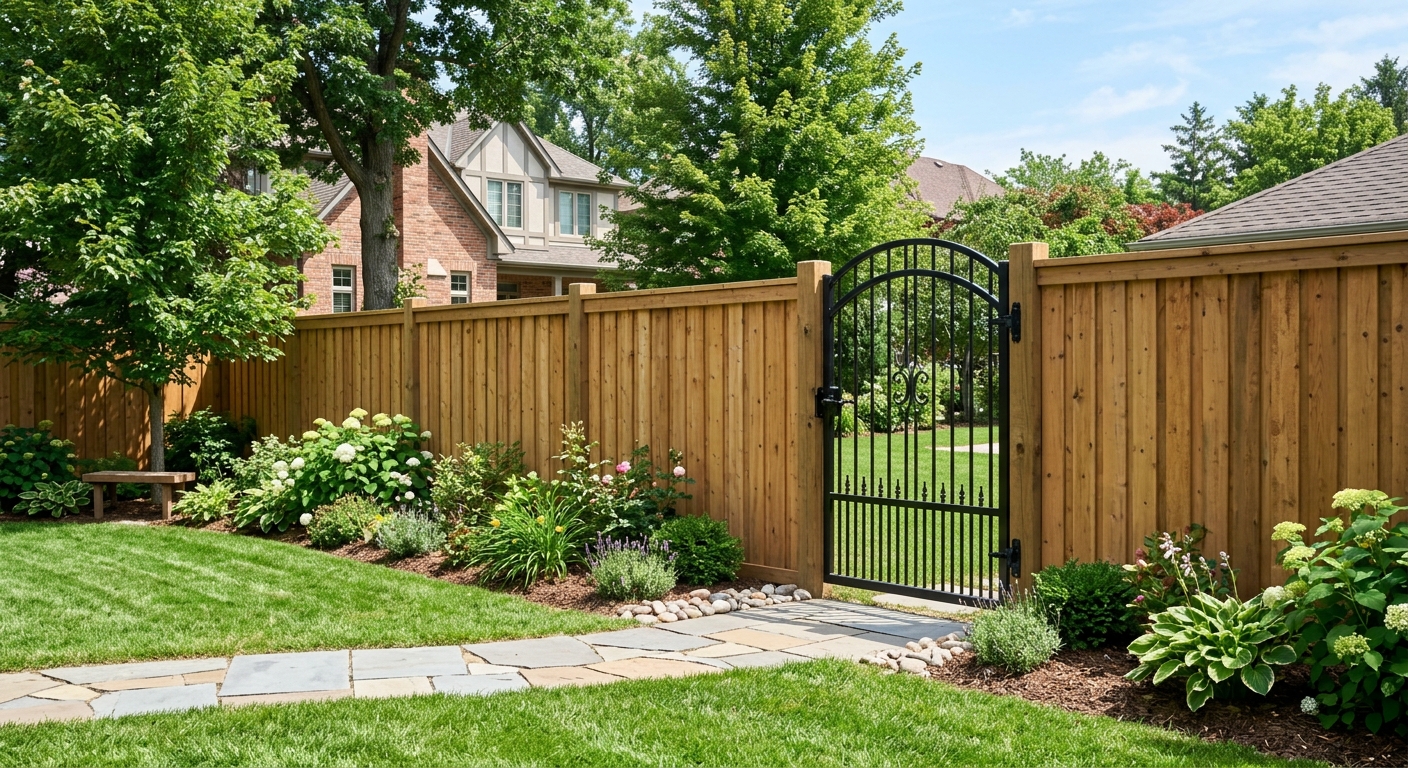
Fencing options and costs in Yorkdale-Glen Park
Yorkdale-Glen Park homeowners have a lot of options when it comes to fencing, but the “right” choice usually comes down to privacy needs, winter durability, and how often you’re willing to maintain boards. With a population of 14,804 (Statistics Canada, 2021 Census) and a neighbourhood mix that attracts families to established residential streets, demand tends to track ongoing home improvements and back-yard upgrades. In practice, each detached property is a potential fencing customer, and availability of local crews becomes a factor when many jobs are scheduled in spring and early summer.
In the Toronto economic region, fencing pricing is shaped by Southern Ontario freeze conditions and local build practices. The commonly used frost line range of about 42"–48" means fence posts typically need to be set 3.5–4 feet deep for most 6–8 ft privacy fences—especially where clay or mixed soils hold moisture. That depth increases concrete-setting labour and ready-mix usage, which is why many contractors recommend concrete-set posts rather than simple driven posts. Wind is not as punishing as the Prairies, but taller solid privacy fences still require properly sized posts and close enough spacing to resist racking and uplift after freeze-thaw cycles.
Trade demand is especially noticeable around mid-block residential pockets off Dufferin Street and the broader Yorkdale area, where backyards are frequently upgraded for privacy. Next, here’s a practical side-by-side comparison of common materials and what homeowners typically budget per linear foot.
| Material |
Lifespan |
Maintenance |
Privacy Rating |
Price per Linear Foot |
| Pressure-treated pine (standard wood) |
10–15 years |
Stain/seal every 2–3 years |
High (solid pickets) |
$65 – $110 |
| Cedar (natural rot resistance) |
15–25 years |
Light stain or oil every 3–4 years |
High (solid pickets) |
$75 – $120 |
| Vinyl / PVC (no-maintenance) |
25–35 years |
Occasional rinse only |
High (solid/v-board styles) |
$75 – $130 |
| Chain-link (galvanized steel) |
20–30 years |
Minimal; re-tension as needed |
Low–Medium (privacy slats optional) |
$45 – $85 |
| Aluminum ornamental |
25–40 years |
Occasional cleaning |
Low (open pickets) |
$90 – $160 |
| Composite / recycled material |
25–30 years |
Minimal; wash-down |
High (solid boards) |
$80 – $140 |
Prices are estimates only and vary by project scope, site access and material selection.
What affects the price of fencing in Yorkdale-Glen Park
In Yorkdale-Glen Park, two quotes for the “same” fence can still differ by 30–50% because contractors price for more than the material—access, post depth, soil conditions, and hardware all change the build time. The Toronto area also has seasonal scheduling pressure: once the spring thaw is complete, crews compete for labour and equipment, which can shift pricing within weeks even for similar fence lengths.
The single biggest cost driver is frost-related footing depth. In Southern Ontario, posts are commonly set about 4–6 inches below the design frost depth; in practical terms, that usually means posts going 1.5–2.0 m into the ground. When you’re building a 6–8 ft privacy fence, concrete-set posts are the typical best practice on clay and mixed soils, because the combination of freeze-thaw and moisture can move posts if they’re only gravel-packed. That extra digging, labour, and ready-mix can push a wood or vinyl job toward the upper end of the local band.
Toronto wind isn’t Prairie-level exposure, but racking still matters for solid panels. If you want a tall vinyl privacy fence, contractors often use heavier posts and tighter centres (often 6–8 ft) to keep the fence straight through winters. By contrast, chain-link stays closer to the lower end of the band because it’s lighter and less sensitive to racking.
Concrete examples from Yorkdale-Glen Park: (1) A backyard with clay that holds water usually increases footing prep time and may require more concrete per post, nudging a wood estimate from the middle of the $65–$120 band toward the higher range. (2) Installing along a busy access lane or with limited pathway clearance adds truck trips and labour time, which can make a vinyl job land closer to $75–$130 rather than the low end. (3) Adding two gates (especially a drive-through) can add both material and reinforcement time, often justifying a move from a “basic” chain-link budget ($45–$85) to a privacy-focused build.
| Price Factor |
Why It Matters |
Cost Impact |
| Fence length in linear feet |
Most materials and labour scale directly by length |
Largest driver; often the biggest change between quotes |
| Post depth required |
Frost line determines hole depth and required post length |
More depth increases labour + concrete + waste |
| Post setting method |
Concrete vs. gravel pack vs. driven posts affects stability |
Concrete-set typically adds cost but improves longevity |
| Material choice |
Different weights, fastening systems, and panel rigidity |
Vinyl/cedar tends to be higher than chain-link |
| Gate count and type |
Gates require bracing, hinges, and often thicker rails |
Walk gates add some cost; drive-through adds significantly |
| Grade and terrain |
Slopes may require stepped or raked panels |
Extra labour and additional hardware/bracing |
| Old fence removal and disposal |
Demolition time and haul-off charges |
Can be a meaningful add-on, especially with concrete footings |
| Permit fees and survey / property line locate |
Some fence heights and locations trigger permits or formal locate work |
Varies; incorrect property lines can cost more later |
Permits & regulations in Ontario
In Ontario, permits are often required when you’re building taller fences than the typical neighbourhood threshold. As a practical rule of thumb, rear-yard fencing around 2.0 m (6.5 ft) or higher commonly triggers a permit requirement, while front or corner-area fences are often more limited (commonly around 1.0–1.2 m or 3–4 ft). Your exact threshold can depend on location (front yard vs. rear yard) and how the fence is positioned, but you should plan for a permit if you’re aiming for a tall privacy fence in regulated areas.
Before digging any post holes in Yorkdale-Glen Park, call for utility locates through Ontario One Call to avoid hitting buried services. Then, verify your property line—ideally by obtaining a survey or at least locating property pins—so you don’t build on a neighbour’s land or into a setback. Shared fence responsibilities are governed by Ontario line-fences principles; in many cases, ownership and maintenance responsibilities depend on the agreement and the boundary arrangement, so it’s wise to confirm expectations in writing.
To verify a contractor, start with: (1) Ontario licence status—look for business registration/contractor information and any relevant trade authorizations; (2) certificate of insurance showing general liability with your work listed; and (3) proof of WSIB coverage or the appropriate WCB clearance letter (as applicable to Ontario’s coverage structure). Ask for current documents before work starts.
Choosing the right fence material for Yorkdale-Glen Park
Choosing a fence material in Yorkdale-Glen Park should match your priorities: privacy, low maintenance, budget, and how long you want to keep replacing boards. Pressure-treated pine is usually the lowest upfront option, but Toronto’s freeze-thaw cycles and wet periods mean you’ll typically need staining or sealing every 2–3 years to prevent grey weathering and premature surface decay. Cedar looks great and resists rot better in damp conditions, so it often lasts longer, but it still benefits from periodic staining to maintain colour and reduce checking.
Vinyl/PVC is the go-to for homeowners who want low upkeep. It won’t need staining, but extremely cold snaps can make some panels brittle if they aren’t installed with proper expansion gaps and good fastening practices. Chain-link is the longest-life low-cost solution for boundary security, yet it offers low privacy unless you add slats, trellis options, or privacy screens. Aluminum ornamental fences are durable and no-rust, but they’re also open by design, so they don’t deliver the same privacy as solid wood/vinyl.
For Toronto’s frost conditions, many contractors recommend concrete-set posts for privacy fences because posts need to reach roughly 1.5–2.0 m into the ground to manage frost heave risks. Taller solid fences also need stronger post sizes and tighter spacing to resist winter rack and spring settling. If you’re comparing budgets: a typical wood privacy build might start around the $65–$120 band, while vinyl often sits around $75–$130—so paying the extra for vinyl can be justified if you value years of minimal maintenance and want to avoid repeated staining labour.
| Material |
Cold Tolerance |
Lifespan |
Annual Maintenance |
Best For |
Price Band |
| Pressure-treated pine |
Good (with proper sealing) |
10–15 years |
1–2 small treatments; staining/seal every 2–3 years |
Budget privacy with acceptable upkeep |
$65 – $120 |
| Cedar |
Good (rot resistance) |
15–25 years |
1 inspection; stain/oil about every 3–4 years |
Premium look and natural longevity |
$75 – $120 |
| Vinyl / PVC |
Very good (proper install for cold) |
25–35 years |
Minimal—rinse and check hardware |
Low-maintenance privacy |
$75 – $130 |
| Chain-link |
Very good |
20–30 years |
Minimal—re-tension and occasional repairs |
Security on a tighter budget |
$45 – $85 |
| Aluminum ornamental |
Excellent |
25–40 years |
Minimal—wash and check alignment |
Curb appeal and durability |
$90 – $160 |
| Composite / recycled |
Good (colour stability varies) |
25–30 years |
Minimal—wash-down; periodic check for fastening |
Solid appearance with reduced upkeep |
$80 – $140 |
How to choose a fencing contractor in Yorkdale-Glen Park
When you hire a fencing contractor in Yorkdale-Glen Park, verify three things early: licensing/registration (as applicable to the work), liability insurance, and WSIB/WCB coverage. For liability insurance, ask for a certificate of insurance showing your project address or that the policy covers the type of fencing work being installed. For WSIB/WCB, request the current clearance letter or confirmation that subcontractors are covered—this helps protect you if a worker is injured on your property. If the contractor can’t provide clear documents on request, that’s a major warning sign.
Next, get 2–3 itemised written quotes. You want a line-by-line breakdown that separates materials from labour, and ideally lists post depth and post setting method (concrete-set vs. gravel pack vs. driven). A “lump sum” quote can hide differences—one crew may assume fewer posts or a lighter gauge, while another may price the correct frost-depth footing and hardware.
Read the scope carefully: what is excluded (old fence removal, hauling/disposal, landscaping repairs, gate reinforcement, permits)? Ask whether permit pulling is included or billed separately. Confirm warranty terms separately for workmanship and product/manufacturer components, and ask if warranties are transferable to you as the homeowner.
Payment scheduling should be conservative: never pay more than 10–15% upfront, and use a holdback until the fence is complete and measured to plan. Get the start date and completion estimate in writing so spring scheduling doesn’t turn into endless delays.
- Ask for proof of liability insurance (certificate dated and current).
- Request WSIB clearance letter or equivalent WCB proof before work begins.
- Confirm post-depth plan that matches Toronto frost best practice (often 1.5–2.0 m for privacy fences).
- Get an itemised quote listing posts, rails, pickets/panels, hardware, and concrete/footings.
- Verify whether old fence removal and disposal are included.
- Confirm gate reinforcement (hinge posts, latch hardware, and whether rails are thicker).
- Ask how the contractor handles sloped yards (stepped vs. raked panels).
- Ensure utility locates are arranged before any digging.
- Check if a permit/locate is included in the price or excluded.
- Review workmanship warranty length in writing (and what counts as a defect).
- Schedule a site walkthrough so dimensions match the quote.
- Use milestone payments: small deposit, progress payments, and final holdback.
Red flags in Yorkdale-Glen Park: contractors who won’t show insurance/WSIB paperwork, quotes that omit post depth or concrete setting details, promises of “driven posts will be fine” for tall privacy fences, unclear gate hardware specs, and crews who ask for most of the money upfront without a written completion plan.
Frequently asked questions — fencing in Yorkdale-Glen Park
How long does a wood fence last in Yorkdale-Glen Park?
In Yorkdale-Glen Park and across Ontario’s freeze-thaw zone, a wood fence lifespan depends on material and maintenance. Pressure-treated pine commonly lasts around 10–15 years, mainly because boards need periodic sealing/staining to reduce grey weathering and surface cracking. Cedar typically lasts longer—often 15–25 years—because it resists rot better in damp seasons, but it still benefits from periodic staining or oil to maintain performance. The biggest longevity lever is also the footing: privacy fences should use proper post setting (often concrete-set) so posts don’t heave after winter. If you’re budgeting, wood installation often falls in the $65 – $120 range; choosing cedar and planning basic maintenance generally protects that investment.
Who owns and maintains a shared fence?
In Ontario, shared fence ownership and maintenance can be more nuanced than people expect. Typically, the fence is treated as a boundary structure with shared responsibilities depending on who owns which side of the property and how the line-fence arrangement was established. Practically, the best approach in Yorkdale-Glen Park is to confirm the boundary and then agree on maintenance responsibilities in writing—especially if you’re replacing an existing fence. Before spending money, check whether your fence is fully on your property or partly on a shared boundary, and consider discussing replacement timing with your neighbour. If disputes arise, a survey/property pins can help clarify location before any demolition or new post holes are dug. For permits, any fence height requirements should be checked before you start.
How do I find my property line before fencing?
Before you install posts in Ontario, confirm the property line to avoid encroachment and neighbour disputes. Start by locating your property pins from the last survey if you have it. If you don’t, consider ordering a survey or property locate so you have accurate boundary confirmation. Yorkdale-Glen Park lots vary in shape and existing fences can drift over time, so don’t assume the current fence is the true line. Also, call for utility locates (Ontario One Call) before digging any holes—this is required best practice and prevents dangerous service hits. Once you know the line, share the marked reference with your contractor so the quote matches where posts will actually be set.
What's the most low-maintenance fence?
For low-maintenance, vinyl/PVC is usually the easiest option in Yorkdale-Glen Park because it doesn’t require staining like wood. With proper installation—including correct fastening and expansion considerations for cold snaps—you can typically expect only occasional rinsing and hardware checks. Aluminum ornamental can also be very low maintenance (no rust, simple cleaning), but it won’t provide the same privacy as a solid privacy fence. Chain-link is also low maintenance, but it’s not private unless you add privacy slats or screens. If you’re comparing budget trade-offs, vinyl often lands in the $75 – $130 range, while wood frequently starts around $65 – $120; paying the higher vinyl band can be worth it when you want to avoid recurring staining labour every 2–3 years.
How tall can my fence be in Yorkdale-Glen Park?
Fence height limits depend on where the fence sits on the lot (front yard, corner area, or rear yard) and local bylaws. A common Ontario guideline is that rear-yard fences around 2.0 m (6.5 ft) or higher may require a building permit, while front or corner fences often have more restrictive height limits (commonly around 1.0–1.2 m or 3–4 ft). Because Yorkdale-Glen Park has many mature residential lots and boundary conditions, the exact permit need can vary by location and height. If you’re planning a tall privacy fence, ask your contractor to confirm whether permits are required before installation. Also remember: even with permits, the fence must respect property lines and any municipal setback rules.
Should fence posts be set in concrete here?
For most tall privacy fences in Ontario—especially in areas with clay or mixed soils—concrete-set posts are the most reliable approach to reduce the risk of frost heave. Yorkdale-Glen Park follows the Southern Ontario frost line logic (commonly estimated around 42"–48"), so posts often need to be set roughly 1.5–2.0 m into the ground for stable results. That typically means longer posts and more excavation, plus concrete at the base—costs that many homeowners see reflected in the quote. While some contractors will propose gravel packs or driven methods, a properly designed concrete set is the safer long-term choice for 6–8 ft privacy fences in the Toronto region. If your quote is unusually low for a tall privacy fence, ask whether post depth and concrete setting are included, and request the details in writing.