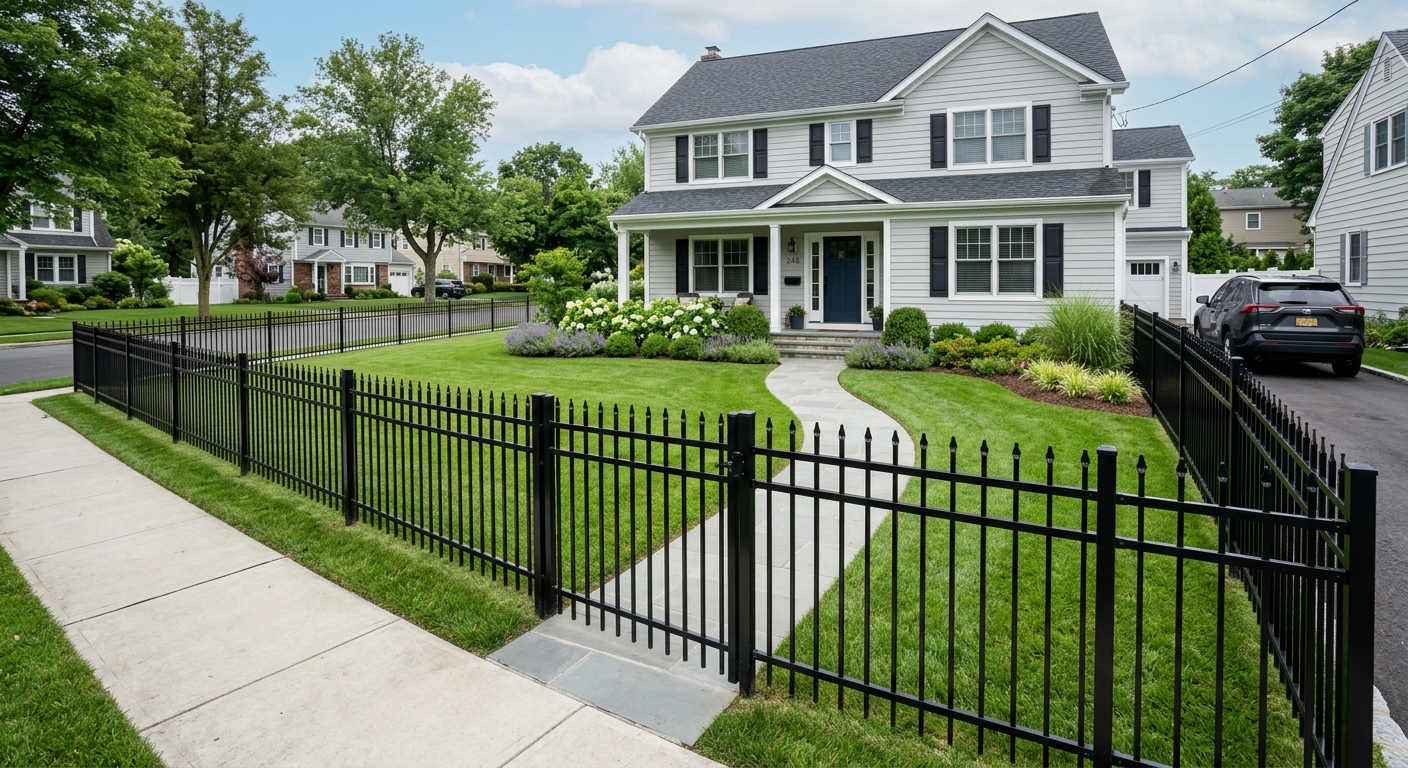
Fencing options and costs in Fenelon Falls
Fenelon Falls homeowners often start with a simple question—“what will it cost?”—but the answer depends on how your yard and your material match the conditions around the Toronto economic region. With a small local population of 1,915 residents (Statistics Canada, 2021 Census), demand is driven by steady turn-over of family properties and routine upgrades rather than constant new builds, so budgeting with realistic contractor lead times matters. In areas like the Village/Centre Hastings St. corridor, where lots are closer together, privacy upgrades and boundary refinishing are especially common.
Toronto-area frost considerations also shape fencing pricing: the design frost depth in Southern Ontario typically means posts need to be set roughly 3.5–4 ft down (and often 4–6 inches below the design line), particularly for taller 6–8 ft privacy fences. Add concrete-set footings for stability on mixed soils, and labour hours plus ready-mix costs rise. That same approach is why two fencing quotes can differ—one contractor may plan concrete-set posts and heavier hardware from the start, while another may propose faster (but less stable) methods.
Finally, availability and crew efficiency play a role. When schedules are tight across the Toronto region, installers may prioritize accessible runs and standard layouts first, changing both labour time and installation cost.
Below is a practical cost comparison to help you align materials with lifespan and maintenance, and then confirm the exact scope in a written quote.
| Material |
Lifespan |
Maintenance |
Privacy Rating |
Price per Linear Foot |
| Pressure-treated pine (standard wood) |
10–15 years |
Stain/seal every 2–3 years |
Good to very good (solid pickets) |
$15–$30 |
| Cedar (natural rot resistance) |
15–25 years |
Light staining/cleaning every 2–4 years |
Very good (solid pickets) |
$18–$36 |
| Vinyl / PVC (no-maintenance) |
20–30 years |
Rinse with hose; occasional cleaning |
Very good (solid panels) |
$22–$40 |
| Chain-link (galvanized steel) |
25–40 years |
Occasional rinse; tighten hardware as needed |
Low (privacy requires inserts) |
$12–$22 |
| Aluminum ornamental |
30–40 years |
Rinse annually; no painting typically |
Low to moderate (most are decorative) |
$20–$45 |
| Composite / recycled material |
25–35 years |
Rinse; minimal spot repairs |
Very good (solid styles) |
$25–$48 |
Prices are estimates only and vary by project scope, site access and material selection.
What affects the price of fencing in Fenelon Falls
In Fenelon Falls and across the wider Ontario market, two homeowners can receive quotes that vary by 30–50% for what looks like the “same fence” because the expensive parts are often hidden: post depth, post setting method, hardware grade, and how much time it takes to work around gates, slopes, and obstacles. In an Ontario context, contractors also price for risk—frost-driven movement, soil conditions, and cleanup/disposal—so scope wording matters as much as the material label.
Post depth is the biggest driver tied to the Toronto economic region’s climate. When the frost line is roughly 42"–48", posts are typically set a minimum of 3.5–4 ft down, and you’ll often see the plan call for concrete-setting to reduce frost heave risk. In practical terms, that means deeper holes, longer posts, and higher concrete and labour time. A 6–8 ft privacy fence in solid wood or vinyl can therefore land closer to the upper end of the local bands (for example, wood typically sits around $65–$120 installed depending on method and access).
Wind still matters even without Prairies-level open exposure. Privacy panels need appropriate post sizing and spacing to resist racking. While BC’s coastal wet climate can accelerate untreated wood rot, Fenelon Falls still sees freeze-thaw cycles that penalize poorly treated boards—especially when the bottom rails trap moisture.
Here are a few local examples of cost ups and downs: (1) a straight run on accessible ground usually keeps labour efficient; (2) a yard with a slope often requires stepped or raked sections, adding layout time and extra rail/posts; (3) removal of an old fence with buried posts can add disposal and excavation time; and (4) gate hardware and alignment add labour even when the fence “length” stays the same. If you’re comparing vinyl at the $75–$130 band to cedar or pressure-treated wood, the justified difference is often the reduced maintenance visits and longer service life on properly concrete-set posts.
| Price Factor |
Why It Matters |
Cost Impact |
| Fence length in linear feet |
Most materials and labour scale directly with length. |
Largest single variable; can swing overall cost widely. |
| Post depth required |
Frost line determines hole depth and required post length. |
Deeper holes raise excavation time and material cost. |
| Post setting method |
Concrete improves stability versus gravel pack or driven-only methods. |
Concrete-set posts typically increase labour and ready-mix costs. |
| Material choice |
Different systems require different posts, rails, and fasteners. |
Vinyl and cedar cost more than chain-link; aluminum sits mid-range. |
| Gate count and type |
Gates need stronger posts, hinges, and alignment hardware. |
Walk-through and double drive-through gates cost extra per opening. |
| Grade and terrain |
Slopes often require stepping, racking, or custom rail alignment. |
More layout time and added hardware; can raise cost noticeably. |
| Old fence removal and disposal |
Unfastening, hauling, and grinding buried anchors adds time. |
Can add hours plus dump fees depending on disposal route. |
| Permit fees and survey / property line locate |
Site verification prevents encroachment and rework. |
Upfront costs; avoids expensive corrections later. |
Permits & regulations in Ontario
In Ontario, fence permitting depends heavily on height and location. As a rule of thumb, fences above about 2.0 m (6.5 ft) at the rear and 1.0–1.2 m (3–4 ft) toward the front or at corners are often the types of projects that may require a building permit. Setbacks still matter: fences must respect property lines and municipal setback rules, and they can’t be placed where they obstruct utilities or sightlines.
Before you dig post holes anywhere in Fenelon Falls, call for utility locates through Ontario One Call. That’s non-negotiable—hitting underground services is both dangerous and expensive. Next, get a survey or a property pin locate so you’re installing on the correct boundary. Shared fence ownership rules are addressed under provincial line-fences legislation, but the practical takeaway is simple: confirm who maintains what, and document it before removing or replacing.
What typically DOES require a permit: taller fences (especially those exceeding common thresholds), and situations where the fence could affect sightlines or encroach due to lot configuration.
What typically does NOT: replacing an existing fence that stays within the same height limits and setbacks, or installing lower decorative fencing that remains under local thresholds.
To verify your contractor in Ontario, check three things: (1) the Ontario business/contractor licence information (through the applicable registry your contractor should reference in their paperwork), (2) a current certificate of insurance with general liability showing adequate coverage for fencing work, and (3) coverage for worker protection—WSIB or applicable WCB coverage where required. Ask for a copy of each document and verify dates match your job start window.
Choosing the right fence material for Fenelon Falls
Choosing the right fence material in Fenelon Falls is mostly about matching your priorities to what freeze-thaw cycles and winter moisture will do to the system. Pressure-treated pine is the budget-friendly route, but it typically needs staining or sealing every 2–3 years to prevent grey weathering and to keep boards from drying unevenly. Cedar generally costs more upfront, yet it resists rot better and looks more natural as it weathers—still, it isn’t “set it and forget it,” and many homeowners recoat every 2–4 years.
Vinyl/PVC is popular for low-maintenance schedules. It’s essentially rinse-and-go, but in extreme cold it can become more brittle—so quality products with proper installation (including correct post spacing and hardware) matter. Chain-link has the longest practical service life at the lowest installed cost, but it offers little privacy unless you add slats, mesh, or planters. Aluminum ornamental fencing is rust-resistant and long-lived, but it’s usually a decorative barrier rather than true privacy.
For Toronto-area frost conditions, taller privacy fences should be planned with concrete-set posts and appropriate post spacing. Even if driven posts are tempting for speed, the deeper set required for frost heave control is what protects the fence in the long run. Wind and snow load can also rack taller panels, so heavier systems and closer spacing are often worth it.
To ground it with dollars: if chain-link comes in around the lower band (roughly $45–$85 installed), and you switch to vinyl privacy closer to $75–$130, the difference is justified when you need screening from neighbours, want fewer maintenance trips, and expect a long service life with properly set posts.
| Material |
Cold Tolerance |
Lifespan |
Annual Maintenance |
Best For |
Price Band |
| Pressure-treated pine |
Good (with proper sealing and good post support) |
10–15 years |
Cleaning/spot sealing; full stain typically every 2–3 years |
Lowest upfront cost for privacy runs |
$65–$120 |
| Cedar |
Good (naturally more rot-resistant) |
15–25 years |
Light cleaning; recoat every 2–4 years |
Appearance-focused privacy with better weather resistance |
$75–$130 |
| Vinyl / PVC |
Moderate to good (quality system installs well in winter) |
20–30 years |
Minimal; rinse as needed |
Low-maintenance privacy and clean-looking boundaries |
$75–$130 |
| Chain-link |
Good |
25–40 years |
Low; rinse and occasional tightening |
Security/containment on a budget |
$45–$85 |
| Aluminum ornamental |
Good |
30–40 years |
Low; rinse annually |
Decorative security and long-term durability |
$90–$160 |
| Composite / recycled |
Good (installed correctly; style-driven) |
25–35 years |
Very low; rinse and occasional panel checks |
Privacy with reduced maintenance |
$90–$160 |
How to choose a fencing contractor in Fenelon Falls
Picking the right fencing contractor is what separates a straight, stable fence from a project that shifts after freeze-thaw. Start by verifying the basics you should expect in Ontario: (1) liability insurance—ask for a certificate of insurance naming you as the certificate holder if possible, and check it’s current; (2) worker protection coverage—contractors typically carry WSIB in Ontario when required, or the appropriate WCB coverage depending on their setup; and (3) a valid Ontario business registration/licensing profile where applicable. Don’t accept “we’re covered” verbally—ask to see the actual certificate and ensure the dates cover your work window.
Next, request 2–3 itemised written quotes that break down labour + materials, not just a total. Make sure the quote specifies: post depth and setting method (concrete-set vs. other), rail and picket spacing, gate hardware type, and the exact material grade. Ask whether permits are included where needed, and whether demolition and disposal of the old fence are in scope.
For warranties, look for a workmanship warranty length and a separate product/manufacturer warranty. Confirm whether the warranty is transferable to future owners. On payment schedule, never pay more than 10–15% upfront; hold back the remainder until the job is complete and cleaned up.
Finally, insist on a written timeline: a start date, an estimated completion window, and what weather conditions could delay the work.
- Ask for proof of current liability insurance (certificate date valid)
- Confirm WSIB/WCB coverage documents for workers on site
- Get an itemised quote listing posts, rails, hardware, gates, and finish materials
- Ensure post depth and setting method are explicitly stated (concrete-set where required)
- Confirm panel spacing and post size for tall privacy fences (racking resistance)
- Ask who pulls permits (if required) and whether it’s included in the quote
- Verify property line approach: survey locate vs. assumed boundary
- Check whether old fence removal and disposal are included (and how debris is handled)
- Require the quote to include gates with specified hardware and swing/clearance
- Clarify slope handling (stepped vs. raked) and how it impacts height
- Review warranty terms: workmanship + manufacturer warranty, and transferability
- Use a payment plan with a small deposit and holdback until final inspection/cleanup
Concrete red flags I see in Fenelon Falls area projects: (1) quotes that don’t specify post depth or concrete-set versus “driven posts,” (2) a lump-sum price without a materials/hardware breakdown, (3) no written warranty or vague “we’ll fix it” language, (4) asking for large upfront payments, and (5) no certificate of insurance or no WSIB/WCB coverage proof.
Frequently asked questions — fencing in Fenelon Falls
Wood vs vinyl vs aluminum fence — which is best?
For Fenelon Falls and Ontario winters, “best” depends on your priorities. Wood (pressure-treated) can be the most affordable choice, and it’s typically in the installed range of about $65–$120, but it usually needs staining or sealing every few years to avoid grey weathering and premature wear. Vinyl/PVC is often selected for low-maintenance privacy; it commonly lands around $75–$130 installed and holds up well when installed with correct spacing and proper post support for frost movement. Aluminum is best if you want a long-life ornamental barrier (no rust) and you’re okay with lower privacy; it usually sits in the higher range—often closer to $90–$160. The frost-line-driven need for properly set posts applies to all tall boundary fences in the Toronto economic region.
Do I need a permit to build a fence in Ontario?
Sometimes yes, sometimes no. In Ontario, permits are more likely when you’re planning a fence that exceeds common height thresholds (often around 2.0 m (6.5 ft) at the rear, and roughly 1.0–1.2 m toward the front/corners) or when your fence placement raises safety or setback concerns. Your municipality’s bylaws still apply, especially for corners and sightlines. A practical step for Fenelon Falls homeowners: ask your contractor to confirm whether your proposed height/location triggers a permit before work starts. Also, call Ontario One Call before digging post holes. If your contractor tells you “no permits ever,” that’s a red flag—height and location matter.
How long does a wood fence last in Fenelon Falls?
In the Fenelon Falls area, a properly installed wood fence can last roughly 10–15 years for standard pressure-treated pine, assuming correct post support and finishing. Cedar often stretches the window to about 15–25 years because of better rot resistance. The biggest real-world variables are: whether posts are set deep enough for frost movement, whether the fence is concrete-set where needed, how well fasteners and rails manage moisture, and how consistently boards are stained/sealed. If someone tries to reduce cost by using shallow or quick post methods, freeze-thaw cycles can loosen the fence sooner. For best longevity, you want stable posts and a maintenance plan rather than just “install and hope.”
Who owns and maintains a shared fence?
Shared fences in Ontario can fall under provincial line-fences rules, but what it means for your specific property depends on where the boundary lies and what the shared agreement or past usage reflects. The most important step is to confirm the property line and the fence ownership arrangement before you remove or replace sections. In practice, many disputes happen when one neighbour assumes they’re replacing “their side” but the fence is actually on (or partly on) the boundary. For homeowners in Fenelon Falls, the contractor’s best practice is to document the layout, heights, and any shared sections in writing, and to confirm who’s responsible for maintenance going forward. If you’re replacing a shared fence, agree on cost sharing and upkeep terms in advance.
How do I find my property line before fencing?
Don’t rely on guesswork or “what the previous fence line looks like.” Start by locating your property pins or getting a survey locate. Many homeowners in Fenelon Falls have older lots where fences may drift over time, so aligning to the pins prevents encroachment issues. If you don’t have an up-to-date survey, ask your contractor whether they recommend a survey locate before installation. Also, confirm any municipal setback rules for fence placement. Once you’ve confirmed the boundary approach, make sure the contractor includes it in the plan and measures from the proper points. Finally, before digging any post holes, call Ontario One Call for utility locates so you don’t discover buried services after the fact.
What's the most low-maintenance fence?
In Ontario, the lowest-maintenance option is usually vinyl/PVC or aluminum, depending on whether you want privacy. Vinyl/PVC privacy fences typically require only occasional rinsing and light cleaning; they avoid the staining cycle that pressure-treated wood needs. Aluminum ornamental fencing is similarly low-maintenance because it won’t rust like untreated steel elements, and it often just needs an annual rinse. If you’re looking for a budget low-maintenance compromise, chain-link is low maintenance but doesn’t provide privacy without add-ons (plants, slats, or privacy screens). For a Fenelon Falls homeowner budgeting around typical Toronto-region pricing, vinyl often sits around $75–$130 installed, while chain-link can be lower (often around $45–$85), with privacy value being the trade-off.