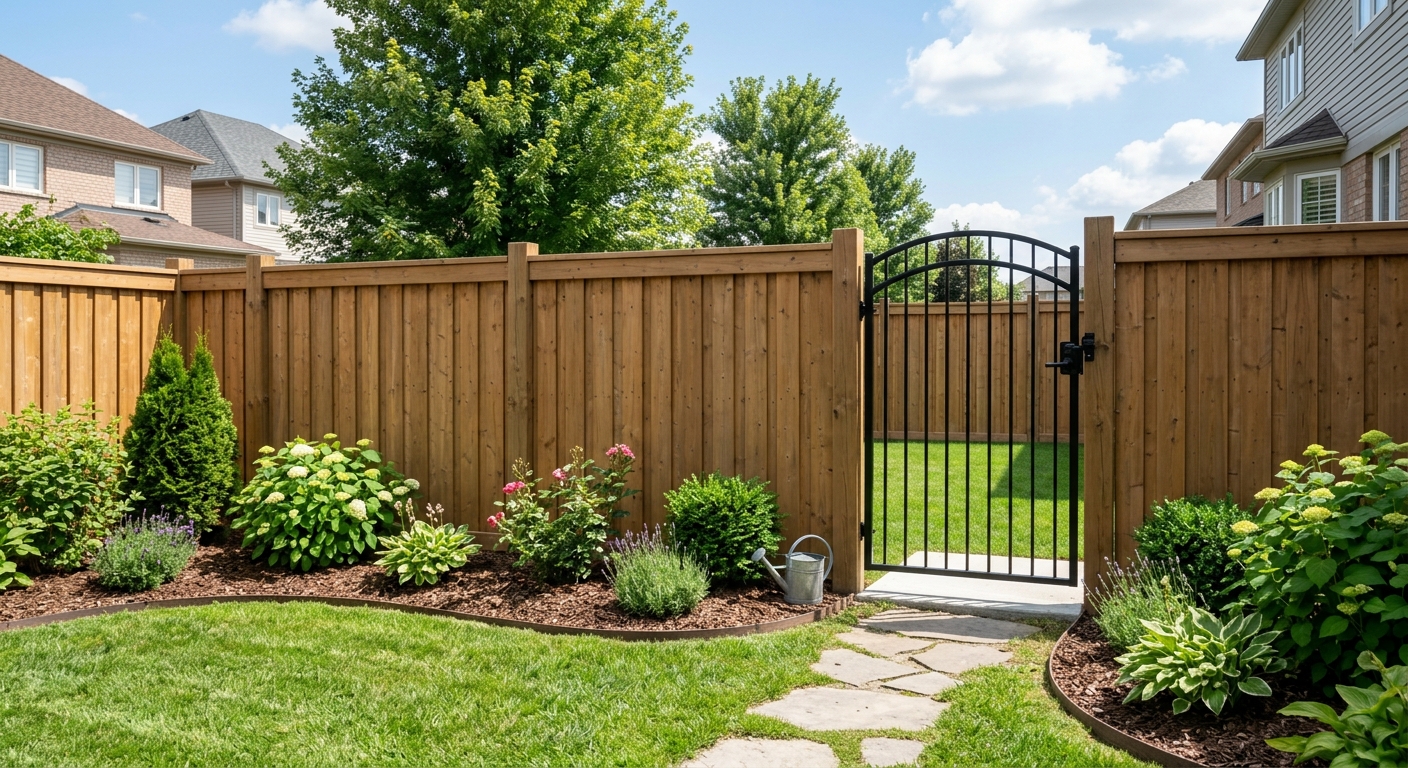
Fencing options and costs in O'Connor-Parkview
In O'Connor-Parkview, fence choices and installed costs are shaped by the everyday reality that many homeowners in this area rely on backyard privacy, defined lot lines, and durable materials that can handle Southern Ontario’s freeze–thaw cycles. With a population of 18,675 in the local area (Statistics Canada, 2021 Census), steady demand is typical—especially because detached homes are common choices for long-term property ownership, and that steadiness shows up in contractor booking patterns every spring and early summer. (Statistics Canada, 2021 Census)
Toronto’s frost considerations matter to your quote. Even though the GTA avoids the extreme open-field wind loads you see in the Prairies, local best practice still treats wind as a reason to size posts, rails, and panel spacing appropriately. The commonly used frost-line rule of thumb in Southern Ontario is about 42"–48", which means posts often need to be set roughly 3.5–4 feet deep to reduce frost heave risk. That typically points buyers toward concrete-set posts for 6–8 ft privacy fences, which raises labour and ready-mix costs but improves long-term stability—particularly in mixed clay and soils.
Trades also tend to be busiest in neighbourhood pockets like around Eglinton Avenue East and the Bridlewood–like residential corridors nearby (near major arterial roads), where backyard lots are consistent and fence replacement cycles are frequent. From here, use the options below to compare typical lifespan, privacy performance, and the usual Toronto pricing bands before you request itemised quotes.
| Material |
Lifespan |
Maintenance |
Privacy Rating |
Price per Linear Foot |
| Pressure-treated pine (standard wood) |
10–15 years |
Stain/seal every 2–3 years; inspect posts and rails |
High (solid panels) |
$16 – $30 |
| Cedar (natural rot resistance) |
15–25 years |
Light staining typically every 2–4 years |
High (solid panels) |
$20 – $36 |
| Vinyl / PVC (no-maintenance) |
25–35 years |
Rinse as needed; check for impact damage |
High (solid or board-on-board) |
$20 – $42 |
| Chain-link (galvanized steel) |
20–30 years |
Occasional wash; tighten hardware |
Low–Medium (not for privacy) |
$12 – $22 |
| Aluminum ornamental |
25–40 years |
Wash annually; touch up minor scuffs |
Low (open pickets) |
$22 – $45 |
| Composite / recycled material |
20–30 years |
Minimal; occasional cleaning |
High (solid styles) |
$25 – $48 |
Prices are estimates only and vary by project scope, site access and material selection.
What affects the price of fencing in O'Connor-Parkview
In O'Connor-Parkview and across the Toronto economic region, two quotes for the same yard can differ by 30–50% because fencing isn’t just “materials per foot.” Contractors price for the hard parts: excavation depth, post setting method, panel rigidity for wind, gate hardware, and how difficult the site is to access with trailers and tools. If your design needs heavier posts, tighter spacing, or more bracing to prevent racking, labour increases quickly—even before adding the cost of concrete and longer posts.
Toronto’s frost behaviour is a major reason. A common Southern Ontario approach is to set fence posts roughly 4–6 inches below the design frost depth to reduce frost heaving. In cold seasons, that often translates to setting posts about 1.5–2.0 m into the ground. Because that means deeper holes, more concrete, and longer treated lumber or bigger post stock, many homeowners see higher installed costs than they expected when pricing “driven posts” or minimal footings.
Local conditions also create “line-item” swings. For example, yards with clay-heavy soil often require slower excavation and extra cleanup, adding labour. Conversely, a flatter lot with easy access for a skid-steer or auger can bring down the cost by reducing labour time. Neighbourhoods with mature tree roots and rocky patches can raise excavation time, which is one reason a “low” price band for wood (for instance $65–$120 for wood installation) can climb toward the upper end if deeper set-ups and extra hardware are required. Likewise, privacy-focused vinyl fencing ($75–$130 for vinyl/PVC installation) can be justified when you’re replacing multiple rotting sections at once, because labour efficiencies and longer service life reduce repeat maintenance costs.
| Price Factor |
Why It Matters |
Cost Impact |
| Fence length in linear feet |
Most costs scale directly with footage: posts, rails, and panels |
Major (often the #1 driver) |
| Post depth required |
Frost line affects hole depth and minimum post length |
Major (more concrete + longer materials) |
| Post setting method |
Concrete set resists frost movement; gravel pack can vary by soil |
Moderate–major depending on soil and design |
| Material choice |
Vinyl and cedar carry different material and installation time costs |
Moderate (can shift you into a different price band) |
| Gate count and type |
Gates require heavier posts, hinges, latches, and often bracing |
Moderate–major (double drive gates add cost quickly) |
| Grade and terrain |
Slopes require stepped panels or raked rails to maintain alignment |
Moderate (more layout time and cutting) |
| Old fence removal and disposal |
Demolition time, haul-out, and disposal fees vary |
Moderate (can add a noticeable chunk) |
| Permit fees and survey / property line locate |
Administrative costs and field work can be required for setbacks |
Low–moderate (but can be critical) |
Permits & regulations in Ontario
In Ontario, fence rules depend on location (front yard vs rear yard), height, and municipal setback bylaws. A common threshold homeowners run into is when fences exceed about 2.0 m (6.5 ft) in the rear and around 1.0–1.2 m (3–4 ft) in the front or corner; in those cases, a building permit is often required before installation. Even when a permit isn’t required, your fence still must respect property lines, easements, and local setbacks. If your plan sits near a lot line or there’s any ambiguity, confirm the layout using a survey or a property line locate.
Before digging any post hole, call for utility locates through Ontario One Call. That step helps prevent service strikes when digging deeper holes for concrete-set posts. For shared fences, line-fences issues are handled under provincial legislation, so you should confirm responsibilities with your neighbour early—especially if you anticipate upgrading posts, rails, or installing new privacy panels.
Step-by-step for verifying a contractor in O'Connor-Parkview: first, ask for their Ontario business/contractor registration information and confirm it on the appropriate provincial resources. Second, request a certificate of insurance showing general liability coverage and ensure the project is listed. Third, confirm WSIB coverage where applicable—ask for the clearance letter and check the status provided. If they can’t supply these documents promptly, pause and request them before signing.
Choosing the right fence material for O'Connor-Parkview
Choosing the right fence material in O'Connor-Parkview is mostly about matching your priorities—privacy, low maintenance, budget, and lifespan—to Toronto’s real weather: wet winters, deep freezes, and a yearly freeze–thaw grind that can loosen poorly set posts. Pressure-treated pine is the budget-friendly route, but it typically needs staining every 2–3 years to limit grey weathering and surface deterioration. Cedar looks excellent and naturally resists rot better than many standard woods, yet it still benefits from routine maintenance to keep its finish and avoid premature drying and cracking.
For low-maintenance ownership, vinyl/PVC is a strong option: it doesn’t require staining, but extreme cold impacts can make it more prone to cracking if panels are unsupported or posts aren’t set rigidly. Chain-link is usually the longest-life budget choice, but it simply doesn’t deliver privacy unless you add privacy slats, and those reduce airflow and can affect wind load behaviour. Aluminum ornamental offers a clean, rust-resistant look with minimal upkeep, but it won’t provide the solid privacy most homeowners want along backyard areas.
Because Southern Ontario frost is commonly planned around 42"–48", concrete-set posts are often recommended for 6–8 ft fences, especially for solid privacy styles where panel racking is a concern. If you’re building with solid boards or heavier rails, the extra stability from concrete setting helps keep alignment during seasonal movement.
As a practical dollar example: if your quote for pressure-treated pine privacy is near the lower wood band, say $65–$120 per installed foot range for wood projects in the GTA tier, you may pay less upfront than vinyl. But when you compare that to vinyl/PVC in the $75–$130 tier, the added upfront cost can be worth it if you want to avoid staining cycles and multiple repeat repairs over time—particularly where shaded backyards and winter salt exposure accelerate finish wear.
| Material |
Cold Tolerance |
Lifespan |
Annual Maintenance |
Best For |
Price Band |
| Pressure-treated pine |
Good when properly stained and post-set |
10–15 years |
Inspect + minor touch-ups; stain every 2–3 years |
Budget privacy with periodic upkeep |
$65 – $120 |
| Cedar |
Good; handles moisture better than many woods |
15–25 years |
Wash/rinse; stain or seal every 2–4 years |
Attractive privacy with better rot resistance |
$80 – $135 |
| Vinyl / PVC |
Good; can crack if unsupported or installed loosely |
25–35 years |
Minimal (rinse and inspect after storms) |
Low-maintenance privacy |
$75 – $130 |
| Chain-link |
Good in cold weather; hardware matters |
20–30 years |
Occasional wash + check tension and posts |
Security boundaries, limited privacy needs |
$45 – $85 |
| Aluminum ornamental |
Good; panels resist corrosion |
25–40 years |
Minimal (annual wash) |
Front-yard curb appeal and durable boundary |
$90 – $160 |
| Composite / recycled |
Good; performs well when posts are rigid |
20–30 years |
Low (cleaning; inspect fasteners) |
Solid privacy with reduced maintenance |
$85 – $150 |
How to choose a fencing contractor in O'Connor-Parkview
To choose a fencing contractor in O'Connor-Parkview, start with verification. In Ontario, ask for their Ontario business registration details and a certificate of insurance showing general liability for the company. Then confirm WSIB coverage where applicable: request the WSIB clearance letter or documentation that demonstrates their coverage status for the workers performing your installation. If a contractor refuses or can’t provide these documents before quoting, that’s a major warning sign.
Next, get 2–3 itemised written quotes. You want a breakdown that separates labour (excavation, setting posts, rail/panel installation, gate build) from materials (posts, rails, fasteners, hardware) and includes disposal if they’re removing an old fence. Avoid lump-sum pricing that doesn’t identify post spacing, fence height, and whether they’re using concrete-set posts. Ask: is the permit pull included (if needed), and who handles it? Is property-line locating included, or is it an extra?
Warranty matters for fencing. Ask for the workmanship warranty length and what it covers (for example, post movement, sagging rails, or gate alignment). Also request the manufacturer/product warranty details and whether the warranty transfers to you if you sell the home. For payment scheduling, never pay more than 10–15% upfront—hold back a meaningful portion until the finish, gate operation, and cleanup are complete. Finally, insist on a written timeline: a start date target, an estimated completion date, and a plan for weather delays.
- Confirm Ontario business information matches the contractor on the quote
- Request certificate of insurance and verify coverage limits
- Ask for WSIB clearance letter (where applicable) before scheduling the job
- Get itemised quotes: labour vs materials vs hardware vs disposal
- Ensure post spacing and post size are stated on the quote
- Ask if posts are concrete-set and what hole depth they plan for frost protection
- Clarify gate type, hinge style, and latch hardware (and number of gates)
- Confirm whether panels are stepped for slopes or raked properly
- Ask what’s excluded (permit fees, survey/locates, damaged underground lines, landscaping restoration)
- Verify warranty: workmanship length and product warranty terms
- Use a payment schedule with 10–15% maximum upfront and holdback on completion
- Get start and completion dates in writing, including weather-delay handling
Red flags I see in O'Connor-Parkview include: contractors who won’t provide proof of insurance or WSIB coverage, quotes that don’t state post depth or setting method, “driven post” offers for 6–8 ft privacy without explaining frost heave risk, vague scope terms that omit disposal, and refusal to put a clear start/completion timeline in writing.
Frequently asked questions — fencing in O'Connor-Parkview
How tall can my fence be in O'Connor-Parkview?
In Ontario (and typically in Toronto-area municipalities), fence height rules depend on whether the fence is in the front yard, side yard, or rear yard and how it aligns with local setback bylaws. A common guideline homeowners run into is that fences around 2.0 m (6.5 ft) in the rear and about 1.0–1.2 m (3–4 ft) in the front/corner may trigger additional requirements such as a building permit. For an O'Connor-Parkview project, the safest approach is to confirm the exact yard location and the planned height with your contractor and, if needed, check municipal requirements before you dig. If your plan is privacy-focused at 6–8 ft, expect permitting checks and ensure the design accounts for wind and panel rigidity.
Should fence posts be set in concrete here?
For most 6–8 ft privacy fences in O'Connor-Parkview, concrete-set posts are usually the recommended best practice because Southern Ontario frost heave is real. Contractors typically set posts about 3.5–4 feet deep (roughly 1.5–2.0 m, depending on design frost depth assumptions) to reduce movement during freeze–thaw cycles. Concrete setting improves long-term stability, especially in mixed soils where clay and moisture can contribute to shifting. That said, some designs may use alternative methods in specific conditions, but your quote should explain the post depth, spacing, and setting method. A well-built wood privacy fence in the $65–$120 installed band often ends up needing concrete setting for stability, even if the material is lower-cost.
What's the best fence for privacy?
For privacy in O'Connor-Parkview, the best options are solid board privacy styles with tight post/rail spacing—most often pressure-treated pine, cedar, vinyl/PVC, or composite panels. Chain-link is usually not considered private unless you add privacy slats, and those can affect wind behaviour and airflow. The key isn’t only the material; it’s the rigidity: heavier panels and taller builds require stronger posts and closer spacing to prevent racking. In Toronto’s climate, you should also plan for concrete-set posts for long-term alignment, especially for 6–8 ft fences. If you want low maintenance, vinyl/PVC in the $75–$130 tier is popular because it avoids staining cycles that wood requires every 2–3 years.
How do I compare fencing quotes?
To compare fencing quotes fairly in Ontario, don’t focus only on the total price—compare the details. Ask for an itemised breakdown (labour vs materials vs gate hardware vs disposal), and verify post spacing, post size, fence height, and whether posts are concrete-set. Ensure the quote specifies hole depth or setting approach tied to frost protection. Check what’s included: permit pull (if required), property line locating/survey, utility locates handling, and site restoration. Also compare gate specs—double gates and custom latches change labour and hardware costs. If one contractor quotes “wood installation” in the $65–$120 band but omits concrete setting or provides fewer rails, it can look cheaper while quietly reducing longevity.
How long does fence installation take in O'Connor-Parkview?
Timelines in O'Connor-Parkview depend on length, access, and whether you need old fence removal. For a typical mid-size privacy fence, installation often takes a few working days, but deeper post holes and concrete setting can add time. If your design includes multiple gates, sloped yard stepping, or difficult excavation due to roots and clay, allow extra time. Weather matters because digging and concrete work slow down during heavy rain or freezing conditions. Most reputable contractors will give you a written start date and completion estimate. If a quote doesn’t include an expected schedule and just says “weather permitting,” treat it as incomplete and ask for a clearer plan.
Can I install a fence on a slope in O'Connor-Parkview?
Yes, you can install a fence on a slope in O'Connor-Parkview, but it must be done correctly to stay straight and stable. The usual approaches are stepped panels (each section adjusted in height) or raked rails (the frame is set to match the slope). Stepped panels are often preferred for solid privacy fences because they keep the fence face consistent and reduce stress on rails. Your contractor should also plan how to handle drainage and frost-set posts so deeper holes don’t create uneven settling at the uphill/downhill transitions. Expect a modest labour increase for layout and cutting, and make sure the quote states the method (stepped vs raked) and the finished height across the slope.