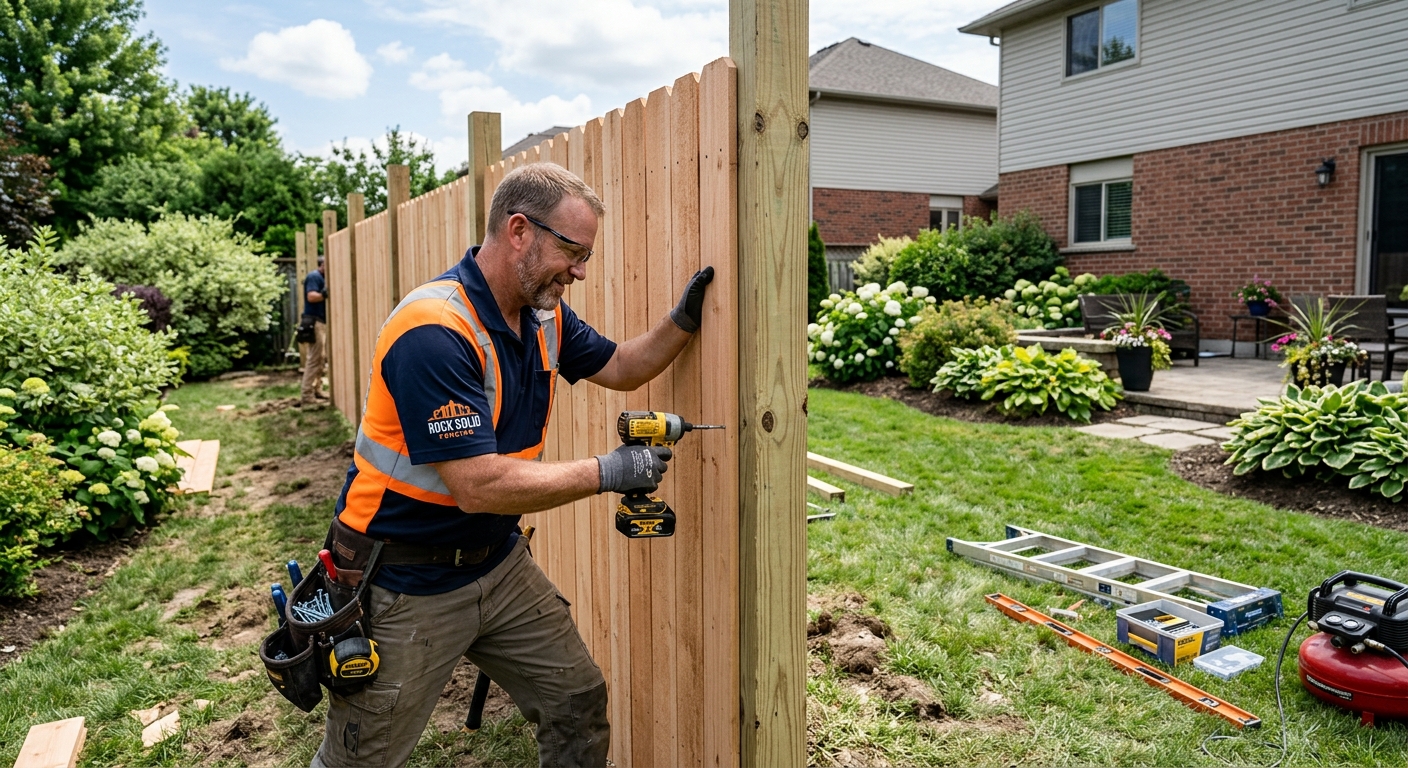
Fencing options and costs in Highland West
In Highland West, Ontario, choosing a fence usually starts with the same question: what’s the right option for your yard and your budget? With a population of 13,066 (Statistics Canada, 2021 Census), and a steady mix of older and newer owner-occupied homes, there’s continuous demand for replacement privacy fencing and property boundary upgrades—especially where detached homes line local streets and cul-de-sacs. In a market shaped by the Toronto economic region, fencing installers stay busy because homeowners often need long, continuous runs that look uniform from season to season.
Toronto-area pricing is strongly influenced by freeze-thaw cycles and soil conditions. In Southern Ontario, contractors commonly plan for frost line depth around 42"–48", which translates to post holes typically set about 3.5–4 feet deep for 6–8 ft fences to reduce frost heave. That requirement pushes labour and materials higher than simple “drive and go” methods. On top of that, local building practice favours concrete-set posts for long-term stability, and taller solid fences need heavier posts and closer spacing to resist racking.
In Highland West, demand is especially noticeable around the more established residential pockets where homeowners are refreshing aging wood fences along front and side yards—often during spring and early fall scheduling. Once you know your material direction, the next step is comparing typical lifespan, maintenance, and per-foot pricing, which is summarized in the table below.
| Material |
Lifespan |
Maintenance |
Privacy Rating |
Price per Linear Foot |
| Pressure-treated pine (standard wood) |
10–15 years |
Stain/seal every 2–3 years |
8/10 (solid boards) |
$65 – $120 |
| Cedar (natural rot resistance) |
15–25 years |
Light staining every 2–4 years (recommended) |
9/10 (solid boards) |
$75 – $135 |
| Vinyl / PVC (no-maintenance) |
20–30 years |
Rinse annually; occasional repairs if hit |
8/10 (solid privacy styles) |
$75 – $130 |
| Chain-link (galvanized steel) |
20–35 years |
Minimal; watch for posts/hardware after storms |
4/10 (security only; privacy via slats only) |
$45 – $85 |
| Aluminum ornamental |
25–40 years |
Wash when dirty; no rust |
5/10 (semi-open) |
$90 – $160 |
| Composite / recycled material |
20–30 years |
Low; clean as needed, inspect fasteners |
8/10 (solid privacy boards) |
$85 – $145 |
Prices are estimates only and vary by project scope, site access and material selection.
What affects the price of fencing in Highland West
In Highland West and across the broader Toronto economic region, fence quotes for the same “typical” length can vary by 30–50% because the true driver isn’t just the material—it’s how the job is engineered for local ground conditions, weather, and installation logistics. Two crews can price the same height fence differently once you factor in post depth, concrete-setting time, hardware upgrades for taller solid panels, and whether the site needs steps, racking, or extra labour for an uneven right-of-way.
Toronto-area frost considerations are a key reason. Contractors generally work with a design frost depth (commonly about 42"–48" in Southern Ontario), and then set posts roughly 4–6 inches below that design frost depth to prevent heaving. Practically, that means most 6–8 ft privacy fences need posts set about 1.5–2.0 m into the ground. The result: longer posts, deeper holes, and more ready-mix or concrete labour—often pushing wood and cedar privacy projects above the lower end of the $65 – $120 wood range, especially when accessibility limits crew efficiency.
Local wind exposure is usually not “Prairies extreme,” but wind still matters for racking and uplift on solid styles. Heavier posts and closer spacing (often 6–8 ft centres) increase material and install time, particularly for vinyl privacy and composite boards that use engineered rail/posts systems. By contrast, chain-link tends to stay closer to the $45 – $85 band because posts can be lighter and removal/rebuild scope is often simpler.
Concrete examples from Highland West: (1) a front-yard replacement with dense roots may force hand-digging near sidewalks, raising labour; (2) a backyard with clay-heavy mixed soil often benefits from proper concrete-set posts, which increases concrete and line-check time but reduces long-term leaning; (3) a yard with a noticeable grade change may require stepped panels, adding design time and extra rails/posts.
| Price Factor |
Why It Matters |
Cost Impact |
| Fence length in linear feet |
Most materials and labour scale directly with run length |
High (primary driver) |
| Post depth required |
Frost line determines hole depth and post length to prevent heaving |
High (more excavation and concrete) |
| Post setting method |
Concrete vs. gravel pack vs. driven posts changes labour and longevity |
Medium to high |
| Material choice |
Vinyl/cedar/aluminium have different component costs and hardware needs |
High (bigger spreads in bands) |
| Gate count and type |
Gates require heavier frames, bracing, and more alignment time |
Medium to high |
| Grade and terrain |
Slope requires stepped or raked panels and extra layout |
Medium |
| Old fence removal and disposal |
Disposal fees, haul-away time, and labour to dismantle |
Medium |
| Permit fees and survey / property line locate |
Locates reduce encroachment disputes; permits can require admin steps |
Low to medium |
Permits & regulations in Ontario
In Ontario, fence requirements are typically tied to height thresholds and location (rear vs. front/corner). As a rule of thumb, fences above about 2.0 m (6.5 ft) at the rear and about 1.0–1.2 m (3–4 ft) at the front or corner often require a building permit. Even when a permit is not required, you still must respect property lines and municipal setback bylaws. In Highland West, the practical risk is encroachment: if a fence is built even slightly over a boundary, disputes can become expensive fast.
Before anyone digs, call for utility locates using Ontario One Call. Then, get a survey or at least a property pin locate before you install posts—especially if you’re replacing an older fence that may have shifted over time. Shared fence ownership rules are governed by Ontario line-fences legislation; it’s worth confirming whether neighbouring property owners share responsibilities for construction and maintenance.
What usually does require a permit: installing or replacing a fence that exceeds common height thresholds in front/corner or rear, or constructing a fence in a way that may conflict with bylaw limits. What often does not require a permit: like-for-like replacements that stay below height thresholds and comply with setbacks, provided required locates are still completed.
To verify contractor legitimacy in Ontario, confirm they hold an Ontario licence where applicable for their work scope, provide certificate of insurance (liability with adequate limits), and list WSIB/WCB coverage. Ask for documentation before work starts, and check the validity dates on the certificate of insurance. A clearance letter (where issued) should match the company name doing the work, not a related entity.
Choosing the right fence material for Highland West
The right fence material in Highland West depends on what you value most: privacy, low maintenance, lifespan, and how much you want to spend up front. With Toronto’s freeze-thaw weather and seasonal wind-driven moisture, the installation details matter as much as the product. For privacy, solid-board styles are the easiest to get right—provided posts are set deep enough for Southern Ontario frost conditions.
Pressure-treated pine is usually the budget choice, but it needs proactive care. Expect staining or sealing every 2–3 years to reduce grey weathering and slow surface cracking. Cedar offers a nicer look and naturally resists rot better, commonly stretching the useful life into the 15–25 year range, but it still benefits from maintenance for best results. Vinyl/PVC is a strong low-maintenance option: no annual staining, just periodic rinsing, though extreme cold snaps and impacts can cause cracking if the structure isn’t rigidly braced. Chain-link has the longest “set it and forget it” life and the lowest upfront cost, but it doesn’t provide privacy unless you add slats or screening. Aluminum ornamental is maintenance-light and won’t rust, yet it’s typically semi-open. Composite/recycled boards can deliver solid privacy and long service life with lower upkeep, but hardware quality and installation alignment still matter.
Because local frost planning often means posts are set about 1.5–2.0 m into the ground for 6–8 ft fences, concrete-set posts are commonly used for stability. That means the “best value” is often the material that won’t demand frequent re-staining while you’re paying for correct post depth and concrete labour. For example, if a pressure-treated privacy fence runs near the lower end of the $65 – $120 band but you’re comparing it to vinyl near $75 – $130, the difference can be justified when you factor in the cost and time of repeated staining over a decade in Ontario’s weather.
| Material |
Cold Tolerance |
Lifespan |
Annual Maintenance |
Best For |
Price Band |
| Pressure-treated pine |
Good (with proper sealant and spacing) |
10–15 years |
Stain/seal every 2–3 years (more in harsh exposure) |
Budget privacy with planned upkeep |
$65 – $120 |
| Cedar |
Good (naturally rot-resistant) |
15–25 years |
Light staining every 2–4 years (recommended) |
Premium look privacy |
$75 – $135 |
| Vinyl / PVC |
Very good (impact matters more than cold) |
20–30 years |
Rinse annually; check fittings after storms |
Low-maintenance privacy |
$75 – $130 |
| Chain-link |
Very good |
20–35 years |
Minimal; tighten hardware as needed |
Security with budget control |
$45 – $85 |
| Aluminum ornamental |
Excellent (no rust) |
25–40 years |
Wash when dirty |
Curb appeal and durability |
$90 – $160 |
| Composite / recycled |
Good (solid structure preferred) |
20–30 years |
Low; clean and inspect fasteners |
Solid privacy with reduced upkeep |
$85 – $145 |
How to choose a fencing contractor in Highland West
Choosing the right fencing contractor in Highland West starts with verifying credentials the homeowner can actually check. First, request proof of liability insurance and confirm the policy is current and covers fencing installation activities. Next, verify WSIB/WCB coverage for workers: ask for the WSIB clearance letter (or evidence of coverage) and ensure the clearance references the correct legal business name. For licensing, verify the contractor’s Ontario authorization relevant to the scope they’ll perform and match the details to the company on your contract.
Then get 2–3 itemised written quotes—not a vague lump sum. The best quotes separate labour, materials, post setting (including concrete quantity or method), gate hardware, and any excavation or line layout. Carefully read exclusions: is permit processing included or billed separately? Is old fence demolition included, hauled away, and disposed of? In Highland West, where access can vary (especially near driveways and narrow side yards), quotes should address how materials are staged and whether additional labour applies for hand-digging or debris removal.
Warranty matters for both the workmanship and the products. Ask for the workmanship warranty length and whether it covers post setting, leaning, and hardware failures. Clarify manufacturer warranties on rails/panels and whether they’re transferable if you sell the home. For payment, keep your upfront deposit low—generally no more than 10–15%—and use a holdback until the work is complete and cleaned up. Finally, require a start date and completion estimate in writing, not just “weather permitting.”
- Provide certificate of insurance with current dates and adequate liability limits.
- Show WSIB/WCB coverage (clearance letter or proof) matching the work company.
- Confirm the Ontario licence/authorization relevant to the job scope.
- Use a detailed proposal: labour, materials, and equipment line items.
- Specify post setting method (concrete-set depth and spacing, not “standard”).
- List gate count, gate sizes, and whether hinges/strikes are included.
- State disposal/haul-away included or itemised separately.
- Confirm whether permit pulls and property-line locates are included.
- Show warranty terms for workmanship and product components.
- Include schedule: start date, milestone inspections, completion target.
- Keep deposit to 10–15%; negotiate holdback until final walkthrough.
- Document site constraints: slope, existing fence removal, and access limits.
In Highland West, common red flags include: quotes that omit post depth and concrete method; missing insurance/WSIB paperwork (or documents that don’t match the contractor’s legal name); “all-in” prices with no itemisation for gates or disposal; vague warranty language; and agreements that require large upfront payments with no holdback until completion.
Frequently asked questions — fencing in Highland West
Should fence posts be set in concrete here?
Yes, in Highland West (and throughout the Toronto area), concrete-set posts are the best default choice for privacy fences because frost conditions and soil conditions increase the risk of movement. Southern Ontario’s frost planning commonly targets about 42"–48", and contractors typically set posts roughly 4–6 inches below the design frost depth to reduce frost heave. In practice, that’s often 1.5–2.0 m into the ground for 6–8 ft fences, which supports long-term alignment and reduces leaning. Concrete also helps where clay and mixed soils hold moisture and expand/contract over winter cycles. If you’re comparing quotes, ask whether “standard” means concrete-set, what depth they’re proposing, and how spacing will be handled for taller solid panels.
What's the best fence for privacy?
For strong privacy in Highland West, solid-panel styles with minimal gaps are usually the clear winner—most homeowners land on vinyl/PVC privacy, cedar privacy, or pressure-treated pine board privacy. Vinyl can be a compelling option if you want low maintenance through Ontario winters; it typically fits within the $75 – $130 band depending on height and gate count. Cedar often looks the most “natural,” but it still benefits from periodic maintenance, and wood costs can fall around the $65 – $120 range for pressure-treated depending on scope. The most important factor for privacy longevity is not just the material—it’s correct post setting depth, solid framing, and resisting wind/racking with proper post size and spacing.
How do I compare fencing quotes?
To compare quotes fairly in Ontario, don’t use only the total price—compare what’s included. Ask each contractor for an itemised breakdown that separates labour, materials, excavation/post setting method, concrete quantities or approach, gate hardware, and disposal of the old fence. Confirm the proposed post depth and spacing for the height you want, since frost heave prevention drives real cost. Make sure they state whether they’ll do stepped/raked panels for slopes and how they handle corner posts. Also check warranty terms for workmanship and product components. If one quote is dramatically lower, it may be using a different post-setting method or leaving out gates, line locating, or hauling.
How long does fence installation take in Highland West?
Most residential fence projects in Highland West take roughly 1–3 working days, depending on length, number of gates, and whether there’s old fence removal. A straightforward backyard privacy run with concrete-set posts and no major grade changes can usually be completed quickly, but longer front-yard runs or projects that require hand-digging near roots and sidewalks can extend the schedule. Sloped yards requiring stepped or raked panels also add layout and labour time. If demolition and hauling are included, that usually adds time as well. Your contractor should provide a start date and completion estimate in writing, and clarify how they handle weather delays—especially during freeze-thaw periods when the ground conditions change.
Can I install a fence on a slope in Highland West?
Yes, you can install a fence on a slope in Highland West, and most crews will use stepped panels or raked rails so the fence remains level visually while following the grade. The exact method affects cost because it changes how many posts and rails you’ll need and increases layout time. For taller privacy fences, raking versus stepping can influence how wind loads are handled, so hardware and bracing should be planned accordingly. When you get quotes, ask specifically how they’ll deal with your slope: stepped panels may require more posts, while raked sections might need different framing. Either way, proper post depth remains critical for frost heave prevention, especially when the uphill and downhill ground levels vary.
What is the most weather-resistant fence for Highland West's climate?
For Highland West’s Ontario freeze-thaw weather and seasonal moisture, the most reliable choices are typically vinyl/PVC privacy and properly installed cedar, as long as the post foundations are done right. Vinyl generally resists rot and doesn’t require staining, which helps it keep its appearance through winter cycles; it often lands in the $75 – $130 range depending on height and style. Cedar is naturally rot-resistant and can perform well, but it’s still wise to maintain it for best appearance and longevity. Chain-link is also very durable for weather exposure (and tends to be lower cost, around the $45 – $85 band), but it won’t provide privacy without add-ons. No matter the material, the weather-resistance comes from correct post depth, concrete-set stability, and properly braced panels for wind.