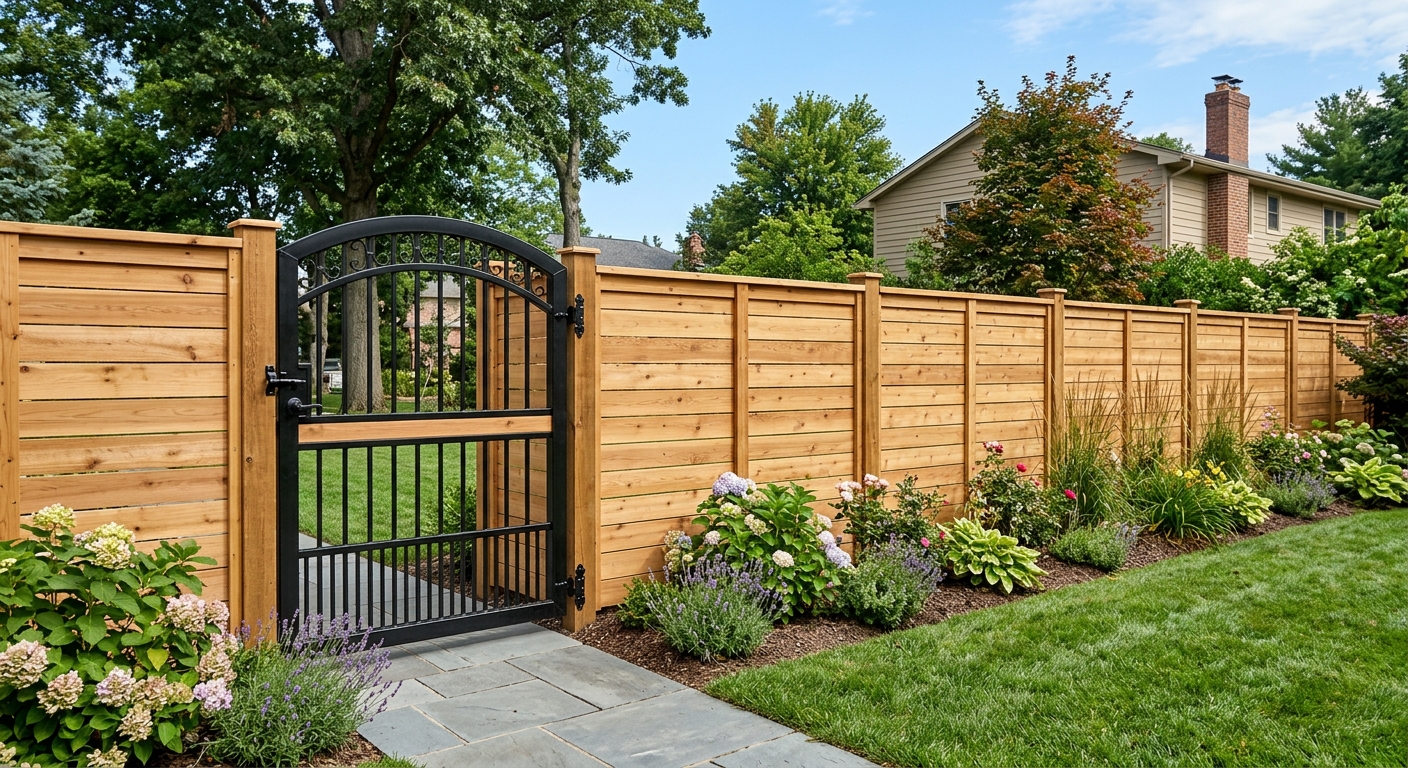
Fencing options and costs in Willowdale East
Willowdale East is one of those Toronto pockets where fences get installed year-round, because the neighbourhood is full of family lots and mature landscaping. With a 2021 population of 50,434 (Statistics Canada, 2021 Census), local demand stays steady, but the biggest practical driver is housing type—detached homes and townhouses are common buyers for backyard privacy and side-yard definition, which keeps contractors busy. Toronto’s freeze–thaw cycle is also a cost shaper: posts need to be set deep enough to resist frost heave, and most of the GTA uses concrete-set footings for long-term stability. That means labour time (excavation, setting, alignment) and ready-mix costs can push the total up compared with “drive-and-go” installations you might hear about elsewhere.
In Willowdale East—especially around Bayview Village and the surrounding side streets near transit corridors—privacy fencing and replacement of older cedar or pressure-treated runs are in high demand. You’ll typically see more solid panel styles on rear yards, along with gates for pets and seasonal access. Because winds in Southern Ontario can still rack lighter panels during winter storms, stronger posts and appropriate spacing matter, even when wind extremes aren’t Prairie-level.
Below is a homeowner-friendly comparison of typical materials and pricing. Use it as a baseline, then budget for your specific height, linear footage, gates, and whether an old fence removal is included.
| Material |
Lifespan |
Maintenance |
Privacy Rating |
Price per Linear Foot |
| Pressure-treated pine (standard wood) |
10–15 years |
Stain or seal every 2–3 years; fasteners check yearly |
High (solid boards) |
$20 – $35 |
| Cedar (natural rot resistance) |
15–25 years |
Light stain/brighten as needed every 3–4 years |
High (solid boards) |
$25 – $45 |
| Vinyl / PVC (no-maintenance) |
20–30 years |
Wash annually; inspect caps and hardware |
High (solid or shadowbox) |
$28 – $50 |
| Chain-link (galvanized steel) |
20–35 years |
Minimal; rinse and check tension annually |
Low (privacy only with slats/mesh) |
$15 – $25 |
| Aluminum ornamental |
25–40 years |
Wash and inspect annually; no rusting expected |
Low to medium (depends on picket spacing) |
$32 – $60 |
| Composite / recycled material |
20–30 years |
Washes only; occasional hardware check |
High (solid styles available) |
$30 – $55 |
Prices are estimates only and vary by project scope, site access and material selection.
What affects the price of fencing in Willowdale East
In Willowdale East, two quotes for what looks like the “same fence” can differ by 30–50% because Toronto-area pricing is driven by site conditions, footing requirements, and how much labour is required to set posts straight and square. Material costs matter, but in practice, labour and access are what swing the number—especially when contractors must excavate for frost-safe depths, handle disposal, and fit fences around mature trees, driveways, and irregular lot lines.
Frost line depth is the big Ontario factor. In Southern Ontario, posts are typically set about 4–6 inches below the design frost depth to reduce heaving risk. Practically, that usually means posts going roughly 1.5–2.0 m into the ground, which often requires concrete-set posts (and longer lumber/longer post hardware). That increases both material (ready-mix, longer posts) and labour time. If you’re comparing vinyl/PVC to chain-link, remember chain-link usually uses smaller, faster hardware—so even though materials can be cheaper, the real savings come from less intensive footing and faster panel assembly.
Local wind and snow load considerations also affect design choices. While the GTA doesn’t face Prairies-level open-field wind, taller solid fences can rack during storms, so contractors may specify heavier posts (and closer spacing) to prevent leaning and uplift.
Concrete examples from Toronto work: (1) Replacing an old cedar fence with a 6–8 ft privacy fence often costs more than first-time installation because you’re paying twice for labour—remove, haul, then set new concrete footings. (2) A backyard with clay/mixed soil typically needs careful excavation and a proper concrete-set workflow versus gravel packs, which can add a few hours per run. (3) If a job is near Bayview Village with narrow gate access, crews may stage materials longer and work in tighter sections—adding labour.
These are why a wood privacy fence might land within the broader wood installation band (about $65–$120), while vinyl/PVC often starts higher (about $75–$130), especially when concrete-set posts and multiple gates are included.
| Price Factor |
Why It Matters |
Cost Impact |
| Fence length in linear feet |
The primary driver—more runs means more posts, panels, rails and labour hours. |
High (often 40–70% of total) |
| Post depth required |
Frost line determines hole depth and post length to prevent heaving. |
High (can add $5–$20 per linear foot) |
| Post setting method |
Concrete-set posts improve long-term stability vs. gravel pack or driven posts. |
Medium to high (concrete increases labour + ready-mix) |
| Material choice |
Vinyl/PVC, cedar, and chain-link differ in hardware, panel weight, and installation speed. |
Medium (material premiums vary by style/height) |
| Gate count and type |
Gates require stronger posts, hinges/latches, and precise alignment. |
Medium (a single double gate can meaningfully raise total) |
| Grade and terrain |
Slopes require stepped rails or raked panels to keep top lines consistent. |
Medium (extra labour and cut lists) |
| Old fence removal and disposal |
Demolition time, hauling, and landfill/disposal fees add cost. |
Medium (often several hundred to over a thousand) |
| Permit fees and survey / property line locate |
Some installs require permits; accurate line locating prevents costly rework. |
Low to medium (varies by site and documentation needs) |
Permits & regulations in Ontario
In Ontario, fence rules are tied to both height limits and municipal by-laws. As a practical threshold that many homeowners run into in Toronto-area communities, fences above roughly 2.0 m (6.5 ft) at the rear and around 1.0–1.2 m (3–4 ft) at the front or corner often need a building permit, depending on location and property context. The key is not to guess from neighbourhood photos—verify the setback and height rules for your specific lot before you dig.
All fences must stay within your property lines and comply with required setbacks. Before installing posts, call Ontario One Call to mark underground utilities. Then, get a survey or have your property line pins located so you don’t encroach on the neighbour’s land or public right-of-way—this is where disputes become expensive.
For shared fencing responsibilities, Ontario’s line-fences framework guides disputes and cost-sharing where boundaries are involved. If you’re replacing an existing fence that’s assumed shared, clarify ownership and alignment in writing before demolition starts.
Step-by-step, to verify your contractor in Willowdale East: (1) Request your contractor’s Ontario licence details (where applicable) and confirm they can legally perform the work. (2) Ask for a current certificate of insurance showing liability coverage and ensure the certificate lists you as an additional insured where possible. (3) Confirm WSIB/WCB coverage paperwork is in place for their workers. (4) If permits are needed, confirm who pulls them and that your contract states whether permit fees and inspections are included.
Choosing the right fence material for Willowdale East
Choosing the right fence material in Willowdale East comes down to matching your goals—privacy, low maintenance, budget, and lifespan—to a climate that cycles through freezing winters and spring thaw. Pressure-treated pine can be the budget-friendly route, but it typically needs staining or sealing every 2–3 years to avoid rapid grey weathering and to protect against rot at fasteners. Cedar looks great and resists rot better naturally, yet it still benefits from maintenance and careful sealing around cut ends and hardware. Vinyl/PVC offers low maintenance and won’t need staining, but in Toronto’s colder snaps it can become more brittle if the installer doesn’t allow for correct expansion and if hardware is under-spec’d. Chain-link is the cheapest and longest-life option, but it’s not true privacy unless you add slats or privacy mesh. Aluminum ornamental is attractive and rust-resistant, usually with mid-range pricing, but it’s generally low privacy due to open pickets.
For post depth, the Toronto frost line means concrete-set posts are often the safest long-term choice for privacy fences—especially 6–8 ft solid styles where wind can rack panels. Concrete-set footings typically reduce heaving risk in clay and mixed soils common around the GTA. If you’re building a taller solid fence, don’t downsize posts just to save money; stronger posts and appropriate spacing prevent leaning.
Budget justification example: if pressure-treated wood lands near the lower end of wood installation (around $65–$120 per typical installation band) but cedar or vinyl pushes the project toward the higher end of its band, the price can be worth it when you want fewer maintenance visits. For many Willowdale East homeowners, the shift to cedar or vinyl becomes “worth it” when they’d otherwise repaint every few years and when they plan to keep the fence for 15–25 years.
| Material |
Cold Tolerance |
Lifespan |
Annual Maintenance |
Best For |
Price Band |
| Pressure-treated pine |
Good (with proper sealing and hardware) |
10–15 years |
Check fasteners; stain/seal every 2–3 years |
Lower upfront cost privacy fencing |
$65 – $120 |
| Cedar |
Good (natural resistance improves durability) |
15–25 years |
Light cleaning; stain as needed every 3–4 years |
Better appearance with privacy |
$75 – $130 |
| Vinyl / PVC |
Very good (when installed with correct fit/expansion) |
20–30 years |
Wash once per year; inspect caps/hardware |
Low maintenance privacy and durability |
$75 – $130 |
| Chain-link |
Excellent (galvanized steel performs well in freeze–thaw) |
20–35 years |
Minimal; tension and hardware check yearly |
Security and boundary definition |
$45 – $85 |
| Aluminum ornamental |
Excellent (no rust) |
25–40 years |
Wash and inspect annually |
Attractive front-yard definition |
$90 – $160 |
| Composite / recycled |
Good (designed for outdoor temperature swings) |
20–30 years |
Wash only; periodic hardware checks |
Privacy with reduced maintenance |
$75 – $130 |
How to choose a fencing contractor in Willowdale East
Choosing the right contractor in Willowdale East starts with proof—don’t rely on verbal assurances. First, verify insurance and coverage: ask for a certificate of liability insurance and confirm it covers fencing-related work. Next, request WSIB/WCB documentation for their workers (and ensure the dates are current). If a contractor can’t provide documents quickly, that’s a red flag.
Then get 2–3 itemised written quotes. A proper fence quote should separate labour from materials and list key components: post depth, post setting method (concrete-set vs. gravel pack), rail style, spacing, gate hardware, and whether demolition/disposal is included. Avoid “lump sum” quotes that don’t specify what you’re actually paying for—those are where change orders happen.
Read the scope carefully for exclusions: tree/root trimming, rock removal, restoration of disturbed grass, and whether permit fees (if required) and utility locate fees are handled. Warranty matters too: confirm workmanship warranty length (for example, how long they cover fence movement, leaning, or post settling) and whether the manufacturer warranty on materials is included. Also ask if warranties are transferable to the next homeowner if you sell.
For payment schedules, keep it homeowner-safe: never pay more than 10–15% upfront. Use a holdback until the job is complete and you’ve received final adjustments (especially gate alignment). Finally, insist on a written start date and completion estimate so you can plan around winter scheduling and delivery windows.
- Provide certificate of liability insurance (and confirm coverage limits).
- Provide current WSIB/WCB coverage documents for workers.
- Give an itemised quote: labour, posts, rails, panels, hardware, and gates.
- State post depth and post setting method (Toronto frost-safe installation).
- Confirm whether an Ontario permit is required and who pulls it.
- Include utility locate and call confirmation (Ontario One Call marking).
- List demolition/haul-away/disposal details for old fencing.
- Specify grade handling (stepped vs. raked panels on sloped yards).
- List gate type, number of hinges/latches, and whether gates are self-closing (if requested).
- Include warranty terms: workmanship duration and material warranty info.
- Use a payment schedule with minimal upfront (10–15%) and holdback until completion.
- Get a written start date and an estimated completion date.
In Willowdale East, my common red flags are: (1) a quote that won’t clearly state post depth or suggests “driven posts only” for a 6–8 ft privacy fence, (2) no written scope for demolition/disposal, (3) vague warranty language (e.g., “we guarantee it” with no duration or what’s covered), (4) refusal to show insurance/WSIB paperwork, and (5) requiring large upfront payments before posts are set and aligned.
Frequently asked questions — fencing in Willowdale East
How tall can my fence be in Willowdale East?
In Willowdale East and across Ontario municipalities, maximum fence heights vary by location on the property (front/corner vs. rear) and by specific by-law rules. A common guideline homeowners run into is that rear fences may be allowed up to about 2.0 m (6.5 ft), while front or corner areas are often limited to roughly 1.0–1.2 m (3–4 ft). If you’re planning a taller privacy fence, don’t assume—check your lot’s by-law and property context, because height and setback rules can trigger permits. If you’re replacing an existing fence, the “as-built” height may not automatically be grandfathered, especially if you’re changing height or fence type. If your contractor is reputable, they’ll ask for a survey/locate and confirm permit needs before ordering materials.
Should fence posts be set in concrete here?
For most backyard privacy fences in Willowdale East—especially 6–8 ft solid styles—concrete-set posts are the most reliable approach. Ontario’s freeze–thaw cycle and frost heave risk means posts typically need to be set below the local frost line; in practice, that often translates to holes around 1.5–2.0 m deep depending on conditions, and concrete-set footings help prevent movement in clay and mixed soils. Gravel packs or driven posts can be tempting for budget reasons, but they’re usually less stable long-term for tall privacy fences where wind racking is a factor. The difference shows up in pricing: wood installations often run about $65 – $120, but concrete-set labour and ready-mix can push you toward the higher end for proper footing work. A good quote should state post depth and setting method clearly.
What's the best fence for privacy?
For privacy in Willowdale East, solid panel fences are the top choice—typically wood (cedar or pressure-treated), vinyl/PVC, composite, or sometimes privacy screening installed on chain-link. “Best” depends on how much maintenance you want. Cedar gives a warmer look and better rot resistance than standard pressure-treated pine, while vinyl/PVC is the lowest maintenance option and can be a good fit if you’re done with annual staining. From a durability standpoint, tall solid fences need heavier posts and secure spacing because winter storms can rack lighter builds. Also, plan for the Toronto frost-line realities: concrete-set posts and correct depth are part of keeping a privacy fence straight for years. Pricing-wise, cedar or vinyl privacy builds often land toward the $75 – $130 band once proper concrete setting, gates, and removal are included.
How do I compare fencing quotes?
To compare quotes fairly in Willowdale East, make sure you’re comparing the same scope, not just the final number. Ask each contractor for an itemised breakdown: fence length, number and type of posts, post depth, post setting method (concrete vs. gravel pack), rail/panel style, gate count and hardware, and whether old fence demolition and disposal are included. Confirm permit handling and whether the price includes a survey/property line locate. Also check warranties for workmanship and materials, and the payment schedule—reputable contractors usually keep upfront payments around 10–15%. If one quote looks cheaper because it skips concrete-set posts or removal, it may cost more later through leaning boards or premature replacement. Use the local price bands as a sanity check: chain-link often starts lower (about $45 – $85), while vinyl/PVC typically sits higher (about $75 – $130).
How long does fence installation take in Willowdale East?
Timelines depend on length, number of gates, access, and whether you’re removing an old fence first. In Willowdale East, typical installs for a straightforward run may take a couple of days on average, but longer privacy fence projects or those with multiple gates often take longer due to concrete-set curing logistics, alignment time, and extra excavation for frost-safe footing depth. Removal adds time because crews must dismantle, haul, and dispose of materials properly. If your site has narrow side access or mature trees, expect additional staging and more careful layout work. Weather also matters—wet ground can slow excavation and make post set-ups harder to square. When you request a quote, ask for a written start date and completion estimate, and ensure the contractor explains whether the schedule includes cure time for concrete-set posts.
Can I install a fence on a slope in Willowdale East?
Yes, you can install a fence on a slope in Willowdale East, and good contractors will plan it correctly instead of forcing a “flat” fence that looks uneven. The two common approaches are stepped panels (stair-stepping by section) or raked panels that follow the grade angle. Stepped panels are often easier to keep level visually, while raked designs can look more continuous depending on the fence type and height. The key is layout: you need accurate levels before posts are set, and the quote should specify how they’ll handle sloped yards so you don’t lose privacy height at one end. Because tall fences also catch wind, uneven installation can increase racking, so proper post depth and secure setting matter even more on slopes. Ask for photos of similar graded backyards and confirm the fencing plan is included in the scope.