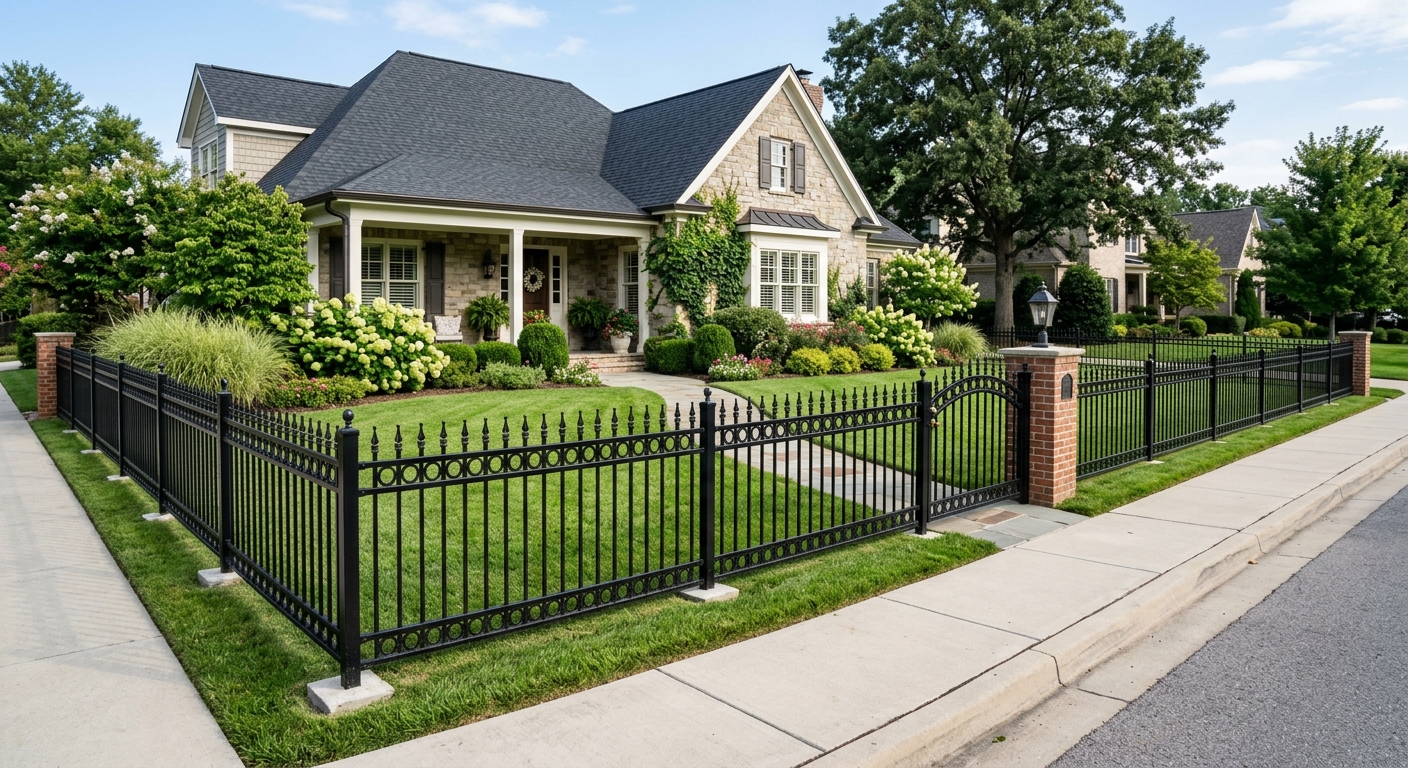
Fencing options and costs in Humewood-Cedarvale
Humewood-Cedarvale is a convenient place to live in Toronto’s orbit, and fencing demand here tends to track household stability and property investment. With a population of 14,365 in the 2021 Census, the neighbourhoods around the main residential streets see steady turnover in backyard upgrades (Statistics Canada, 2021 Census). Many lots are built close to established property lines, so fence lines, gates, and post locations often become the critical parts of the quote.
In Toronto, pricing is strongly shaped by freeze-thaw cycles. Even though we don’t have Prairies-level wind exposure, frost heave is still a real concern for taller privacy fences. Local best practice typically sets concrete-set posts about 3.5–4 feet deep for 6–8 ft privacy fencing, which raises labour time and ready-mix costs compared with driven-post installs.
Material choice matters, too. Pressure-treated pine is usually the lowest upfront option, but Ontario weather can grey and lift surface grain if you don’t plan on regular upkeep. Vinyl and PVC reduce routine maintenance, while chain-link stays among the most budget-friendly for long runs—though privacy is limited. In Humewood-Cedarvale, trade is especially busy near the residential blocks around Eglinton Avenue West and Lumsden Avenue, where backyard projects are common as houses age and families refresh outdoor spaces.
Use the comparison table below as a starting point for planning. For an accurate number, your final price still depends on fence length, access, gate count, and whether we need to remove or adjust an existing line.
| Material |
Lifespan |
Maintenance |
Privacy Rating |
Price per Linear Foot |
| Pressure-treated pine (standard wood) |
8–12 years (with upkeep) |
Stain/seal every 2–3 years |
High (solid boards) |
$65–$95 |
| Cedar (natural rot resistance) |
15–25 years |
Clean annually; stain every 3–4 years (optional to weather) |
High (solid boards) |
$80–$120 |
| Vinyl / PVC (no-maintenance) |
20–30 years |
Rinse as needed; no painting |
High (solid panels) |
$75–$130 |
| Chain-link (galvanized steel) |
20–35 years |
Occasional tension/repair |
Low to medium (add privacy slats) |
$45–$85 |
| Aluminum ornamental |
25–40 years |
Rinse; occasional touch-up |
Low (decorative) |
$90–$160 |
| Composite / recycled material |
20–30 years |
Rinse; periodic inspection |
Medium to high (solid styles) |
$95–$145 |
Prices are estimates only and vary by project scope, site access and material selection.
What affects the price of fencing in Humewood-Cedarvale
In Humewood-Cedarvale and across the Toronto economic region, two homeowners can receive quotes that are 30–50% apart for what seems like the same fence. The difference usually comes down to how posts are installed for winter stability, how much labour is required for access and gate work, and whether the contractor includes items like demolition, disposal, and property line verification.
Post depth is the biggest driver. With Southern Ontario’s commonly referenced frost line depth around 42"–48", best practice is to set posts about 4–6 inches below the design frost depth to reduce heaving risk. That typically means posts set roughly 1.5–2.0 m into the ground, especially for 6–8 ft privacy fences. Once you’re doing concrete-set posts, you’re not only paying for extra labour time, but also for ready-mix, longer lumber, and more drilling.
Wind and panel stability also matter even if we’re not in the Prairies. Taller solid fences benefit from heavier posts and tighter spacing (often 6–8 ft centres) to avoid racking and uplift. Meanwhile, contractors in Toronto price differently than coastal BC because mild-but-wet climates can accelerate wood rot if treatment and drainage aren’t ideal—so it’s not just the material, it’s how it’s detailed.
Here are a few examples that commonly change the cost in Humewood-Cedarvale:
- A 50 linear foot wooden privacy fence on firm soil may land near the wood band, while a similar length on mixed clay with deep frost-safe holes can push the installed total toward the upper end of that band.
- Adding two gates can jump costs because hinges, latches, and bracing must be sized for wind loads; you’ll often see metal hardware choices account for a noticeable part of the difference between “mid-range” and “top” quotes.
- Switching from pressure-treated wood to cedar is sometimes only a modest increase per foot, but it becomes more expensive when your design needs thicker pickets/boards and reinforced post sizes.
As a quick planning reference, wood privacy work often targets the $65–$120 per linear foot range, while vinyl/pvc privacy tends to sit in the $75–$130 range—before you factor in gates and difficult access. If you can keep the layout simple (straight runs, fewer corners, minimal height changes), you usually avoid the steepest quote inflation.
| Price Factor |
Why It Matters |
Cost Impact |
| Fence length in linear feet |
Most materials and labour scale directly with total length |
High (primary cost driver) |
| Post depth required |
Frost line depth determines hole depth and lumber length |
Medium to high |
| Post setting method |
Concrete-set posts add labour and ready-mix vs. gravel or driven posts |
Medium to high (stability upgrade) |
| Material choice |
Vinyl/cedar/chain-link have different hardware, boards/panels, and expected lifespans |
Medium (often shifts entire quote band) |
| Gate count and type |
Walk-through vs. double drive-through gates require heavier frames and bracing |
High for multiple/heavy gates |
| Grade and terrain |
Slopes require raked/stepped panels and extra measurements |
Medium |
| Old fence removal and disposal |
Demolition time, haul-away fees, and recycling/disposal logistics |
Medium to high |
| Permit fees and survey / property line locate |
Administrative costs and locating pins to avoid encroachment disputes |
Low to medium (project dependent) |
Permits & regulations in Ontario
In Ontario, fences can require a building permit when they exceed certain height thresholds—commonly around 2.0 m (6.5 ft) at the rear and about 1.0–1.2 m (3–4 ft) at the front or corner, depending on the local situation. Even when a permit isn’t required, you still must respect your property line and municipal setback rules. In Humewood-Cedarvale, that “property line first” approach is especially important because older lots and mature landscaping can make fence placement disputes more likely if a line isn’t verified.
Before you dig any post hole, call for utility locates. In Ontario, that’s done through Ontario One Call. You should also get a survey or at least verify property pins/locates so your posts land where they should. Shared fence ownership rules are governed by provincial line-fences legislation, so if you’re building or replacing a boundary fence, know whether you’re dealing with shared responsibility.
What typically DOES require a permit: fences over the common rear/front height thresholds mentioned above, plus projects that involve significant changes to structures or boundary conditions. What typically does NOT: replacement-in-kind work that stays under applicable height thresholds and doesn’t change the footprint, provided it meets property line and setback requirements.
To verify your contractor in Ontario: confirm they have the appropriate Ontario licence/registration where applicable, request proof of liability insurance (certificate of insurance showing your jobsite and coverage amounts), and ask for evidence they’re covered for workplace injuries (WSIB/WCB coverage). Look for the certificate details directly from the insurer, and ensure the policy is active for the project dates. If they can’t provide current documents, that’s a major red flag.
Choosing the right fence material for Humewood-Cedarvale
Choosing a fence material in Humewood-Cedarvale is really about matching your priorities—privacy, maintenance level, lifespan, and budget—to Ontario’s winter-and-spring conditions. Pressure-treated pine is typically the most budget-friendly wood option, but it usually needs staining or sealing every 2–3 years to prevent grey weathering and surface degradation. Cedar looks better longer and resists rot naturally; it still benefits from periodic cleaning and staining, but it generally holds up better in wet cycles and freeze-thaw.
For low maintenance, vinyl/PVC is a strong option because it doesn’t require painting, and panels typically rinse clean after winter salt and spring runoff. The trade-off is higher upfront cost, and in extreme cold you still want proper post mounting and panel support to reduce cracking risk over time. Chain-link is the longest-lived “value per year” material for security, but for privacy you’ll likely need privacy slats (which can reduce airflow and affect wind performance if installed loosely). Aluminum ornamental fences offer a rust-resistant, tidy look and perform well around snow loads, but they’re not a privacy solution.
In Toronto’s frost conditions, regardless of material, posts must be set to resist heaving. For 6–8 ft privacy fences, concrete-set posts are usually recommended, given the common frost line depth of about 42"–48" and the need to set below it. This is where construction method matters as much as the material—good post depth and hardware prevent fence racking when the ground shifts.
For example, a straight run of solid cedar privacy may cost more than pressure-treated pine, but the higher initial cost can be justified if you want to avoid frequent staining and want a longer service life. Conversely, if you’re budget-limited and only need moderate privacy, chain-link may save money while still meeting security goals—its installed band is often around $45–$85 per linear foot, versus typical wood privacy in the $65–$120 range depending on height and post requirements.
| Material |
Cold Tolerance |
Lifespan |
Annual Maintenance |
Best For |
Price Band |
| Pressure-treated pine |
Good (needs sealing to manage moisture/ice) |
8–12 years (typical upkeep) |
Low to moderate (check boards; stain/seal every 2–3 years) |
Lowest upfront privacy within a wood budget |
$65–$95 |
| Cedar |
Very good (rot resistance in wet-snow cycles) |
15–25 years |
Low (clean and plan staining every 3–4 years) |
Attractive privacy with fewer long-term issues |
$80–$120 |
| Vinyl / PVC |
Good (proper bracing helps in cold snaps) |
20–30 years |
Very low (rinse as needed) |
Low-maintenance privacy |
$75–$130 |
| Chain-link |
Excellent (galvanized steel handles freeze-thaw) |
20–35 years |
Very low (tension and occasional repairs) |
Security and long runs |
$45–$85 |
| Aluminum ornamental |
Excellent (no rust in road-salt exposure) |
25–40 years |
Low (rinse; occasional touch-up) |
Decorative boundaries and security with visibility |
$90–$160 |
| Composite / recycled |
Good (stable boards; hinges/posts still matter) |
20–30 years |
Low (inspection and rinse) |
Solid privacy with reduced wood rot risk |
$95–$145 |
How to choose a fencing contractor in Humewood-Cedarvale
Choosing the right fencing contractor in Humewood-Cedarvale comes down to documentation, clarity, and workmanship. Start by verifying Ontario coverage and business credentials. Ask for proof of liability insurance (certificate of insurance showing the coverage amounts and policy active dates), then request evidence of WSIB/WCB coverage so you’re protected if a worker is injured on your property. For licensing/registration, confirm they’re properly registered for the scope of work they’re performing and that the paperwork matches the contractor who will be on-site.
Next, get 2–3 itemised written quotes—not just a lump sum. A proper quote breaks out labour, materials, post depth/footing method (concrete-set vs. gravel pack vs. driven), panel/picket layout, gate hardware, and removal/disposal. Look for what’s included and what’s excluded: will they pull permits if required, locate property pins, or handle utility marking coordination? Are you paying extra for rock drilling, sloped-yard racking, or additional fence height at corners? A detailed scope reduces surprises and price drift.
Warranty matters, too. Ask for the workmanship warranty length (how long they stand behind post setting and installation), the manufacturer warranty for fence materials, and whether it’s transferable to future owners if you sell. Payment schedule should be conservative—never pay more than about 10–15% upfront, and use a holdback until the job is complete and final walkthrough is done. Also demand timeline details: a start date and completion estimate in writing, with weather-related allowances noted.
- Confirm active liability insurance and request the certificate before work begins.
- Verify WSIB/WCB clearance is current for your project dates.
- Ask who will pull permits (if required) and whether that cost is included.
- Require an itemised quote: labour, materials, posts, concrete, and hardware.
- Make sure post depth/footing method is specified (frost-safe depth + concrete-set where appropriate).
- Confirm gate construction details: hinges, latch type, and bracing.
- Specify fence height by section and how corners/edges will be handled.
- Ask how slopes will be treated (stepped vs. raked panels) and ensure it’s written.
- Ensure old fence removal/disposal is included or listed as an add-on.
- Check how utility locates are handled (Ontario One Call marking responsibility).
- Confirm warranty terms in writing: workmanship plus product warranty.
- Use a payment schedule with low upfront deposit and retainage until final acceptance.
Concrete red flags I commonly see in Humewood-Cedarvale: (1) quotes that don’t specify post depth or footing method, (2) “too good to be true” pricing without breakdown for concrete and hardware, (3) contractors who won’t provide insurance/WSIB paperwork, (4) unclear disposal/haul-away terms for old fencing, and (5) pressure to pay the majority upfront or starting work without a signed scope.
Frequently asked questions — fencing in Humewood-Cedarvale
Can I install a fence on a slope in Humewood-Cedarvale?
Yes, you can install a fence on a slope in Humewood-Cedarvale, but it should be designed deliberately so it doesn’t look “wavy” or fail prematurely. Most Toronto-area installs use either stepped panels (best for small-to-moderate grade changes) or raked panels (when you want a smoother visual line). The slope also affects post lengths and hole depth, so the installer must still account for frost-safe footing. If your yard drops toward a boundary, concrete-set posts help maintain stability through freeze-thaw cycles. Discuss this during quoting so it’s included in the labour and material plan—sloped yards often add time for layout and cutting.
What is the most weather-resistant fence for Humewood-Cedarvale's climate?
For Toronto’s freeze-thaw winters and damp shoulder seasons, the most weather-resistant options are typically cedar (for wood look and rot resistance) or vinyl/PVC (for very low maintenance). Cedar generally performs well because it resists rot better than pressure-treated pine, though it still benefits from periodic maintenance. Vinyl/PVC is strong in cold when installed with correct post support and hardware spacing; it doesn’t need painting like wood. For budget planning, you’ll often see cedar privacy in the $80–$120 per linear foot range and vinyl privacy in the $75–$130 range, before considering gates and removal. No material is “weatherproof” if posts aren’t set frost-safely.
How do I prevent wood fence rot in Humewood-Cedarvale?
Preventing rot in Humewood-Cedarvale is mostly about moisture control and proper post installation—not just the type of wood. Make sure posts are installed with frost-stable depth (commonly around 42"–48" frost line considerations, translating to about 3.5–4 feet deep for many privacy builds), and use concrete-set posts where required by best practice. Avoid ground-contact board details where possible and ensure rails and pickets don’t trap water. For pressure-treated pine, plan on staining or sealing every 2–3 years; for cedar, clean and plan maintenance every 3–4 years depending on sun exposure and how grey it weathers. Also, keep sprinklers from blasting fence bases so the fence doesn’t stay wet through winter freeze-thaw.
What is the cost per linear foot for fencing in Humewood-Cedarvale?
In Humewood-Cedarvale, fencing costs per linear foot typically fall within these local Toronto bands, depending on height, materials, and post/footing method. Wood installation commonly lands around $65–$120 per linear foot, vinyl/PVC often around $75–$130, and chain-link around $45–$85. Aluminum ornamental usually ranges from $90–$160. Your final price can shift upward for concrete-set posts, multiple gates, sloped yards, and old fence removal/disposal. That’s why itemised quotes matter: a “cheap” per-foot number can change dramatically if concrete, gates, and disposal aren’t included.
Should I repair or replace my old fence in Humewood-Cedarvale?
In Ontario, it’s often worth repairing if posts are still solid and only a few rails/pickets are failing. Replace is usually the better value if multiple posts are loose, significant sections are sagging, or rot has reached structural members. With older Toronto-area fences, rot can be hidden—especially near post bases where moisture collects and freeze-thaw loosens connections. A contractor should inspect the posts at ground level and check for wobble, leaning, and hardware corrosion. If repairs involve reinforcing many posts, partial replacement can still save money, but a full replacement becomes more cost-effective when more than a handful of structural elements need attention. Get an itemised “repair scope” quote alongside a replacement option so you can compare apples to apples.
How do I handle a fence dispute with a neighbour in Ontario?
Fence disputes are common in established Toronto neighbourhoods, and the best first step in Ontario (including Humewood-Cedarvale) is to confirm the boundary. Start with a survey or request a property line locate so you know whether the fence is on the correct side of the property line. Review whether your fence is shared and understand provincial line-fences rules for shared responsibility. Before making changes, document conditions with photos and keep any correspondence polite and factual. If you’re replacing a fence, make sure the contractor follows utility locate procedures (Ontario One Call) and uses correct post placement—don’t rely on “it looks right.” If you can’t agree, consider mediation or professional legal guidance rather than arguing during construction.