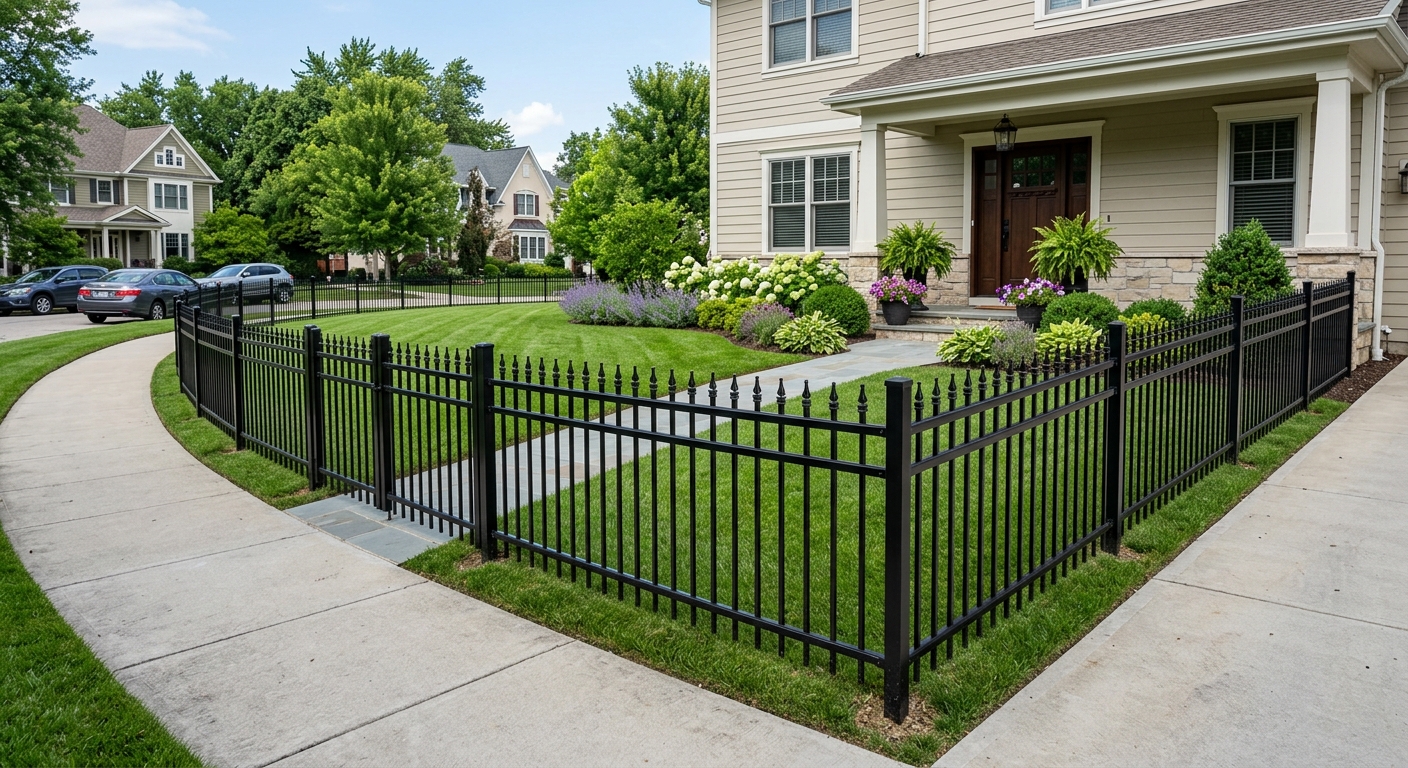
Fencing options and costs in Mount Albert
In Mount Albert, choosing a fence usually starts with matching what you want—privacy, curb appeal, or low upkeep—to what the ground and weather will tolerate. With a population of about 4,925 (Statistics Canada, 2021 Census), the community is smaller than the GTA core, but fencing demand stays steady because owner-occupied homes create long-term improvement projects. In the broader Toronto economic region, fencing work is also closely tied to the area’s housing mix, so contractors tend to be busy around peak spring installation windows.
Pricing in Mount Albert is shaped by Southern Ontario frost depth and local install practices. In this part of Ontario, the design frost line is commonly estimated around 42"–48", which means fence posts typically need to be set roughly 3.5–4 ft deep to reduce frost heave risk—especially for taller 6–8 ft privacy fences. That depth usually pushes jobs toward concrete-set posts (more labour and ready-mix), heavier hardware, and tighter panel tolerances. The result is that two fences that look identical on paper can still land in different price bands depending on how the contractor handles footing depth, post size, and gate framing.
Trade demand is particularly noticeable in established residential pockets along main commuting corridors where backyards face wind exposure and where homeowners often upgrade from older, sagging rails to solid privacy panels. If you’re planning a replacement or a new run on a side yard, the cost comparison below will help you sort options before you request itemised quotes.
| Material |
Lifespan |
Maintenance |
Privacy Rating |
Price per Linear Foot |
Price Range |
| Pressure-treated pine (standard wood) |
10–15 years |
Stain/seal every 2–3 years |
8/10 (solid pickets) |
$10–$18 |
$65 – $120 |
| Cedar (natural rot resistance) |
15–25 years |
Light staining/finishing as needed |
9/10 (solid boards) |
$12–$22 |
$75 – $130 |
| Vinyl / PVC (no-maintenance) |
25–35 years |
Rinse occasionally; no painting |
9/10 (solid panels) |
$13–$25 |
$75 – $130 |
| Chain-link (galvanized steel) |
20–30 years |
Occasional tension/hardware checks |
2/10 (limited privacy) |
$8–$14 |
$45 – $85 |
| Aluminum ornamental |
20–30 years |
Wash as needed |
3/10 (decorative/open) |
$15–$30 |
$90 – $160 |
| Composite / recycled material |
20–30 years |
Rinse; no staining |
8/10 (solid styles) |
$14–$26 |
$75 – $130 |
Prices are estimates only and vary by project scope, site access and material selection.
What affects the price of fencing in Mount Albert
In Mount Albert and across the Toronto economic region, you can easily see 30–50% differences for what looks like the “same” fence—because quotations respond to installation realities, not just the material name. One contractor may price a run with driven posts and lighter bracing; another may price concrete-set posts with heavier panel framing to resist racking and uplift. In Ontario backyards, that difference is often the biggest driver.
Frost depth is the core reason. In cold Ontario, posts typically must be set about 4–6 inches below the design frost depth to reduce heaving, which pushes post depth to roughly 1.5–2.0 m (about 5–6.5 ft) in practice. That means longer posts, deeper holes, and more concrete—costs that show up in labour and materials. For taller 6–8 ft privacy fences, the need for thicker posts and closer centres (commonly 6–8 ft centres) also increases the number of components per linear foot.
Wind matters too, though Toronto isn’t as extreme as prairie exposure. Wider boards, solid solid privacy styles, and gate openings can still rack under gusts, which is why contractors may upgrade post size and add diagonal bracing. By contrast, chain-link and some aluminum systems need less massive bracing, which helps keep them closer to the lower end of the bands—often around the $45 – $85 range for chain-link installations. Wood and vinyl privacy fences frequently land in the mid-to-higher bands (commonly $75 – $130 for vinyl/PVC), particularly when the job requires concrete footings.
Local examples that move the price up in Mount Albert: (1) clay-rich soils that hold water can require careful hole excavation and more concrete for stable setting; (2) uneven lots near slopes or swales may require stepped rails or raked panels, increasing labour. On the low end, a short straight run on an accessible lot with minimal gates can keep costs closer to the base of the wood range $65 – $120. The age of existing fences also affects labour—full removal and disposal can add material handling time and stump removal that you won’t see in a fast “new build” quote.
| Price Factor |
Why It Matters |
Cost Impact |
| Fence length in linear feet |
Every post, rail, and section scales directly with total run length. |
High (primary driver of total cost) |
| Post depth required |
Frost line determines minimum hole depth and post length. |
High (more concrete + longer posts) |
| Post setting method |
Concrete-set posts resist frost heave better than gravel or driven posts. |
Medium–High (labour and ready-mix) |
| Material choice |
Vinyl, cedar, and chain-link have different component costs and framing needs. |
Medium–High (drives the band you fall into) |
| Gate count and type |
Gates require heavier framing, hinges, and latches; doubles cost more. |
Medium–High (hardware + extra posts) |
| Grade and terrain |
Slope demands stepped or raked sections for straight sightlines. |
Medium (more labour + cut parts) |
| Old fence removal and disposal |
Hauling and demolition time can be significant on older builds. |
Medium (can add hours and dumps fees) |
| Permit fees and survey / property line locate |
Some higher fences require permits; locating prevents encroachment work. |
Low–Medium (varies by scope) |
Permits & regulations in Ontario
In Ontario, fences above a height threshold—often around 2.0 m (6.5 ft) at the rear and about 1.0–1.2 m (3–4 ft) near the front or corners—can require a building permit, depending on your municipality and location on the lot. Regardless of height, you must respect the property line and any municipal setback bylaws. Before any post holes are dug, homeowners should arrange utility locates through Ontario One Call so you don’t damage buried services.
From a homeowner’s practical standpoint in Mount Albert, a survey or property pin locate is one of the best “insurance policies.” It helps prevent encroachment disputes, especially when older fences are slightly off-line or when neighbourhood trees or grading have shifted. Shared fence ownership is also governed by Ontario line-fences rules—so if you’re replacing a fence that sits on or near a shared boundary, confirm who maintains which side and what “like-for-like replacement” means before you order materials.
To verify your contractor properly, ask for: (1) Ontario licence information (and confirm it matches the company on your contract), (2) liability insurance (certificate of insurance naming the correct legal entity), and (3) WSIB coverage or an appropriate clearance showing the contractor’s status for workers. Step-by-step, you should look for the WSIB clearance document number on the certificate package, check the certificate’s policy dates, and ensure the clearance/coverage matches the work period. If any of these are missing, treat it as a scope and risk problem—not an administrative detail.
Choosing the right fence material for Mount Albert
Your best fence in Mount Albert is usually the one that fits your priorities with the least long-term effort. Pressure-treated pine is the typical budget option, but it can grey-weather and needs staining or sealing about every 2–3 years to keep it looking solid. Cedar has better natural rot resistance and a richer appearance, yet it still benefits from periodic maintenance. Vinyl/PVC offers the “set it and forget it” experience with no staining, but it’s more sensitive to extreme cold impact and requires proper post setting and spacing to prevent flex. Chain-link is the lowest-cost way to define boundaries and add security, but it doesn’t deliver true privacy unless you add slats or planting. Aluminum is clean, rust-resistant, and looks great for curb appeal, but it’s ornamental rather than private. Composite/recycled boards can match the look of wood with less upkeep, and they’re commonly considered for solid privacy styles.
Cold tolerance matters because Southern Ontario’s frost line typically drives posts deeper—commonly 3.5–4 ft to reduce heave risk. That means concrete-set posts are frequently recommended for tall privacy fences, regardless of material, because stability protects rails and boards from rack and sag. In wind and snow seasons, solid boards act like sails, so heavier posts and closer spacing help reduce uplift and movement.
A concrete example of “where the price difference is justified”: if you’re comparing pressure-treated pine privacy versus vinyl, the installed cost often shifts toward the vinyl band (commonly $75 – $130) versus wood’s $65 – $120. If you don’t want annual/biannual maintenance work and you’re building a long run with multiple panels, the labour savings over time can be worth it—especially when contractors are already setting posts deep for frost protection.
| Material |
Cold Tolerance |
Lifespan |
Annual Maintenance |
Best For |
Price Band |
| Pressure-treated pine |
Good with proper sealing; can weather grey in Ontario winters |
10–15 years |
Seal/stain every 2–3 years |
Lower upfront cost privacy with planned upkeep |
$65 – $120 |
| Cedar |
Very good; handles freeze/thaw better than many softwoods |
15–25 years |
Light maintenance as needed (often every few years) |
Premium look and strong rot resistance |
$75 – $130 |
| Vinyl / PVC |
Good; can crack if impacts aren’t managed, and must be installed correctly |
25–35 years |
Minimal (rinse/inspect) |
Low maintenance solid privacy |
$75 – $130 |
| Chain-link |
Excellent; galvanized coatings handle freeze/thaw well |
20–30 years |
Low (check tension/hardware) |
Security on budget with minimal upkeep |
$45 – $85 |
| Aluminum ornamental |
Excellent; powder-coated and rust-resistant |
20–30 years |
Low (wash as needed) |
Curb appeal with defined boundaries |
$90 – $160 |
| Composite / recycled material |
Good; designed for outdoor freeze/thaw performance |
20–30 years |
Low (rinse/inspect) |
Solid privacy with less upkeep than wood |
$75 – $130 |
How to choose a fencing contractor in Mount Albert
Start by confirming the contractor is properly covered for Ontario projects and for the specific physical risk of fencing installs. Ask for (1) proof of Ontario licensing/registration where applicable for the contractor’s business and work scope, (2) liability insurance with the correct company name and a current policy period, and (3) WSIB coverage or a WSIB clearance letter. You should be able to view certificates before work begins—don’t accept photos taken months ago, and don’t rely on “it’s the same as last job.” For safety and compliance, the certificate should list the insured parties correctly, show limits appropriate for construction work, and match the contract start and completion dates.
Next, get 2–3 written quotes that break down labour and materials separately instead of one lump sum. Itemised quotes make it easier to compare post depth approach (concrete-set vs alternatives), gate framing, rail quantity, and whether disposal is included. Carefully read exclusions: sometimes the quote excludes permit pulling, survey locate costs, or utility locate fees, and those can be real add-ons in Toronto-area builds. Also ask about scope for old fence removal—if it’s not clearly included, you may be left with haul-off bills.
Warranty is another area where fences vary widely. Confirm the workmanship warranty length, whether the manufacturer warranty covers materials only, and whether it’s transferable if you sell your home. Payment should be staged: never pay more than 10–15% upfront, and hold a portion until the job is complete and you’ve inspected alignment, gate operation, and post stability.
Finally, insist on timing in writing. A clear start date and completion estimate helps avoid rushed installs in wet shoulder seasons when soils can be softer.
- Ask for proof of liability insurance and confirm policy dates cover your scheduled work window.
- Request WSIB clearance/coverage details in writing and match them to the contractor’s legal entity.
- Verify Ontario licence/registration status relevant to the contractor’s business and work scope.
- Get itemised pricing: posts, rails, panels, hardware, labour, and concrete/footings separately.
- Confirm post depth and setting method in the quote (typical frost-protection depth often requires concrete-set posts).
- Check gate pricing includes upgraded framing, hinges, latches, and proper alignment.
- Clarify whether permits (if required) are included or homeowner-responsible.
- Confirm disposal/hauling for old fence removal is included, with no “extra” landfill charges.
- Ask how they handle uneven grade (stepped vs raked panels) and whether it’s reflected in labour.
- Request a written schedule with start date and an estimated completion date.
- Review warranty terms for workmanship and products; ask if it’s transferable.
- Use a payment schedule with ≤10–15% upfront and a holdback until final inspection.
In Mount Albert, red flags I see too often include vague quotes with no post-depth or footing details, contractors who won’t provide insurance/WSIB paperwork, “cash only” arrangements with heavy upfront payments, missing product specs (board thickness, rail size, or gauge for metal), and no clear plan for permit/locate responsibilities or old-fence disposal.
Frequently asked questions — fencing in Mount Albert
Who owns and maintains a shared fence?
In Ontario, shared fence ownership and responsibilities are commonly handled under provincial line-fences principles, but the exact arrangement can vary based on where the fence sits on the boundary and any prior agreements between neighbours. For Mount Albert homeowners, the safest approach is to treat the boundary location and maintenance split as facts you confirm before ordering materials—especially if you’re replacing an older fence that may not be perfectly on-line. If a fence is truly shared, neighbours may each be responsible for their portion of the fence’s upkeep and costs, but you should document who is paying for what in writing. I recommend confirming with a property survey or pin locate first, then agreeing in writing on materials (like board type) and height so you don’t end up disputing “like-for-like” replacement later.
How do I find my property line before fencing?
Before any holes are dug in Mount Albert, you should identify your property pins or obtain a locate/survey to confirm the exact boundary. Many fencing disputes start with a fence that was assumed to be on the line but was actually a few inches off—an issue that becomes expensive once posts are set. Start by locating your property documents (survey plan or pin markers) and consider hiring a surveyor if pins are missing, covered, or uncertain. If there’s any doubt from an older fence alignment, don’t “measure from the existing fence”—it may be wrong. Once you’re confident in the boundary, also ensure your contractor follows utility locates (Ontario One Call) so excavation doesn’t hit buried services. This step protects both your budget and your relationship with neighbours.
What's the most low-maintenance fence?
For low maintenance in Ontario’s freeze/thaw seasons, vinyl/PVC is usually the easiest choice. It doesn’t require staining like pressure-treated pine, and you generally only need occasional rinsing and hardware inspections. Cedar and wood can still be good, but they typically need finishing or staining to avoid weathering and to slow down wear at cut ends and fasteners. If you’re comparing options in Mount Albert, many homeowners choose vinyl/PVC because the installed pricing typically sits around the $75 – $130 range, and that premium can be worth it if you don’t want recurring maintenance visits. Chain-link is also low maintenance, but it offers limited privacy unless you add slats or landscaping.
How tall can my fence be in Mount Albert?
Fence height rules depend on where the fence sits on your lot (rear vs front/corner) and often trigger permit requirements in Ontario when you go above common thresholds. As a practical guideline, many homeowners see permit-related thresholds around 2.0 m (6.5 ft) at the rear and roughly 1.0–1.2 m (3–4 ft) closer to the front or corner. Because bylaws and enforcement can vary, the best move in Mount Albert is to confirm the applicable height limits with your municipality and ask your contractor to document whether a permit is required for your design. If you’re planning a 6–8 ft privacy fence for wind/rack resistance reasons, it’s especially important to align your height, post depth, and hardware plan with the regulations before installation begins.
Should fence posts be set in concrete here?
Often, yes—especially for privacy fences and taller runs in Southern Ontario where frost heave is a real concern. In the Mount Albert area, contractors commonly set posts deeper to protect against the region’s frost line (often estimated about 42"–48"), which translates to typical hole depths around 3.5–4 ft. That’s why concrete-set posts are frequently recommended: they stabilize the post long-term and reduce movement that can cause sagging rails and gate misalignment. Concrete-set installation usually increases labour time and ready-mix costs, which can move your project toward the higher end of wood or vinyl pricing (for example, wood privacy often falls within $65 – $120, while vinyl/PVC typically lands in the $75 – $130 range). If a quote suggests shallow holes or driven-only posts for a tall fence, ask for the frost-protection rationale.
What's the best fence for privacy?
For true privacy in Mount Albert, solid panel styles are your best bet: wood (pressure-treated or cedar), vinyl/PVC, and composite/recycled systems typically provide the highest privacy ratings. The “best” material usually depends on how much maintenance you’re willing to do and how you want the fence to look year after year. Pressure-treated pine can be a good budget privacy option, but it needs staining/finishing every 2–3 years to maintain appearance and slow weathering; cedar usually looks better longer and resists rot better. Vinyl/PVC is often the lowest-effort privacy choice because it’s essentially no-maintenance aside from occasional cleaning, and its installed pricing commonly sits around $75 – $130. Chain-link alone won’t give privacy unless you add solid inserts, so if privacy is the goal, plan for a solid system and ensure the posts are set for Ontario frost stability.