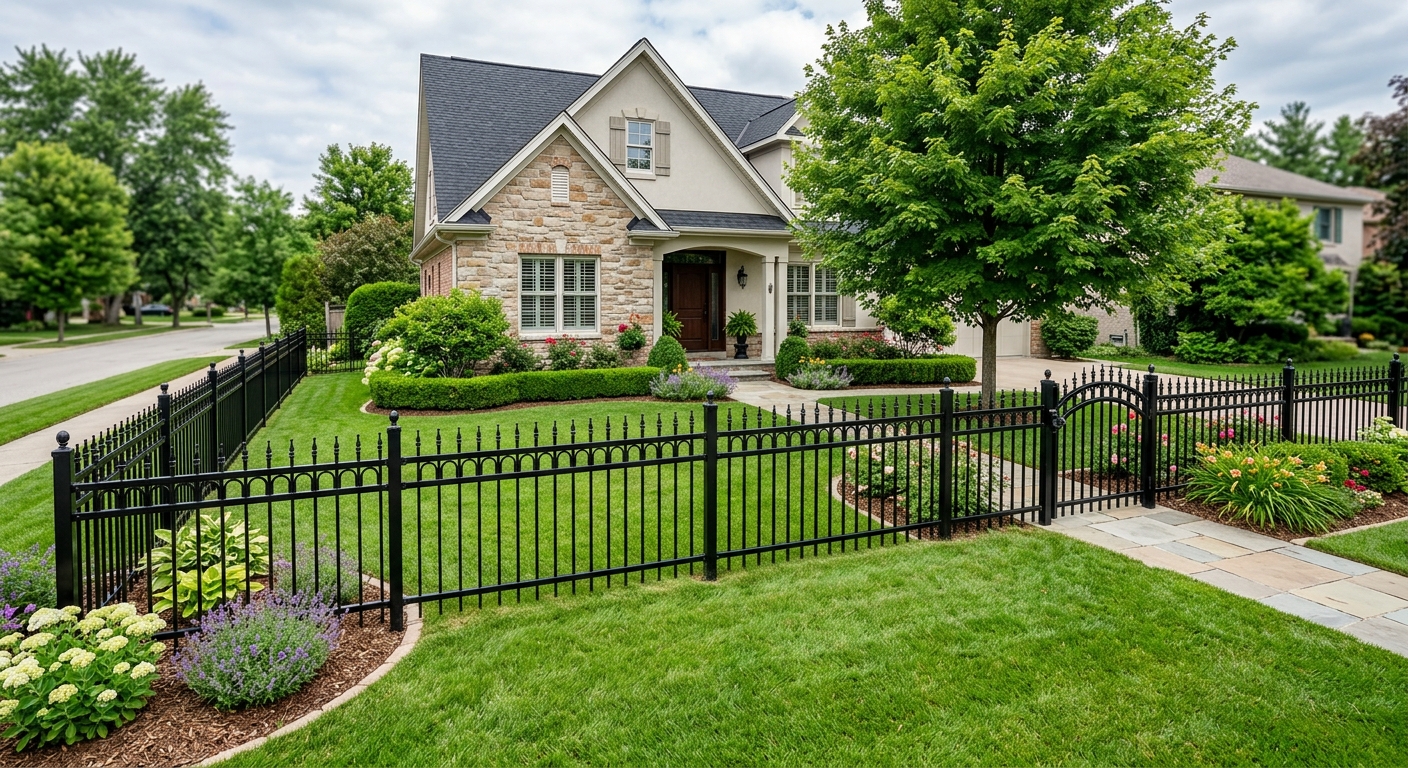
Fencing options and costs in Bayview Village
Bayview Village homeowners can choose from several solid fencing types, but the “best value” depends on how much privacy and durability you need along your property line. With a population of 21,396 (Statistics Canada, 2021 Census), the area has an active housing market—each detached property or backyard renovation is typically a new fencing opportunity, especially on the side yards facing busier streets. It’s also a neighbourhood where many lots turn to privacy screening to balance sightlines, seasonal snow buildup, and everyday living.
In Toronto, fencing costs are shaped less by extreme wind than by freeze-thaw conditions. The frost line in Southern Ontario is commonly planned around 42"–48", so contractor best practice is to set posts at least 3.5–4 feet deep for 6–8 ft privacy runs. That depth increases labour time, hole drilling costs, and the amount of concrete used—so “same fence, different season” quotes can vary. Access also matters here: neighbourhood streets and mature landscaping can slow down installation, and crews may have limited equipment access near fences in areas like Bayview Village’s central residential pockets near local schools and park edges, where driveways and curbs tighten work zones.
As a result, you’ll see pricing move based on post depth, panel style, and whether the contractor uses concrete-set posts. Below is a practical comparison of common materials and what Bayview Village homeowners typically budget per linear foot, before we get into the major cost drivers.
| Material |
Lifespan |
Maintenance |
Privacy Rating |
Price per Linear Foot |
| Pressure-treated pine (standard wood) |
10–15 years |
Stain/coat every 2–3 years |
High (solid panels) |
$65 – $95 |
| Cedar (natural rot resistance) |
15–25 years |
Seal/stain every 2–4 years |
High (solid panels) |
$85 – $120 |
| Vinyl / PVC (no-maintenance) |
25–35 years |
Occasional wash; no staining |
High (solid/slat options) |
$75 – $130 |
| Chain-link (galvanized steel) |
20–30 years |
Minimal; occasional tension checks |
Low–Medium (add privacy slats for more) |
$45 – $85 |
| Aluminum ornamental |
25–40 years |
Occasional cleaning |
Low–Medium (open pickets) |
$90 – $160 |
| Composite / recycled material |
20–30 years |
Low; periodic wash |
High (solid panels) |
$100 – $170 |
Prices are estimates only and vary by project scope, site access and material selection.
What affects the price of fencing in Bayview Village
For the same length and height of fence, quotes can differ by 30–50% across Toronto and the broader Ontario market. The gap usually comes from how contractors handle three things: ground conditions and frost-depth post setting, panel/wind engineering, and the labour details inside the estimate (gates, removal, disposal, and footing choices). In Bayview Village, most residential properties are on typical Southern Ontario clay/mixed soils, and crews plan for freeze-thaw movement with concrete-set posts rather than simple driven posts.
Here’s the key: the frost line in Southern Ontario is commonly planned around 42"–48", and posts are typically set about 4–6 inches below the design frost depth to prevent heaving. That translates to roughly 1.5–2.0 m into the ground for many 6–8 ft fence projects. Deeper holes mean more equipment time, more labour, and more ready-mix/concrete—so even “budget” wood can land closer to the vinyl band once you add proper concrete-set installation.
Concrete examples from what I see in Bayview Village: (1) a 6 ft privacy fence that’s concrete-set will often cost noticeably more than a similar chain-link layout because chain-link may use shallower/less intensive footing methods and requires fewer heavy rails; (2) replacing 60–80 linear feet of fence on a sloped yard often adds “raked panel” labour and hardware adjustments—commonly pushing the overall project toward the higher end of the wood or vinyl ranges; (3) if your fence line includes mature shrubs or tight side access, crews spend more time on controlled excavation, which can raise labour even when materials stay the same.
As a baseline, wood installations commonly fall in the $65–$120 range, while vinyl/PVC frequently lands in the $75–$130 range depending on post sizes and gate count. Chain-link can be lower at $45–$85, but once you add privacy slats, heavier tensioning, and multiple gates, the economics can change quickly.
| Price Factor |
Why It Matters |
Cost Impact |
| Fence length in linear feet |
Most components scale directly with length |
Highest overall driver; changes everything from posts to rails |
| Post depth required |
Frost line determines how far below freeze movement posts must be set |
Deeper excavation and longer posts increase material + labour |
| Post setting method |
Concrete-set improves long-term stability in clay/mixed soils |
Concrete and labour can add significant cost vs gravel pack |
| Material choice |
Vinyl/cedar/chain-link have different rail/post systems and hardware |
Shifts you between the wood ($65–$120) and vinyl ($75–$130) bands |
| Gate count and type |
Gates require heavier frames, hinges, and latching hardware |
Walk-through gates add cost; drive-through/double gates add more |
| Grade and terrain |
Slopes need stepped sections or raked rails to maintain alignment |
More cutting/layout time; may require extra labour and materials |
| Old fence removal and disposal |
Demolition and hauling aren’t “free” and may involve mixed materials |
Can add days of work depending on volume and site access |
| Permit fees and survey / property line locate |
Determines compliance and reduces dispute risk |
Survey/locates add upfront cost; permit handling may be included or extra |
Permits & regulations in Ontario
In Ontario, fence rules are typically tied to height limits, location, and municipal by-laws, meaning your requirements in Bayview Village depend on where the fence sits (rear yard vs. corner/front). As a common planning benchmark, fences above a height threshold—often around 2.0 m (6.5 ft) at the rear and roughly 1.0–1.2 m (3–4 ft) at the front or corner—can require a building permit. Even when a permit isn’t triggered, you still must respect property lines and municipal setbacks.
Before any post hole is dug, the most important step is utility locates. In Ontario, homeowners and contractors should call Ontario One Call so buried services can be marked. Also, get a survey or property line locate (pin verification) before install if you’re uncertain about the exact boundary—this is one of the biggest causes of neighbour disputes.
Shared fence ownership rules are generally governed by provincial line-fences legislation, so if the fence is on or near a shared boundary, confirm responsibility for costs and maintenance with clear documentation.
To verify an Ontario contractor, ask for three items in writing: (1) Ontario licence/registration details (as applicable for the scope of work), (2) certificate of insurance showing liability coverage, and (3) WSIB coverage confirmation (or the appropriate clearance letter/status, if they operate under an exemption). A legitimate contractor should supply current documents quickly, and you should be able to match the certificate holder name to the company doing the job.
Choosing the right fence material for Bayview Village
Choosing the right fence material in Bayview Village is mostly about matching your priorities—privacy, low maintenance, budget, and lifespan—to what Ontario’s freeze-thaw cycle does to fence posts and boards. Pressure-treated pine is usually the lowest upfront option, but it demands active care: to prevent grey weathering and surface decay, most homeowners budget staining or coating every 2–3 years. Cedar looks better for many years and has natural rot resistance, but it still benefits from periodic sealing. Vinyl/PVC is popular because it’s low maintenance and doesn’t require staining, but it can become brittle if you have extreme cold snaps and poor panel support—so quality post spacing and proper fastening matter. Chain-link is the most budget-friendly long-run option, yet privacy is limited unless you add privacy slats or upgrade to a privacy screen system. Aluminum ornamental provides a clean, rust-resistant look with minimal upkeep, but it won’t give you the same privacy as solid wood, cedar, or vinyl.
For Toronto-area installations, frost-depth planning affects every material. With the commonly planned 42"–48" frost line, contractors typically set posts at roughly 3.5–4 feet deep for privacy fences, using concrete-set posts for stability in clay/mixed soils. That matters for wind as well: solid tall fences should use heavier posts (and closer spacing) to reduce racking during snow-loaded seasons and spring freeze-thaw.
Dollar-wise, the “justify it” moment is usually around proper footings, not just the board type. For example, if pressure-treated pine is priced around the wood band ($65–$95 per linear foot), and a vinyl/PVC quote lands near $75–$130, the extra cost can be worth it if you want to avoid repeated staining over many years and you’re installing concrete-set posts anyway (which is where most long-term stability is won).
| Material |
Cold Tolerance |
Lifespan |
Annual Maintenance |
Best For |
Price Band |
| Pressure-treated pine |
Good with proper posts and coating |
10–15 years |
Light-to-moderate (stain/inspect seasonally) |
Budget privacy when upkeep is acceptable |
$65 – $95 |
| Cedar |
Good; responds well to sealing |
15–25 years |
Light-to-moderate (seal/inspect) |
Premium look with less rot concern |
$85 – $120 |
| Vinyl / PVC |
Very good (quality hardware matters) |
25–35 years |
Very low (wash/inspect fasteners) |
Low-maintenance privacy |
$75 – $130 |
| Chain-link |
Excellent for frame durability |
20–30 years |
Low (tension and spot checks) |
Security with minimal cost |
$45 – $85 |
| Aluminum ornamental |
Excellent (no rust issues) |
25–40 years |
Low (clean as needed) |
Front-yard curb appeal |
$90 – $160 |
| Composite / recycled |
Good; depends on brand system |
20–30 years |
Low (wash/inspect) |
Modern look with reduced upkeep |
$100 – $170 |
How to choose a fencing contractor in Bayview Village
When you’re hiring a fencing contractor in Bayview Village, verify credentials early and insist on a written paper trail. For Ontario projects, ask for (1) their Ontario business registration/licensing details as applicable to the scope, (2) a certificate of liability insurance showing the correct insured name and coverage limits, and (3) WSIB/WCB coverage confirmation. How to check: review the certificate for expiry date and insured party; then confirm they can provide a clearance letter/status if they’re operating under an exemption or specific coverage model. If they can’t produce documents quickly, that’s a warning sign—fencing is often harder than it looks because of frost-depth digging and buried utilities.
Get 2–3 itemised written quotes. You want line items for labour and materials (posts, rails, pickets/panels, hardware), concrete/footings, gate hardware, and any disposal. Avoid lump sums that hide scope changes. Also clarify what’s excluded: permit pull (if required), locate/survey costs, damage remediation if utility markings are missed, and how removal of old fencing is handled.
Warranty is critical. Ask for the workmanship warranty length and whether the manufacturer’s product warranty covers the fence system components (and whether it’s transferable to you as the homeowner). For payment scheduling, a common best practice is to never pay more than 10–15% upfront, with remaining payments tied to milestones, and a holdback until the job is complete and cleaned up. Finally, demand a start date and completion estimate in writing, not just “this week” or “weather permitting.”
- Ask for proof of liability insurance and confirm it matches the contractor/company name on the contract.
- Request WSIB/WCB clearance documentation (or status letter) and keep copies for your records.
- Get 2–3 quotes with itemised labour + materials, not only a total price.
- Confirm footing method: concrete-set vs gravel pack vs other approach for your soil/frost depth plan.
- Verify post depth/spacing is stated in the quote (especially for privacy fences).
- Ask whether permits are included or extra if your fence crosses Ontario height thresholds.
- Ensure utility locate call-out is included (Ontario One Call) before any digging.
- Check gate pricing: hinges, latches, frame type, and swing direction should be specific.
- Confirm old fence removal/disposal is included (and how debris is hauled away).
- Require a site-protection plan for lawns, interlock/driveways, and landscaping.
- Review warranty terms: workmanship length + what manufacturer warranty covers.
- Use milestone payments and hold back until you sign off on straightness, alignment, and cleanup.
Red flags I commonly see in Bayview Village include: contractors who won’t put post depth/footing method in writing, vague scopes that omit gates or disposal, pushing for large upfront payments, refusing to provide insurance/WSIB documentation, and giving “hard” timelines without acknowledging weather and locates.
Frequently asked questions — fencing in Bayview Village
What is the most weather-resistant fence for Bayview Village's climate?
For Bayview Village (Toronto area), the most weather-resistant choices are typically vinyl/PVC and aluminum, assuming they’re installed on properly planned, concrete-set posts. Southern Ontario freeze-thaw cycles mean post stability is everything: fence systems fail when posts move, not just when boards weather. Vinyl/PVC tends to hold up well without staining and generally won’t rot, while aluminum won’t rust like steel can without good coatings. If you prefer solid privacy with a natural look, cedar is also a strong option because it resists rot better than pressure-treated pine, though it still benefits from regular sealing. For budget context, vinyl/PVC is often priced around the $75–$130 per linear foot band, while pressure-treated wood commonly starts lower but requires ongoing coating work every 2–3 years.
How do I prevent wood fence rot in Bayview Village?
Wood rot in Ontario is usually a “moisture + movement” problem. Start with proper installation: set posts to the frost-depth plan (commonly deeper than you think for 6–8 ft fences) and use concrete-set posts where recommended for your soil type so posts don’t heave and trap moisture. Avoid burying untreated ends; ensure boards/pickets and caps are installed so water doesn’t sit at joints. For Bayview Village, I also recommend staining/sealing on a schedule—most pressure-treated pine fences need coating roughly every 2–3 years to reduce moisture penetration and grey weathering. Cedar still needs maintenance, but homeowners often notice better appearance longer. Finally, keep sprinkler overspray off fence lines and clear debris at the base so airflow reduces persistent damp conditions.
What is the cost per linear foot for fencing in Bayview Village?
In Bayview Village, fencing cost per linear foot depends on material, privacy level, gate count, and footing details. As a practical guide, wood installations typically fall around the $65–$120 range, while vinyl/PVC is commonly in the $75–$130 range. Chain-link is usually lower, roughly $45–$85 per linear foot, and aluminum/metal ornamental often runs about $90–$160 per linear foot. Those bands assume proper post setting and typical access conditions for the Toronto economic region, where frost-depth excavation drives labour time. If your yard is sloped or you’re adding gates, expect the per-foot “effective” cost to rise because gates add hardware and framing beyond what you’d see in straight runs.
Should I repair or replace my old fence in Bayview Village?
Repair can be worth it when the posts are solid, the top rail is straight, and only a few sections (like damaged pickets or one panel bay) are failing. Replace is usually the better long-term choice if you see widespread post movement, rotted posts at the base, leaning sections along multiple spans, or repeated repairs that keep returning. In Toronto area conditions, frost movement and moisture retention often create failure patterns around post bottoms and rail connections. If you’re only missing privacy at a few bays and the rest is stable, patching can be cost-effective. But if the fence line is failing at many points, a full replacement can prevent ongoing labour costs and rework. A clear contractor quote should separate “repair scope” from “new fence scope” so you can compare both options realistically.
How do I handle a fence dispute with a neighbour in Ontario?
In Ontario, neighbour fence disputes often come down to boundaries, shared responsibility, and maintenance expectations. Start by confirming the property line: a survey or property line locate helps reduce guesswork, particularly where fence placement may have drifted over time. If your fence is on (or likely on) a shared boundary, line-fences rules and shared ownership concepts can apply, so document who is responsible for what. Keep communication factual and in writing—photos and measurements help. If you believe the fence is on private property, pause any demolition before you verify the boundary; removing first can turn a boundary dispute into a larger liability issue. As a homeowner in Bayview Village, the most practical next step is to request a locate, then compare contractor quotes that specify exact starting points and measurements along the verified line.
What fence style offers the best wind resistance in Bayview Village?
In Bayview Village, the goal is usually to resist racking and uplift rather than extreme hurricane-force winds, so the best wind performance comes from engineered solidity and correct support. Solid privacy fences (wood, cedar, or vinyl) can be very wind-stable when built with heavier posts and appropriate spacing, plus concrete-set posts for long-term movement control. If the panels are too lightweight or posts are spaced too far apart, the fence can “rack” under gusts and seasonal expansion/contraction. Chain-link is flexible and typically withstands wind better structurally, but it provides minimal privacy unless you add slats—those can change wind behaviour and sometimes require stronger posts. For winter snow and freeze-thaw, proper post anchoring matters as much as the style. For many homeowners, a solid panel design with correct footing and hardware is the best balance of privacy and wind stability.