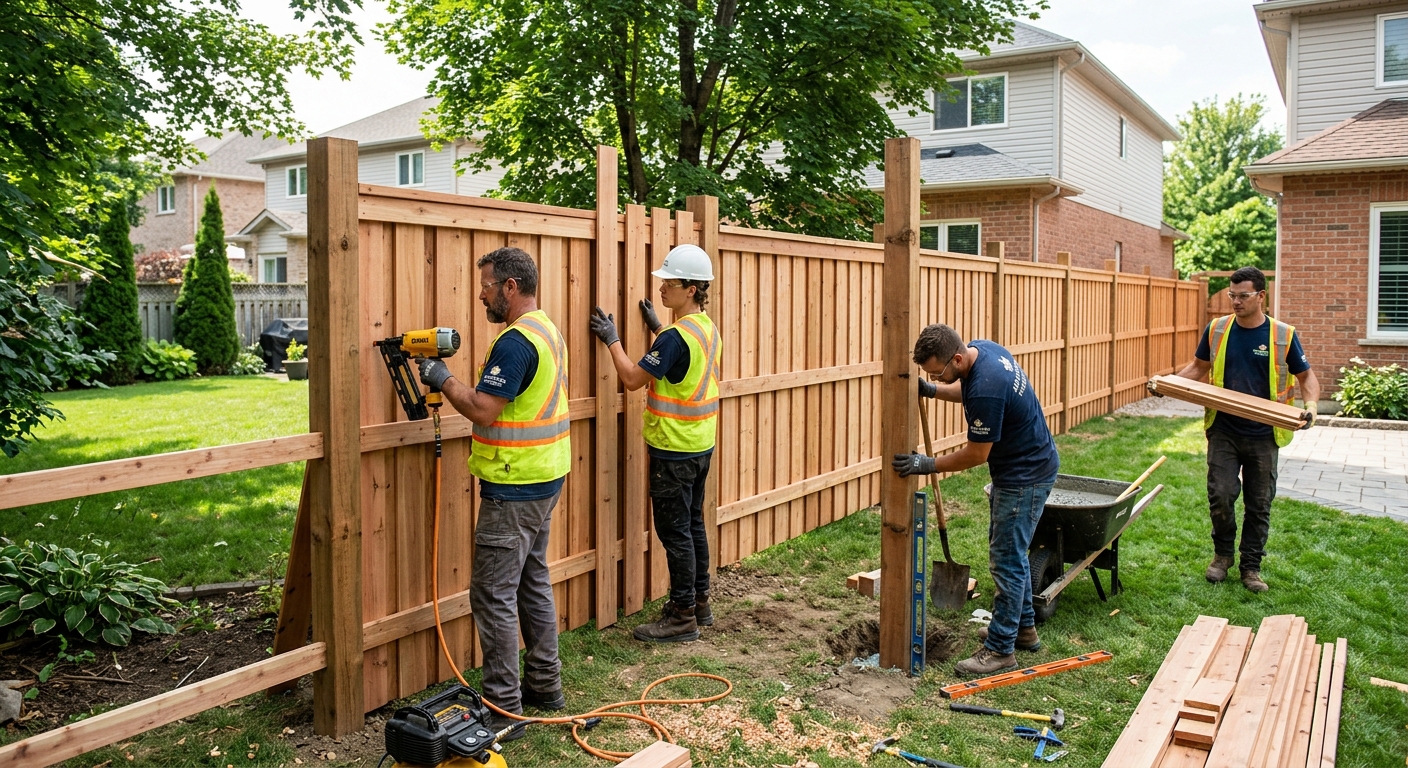
Fencing options and costs in Chatham
In Chatham, homeowners typically choose a fence based on a balance of privacy, maintenance, and the reality that winters around Windsor–Sarnia can be hard on wood posts and hardware. With a population of 43,550 (Statistics Canada, 2021 Census), there’s steady year-round demand, and fencing projects often follow the housing profile—every detached home is a potential customer because front, side, and backyard boundaries all need durable, correctly set posts. In established areas like south Chatham, we see repeat requests for upgrades to aging privacy lines, especially where lots are narrow and access for digging is limited.
Pricing in this corridor is strongly influenced by how we build for southern Ontario’s frost line. For most fencing in Windsor–Sarnia, we set posts deep enough to prevent frost heave—typically at least 3 ft deep in regular conditions, and often closer to 4 ft embedment on exposed or clay-heavy soil. That means more excavation, more concrete volume when we choose concrete setting, and longer posts, all of which raise labour and material costs compared to “shallow-set” builds. On top of that, gusts near open fields (and some shoreline-adjacent yards) can push us toward tighter post spacing, sturdier frames, and more wind-friendly panel options.
Below is a practical comparison of common fence types we install around Chatham and the Windsor–Sarnia market. Use it as a starting point before we price your exact length, gate count, and site conditions in your specific neighbourhood.
| Material |
Lifespan |
Maintenance |
Privacy Rating |
Price per Linear Foot |
| Pressure-treated pine (standard wood) |
10–15 years |
Stain/seal every 2–3 years to reduce grey weathering; inspect posts yearly |
High (solid panel/board-on-board) |
$45 – $80 |
| Cedar (natural rot resistance) |
15–25 years |
Seal or stain every 2–4 years; still needs seasonal inspection |
High (solid privacy) |
$60 – $95 |
| Vinyl / PVC (no-maintenance) |
20–30 years |
Rinse yearly; check for impact damage and footing movement |
High (good opacity with solid styles) |
$65 – $110 |
| Chain-link (galvanized steel) |
25–40 years |
Occasional cleaning; replace tension parts as needed |
Low to medium (open mesh; can add privacy slats) |
$30 – $55 |
| Aluminum ornamental |
20–35 years |
Rinse as needed; check hardware and gate alignment |
Low to medium (decorative pickets) |
$70 – $130 |
| Composite / recycled material |
20–30 years |
Low maintenance; occasional cleaning; verify post liners/footings |
High (solid styles) |
$80 – $125 |
Prices are estimates only and vary by project scope, site access and material selection.
What affects the price of fencing in Chatham
In Chatham and across the Windsor–Sarnia corridor, it’s common to see quotes for the “same” fence vary by 30–50%. The biggest reason is that the visible fence is only part of the job—posts, excavation, reinforcement, gates, and how we set foundations for winter performance can change dramatically from one yard to the next. Even within Ontario, an older neighbourhood with mature trees and tight driveways can add hours of labour for removals, hauling, and careful digging. At the same time, a simpler, open lot with easy access can reduce concrete and installation time, even if the fence height and style look identical.
Frost-depth building practice is the central cost driver. While the region design frost line is roughly 1.2 m (about 4 ft), frost heave risk is addressed by setting posts below the effective frost influence—commonly with a deep embedment and, on many projects, concrete setting. In cold Ontario conditions, this often works out to about 1.5–2.0 m into the ground for typical post length planning, meaning more digging and concrete volume. That’s one reason wood builds in the $45–$80 range can move upward when the job requires longer posts, deeper holes, and heavier gate hardware. Likewise, areas exposed to gusty conditions may require tighter spacing and upsized posts to keep panels from acting like sails, pushing costs higher within the same material band.
Local examples we see around Chatham that raise cost: (1) clay-rich soil where holes don’t drain well and we need proper concrete consolidation and extra cleanup, (2) yards near open farmland where gusts demand more rigid framing, and (3) gate-heavy designs—every gate increases labour for bracing, hinges, and alignment. By contrast, cost can drop when you have a short run of fencing, minimal grading, and no demolition of an old fence line.
| Price Factor |
Why It Matters |
Cost Impact |
| Fence length in linear feet — the primary cost driver |
More feet means more posts, more labour, and more materials |
Large swing; longest runs typically determine the total budget |
| Post depth required — frost line determines post length and hole depth |
Deeper embedment reduces heaving risk and keeps panels plumb |
Often adds labour and concrete; can move pricing up within the band |
| Post setting method — concrete vs. gravel pack vs. driven posts |
Concrete-set posts resist movement in freeze–thaw cycles |
Concrete increases cost but improves winter stability |
| Material choice — vinyl vs. cedar vs. chain-link |
Materials differ in price, rigidity, and how they handle impact |
Switching from chain-link (e.g., $30–$55) to vinyl (e.g., $65–$110) changes the baseline |
| Gate count and type — walk-through vs. drive-through (double) |
Gates require reinforced posts, hinges, and precise alignment |
One double drive gate can add a substantial premium versus no gates |
| Grade and terrain — sloped yards require stepped or raked panels |
Slopes can force custom layout and extra labour for alignment |
Stepped systems and raking often increase installation time |
| Old fence removal and disposal |
Demolition, hauling, and recycling/dump fees add work |
Can add days of schedule time depending on access and debris |
| Permit fees and survey / property line locate |
Correct boundary location avoids encroachment disputes |
May be a one-time cost, but protects you from expensive rework |
Permits & regulations in Ontario
In Ontario, permits are commonly required for fences above certain height thresholds—often around 2.0 m (6.5 ft) at the rear and about 1.0–1.2 m (3–4 ft) at the front or corner (requirements can vary by municipality and location within a lot). Regardless of permit requirements, all fences must respect property lines and municipal setback bylaws. If you’re in a neighbourhood with older layouts in Chatham, we also recommend verifying setbacks early, because fence lines sometimes conflict with drainage easements, laneways, or historical boundary markers.
Before digging any post hole, call to locate utilities using Ontario One Call. Even on residential lots, utilities can run deeper than homeowners expect—especially near driveways and mature tree areas. Next, confirm your boundary: obtain a survey or locate your property pins and boundary markers before installing. Shared fence ownership rules are addressed under provincial line-fences legislation, but your exact responsibilities (maintenance, cost sharing, and whether you can replace) depend on how the fence is classified and what’s already on the boundary.
What typically DOES require a permit: installing a new fence that exceeds common height thresholds, changing location close to setbacks, or building a fence that may be considered a “structure” due to height/material or special site conditions. What typically does NOT require a permit: replacing like-for-like fencing on the same footprint and within typical residential height limits (still confirm with your municipality and your contractor’s process).
To verify a contractor for work in Chatham: ask for an up-to-date insurance certificate of liability (and ensure it lists you as an interested party if required), confirm workers’ compensation coverage via WSIB clearance for their employees, and check Ontario business licensing or registration where applicable through the appropriate online resources. Get the policy dates and coverage amounts in writing, not just verbally.
Choosing the right fence material for Chatham
Choosing the right fence material for Chatham is mostly about matching your priorities—privacy, low maintenance, budget, and the lifespan you want—while still building for Ontario’s freeze–thaw cycle. Pressure-treated pine is usually the lowest upfront wood option, but it typically needs staining or sealing every 2–3 years to prevent weathering and keep the look even. Cedar offers a warmer appearance and better natural resistance to rot, yet it still benefits from periodic sealing to maintain colour and protect against moisture intrusion at post joints.
Vinyl and PVC are the low-maintenance favourites for many homeowners: they don’t need staining and are easy to rinse clean. The trade-off is higher upfront cost, and you still need proper post embedment and hardware alignment; vinyl can be susceptible to cracking with impacts, especially at thin sections around gates. Chain-link is often the best value when you want security and maximum longevity, but privacy is limited unless you add slats or a privacy screen. Aluminum ornamental fencing provides a rust-resistant, attractive look with mid-range pricing, but it won’t give you “solid backyard privacy.” Composite and recycled materials land in the higher band; they’re designed for longevity and consistent appearance with minimal upkeep, provided the foundation and post liners are installed correctly.
Because Windsor–Sarnia’s frost line is roughly 1.2 m, post planning matters as much as material. For most yards, concrete-set posts help prevent movement in winter freeze–thaw cycles, especially on clay-heavy ground or exposed runs. In windy sites near open fields, we also tighten post spacing and brace gates so panels don’t rack under gusts and snow load. If privacy is your goal, a solid vinyl style can justify the jump over chain-link: for example, chain-link pricing typically sits around $30–$55 per linear foot, while vinyl commonly runs $65–$110—those extra dollars largely buy opacity, rigidity, and better resistance to sagging over time.
| Material |
Cold Tolerance |
Lifespan |
Annual Maintenance |
Best For |
Price Band |
| Pressure-treated pine |
Good when posts are set deep and properly sealed at cut ends |
10–15 years |
Seasonal inspection; stain/seal every 2–3 years |
Budget-focused privacy where you’re OK with periodic maintenance |
$45 – $80 |
| Cedar |
Good; handles moisture better than many softwoods |
15–25 years |
Seal/stain every 2–4 years; check posts yearly |
Appearance + longer natural rot resistance for privacy lines |
$60 – $95 |
| Vinyl / PVC |
Good; foundation and impact protection are key in extreme cold |
20–30 years |
Rinse yearly; inspect hinges and gate alignment |
Low-maintenance privacy and clean curb appeal |
$65 – $110 |
| Chain-link |
Excellent; galvanized steel resists winter corrosion |
25–40 years |
Minimal; occasional wash and hardware checks |
Security and pet containment with minimal upkeep |
$30 – $55 |
| Aluminum ornamental |
Excellent; coatings resist salt and freeze effects |
20–35 years |
Rinse as needed; check hardware |
Decorative security when you want an open look |
$70 – $130 |
| Composite / recycled |
Good; performs well when supported by proper footings |
20–30 years |
Low; clean occasionally and monitor footing movement |
Solid privacy with minimal upkeep |
$80 – $125 |
How to choose a fencing contractor in Chatham
Choosing the right fencing contractor in Chatham is about proof, not promises. Start with credentials. In Ontario, ask for their up-to-date Ontario business registration (where applicable), a certificate of liability insurance, and confirmation that they have WSIB coverage for their workers (or appropriate equivalent arrangements for coverage status). Don’t guess—ask to see the certificates, check the expiry dates, and verify that the coverage limits are reasonable for construction work. If you want extra comfort, request a WSIB clearance letter and ensure the certificate of insurance matches the contractor’s legal name.
Then, get 2–3 itemised written quotes with a clear labour and materials breakdown. You should see line items for excavation, post setting method (concrete vs gravel pack/driven posts), post depth, gate hardware/bracing, rail and panel components, and disposal/removal if included. Avoid lump-sum quotes that don’t explain what’s excluded. Read the scope for the small things that typically cause disputes: permit pull included or not, survey/locate included or not, whether demolition haul-away is included, how tree/utility conflicts are handled, and whether the contractor will step/rake panels to match slope. A solid workmanship warranty matters—ask what length they cover and what they consider a defect.
For payment, never pay more than 10–15% upfront. Hold back the remainder until key completion items are finished and site cleanup is done. Finally, demand a start date and a realistic completion estimate in writing, including what happens if weather or soil conditions delay digging—Chatham’s freeze–thaw cycles can affect foundation work timing.
- Ask for proof of liability insurance and confirm coverage dates.
- Verify WSIB status and request a clearance letter if available.
- Confirm they include utility locates before digging.
- Require a posted plan that shows post depth and setting method.
- Get line-by-line labour/materials, not a single lump sum.
- Confirm whether demolition and disposal of the old fence are included.
- Check gate pricing: walk-through vs double drive-through, plus bracing.
- Make sure the quote states who handles permits (if required) and associated fees.
- Ask how they protect fence lines from soil movement (especially clay yards).
- Verify warranty terms: workmanship length, product warranty, transferability.
- Agree on a payment schedule; keep a holdback until completion.
- Confirm cleanup and final grading around post holes.
Red flags I see with fencing contractors in Chatham include: refusing to provide certificates of insurance or WSIB information, using vague “we’ll set posts properly” language without specifying depth and setting method, quoting without any breakdown for gates or excavation, requiring large upfront payments beyond 10–15%, and promising a start date without acknowledging frost/soil conditions that impact foundation work.
Frequently asked questions — fencing in Chatham
How long does a wood fence last in Chatham?
In Chatham, a properly built wood privacy fence is commonly expected to last about 10–15 years for standard pressure-treated pine, assuming posts are set deep enough for winter movement and the fence gets basic maintenance. Cedar can often reach 15–25 years because it resists rot better, but it still needs periodic sealing or staining to prevent moisture-related wear. The biggest reliability factor is foundation work: in the Windsor–Sarnia area, we design around southern Ontario’s frost line (roughly 1.2 m) so posts are embedded far enough to reduce heaving during freeze–thaw cycles. If someone sets posts too shallow or skips concrete in clay-heavy spots, you’ll usually see lean and loosening earlier. If you’re budgeting, wood typically falls around the $45–$80 per linear foot band, but heavier gate bracing and deeper concrete-set footings can push you toward the upper end.
Who owns and maintains a shared fence?
In Ontario, shared fence ownership and maintenance is governed by provincial line-fences legislation, but the real answer depends on how the fence is positioned relative to the boundary and how it’s classified (and what your lot agreement or prior arrangements show). In practice around Chatham, when a fence sits on or effectively forms the boundary, neighbours often share responsibility for maintenance and replacement costs—yet disputes happen when one party replaces without notice or when the fence is not actually on the boundary. If you’re planning an upgrade, start by identifying boundary markers or getting a survey. Then, communicate in writing with your neighbour about the scope (repair vs replacement), material choice, height, and who pays. A licensed, insured contractor can also help document the existing conditions and location so you’re not negotiating blind.
How do I find my property line before fencing?
To find your property line before fencing in Chatham, use a survey or locate your property pins/boundary markers—don’t rely on the edge of grass or an old fence line. The most accurate route is to request a recent survey and compare the recorded dimensions to the markers on-site. If you don’t have a survey, you can usually start with the municipality’s land records and then hire for a professional locate. Before digging post holes, also call Ontario One Call to mark underground utilities; utility stakes help prevent expensive damage and delays. This step is especially important for fences near driveways, services, or mature trees, where lines can be deeper than expected. Taking these steps early protects you from encroachment disputes, which can turn a straightforward fence job into costly rework.
What's the most low-maintenance fence?
For most Chatham homeowners, the most low-maintenance option is typically vinyl/PVC or aluminum, because they don’t require staining and resist rot. Vinyl generally gives you strong privacy potential with solid styles, while aluminum is usually decorative/open. In the Windsor–Sarnia climate, both can perform well as long as posts are properly set for frost movement and gate hardware is adjusted correctly. Vinyl commonly ranges around $65–$110 per linear foot in this market, which is why people often view it as “worth it” when they want fewer weekend projects. Chain-link is also low-maintenance and very durable, but it won’t provide real privacy unless you add slats or screens. If you want an easy-care backyard boundary, vinyl privacy panels with properly embedded posts are a frequent top pick.
How tall can my fence be in Chatham?
Fence height limits in Ontario are commonly handled by municipal bylaws, and permits often come into play above typical thresholds—commonly around 2.0 m (6.5 ft) at the rear and about 1.0–1.2 m (3–4 ft) at the front or corner. Chatham homeowners should verify the exact requirement with the municipality before ordering materials, especially if you’re aiming for a tall privacy fence on a corner lot or near a driveway. Height restrictions can also interact with sightlines near intersections and any easements. The safest process is to confirm your intended height and location first, then ask your contractor whether a permit pull is required for your specific plan. A good fence quote should state how permits are handled rather than leaving you to discover it after the materials arrive.
Should fence posts be set in concrete here?
In most Chatham and broader Windsor–Sarnia projects, concrete-set posts are often recommended to reduce movement caused by winter freeze–thaw cycles—especially on clay-heavy soils, exposed fence runs, and gate-heavy designs. Ontario’s frost line planning (roughly 1.2 m regionally) drives the need for deeper embedment so posts are below the effective frost influence. Concrete helps lock the post in place and improve long-term stability when the ground shifts. That said, the best method depends on your site conditions: some contractors use gravel pack or alternative methods in specific soil settings, but they must still achieve the required embedment depth and stability. If your quote is comparing wood in the $45–$80 range to a higher option, ask whether concrete setting and required post depth are included—those two factors are frequently what separates “looks fine now” from “still straight after a few winters.”