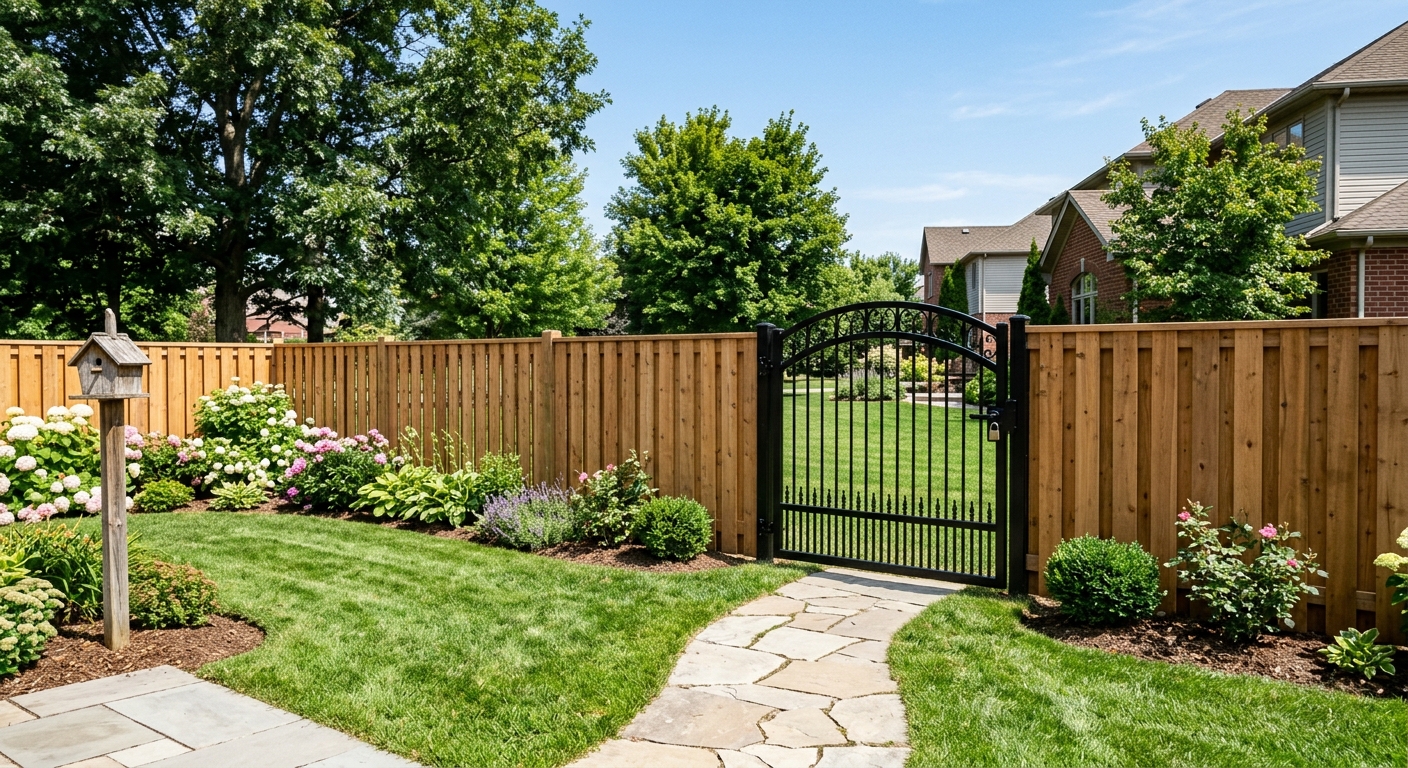
Fencing options and costs in Pembroke
Pembroke homeowners typically choose between wood, vinyl/PVC, chain-link, aluminum, and newer composite options—then we match the material to how your yard freezes, drains, and weathers. In the Kingston–Pembroke economic region, 57.8% of households own their homes (Statistics Canada, 2021 Census), and with 57.8% of dwellings being single-detached houses, a lot of properties need full runs of boundary fencing, gate upgrades, and occasional panel replacements. Demand is especially steady in established pockets like North Pembroke, where older housing stock and mature lots often mean longer fence lines, more grade changes, and repairs.
Pricing in Pembroke is shaped by two local realities: freeze–thaw movement and periodic wind loading near open areas. Southern and eastern Ontario frost penetration is commonly planned around 1.2 m (4 ft), so posts are usually set roughly 36–48 inches deep to sit below the frost line and reduce heaving. Along with that, many jobs require concrete-set posts for structural sections and gates, which pushes labour and materials toward the upper end—especially where soils stay wet or where access is tight.
Material choice then changes the maintenance workload. Pressure-treated wood can be the lowest upfront buy, but it typically needs staining every 2–3 years in our damp winters. Vinyl/PVC costs more initially but handles moisture well. Chain-link costs less and lasts, though privacy is limited. When you’re ready to budget, the table below gives typical installed bands for Pembroke.
| Material |
Lifespan |
Maintenance |
Privacy Rating |
Price per Linear Foot |
| Pressure-treated pine (standard wood) |
10–15 years |
Stain or seal every 2–3 years |
High (solid boards) |
$55 – $95 |
| Cedar (natural rot resistance) |
15–25 years |
Light staining/brightening every 2–4 years |
High (solid boards) |
$75 – $110 |
| Vinyl / PVC (no-maintenance) |
20–30 years |
Rinse as needed |
High (privacy styles) |
$75 – $140 |
| Chain-link (galvanized steel) |
20–35 years |
Occasional rinse/straighten; occasional slat add-ons |
Low–Medium (privacy slats optional) |
$40 – $80 |
| Aluminum ornamental |
25–40 years |
Rinse; repaint only if damaged |
Low–Medium |
$80 – $160 |
| Composite / recycled material |
25–35 years |
Rinse; minimal periodic checks |
High (board-style composites) |
$95 – $155 |
Prices are estimates only and vary by project scope, site access and material selection.
What affects the price of fencing in Pembroke
In Pembroke, two quotes for the “same” fence can differ by 30–50% because your soil, access, gate needs, and how deep we must set posts all vary from lot to lot. In the Kingston–Pembroke region, labour can also swing based on whether crews can machine auger holes quickly or whether we’re forced into hand digging due to rock, tight setbacks, or landscaped interference.
Frost line depth is the biggest structural cost driver. Contractors plan posts about 4–6 inches below the design frost depth, which is why local holes are commonly in the 1.2 m range or deeper. In practice that means longer posts, more auger time, and more concrete for structural sections and gates—so a wood fence can creep from the $55–$95 band toward the high end when more posts are concrete-set. Wind exposure plays the second role: while we’re not as extreme as the open Prairies, gusty conditions near large open areas and weather fronts mean privacy-style fences often require tighter post spacing or sturdier framing to reduce panel bounce. That’s one reason a higher privacy build can push toward the $75–$140 range for vinyl/PVC even when the fence line isn’t unusually long.
Concrete examples from Pembroke jobs: (1) yards with clay or silty, water-holding soils tend to need extra attention to drainage and deeper holes, increasing material and labour; (2) a run that crosses a sloped backyard usually requires stepped or raked sections—more labour and sometimes more board waste; (3) gate openings often require heavier posts and solid hardware, which raises the per-linear-foot effective cost for that segment. With many homes built before 1981 (73.3%—Statistics Canada, 2021 Census), older property lines and mature landscaping can also add extra demo and disposal time, pushing projects upward by several hundred dollars to over a thousand depending on scope.
| Price Factor |
Why It Matters |
Cost Impact |
| Fence length in linear feet — the primary cost driver |
More lineal footage means more posts, rails, boards/panels and hardware |
Often the biggest lever; small access issues scale up |
| Post depth required — frost line determines post length and hole depth |
Deeper holes and longer posts are required to reduce heaving |
Can add noticeable labour + concrete/post material cost |
| Post setting method — concrete vs. gravel pack vs. driven posts |
Concrete-set posts resist movement better in freeze–thaw conditions |
Concrete set typically increases costs vs gravel-only methods |
| Material choice — vinyl vs. cedar vs. chain-link |
Materials differ in upfront cost and winter performance |
Switching from chain-link to vinyl or cedar is a major jump |
| Gate count and type — walk-through vs. drive-through (double) |
Gates require reinforced posts and heavier hardware |
Double drive gates often raise the total by a large margin |
| Grade and terrain — sloped yards require stepped or raked panels |
Adjustments change framing, cutting and install time |
Higher labour and potential material waste |
| Old fence removal and disposal |
Demolition, hauling, and protecting retained landscaping |
Often adds a separate line item; increases with debris volume |
| Permit fees and survey / property line locate |
Some fence projects require verification to avoid encroachment |
Can add several hundred dollars depending on scope |
Permits & regulations in Ontario
In Ontario, fences may require a building permit when their height exceeds typical thresholds—commonly about 2.0 m (6.5 ft) for rear yards and around 1.0–1.2 m (3–4 ft) for the front or corner (exact requirements can vary by municipality). Even when a permit isn’t needed, the fence must stay within property lines and comply with municipal setback rules. Before any post hole is dug, you also need utility locates through Ontario One Call to prevent damage to buried services.
For Pembroke homeowners, the practical approach is: (1) confirm where your property line is by obtaining a survey or locate your pins; (2) check the local fence-height and setback requirements before construction—especially if you’re planning a privacy fence that can catch wind; (3) do the Ontario One Call locate before digging; and (4) keep documentation showing the contractor used correct post positions.
Shared fence ownership is generally governed by Ontario’s line-fences principles, which means disputes often come down to whether the fence is on the boundary and how the neighbour’s portion is treated. For contractor compliance, verify three things before work starts: (a) licensing/registration where applicable via Ontario’s public business and contractor resources; (b) liability insurance—request a certificate of insurance showing the coverage limits; and (c) worker coverage—ensure the contractor can demonstrate WSIB/WCB coverage. Ask for proof you can review on-site or in the quote package, and keep a copy for your records.
Choosing the right fence material for Pembroke
Choosing a fence in Pembroke is less about trends and more about matching material to your priorities: privacy, low maintenance, budget, and lifespan in our freeze–thaw winters. Pressure-treated pine is the budget workhorse, but it typically needs staining every 2–3 years to reduce grey weathering and keep moisture from degrading the surface. Cedar looks better for longer and has natural rot resistance, yet it still benefits from periodic maintenance and proper airflow behind boards. Vinyl/PVC is usually the lowest-maintenance option because it doesn’t rot, and it’s a strong fit for damp conditions; however, extreme cold can make some panels feel “stiffer,” so good installation (level posts, correct spacing) matters. Chain-link has the longest value per dollar for many yards, but privacy requires slats or adding screening plants, so it’s rarely the first choice for people wanting solid privacy. Aluminum ornamental is clean-looking and rust resistant, but it’s not a privacy solution unless you pair it with landscaping.
Because Kingston–Pembroke frost planning commonly uses about 1.2 m (4 ft) frost depth, most installed fences rely on deeper, concrete-set posts for stability—particularly at gate locations and structural segments. That design discipline affects all materials: posts must resist heaving, or even the best panel material will fail when frames move. Wind and snow loads then influence spacing and bracing—especially for 6–8 ft privacy fences in gusty local conditions, where extra framing cost can push you toward the top of the vinyl/PVC range.
As a dollar example, if you’re looking at a privacy fence where pressure-treated pine might land around $55 – $95 per linear foot and vinyl/PVC around $75 – $140, the typical justification for vinyl is time saved: no staining cycles and better long-term appearance when you have an older home layout and tight schedules.
| Material |
Cold Tolerance |
Lifespan |
Annual Maintenance |
Best For |
Price Band |
| Pressure-treated pine |
Good when posts are set below frost and hardware is corrosion-rated |
10–15 years |
1–2 short inspections; stain/seal every 2–3 years |
Lowest initial cost with a willingness to maintain |
$55 – $95 |
| Cedar |
Good in cold; performs well with proper ventilation and protected edges |
15–25 years |
1 inspection; stain/brighten every 2–4 years |
Better curb appeal while staying budget-conscious |
$75 – $110 |
| Vinyl / PVC |
Very good; stable when installed square and with correct spacing |
20–30 years |
Rinse as needed; check for impact damage |
Low maintenance and long-term appearance |
$75 – $140 |
| Chain-link |
Excellent for freeze–thaw; metal holds shape |
20–35 years |
Minimal; occasional rinse and tension checks |
Security, pets, and budget-friendly boundary fencing |
$40 – $80 |
| Aluminum ornamental |
Excellent; coated metal resists cold and rust |
25–40 years |
Rinse; spot paint only if chipped |
Decorative look with durability |
$80 – $160 |
| Composite / recycled |
Good; resists rot and warping when installed correctly |
25–35 years |
Minimal; periodic visual inspection |
Privacy style with low maintenance expectations |
$95 – $155 |
How to choose a fencing contractor in Pembroke
For fencing in Pembroke, I treat contractor vetting as part of your project budget—because a short, sloppy install is what causes post heaving, sagging gates, and warped panels after the first winter. Start by verifying the contractor’s proof of liability insurance (ask for a current certificate of insurance and confirm your address is covered). Next, confirm worker coverage: in Ontario that typically means WSIB. Request documentation—don’t accept “we’ll cover it” as an answer. Finally, verify their standing through Ontario’s public business/contractor resources and make sure the company is set up to invoice properly under its business name.
Then get 2–3 itemised, written quotes—not one-line “lump sums.” Look for a breakdown of labour and materials (posts, rails, boards/panels, concrete amount, hardware, gate components), and confirm what’s included: permit pulling (if required), utility locate responsibility, and disposal of removed fence materials. Ask for how they’ll set posts given frost depth—concrete-set for structural sections is common here. Warranty matters too: request the workmanship warranty length and whether it’s transferable if you sell the home. Product/manufacturer warranty varies by brand and typically doesn’t cover improper installation.
Payment schedule should be controlled: never pay more than 10–15% upfront. Hold back payment until the job is complete, gates operate correctly, and the fence line is straight and secured. Also insist on a written start date and completion estimate, because winter scheduling and material lead times affect what you’ll get.
- Ask for proof of WSIB coverage before work begins.
- Request a current certificate of liability insurance with coverage limits.
- Get quotes that separate labour from materials and list quantities (posts, rails, concrete, hardware).
- Confirm post depth and setting method (concrete-set where required, not “gravel-only” by default).
- Clarify gate reinforcement (hinge posts and latch hardware grade).
- Check if permits and utility locates are included or billed separately.
- Verify property-line responsibility (survey locate vs. “we’ll eyeball it”).
- Confirm disposal is included if you remove an old fence.
- Request a workmanship warranty in writing (and what it covers).
- Ask if the product warranty is provided by the manufacturer and how claims are processed.
- Use a staged payment plan with a holdback until complete and cleaned up.
- Ensure the proposal includes colours, styles, and fasteners/hardware specifications.
Red flags I see in Pembroke include: quoting too low with no itemisation, promising “shallow holes” to save time, skipping insurance/WSIB proof, not mentioning concrete-set posts at gates, and using vague timelines (“sometime in the next month”) without dates.
Frequently asked questions — fencing in Pembroke
What is the most weather-resistant fence for Pembroke's climate?
For Pembroke and the broader Kingston–Pembroke area, the most weather-resistant choice is typically vinyl/PVC or properly installed cedar, with concrete-set posts for structural sections. Vinyl/PVC holds up well through freeze–thaw because it doesn’t rot, and good installation (level spacing, correct post depth) matters as much as the material itself. Cedar is naturally rot-resistant and can perform beautifully, especially where you want a warmer look, but it still needs periodic maintenance to protect surfaces and edges. If you’re aiming for a “set it and forget it” build, vinyl/PVC usually comes with higher upfront cost—often within the $75 – $140 per linear foot band depending on privacy height and gate complexity. The real long-term advantage comes from frost-safe post setting planned around the local frost depth.
How do I prevent wood fence rot in Pembroke?
Wood rot prevention in Ontario starts below grade: use post setting methods that resist heaving, typically setting posts deeper and using concrete for stability where needed. Rot is often accelerated by water pooling at bases and by boards staying wet at ground level. Practical steps include keeping the lowest rail/board off standing water, using proper corrosion-rated fasteners, and staining/sealing on a regular cycle—commonly every 2–3 years for pressure-treated pine to prevent grey weathering from turning into surface breakdown. For cedar, maintenance still helps: even rot-resistant wood needs protection and airflow. In Pembroke, older lots can have drainage issues, so if your fence line crosses damp soil or low spots, ask your contractor about drainage-minded installation rather than just replacing boards. With correct installation, rot risk drops dramatically even through harsh winters.
What is the cost per linear foot for fencing in Pembroke?
In Pembroke, per-linear-foot pricing depends on material and site conditions, but your local bands are a good benchmark. For pressure-treated pine wood, installed pricing often lands in the $55 – $95 per linear foot range. Vinyl/PVC is commonly higher at about $75 – $140 per linear foot when you’re doing privacy-style panels or heavier gate hardware. Chain-link typically runs $40 – $80 per linear foot, and aluminum ornamental tends to sit in the $80 – $160 per linear foot range because of materials and the framed build. Final quotes can move upward if frost-safe deeper post holes, concrete-set posts, gate reinforcement, sloped yard stepping, or old fence removal are included. Always compare quotes on the same assumptions for post depth and gate scope.
Should I repair or replace my old fence in Pembroke?
In Pembroke, repair is usually the best move when the line is mostly sound and the damage is limited to a few boards, rails, or gate hinges. Replacement becomes more practical when you see repeated post movement from freeze–thaw (leaning sections), widespread rot at the base, or multiple posts that clearly weren’t set deeply enough in prior installs. You’ll also want to consider weather exposure: in windy stretches, a partially failing frame can cause cascading panel issues. If your fence is built with older fastening methods or posts are near frost-sensitive depths, repairs can cost the same as replacement over a few seasons. A good contractor will evaluate what’s structural versus cosmetic and explain the expected service life after a repair. That’s especially important for homes built before 1981—many of which have fence hardware and layout challenges that weren’t designed around today’s frost-safe standards.
How do I handle a fence dispute with neighbour in Ontario?
Fence disputes in Ontario usually come down to the property line location and who is responsible for shared boundary fencing. First, don’t move posts or remove sections until you confirm the boundary—obtain a survey or locate the property pins so you’re working from a verifiable line, not assumptions. Next, document the situation: photos, measurements, and copies of any prior correspondence or fence agreements. If it’s a shared fence, Ontario line-fences principles can guide how responsibilities are handled, but the practical best step is to communicate and align on repair/replacement scope. If disagreement continues, consider mediation or legal advice rather than escalating by demolition. In Pembroke, I also recommend that both parties agree on contractor selection and installation standards (especially post depth and frost-safe setting), so you’re comparing like-for-like solutions.
What fence style offers the best wind resistance in Pembroke?
Wind resistance in Pembroke comes more from how the fence is framed and supported than from the “privacy” label. Solid privacy fences can catch gusts, so they need stronger bracing, proper post spacing, and often more reinforcement around gates to prevent panel bounce. A common approach is using a privacy design with tighter post spacing and sturdy rails, with concrete-set posts in structural points. If you want a more wind-friendly option, consider a semi-open style (like aluminum ornamental with pickets or a lower-privacy board layout) that reduces sail area, or chain-link with additional bracing where needed. For 6–8 ft privacy builds near gustier exposure pockets, your contractor may recommend upsizing posts or adjusting panel design to withstand seasonal gusts. The safest “wind-resistant” outcome is achieved when post depth and setting are planned for freeze–thaw and the framing is built for Ontario wind loading, not just aesthetics.