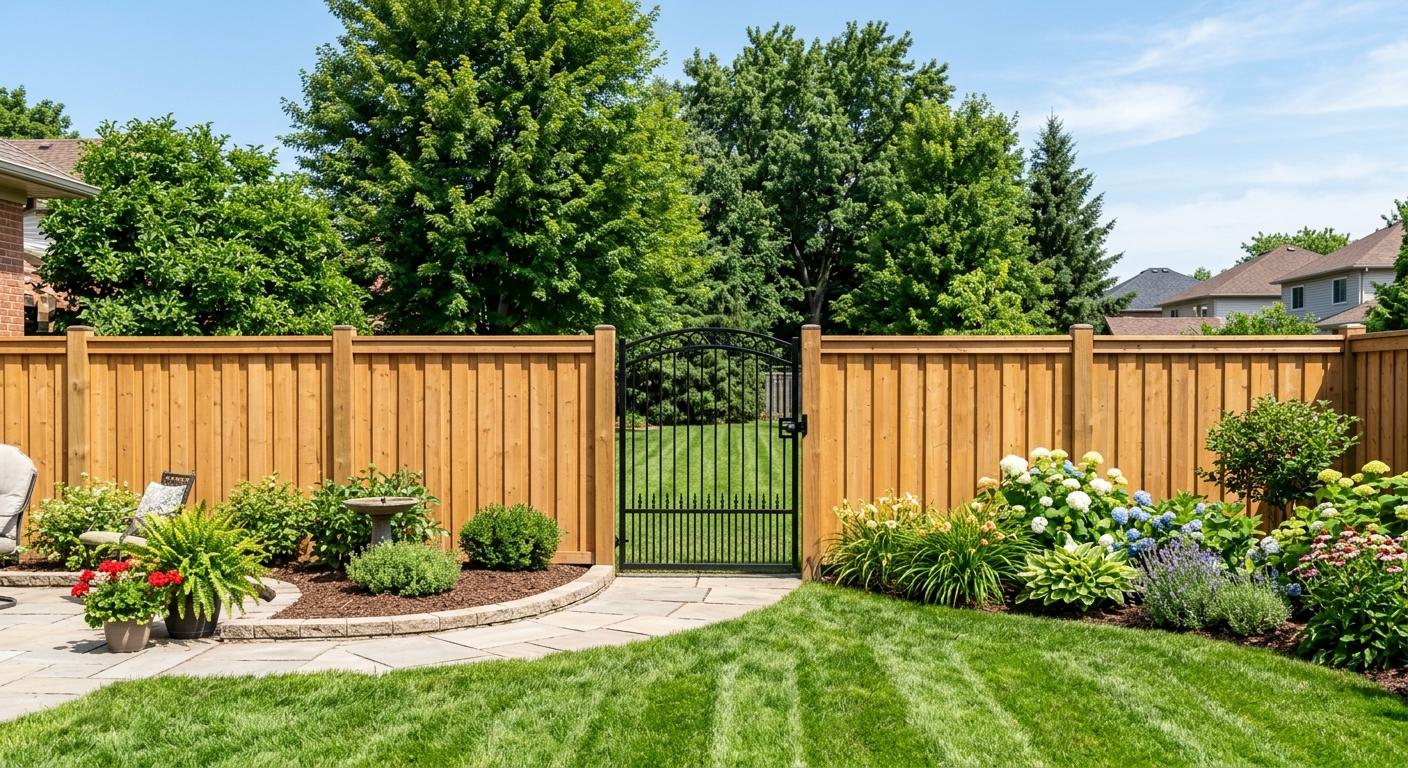
Fencing options and costs in Iroquois Falls
Iroquois Falls homeowners often start shopping for fencing because most neighbourhood lots are close to the street and adjacent properties need clear boundaries year-round. With 74.9% of households owning their homes and about 75.9% of dwellings being single-detached homes (Statistics Canada, 2021 Census), demand is steady for backyard privacy, dog containment, and driveway or side-yard enclosures. The city’s older housing stock also matters: 83.8% of homes were built before 1981 (Statistics Canada, 2021 Census), which frequently means renovations and lot line updates—prime triggers for fence replacement.
In the Northeast of Ontario, frost and freeze–thaw cycles drive up installation time and material choices. Even when the winter is less wind-driven than open prairie sites, you still get ground movement that can loosen shallow-set posts, so contractors often plan deeper holes and stronger post anchoring. Labour availability can also affect pricing: in smaller communities, fewer crews mean tighter scheduling, which can raise labour portions of your quote, especially when multiple nearby jobs are happening at once.
For Iroquois Falls, fencing work is especially in demand around the residential cores near Main Street and the areas off the main highway access where lots are more exposed and require consistent boundary fencing. Before you choose a material, it helps to compare typical costs and expected service levels—see the table below for a practical range.
| Material |
Lifespan |
Maintenance |
Privacy Rating |
Price per Linear Foot |
| Pressure-treated pine (standard wood) |
10–15 years |
Stain/seal every 2–3 years; occasional board replacement |
6/10 (solid pickets); 8/10 (solid panel) |
$80–$130 |
| Cedar (natural rot resistance) |
15–20 years |
Light staining yearly to every 2 years; clean/inspect after winter |
7/10 (solid styles) |
$95–$140 |
| Vinyl / PVC (no-maintenance) |
20–30 years |
Rinse as needed; no staining |
8/10 (solid privacy) |
$85–$140 |
| Chain-link (galvanized steel) |
20–30 years |
Rinse; straighten after storms |
2/10 (visibility); 4/10 (privacy slats) |
$55–$90 |
| Aluminum ornamental |
25–35 years |
Occasional washing; inspect hardware |
3/10 (open) |
$95–$150 |
| Composite / recycled material |
20–30 years |
Minimal cleaning; periodic inspection |
7/10 (solid boards) |
$110–$170 |
Prices are estimates only and vary by project scope, site access and material selection.
What affects the price of fencing in Iroquois Falls
In Iroquois Falls, it’s common to see the same fencing project come back 30–50% apart across the Northeast region and broader Ontario—even before you compare materials. The biggest reason is that quotes often bundle different assumptions about ground conditions, post depth, and how exposed your yard is. When a contractor has to set posts deeper and work longer with augers or excavators, the labour portion rises quickly, especially in colder stretches when soil is harder to dig and the install window is shorter. Material also shifts the outcome: vinyl/PVC and aluminum generally cost more per foot than wood or chain-link, and premium hardware becomes a requirement for stability in rough weather.
Frost line depth is a major cost setter. A common rule of thumb is that posts should be set roughly 4–6 inches below the design frost depth; in cold Ontario settings this often works out to posts going about 1.5–2.0 m into the ground, which means longer posts, more digging, and often concrete setting for consistent results. In more wind-exposed rural lots, tighter post spacing and stronger panel frames can push the design toward higher-cost wood privacy or vinyl privacy styles, while open styles like chain-link may hold up with less structural strengthening.
Concrete examples that change costs in Iroquois Falls: (1) sandy or rocky soil can increase excavation time, sometimes adding cost even if the fence length stays the same; (2) removing an older, leaning fence with buried posts can add disposal and extra labour—particularly if boards are weathered and posts are encased; (3) sloped yards can require raked or stepped rails, which increases layout time. If your baseline wood privacy quote falls near the $80–$130/linear foot band, a switch to vinyl or aluminum can move you into the $85–$140 or $95–$150/linear foot ranges once upgraded posts, stronger rails, and longer concrete-set embeds are included.
| Price Factor |
Why It Matters |
Cost Impact |
| Fence length in linear feet |
More runs means more posts, rails, and fittings. |
Largest driver (can swing total by hundreds to thousands). |
| Post depth required |
Frost heave resistance depends on embed depth. |
Deeper embed usually adds material and excavation time. |
| Post setting method |
Concrete vs gravel pack vs driven posts affects stability. |
Concrete setting typically costs more but reduces future movement risk. |
| Material choice |
Vinyl and aluminum require different brackets and hardware. |
Shifts you between wood ($80–$130), chain-link ($55–$90), vinyl ($85–$140), and aluminum ($95–$150) bands. |
| Gate count and type |
Gates need stronger frames and more adjustable hardware. |
Each gate commonly adds noticeable labour and material. |
| Grade and terrain |
Slope needs stepped panels or raked rails. |
More layout time and potential extra framing/rails. |
| Old fence removal and disposal |
Buried posts and debris removal add work. |
May add a significant one-time cost to your quote. |
| Permit fees and survey / property line locate |
Exact line location prevents encroachment issues. |
Can add administrative and professional service costs. |
Permits & regulations in Ontario
In Ontario, fence rules are primarily about property lines and (in many municipalities) permits for taller fences. As a practical guideline homeowners should plan around, fences above a typical height threshold of about 2.0 m (6.5 ft) at the rear and about 1.0–1.2 m (3–4 ft) at the front or corner may require a building permit, depending on your exact location and municipal by-laws. Even when a permit is not triggered, the fence must stay within your property boundaries and respect required setbacks where they apply.
Before digging any post holes, call for utility locates. In Ontario, that’s done through Ontario One Call (call before you dig). If you’re unsure where your property line sits, obtain a survey or have pins/lines located—this avoids costly disputes when a new fence crosses into a neighbour’s yard or into a reserve area.
Shared fence ownership is generally governed by line-fences principles under provincial legislation; the key for homeowners is documenting what was installed and who is responsible for maintenance, especially if you’re replacing an older boundary fence.
For contractor verification in Iroquois Falls: ask for the Ontario licence number (where applicable for the work type), and request a certificate of insurance showing liability coverage. Confirm the contractor has active WSIB coverage (or the appropriate coverage/clearance documentation) before work begins—your quote should include the coverage details. Also keep a copy of their insurance certificate and any clearance/coverage letter for your records.
Choosing the right fence material for Iroquois Falls
The best fence in Iroquois Falls usually comes down to your priorities: privacy, low maintenance, budget, and how long you want to avoid major repairs. Pressure-treated pine is the budget-friendly starting point, but it typically needs staining or sealing every 2–3 years to reduce greying and to protect the boards from moisture cycling. Cedar offers a more attractive look and has natural rot resistance, but you still need periodic maintenance to keep it from weathering unevenly.
For low-maintenance ownership, vinyl/PVC stands out because it doesn’t require staining; however, in extreme cold it can become brittle if the system isn’t installed with correct post embed depth and proper spacing. Chain-link is the lowest-cost long-life option—great for pets and boundary definition—but it offers little privacy unless you add privacy slats or a secondary screen. Aluminum ornamental is rust-resistant and durable with mid-range pricing, but it’s mainly decorative/open and not ideal for full privacy.
Because Northeast Ontario has freeze–thaw ground movement, post depth matters more than many homeowners expect. Even for wood and vinyl, contractors usually plan deeper post embeds to reduce movement; concrete-set posts are often recommended when soil conditions are prone to shifting or where frost impacts are more pronounced. For wind and snow load considerations, solid privacy fences need solid framing and properly spaced posts so the wind load doesn’t rack the panels. Open fences like chain-link generally catch less wind like a sail.
Example: if a pressure-treated pine privacy fence is quoted near the $80–$130/linear foot band, and cedar comes back closer to the $95–$140/linear foot range, the extra cost can be justified if you want better appearance and reduced rot risk without moving to vinyl’s typically higher upfront cost.
| Material |
Cold Tolerance |
Lifespan |
Annual Maintenance |
Best For |
Price Band |
| Pressure-treated pine |
Good with proper staining and post embed depth |
10–15 years |
Stain/seal every 2–3 years; inspect boards after winter |
Budget privacy with willingness to maintain |
$80–$130 |
| Cedar |
Very good; handles wet-dry cycles better than most softwoods |
15–20 years |
Light staining yearly to every 2 years |
Natural look with moderate maintenance |
$95–$140 |
| Vinyl / PVC |
Good if installed with correct supports in freeze conditions |
20–30 years |
Minimal—rinse/clean as needed |
Low maintenance privacy |
$85–$140 |
| Chain-link |
Excellent; galvanized hardware resists winter wear |
20–30 years |
Minimal—check tension and straighten if needed |
Pets/containment and secure boundaries on a budget |
$55–$90 |
| Aluminum ornamental |
Excellent; no rust with proper powder coating |
25–35 years |
Low—occasional washing and hardware checks |
Front yard definition and durability |
$95–$150 |
| Composite / recycled |
Good; performs well when posts are set correctly |
20–30 years |
Minimal—periodic cleaning and inspection |
Long-life privacy without wood staining |
$110–$170 |
How to choose a fencing contractor in Iroquois Falls
Choosing the right fencing contractor matters as much as the material. In Ontario, you should verify licensing (where applicable to the trade or work type), liability insurance, and WSIB/WCB coverage before signing. Start by asking for an Ontario business registration or licence details if provided, then review their certificate of insurance—make sure liability is current and lists the right insured party. For WSIB, request a clearance letter or confirmation of coverage so you’re not responsible for labour-related gaps if a worker is injured on your property.
Next, collect 2–3 itemised quotes, not lump sums. You want a line-by-line breakdown showing labour hours, post materials, concrete setting (if included), rails/pickets, gates, hardware, and any removal/disposal. Clarify what’s excluded: for example, tree trimming, digging around existing buried services, hauling, or replacing damaged landscaping. Also ask whether the contractor includes permit pulls and property line locating support if needed.
Warranty is a key differentiator. Ask for the workmanship warranty length (usually for fence alignment and post stability) and the manufacturer warranty on material and components; confirm whether it is transferable to future owners. Payment should be conservative—never pay more than 10–15% upfront, and hold back a portion until the fence is complete and you’ve reviewed alignment, gate operation, and cleanup.
Finally, insist on a start date and completion estimate in writing. In Iroquois Falls, weather and ground conditions can shift timelines, but a clear plan helps prevent surprises.
- Ask for insurance certificate and WSIB clearance before signing.
- Request proof of liability coverage amount and effective dates.
- Get 2–3 itemised quotes with labour/material line items.
- Confirm post depth and setting method in writing (concrete vs gravel pack).
- Verify gate hardware type, swing direction, and latching details.
- Ask if fence removal and disposal are included (dump fees, hauling).
- Clarify whether permit pull/property locate is included when required.
- Check warranty: workmanship duration and product/manufacturer coverage.
- Confirm warranty transferability to homeowners/future owners.
- Payment schedule: 10–15% max upfront; holdback until completion.
- Get an installation timeline and weather contingency plan.
- Ensure the quote includes site protection (damaged sod/driveway repairs if applicable).
Red flags I commonly see around Iroquois Falls: (1) contractors who won’t provide insurance or WSIB confirmation; (2) quotes that only state a total price without post depth, setting method, and gate specs; (3) promises of “no concrete needed” without explaining frost/heave risk; (4) requests for a large upfront payment beyond 15%; and (5) vague warranty terms like “manufacturer warranty applies” with no workmanship coverage stated.
Frequently asked questions — fencing in Iroquois Falls
Should fence posts be set in concrete here?
In Iroquois Falls, it depends on soil and the fence type, but frost movement is a serious consideration. Most solid privacy systems (wood privacy, vinyl privacy, and any heavier panel) benefit from deeper embeds and, in many yards, concrete setting to reduce shifting through freeze–thaw cycles. If the ground is stable and you’re using a proven gravel pack technique, some contractors can design a solution without full concrete—however, that should be explained in the quote with post depth and embed details. A well-built installation that lands in the wood band (often $80–$130/linear foot) still varies based on whether concrete setting is included, so compare quotes line-by-line.
What's the best fence for privacy?
For privacy in Ontario, solid-panel styles are the answer: wood privacy pickets with close spacing, vinyl privacy, or composite boards. Vinyl often appeals to homeowners who want “set it and forget it,” while cedar gives a warmer natural look but still needs routine maintenance. Chain-link with privacy slats can work, but it’s not as solid or sound-blocking as a true privacy fence. If your yard is exposed to winter gusts, a contractor should tighten post spacing and use stronger rails for solid designs. Budget-wise, privacy options typically sit higher than open fences—vinyl privacy commonly lands in the $85–$140/linear foot range depending on post anchoring and gates.
How do I compare fencing quotes?
Compare quotes the way you’d compare appliances: by features and specs, not only the total price. Ask whether the quote includes post depth, post setting (concrete vs gravel pack vs driven), rail thickness, and the exact fence style (solid privacy vs open). Make sure each quote uses the same linear footage and includes any gates, corner posts, and end bracing. Confirm removal/disposal is included if you’re replacing an old fence. In Iroquois Falls, differences of 30–50% often come from these hidden assumptions. For example, one quote in the $80–$130/linear foot wood band may exclude concrete setting or use lighter hardware, making it cheaper up front but more likely to need adjustment sooner.
How long does fence installation take in Iroquois Falls?
Timing depends on length, ground conditions, and whether there’s removal. As a general planning approach, a smaller backyard run may take a crew a day or two, while longer perimeter jobs often take several days. Weather and soil in Northeast Ontario can affect digging speed, especially near the edges of the install season. When concrete setting is included, curing time doesn’t usually stop progress on the same day, but it may influence how quickly sections are fully loaded and gates are adjusted. If you’re replacing an older fence with buried posts, add time for excavation and disposal. Ask your contractor for a start date, completion estimate, and a written plan for weather delays.
Can I install a fence on a slope in Iroquois Falls?
Yes, slopes are common around Iroquois Falls, but the design needs to match the grade. You typically choose between stepped panels (where sections “step” up and down) or raked panels (where rails follow the slope). Stepped designs often look more uniform where the grade changes quickly, while raked designs can be smoother on gentle slopes. Either way, the contractor should measure the grade at multiple points, plan for consistent top alignment, and use correct post lengths and embeds so the fence stays plumb and stable. Expect slightly higher labour on sloped yards because layout and trimming take more time—this can push the project up within the same material price band.
What is the most weather-resistant fence for Iroquois Falls's climate?
For Northeast Ontario winter conditions—freeze–thaw movement, moisture cycling, and occasional harsh weather—the most weather-resistant choices are the ones built on correct post anchoring and appropriate materials. Vinyl and aluminum are standout options for corrosion resistance and low rot risk, but they still require correct embed depth and sturdy framing so they don’t rack. Cedar is also durable and can handle damp-dry cycles well, though it still benefits from maintenance. Chain-link is highly weather-resilient and long-lived, but it won’t provide privacy. If you want “tough and practical” with minimal upkeep, vinyl/chain-link and properly installed solid panels are usually the best bets; pricing typically reflects this, with vinyl often within the $85–$140/linear foot band.