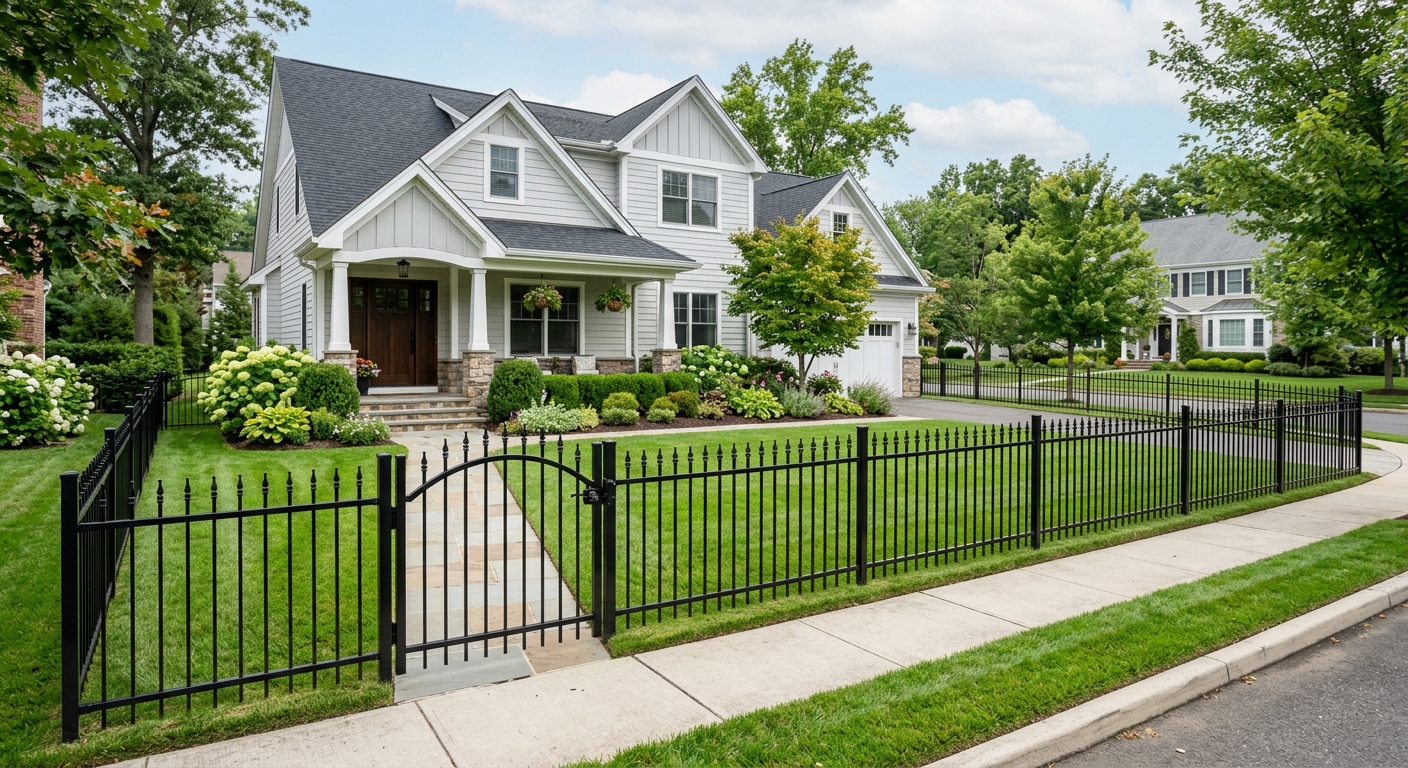
Fencing options and costs in Vanier
In Vanier, Ontario, fencing demand is closely tied to how many homeowners have detached properties that need boundary protection and privacy. With a population of about 17,000 (Statistics Canada, 2021 Census), the Ottawa area has an active residential renovation market, and fence jobs often move in when homeowners replace older timber rails or tighten up yard boundaries. In practice, each detached property represents a real “fence perimeter” to plan for—especially along busy streets and school-walk routes where privacy and wind buffering matter.
Ottawa’s climate is the main cost shaper. Winter frost depth around the region is roughly 3.5–4 ft, so quality installs typically bury posts close to 4 ft with concrete footings, particularly in clay soils where freeze–thaw cycling can shift ground and make panels lean. That deeper digging takes more labour hours, more machine time, and more disposal for spoil, which pushes installed pricing toward the upper end of typical Ontario ranges. Wind loading also matters: privacy fences behave like sails during snowdrifts and gusts, so contractors size spacing and hardware for Ottawa conditions (even though it’s not as harsh as open-exposure sites).
In Vanier, this trade is especially busy around Ruisseau-des-Chênes and the broader older neighbourhoods where many yards were first fenced decades ago and are now being upgraded. With that local reality in mind, here’s a clear side-by-side comparison of common materials and what they typically cost per linear foot in Vanier.
| Material |
Lifespan |
Maintenance |
Privacy Rating |
Price per Linear Foot |
| Pressure-treated pine (standard wood) |
10–15 years |
Stain or seal every 2–3 years |
High (solid pickets) |
$40 – $75 |
| Cedar (natural rot resistance) |
15–25 years |
Seal or stain every 2–4 years |
High (solid boards) |
$50 – $90 |
| Vinyl / PVC (no-maintenance) |
20–30 years |
Rinse as needed; inspect posts/rails |
Medium–High (solid panels) |
$45 – $80 |
| Chain-link (galvanized steel) |
20–35 years |
Occasional tightening; wash off debris |
Low (non-private) |
$25 – $50 |
| Aluminum ornamental |
25–40 years |
Wash; rarely needs refinishing |
Low–Medium (decorative pickets) |
$70 – $120 |
| Composite / recycled material |
20–35 years |
Low; clean and inspect annually |
High (solid privacy styles) |
$80 – $130 |
Prices are estimates only and vary by project scope, site access and material selection.
What affects the price of fencing in Vanier
In Vanier and across the Ottawa economic region, two quotes for what looks like the “same” fence can differ by 30–50% once you price in ground conditions, access, and how posts must be built for local winters. The biggest swing is frost performance: Ottawa’s frost depth is about 3.5–4 ft, and quality installations commonly bury posts close to 4 ft to reduce winter heave and prevent leaning. That depth typically means digging deeper holes, using longer posts, and setting in concrete—especially in clay where freeze–thaw cycles repeatedly expand and contract the soil. In other parts of Canada where frost is milder (often closer to 2–3 ft), companies can sometimes build with shallower holes, fewer concrete footings, and shorter posts, lowering both labour and materials.
Wind loading also changes the build. Even when Ottawa isn’t exposed like some Prairie sites, snowdrifts and gusts can stress fence lines, so contractors may use closer post spacing, heavier rails, and stronger panel systems for privacy fences—pushing wood and vinyl into the mid-to-upper end of Ontario residential ranges (commonly aligned with the $40–$75 or $45–$80 per linear foot bands depending on material and height).
Concrete examples from Vanier jobs: (1) a fence on a clay swale often needs extra post holes and concrete to stabilize shifting soil, raising labour and disposal costs; (2) replacing an old fence that’s fully rotted requires more removal time and haul-away, which can add several hundred dollars to over $1,500 depending on length and debris volume; (3) a straight backyard run with good access (no sidewalk restoration, minimal stairs) can come in near the low end of the same material band because crews work faster with fewer interruptions.
| Price Factor |
Why It Matters |
Cost Impact |
| Fence length in linear feet |
Every additional foot adds posts, rails, and labour time |
High (direct proportional cost) |
| Post depth required |
Frost line drives hole depth and longer posts to prevent heaving |
High in Ottawa soils; increases labour and material |
| Post setting method |
Concrete footings versus gravel pack versus driven posts affects stability |
Medium–High (concrete and cure time add cost) |
| Material choice |
Vinyl, cedar, and chain-link differ in material price and installation method |
Medium (shifts you between $25–$50 vs $40–$120 bands) |
| Gate count and type |
Drive-through (double) gates require heavier framing and hardware |
Medium–High (gates can equal 1.5–3× a run segment) |
| Grade and terrain |
Sloped yards require stepped or raked panels and extra layout time |
Medium (more labour and material fitting) |
| Old fence removal and disposal |
Haul-away, stump-like post removal, and debris handling add time |
Medium (can materially change total) |
| Permit fees and survey / property line locate |
Survey and locate work prevents encroachment and rework; permits can apply |
Low–Medium (varies by scope and local requirements) |
Permits & regulations in Ontario
In Ontario, fence rules are tied to height thresholds, property-line compliance, and municipal setback by-laws. As a practical homeowner guide, fences above a height threshold—often around 2.0 m (6.5 ft) at the rear and 1.0–1.2 m (3–4 ft) at the front or corner—may require a building permit, depending on the specific location and how the fence relates to property lines. Before any digging, you must arrange utility locates by calling Ontario One Call to mark buried services; digging without locates is a safety risk and can delay your project.
To avoid expensive disputes, obtain a survey or confirm property pins/locates before installing posts. Shared fence boundaries are treated under line-fences principles: while neighbouring landowners may agree on costs and maintenance, the details depend on the situation and any prior agreements. Also, setbacks may affect where you can place the fence—especially near corners and driveways.
What typically does not require a permit: like-for-like replacements that stay within typical permitted height limits and do not change the fence’s location relative to property lines. What does more often require a permit: taller privacy fences, fences that cross into height thresholds, and projects that change the fence footprint or placement beyond allowed limits.
Step-by-step verification for your Vanier contractor: (1) ask for their Ontario business registration and confirmation they’re legally operating; (2) request certificate of insurance (liability) naming you as additional insured where appropriate; (3) confirm workers are covered under WSIB (for workers) and get evidence/clearance documentation; and (4) keep copies of all paperwork with your quote and contract.
Choosing the right fence material for Vanier
Choosing the right fence in Vanier is really about matching material performance to Ottawa’s freeze–thaw winter and wind/snow conditions. Pressure-treated pine is the budget-friendly starting point, but it needs staining or sealing every 2–3 years to prevent greying and surface breakdown. Cedar is naturally more rot-resistant and often looks better over time, but it still benefits from periodic sealing to keep colour and reduce drying cracks. Vinyl/PVC offers low maintenance and won’t rot, yet it can become brittle if the system is installed poorly (for example, inadequate bracing or flex in extreme cold); high-quality rail and post stability matters. Chain-link is usually the lowest upfront option and lasts a long time, but it provides minimal privacy unless you add slats or privacy mesh. Aluminum ornamental fencing is rust-resistant and clean-looking with mid-range cost, but it’s not a true privacy solution because of its open picket design. Composite/recycled options can deliver strong privacy with low maintenance, though the upfront price is commonly higher.
For all materials, Ottawa’s frost depth means you can’t treat posts like a “shallow install.” Quality work typically sets posts close to 4 ft and uses concrete footings to limit winter heave in clay soils; that’s one reason the installed prices tend to align with Ontario residential bands (wood often around $40–$75 per linear foot and vinyl commonly around $45–$80, depending on height and access).
A concrete budgeting example: if you price a similar 60 ft run, a vinyl privacy fence might land around $45–$80 per linear foot versus wood around $40–$75. The extra cost can be justified if you want to avoid recurring staining and you expect heavy winter wind stress on a long boundary line; it becomes less justified if you’re comfortable doing routine maintenance and the fence will be partially sheltered.
| Material |
Cold Tolerance |
Lifespan |
Annual Maintenance |
Best For |
Price Band |
| Pressure-treated pine |
Good with proper sealing and stable post depth |
10–15 years |
Inspect yearly; stain/paint every 2–3 years |
Lower upfront cost and traditional appearance |
$40 – $75 |
| Cedar |
Good; performs well in wet-freeze cycles with sealing |
15–25 years |
Inspect yearly; seal every 2–4 years |
Natural look with better rot resistance |
$50 – $90 |
| Vinyl / PVC |
Very good if posts and rails are installed rigidly |
20–30 years |
Rinse as needed; check hardware after winter |
Low maintenance and long-term clean lines |
$45 – $80 |
| Chain-link |
Excellent; galvanized steel resists Ottawa corrosion |
20–35 years |
Tighten/repair as needed; periodic wash |
Security with minimal budget |
$25 – $50 |
| Aluminum ornamental |
Excellent; coated rails tolerate cold and moisture |
25–40 years |
Wash occasionally; inspect fittings |
Curb appeal without rust |
$70 – $120 |
| Composite / recycled |
Good; resists rot and moisture cycling |
20–35 years |
Low; annual inspection |
Privacy with minimal upkeep |
$80 – $130 |
How to choose a fencing contractor in Vanier
Choosing the right fencing contractor in Vanier starts with proof of compliance and clear paperwork. In Ontario, fencing is labour-intensive and involves excavation, so you should verify three things: (1) liability insurance—ask for a certificate of insurance and confirm coverage limits; (2) workers’ coverage under WSIB—get confirmation/clearance information for the company’s workers; and (3) that the contractor is operating lawfully (ask for business information and match it to what you receive in writing). Where to look: request documents directly, then cross-check the WSIB clearance status and insurance validity on the certificates. If they can’t provide current documentation, move on.
Next, get 2–3 itemised written quotes, not a single lump sum. A good quote breaks down labour, materials (rails, pickets/panels, hardware), post depth/footings, and gate work. Read the scope carefully: is permit pulling included if required, is utility locate booking included, and does disposal/haul-away of removed fencing and concrete spoils come with the price? Also confirm warranty terms: workmanship warranty length, any manufacturer product warranty on materials, and whether the warranty is transferable if you sell your home.
Payment scheduling matters. Never pay more than 10–15% upfront. Use a holdback until substantial completion and walkthrough corrections are done. Finally, insist on a timeline in writing with a start date and a completion estimate—winter weather can affect cure times for concrete-set posts, so clarity prevents delays.
- Provide a detailed, itemised quote (materials + labour + footing method).
- Confirm post depth approach for Ottawa frost performance (typical near 4 ft with concrete footings where needed).
- Show evidence of liability insurance (COI) and request you’re added where appropriate.
- Provide WSIB clearance/coverage information for workers.
- Include whether utility locates are booked (Ontario One Call) and who schedules them.
- Clarify what’s included in gates (latch type, hinges, posts, framing).
- Specify removal and disposal of old fence components and stump/footing remnants.
- State if permits are included where height thresholds require them.
- Define warranty duration for workmanship and manufacturer coverage for materials.
- Use a written contract with layout details (locations, gates, and panel style).
- Never approve a payment plan with more than 10–15% upfront; keep a holdback.
- Get start date and estimated completion date in writing.
Concrete red flags I commonly see in Vanier: (1) quotes that don’t mention post depth or footing method; (2) “we’ll handle it” promises without written documentation for insurance or WSIB coverage; (3) no line-item breakdown for gates, concrete setting, or disposal; (4) insisting on large deposits (over 15%) before any work starts; and (5) vague timelines with no start/completion estimate or weather caveats for curing concrete.
Frequently asked questions — fencing in Vanier
How deep should fence posts be for Vanier's frost?
For Vanier and the Ottawa area, the goal is to set posts below the regional frost influence to reduce winter heave and leaning. Ottawa’s frost depth is typically about 3.5–4 ft, so quality installs often bury posts close to 4 ft and use concrete footings—especially in clay soils that shift during freeze–thaw cycles. In practical terms, that usually means digging deeper than many “low-cost” installs that assume shallow frost conditions. Your contractor should state the planned post depth, hole diameter, and whether concrete is used. If the quote doesn’t clearly cover post depth and footing method, ask for it in writing before you approve the work.
Wood vs vinyl vs aluminum fence — which is best?
“Best” depends on your priorities. Wood (pressure-treated pine) is often the most budget-friendly, commonly aligning with Ontario residential bands around $40–$75 per linear foot depending on height and access; cedar typically costs more but can last longer. Vinyl/PVC tends to be low maintenance and commonly sits in the $45–$80 per linear foot range, but it still needs properly rigid installation to tolerate Ottawa cold snaps and gusts. Aluminum is rust-resistant and attractive, but it’s usually an ornamental option with lower privacy, and pricing often lands in the higher $70–$120 per linear foot band. For privacy-heavy lots near wind corridors, vinyl or solid wood styles often make the most sense.
Do I need a permit to build a fence in Ontario?
In Ontario, permits can be required depending on fence height and location. A common rule of thumb is that taller fences—often around 2.0 m (6.5 ft) at the rear and roughly 1.0–1.2 m (3–4 ft) at the front or corner—may trigger a building permit, while smaller installations within permitted limits may not. Regardless of permits, fences must respect property lines and municipal setback by-laws. For any installation involving digging, also complete utility locates through Ontario One Call before your contractor digs post holes. If your contractor can’t confirm whether a permit is required for your specific height and placement, ask them to outline the basis and provide it in writing.
How long does a wood fence last in Vanier?
In Vanier, a properly installed wood fence typically lasts about 10–15 years for pressure-treated pine, and cedar can last about 15–25 years, assuming stable post depth and correct maintenance. The winter climate is the challenge: freeze–thaw cycles in clay can destabilize posts if they’re set too shallow, and Ottawa’s moisture and temperature swings can accelerate surface weathering. If you maintain the finish—stain or seal every 2–3 years for pressure-treated wood—it slows grey weathering and reduces splitting. Without maintenance, wood can deteriorate faster even if the structure is well-built. A maintenance plan is part of the true “cost” of wood.
Who owns and maintains a shared fence?
For shared fences in Ontario, ownership and maintenance can depend on how the boundary was originally built and any agreements between neighbours. Generally, line-fences principles guide disputes and contributions, but homeowners may have different expectations depending on local history (many Vanier lots have older boundary fences). If both neighbours use the fence, it’s common for maintenance responsibilities to be shared, but there’s no one-size-fits-all answer for every scenario. The safest approach is to document the boundary understanding, clarify what work is being done (repair vs replacement), and agree in writing on cost-sharing and future maintenance. If you’re unsure about the boundary location, start with a survey or property-pin locate before repairs.
How do I find my property line before fencing?
Before fencing in Vanier, don’t rely only on old landmarks or neighbour consensus—use official information. Best practice is to get a survey or have your property pins located by a qualified professional. Many disputes happen when a fence is built even a small distance over the line, and rework can erase any savings from a cheaper install. Start by checking what records you already have from purchase documents, then ask a surveyor to confirm pin positions. Your contractor can’t replace the need for accurate boundary verification. Also, do utility locates before digging post holes to prevent service strikes while you’re working at the correct line.