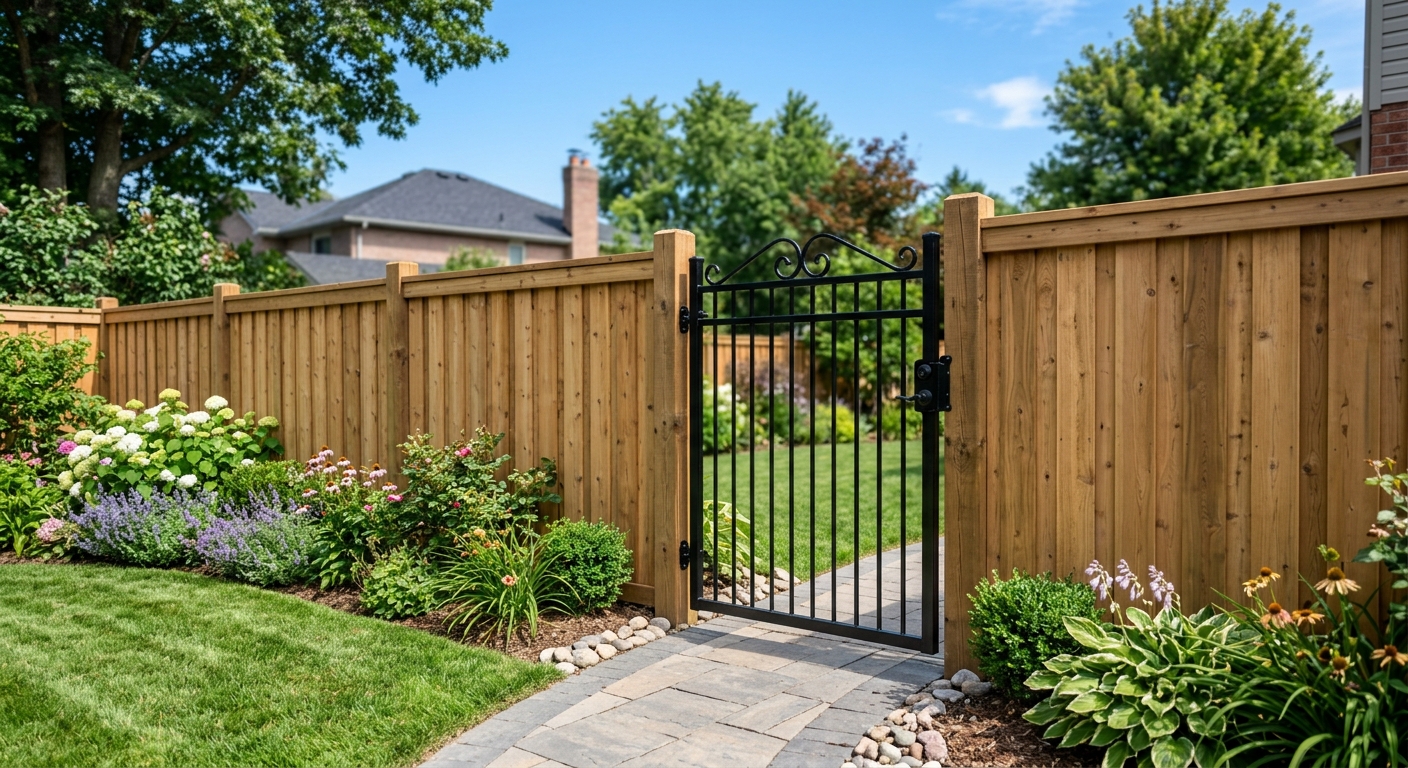
Fencing options and costs in Hornepayne
Fencing in Hornepayne is often decided by two realities: most homes here are single-detached (87.5% of dwellings), and the community is largely owner-occupied (79.5% of households are homeowners). That matters because each detached property is a potential perimeter and backyard fencing client, so demand tends to stay steady even in slower seasons. A second local driver is housing age—84.1% of homes were built before 1981—meaning you’ll commonly see older fence lines being topped up, realigned, or replaced rather than brand-new layouts.
Cost is then shaped by Northeast Ontario winter conditions and the time fencing crews spend on post excavation, setting, and bracing to keep lines straight. Even when materials are similar, quotes can diverge because contractors must account for soil conditions, how deep posts need to be set to resist frost movement, and how much labour it takes to remove or relocate an aging fence. In Hornepayne, you’ll feel this most in high-visibility residential areas near local amenities, where straight runs and clear sightlines are expected and gates must be installed to match existing driveways.
Below are realistic options homeowners typically compare in Hornepayne, including maintenance expectations and installed price ranges. Use this table as a baseline, then confirm exact pricing once you know the total linear footage, gate count, and post depth needed for your lot.
| Material |
Lifespan |
Maintenance |
Privacy Rating |
Price per Linear Foot |
| Pressure-treated pine (standard wood) |
10–20 years |
Stain/seal every 2–3 years; periodic board replacement |
Medium–High (solid boards) |
$80 – $130 |
| Cedar (natural rot resistance) |
15–25 years |
Annual inspection; stain or seal every 2–4 years |
High (solid boards) |
$95 – $145 |
| Vinyl / PVC (no-maintenance) |
20–30 years |
Minimal; rinse and replace damaged sections if impacted |
High (solid or semi-solid styles) |
$85 – $140 |
| Chain-link (galvanized steel) |
20–40 years |
Occasional tension/fastener checks; no coating re-staining |
Low (visibility through mesh) |
$55 – $90 |
| Aluminum ornamental |
25–40 years |
Minimal; wash and inspect annually |
Low–Medium (open pickets) |
$95 – $150 |
| Composite / recycled material |
20–30 years |
Low; occasional cleaning, hardware checks |
Medium–High (solid panels typical) |
$110 – $170 |
Prices are estimates only and vary by project scope, site access and material selection.
What affects the price of fencing in Hornepayne
In Hornepayne, two neighbours can receive quotes for what sounds like the “same” fence and still see a 30–50% difference. The gap usually comes from hidden scope: post depth, frost-stable setting, how many gates are needed, and whether the crew must remove an old fence line before installing the new one. Because many local jobs involve older properties (84.1% built before 1981), contractors often spend extra time correcting out-of-square runs and matching new heights to existing driveways and walkways.
Frost line depth is a major factor because it determines how deep posts must be set to prevent heaving. In cold regions of Ontario, that often means setting posts roughly 4–6 inches below the design frost depth—so typical post lengths and excavation increase, which raises both material cost (longer posts) and labour (deeper holes and more concrete where specified). Wind exposure also affects price in practice: even in Ontario’s colder months, higher gusts and open lots can push crews to use tighter post spacing and sturdier rails for solid panels. Vinyl and heavier wood privacy sections may require upgraded anchoring to keep the fence from racking.
Concrete examples that change your Hornepayne estimate: (1) A 60 ft run with two gates often costs noticeably more than a straight 60 ft run because the crew adds reinforced hinges and doubled framing; (2) soil that’s rocky or poorly drained can increase excavation time and the need for additional base prep—sometimes pushing the job towards the top end of the wood band (for example, $80 – $130 per linear foot) rather than the middle; (3) if you choose vinyl in a longer privacy layout, the hardware and post spacing tend to drive you into the vinyl band (often $85 – $140 per linear foot) instead of a cheaper “open” style.
| Price Factor |
Why It Matters |
Cost Impact |
| Fence length in linear feet |
Labour, posts, rails and materials scale directly with total run |
Most jobs swing the estimate the fastest; longer runs can move total pricing by thousands |
| Post depth required |
Frost movement control determines post length and hole depth |
Deeper holes add excavation time and increase hardware/posts; commonly the largest structural driver |
| Post setting method |
Concrete footings vs. gravel packing affects stability and labour time |
Concrete setting typically adds cost compared with simple gravel packs |
| Material choice |
Vinyl/higher-grade wood/hardware cost and installation complexity vary |
Material premiums can shift a quote by 10–40% for comparable footprints |
| Gate count and type |
Gates require reinforced framing, hinges and often closer spacing |
Two gates can add disproportionate labour vs. extra fence panels |
| Grade and terrain |
Slopes require stepped/raked panels and extra measuring/trim |
Can increase waste and labour, especially with solid privacy styles |
| Old fence removal and disposal |
Hauling and demolition are time-consuming and can add dump fees |
Often adds a noticeable lump of cost if the old fence is full height or heavily fastened |
| Permit fees and survey / property line locate |
Paperwork and locating pins reduce encroachment risk |
May add a few hundred to over a thousand depending on requirements |
Permits & regulations in Ontario
In Ontario, fence height rules and permitting requirements depend on location and how tall the barrier is. As a homeowner in Hornepayne, plan for the possibility that fences above a typical threshold—often around 2.0 m (6.5 ft) at the rear and 1.0–1.2 m (3–4 ft) at the front or corner—may require a building permit. Even when a permit is not required, you still need to respect property lines and any municipal setback bylaws that apply to your lot. The practical takeaway: tell your contractor the fence height and where it’s located (front yard, side yard, rear yard) so they can confirm what paperwork is needed before any posts are dug.
Before digging post holes, you must arrange utility locates. Use Ontario One Call (not BC 1 Call / Alberta One-Call) to mark underground lines so your excavator or auger doesn’t strike services. Also consider obtaining a survey or at minimum a property line locate tied to your pins; this helps avoid disputes over encroachment, especially on older lots where fences may have been placed informally.
To verify your contractor in Ontario, ask for (1) proof they’re properly licensed for the work they’re doing (where applicable), (2) a current certificate of insurance for liability, and (3) confirmation of WSIB coverage where the contractor is required to carry it. You can confirm validity by reviewing the certificate’s policy details directly and then calling/using the insurer contact shown, and by checking any online licensing registry the province provides. Get this done before the first post is installed, not after.
Choosing the right fence material for Hornepayne
Your best fence material in Hornepayne should match what you care about most—privacy, low maintenance, budget, and how long you want the fence to last through wet freeze–thaw cycles. Pressure-treated pine is usually the budget-friendly route, but it commonly needs staining or sealing every 2–3 years to prevent grey weathering and splitting. Cedar looks sharper and resists rot better than standard pine, yet it still benefits from periodic sealing to slow UV fading and keep joints tight. Vinyl/PVC is the “set it and forget it” option for many homeowners, but it’s not invincible—extreme cold can be hard on thin sections, so you want quality profiles and proper post anchoring. Chain-link is the lowest-cost and long-life choice, but it offers minimal privacy unless paired with slats or screening. Aluminum ornamental brings no-rust durability and clean curb appeal, though it won’t provide the same privacy as solid board fences.
Whatever material you pick, Northeast Ontario frost movement means post depth and setting matter as much as the finish. Many installers plan for posts to be set below frost influence; for colder sites, concrete-set posts are often recommended for stability—particularly where the soil is loose, the yard is exposed, or the fence will be taller. Wind and snow load can also stress solid panels more than open styles, so tighter post spacing and sturdier rails are important for privacy fences.
Where the price difference makes sense: if you’re choosing between pressure-treated pine ($80 – $130 per linear foot) and vinyl ($85 – $140 per linear foot), the extra spend is most justified on long privacy runs where you’d otherwise pay for repeated staining and board replacements over time. If you only need a short boundary segment or an entry area, chain-link ($55 – $90 per linear foot) can be a smarter value while you decide on privacy later.
| Material |
Cold Tolerance |
Lifespan |
Annual Maintenance |
Best For |
Price Band |
| Pressure-treated pine |
Good with proper sealing; watch for warping in freeze–thaw |
10–20 years |
Low–moderate (inspect; stain/seal every 2–3 years) |
Budget-conscious privacy or boundary fencing |
$80 – $130 |
| Cedar |
Very good; resists rot but can shrink and check over time |
15–25 years |
Low–moderate (seal every 2–4 years) |
Better appearance with rot resistance |
$95 – $145 |
| Vinyl / PVC |
Good; choose quality hardware and proper installation depth |
20–30 years |
Very low (wash and inspect) |
Low-maintenance privacy |
$85 – $140 |
| Chain-link |
Excellent; galvanized coating holds up in cold cycles |
20–40 years |
Very low (check tension and posts) |
Security with minimal visual bulk |
$55 – $90 |
| Aluminum ornamental |
Excellent (no rust); resists corrosion in damp winters |
25–40 years |
Very low (wash; tighten fittings) |
Curb appeal and durability |
$95 – $150 |
| Composite / recycled |
Good if installed with correct fasteners and spacing |
20–30 years |
Low (clean and inspect hardware) |
Modern solid privacy with low upkeep |
$110 – $170 |
How to choose a fencing contractor in Hornepayne
Choosing the right fencing contractor in Hornepayne starts with verification. Ask for a current certificate of liability insurance (so you’re not exposed if something is damaged on your property), and confirm WSIB/WCB coverage where required—many homeowners are surprised by what a subcontractor’s paperwork covers. For Ontario jobs, also ask to see proof of coverage that matches the work dates, and make sure the certificate shows you as an additional insured where possible. To check licensing, use the relevant provincial online registry the contractor references and confirm the business name matches the quote and invoice. If they can’t provide documents quickly, that’s usually a sign of weak admin controls.
Next, get 2–3 itemised written quotes—labour and materials broken out, not a single “lump sum” number. Itemisation should show line items for: materials (posts/rails/panels/hardware), excavation and post setting, gates and reinforcement, and any disposal or removal. Read the scope carefully for exclusions like: permit pulls, utility locate coordination, concrete pricing assumptions, and whether the contractor reinstates topsoil and restores landscaping. Confirm warranty terms: workmanship warranty length, product/manufacturer warranty, and whether it transfers if you sell your home. For payment, never pay more than 10–15% upfront; hold back the remainder until the fence is complete, inspected, and any adjustments are done. Finally, ask for a start date and a completion estimate in writing—seasonal weather affects timelines, so vague scheduling is a red flag.
- Provide liability insurance certificate before signing
- Show WSIB/WCB clearance where required for Ontario jobs
- Use an itemised quote with separate labour and materials totals
- Confirm whether permits are included or your responsibility
- Confirm disposal/removal of old fence (dump fees included or not)
- Ask about post setting method (concrete vs gravel pack vs driven posts)
- Request post depth or frost-resistant installation details in writing
- Verify gate reinforcement and hardware line items
- Get a written site plan showing fence layout, offsets and gate swing direction
- Confirm warranty length for workmanship and product; ask if transferable
- Request the exact payment schedule and holdback amount
- Insist on a start date and completion target in the contract
In Hornepayne, common red flags I see include: contractors quoting only per “linear foot” without stating how posts will be set, vague descriptions like “we’ll handle permits” without confirming who pulls them, pushing for large upfront deposits, refusing to itemise materials and labour, and providing warranties that only apply to materials (not workmanship) or omit the warranty start date.
Frequently asked questions — fencing in Hornepayne
How long does fence installation take in Hornepayne?
For most typical Hornepayne backyards, installation time is driven by linear footage, gate count, and how long excavation and post setting take. A straight fence run with no gates is usually faster than a privacy fence with multiple gates because the crew must reinforce hinge points and ensure proper alignment before rails are attached. If your job includes old fence removal and disposal, plan extra time for demolition and hauling. Weather matters in Ontario: crews often schedule digging and post set when conditions allow stable footing, since freeze–thaw can make holes unstable. For planning, ask your contractor for a written start date and a completion estimate, then confirm whether your quote assumes a certain number of workdays.
Can I install a fence on a slope in Hornepayne?
Yes, you can install a fence on a slope in Hornepayne, but the approach affects both cost and how the finished fence looks. Most contractors handle slopes by using stepped panels (common with wood, vinyl and composite) or racked rails (often considered with certain styles). Stepped sections usually require more measuring and trimming, and they can increase material waste compared with a flat yard. Your quote should state the method—stepped or raked—and show how the fence will maintain consistent top alignment while meeting grade. A solid privacy fence generally needs tighter spacing and careful alignment so it doesn’t rack in gusty weather. Make sure the estimate includes the added labour for slope layout and any extra posts required by the design.
What is the most weather-resistant fence for Hornepayne's climate?
For Northeast Ontario, many homeowners prioritize fences that resist moisture and remain stable through winter conditions. Chain-link is often the most forgiving for year-to-year weather resistance because the galvanized steel coating holds up well and the structure tolerates freeze–thaw cycles with minimal warping. Aluminum ornamental is also highly durable and won’t rust, though it won’t provide privacy like a solid board system. If you want privacy with strong weather performance, vinyl and properly installed pressure-treated pine can work well when posts are set correctly and the design includes adequate post spacing for wind and snow loads. If your budget allows, vinyl commonly lands in the $85 – $140 per linear foot range and can reduce long-term maintenance demands compared with wood.
How do I prevent wood fence rot in Hornepayne?
Wood rot prevention starts below ground and at the fastener line. In Hornepayne, insist on a proven post installation approach: correct post depth and stable setting reduce seasonal movement that loosens boards. If your fence uses pressure-treated pine or cedar, ensure the wood is properly sealed where recommended by the product system and that cut ends and drilled holes are protected. Keep vegetation trimmed back so air can circulate around the fence. Also ask for proper rail spacing and drainage—standing water at the base speeds rot. Yearly inspections help: look for loose boards, cracked rails, and any areas where soil has covered the lower trim. If rot begins, early board replacement is usually less expensive than replacing entire sections later.
What is the cost per linear foot for fencing in Hornepayne?
In Hornepayne, pricing is typically quoted per linear foot for the fence run, then adjusted for gates and site complexity. For wood installations, a realistic installed range is about $80 – $130 per linear foot, depending on whether you choose standard pressure-treated pine or a higher-end cedar system and how many gates you need. Vinyl/PVC is commonly a bit higher at $85 – $140 per linear foot, while chain-link is usually the lowest at $55 – $90 per linear foot due to lighter build-up and fewer labour-intensive panels. Your final figure will still depend on post depth requirements, post-setting method, slope work, and whether the contractor removes and disposes of the old fence.
Should I repair or replace my old fence in Hornepayne?
Often, you can repair a fence if the posts are still solid and the damage is limited to a few boards or rails. Start by checking post movement: if you can push a section and see wobble, the problem is structural and replacement is usually the better long-term value. Also look at the fence bottom—rot and soil contact typically migrate over years, and repairs won’t stop rot if the post setting is compromised. If your existing fence has leaning sections, misaligned gates, or widespread panel failure, replacement saves labour and improves appearance. Because many Hornepayne homes are older (84.1% built before 1981), it’s common to see fences that need partial rebuilds first, then full replacement once multiple sections fail. A contractor should assess sections and provide a clear repair-vs-replace recommendation with itemised costs.