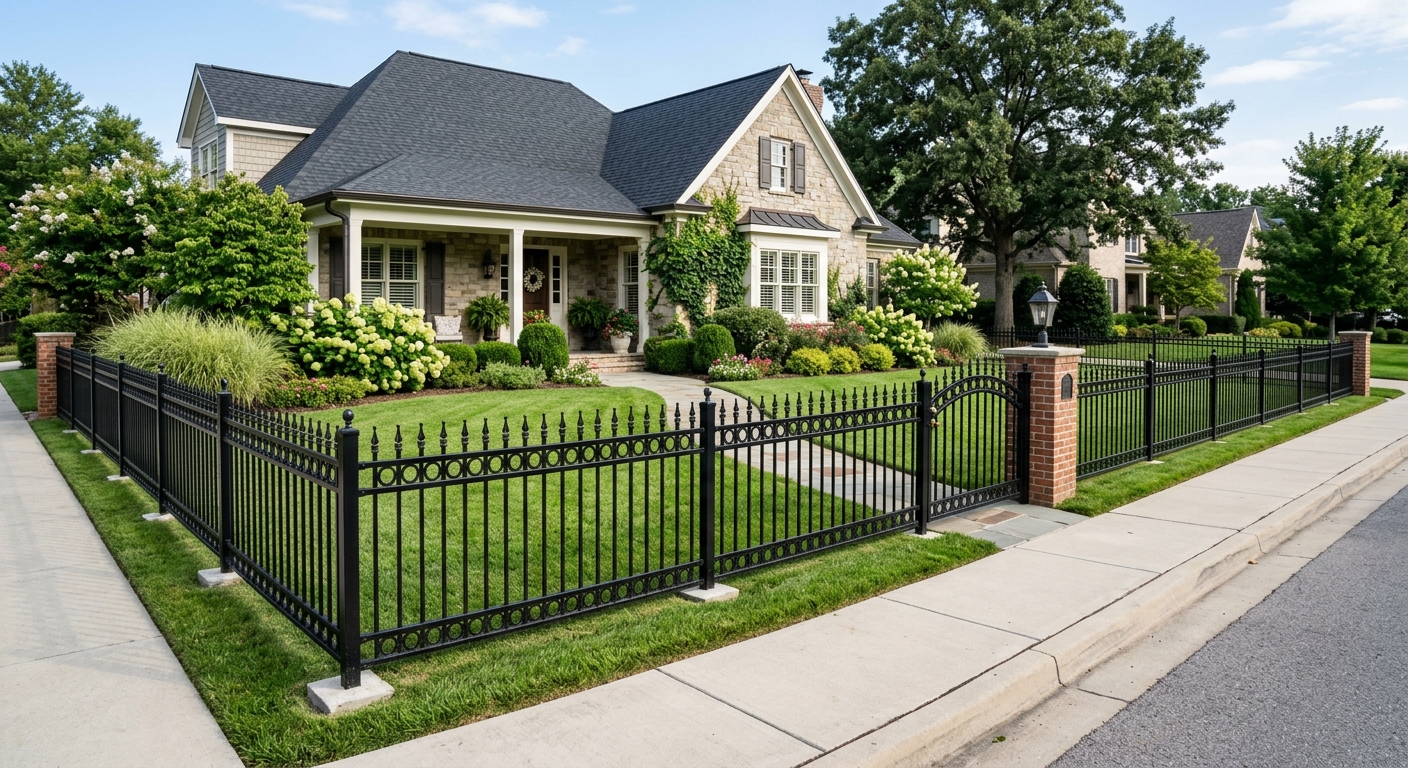
Fencing options and costs in West Humber-Clairville
West Humber-Clairville is a busy pocket of Toronto where homeowners want fences that can handle freeze–thaw, wet winters, and long service life. With a population of 33,312 (Statistics Canada, 2021 Census), there’s steady demand for boundary upgrades and privacy screens, especially around the more established residential blocks near Humberline Drive and the Clairville area. In practical terms, fencing demand tracks closely with the number of detached properties in the neighbourhood—each one is a potential backyard privacy project, pet enclosure, or pool safety upgrade.
In Toronto’s mixed soils (often clay-heavy in parts of the GTA), the biggest cost driver is how deep posts must be set for stability. The “rule of thumb” many contractors use for Southern Ontario is a frost line of about 42"–48", which usually means concrete-set posts and post holes around 3.5–4 feet deep for typical 6–8 ft privacy fences. That extra labour and ready-mix cost is why two quotes for the same fence height can look very different even when materials are similar. On top of that, panel style and spacing must still respect wind loads; solid privacy fences need heavier posts and tighter spacing to resist racking.
Across the West Humber-Clairville market, you’ll see the trade especially active for rear-yard privacy fencing in high-visibility streets where neighbours want more screening—then it’s common to pair that with gates for side access. Use the table below to compare material choices and typical pricing per linear foot.
| Material |
Lifespan |
Maintenance |
Privacy Rating |
Price per Linear Foot |
| Pressure-treated pine (standard wood) |
10–15 years |
Stain/seal every 2–3 years; inspect posts and rails |
High (solid/close board) |
$65–$120 |
| Cedar (natural rot resistance) |
15–20 years |
Seal/stain every 2–4 years; occasional board replacement |
High (close board or solid) |
$85–$135 |
| Vinyl / PVC (no-maintenance) |
20–30 years |
Wash as needed; check for expansion in extreme cold |
High (solid picket/closed panels) |
$75–$130 |
| Chain-link (galvanized steel) |
20–30 years |
Low; rinse with water, replace damaged sections |
Low–Medium (open mesh) |
$45–$85 |
| Aluminum ornamental |
25–35 years |
Low; occasional cleaning |
Low–Medium (ornamental spacing) |
$90–$160 |
| Composite / recycled material |
20–30 years |
Very low; occasional cleaning and hardware checks |
High (solid boards/panels) |
$95–$155 |
Prices are estimates only and vary by project scope, site access and material selection.
What affects the price of fencing in West Humber-Clairville
In West Humber-Clairville and across the Toronto region, it’s common to see fencing quotes for the “same” job swing by 30–50%. The reason isn’t only brand pricing—it’s the real cost of installing stable posts in Ontario soils, adjusting for grade, and building for winter performance. Labour and material costs can also differ based on crew availability and how quickly a contractor can mobilize for digging and concrete scheduling in the GTA.
The biggest technical driver is post depth. With a Southern Ontario frost line commonly estimated at 42"–48", contractors typically set posts about 4–6 inches below the design frost depth to prevent heaving—meaning holes often land around 1.5–2.0 m into the ground. That pushes you into longer posts and concrete-set installation for most 6–8 ft privacy fences. In cold Ontario, that concrete and extended labour are why wood can land near the top of the wood band (for example, closer to $65–$120), and why “low-cost” installs using gravel packs are often limited to shorter runs or lighter panel designs.
Wind also affects how the fence is engineered. Even though Toronto doesn’t face the open-field wind loads seen on the Prairies, solid privacy fences can still rack in gusty backyard layouts—so post size and spacing (often 6–8 ft centres with heavier sections) matter. By comparison, chain-link can stay in the lower band (around $45–$85) because it’s lighter and uses more forgiving line tension.
Local examples that raise cost in West Humber-Clairville include: clay or mixed soils that slow excavation and increase concrete volume; tighter side-yard access near garages where extra labour is required to stage materials; and sloped lots where stepped panels reduce wastage only if the crew is experienced. Conversely, costs can be lower when runs are short, the grade is flat, and there’s easy truck access—those factors reduce both time and materials (and keep you closer to the lower ends of the price bands).
| Price Factor |
Why It Matters |
Cost Impact |
| Fence length in linear feet |
Every extra foot adds posts, rails, fasteners and labour time |
High—primary driver |
| Post depth required |
Frost line determines hole depth and how long posts must be |
Medium–High (often +concrete and +labour) |
| Post setting method |
Concrete vs. gravel pack vs. driven posts affects stability and longevity |
Medium (concrete increases cost but improves long-term stability) |
| Material choice |
Vinyl/PVC, cedar, and chain-link differ in unit price and hardware |
High (drives you across the bands) |
| Gate count and type |
Gates require heavier frames, hinges, latches and often more posts |
Medium (double drive-through gates can add significant cost) |
| Grade and terrain |
Slopes require stepped, raked, or custom panel adjustments |
Medium (extra layout time and possible material waste) |
| Old fence removal and disposal |
Demolition, hauling, and disposal add labour and dump fees |
Medium (can be close to the cost of new boards on small jobs) |
| Permit fees and survey / property line locate |
May require documentation to confirm boundary and compliance |
Low–Medium (but can be critical to avoid disputes) |
Permits & regulations in Ontario
In Ontario, fencing is regulated through a combination of municipal by-laws and provincial line-fence principles. As a practical guide, fences above a height threshold—often around 2.0 m (6.5 ft) at the rear and roughly 1.0–1.2 m (3–4 ft) at the front or corner—commonly require a building permit, depending on where the fence sits on the lot and its proximity to property lines. The key point for homeowners in West Humber-Clairville is that a “privacy fence” plan may be treated differently from a “front-yard boundary” barrier.
Before any digging, call for utility locates using Ontario One Call to mark gas, hydro, cable, and other underground services. Next, verify your boundary: get a survey or at least a professional locate tied to your property pins. This step helps prevent encroachment disputes and reduces the risk of costly rework.
Permits are most likely required when your proposed fence is tall (typically over the thresholds above) or when your site has constraints that trigger additional review. Work that typically does not require a permit is like-for-like replacement within common height limits in non-restricted areas, minor repairs that don’t change height or location, and aesthetic touch-ups (but you still must respect setbacks and property lines).
To verify an Ontario contractor, ask for: (1) a valid licence/registration as applicable for fence contracting and any required municipal qualification, (2) liability insurance (request the certificate of insurance) and (3) proof of workplace coverage such as WSIB (WCB coverage) when workers are on site. Clearance letters and coverage dates matter—don’t rely on a verbal promise.
Choosing the right fence material for West Humber-Clairville
Choosing a fence material in West Humber-Clairville is about matching your priorities to how Ontario winter performs on wood, vinyl, and metal. Pressure-treated pine is the budget-friendly option, but it’s not “set and forget”: expect staining or sealing every 2–3 years to slow grey weathering and protect the top rails and pickets. Cedar looks better longer and has natural rot resistance, but it still needs maintenance to keep it looking uniform. Vinyl/PVC has the lowest day-to-day work, but it’s more sensitive to how it’s installed—especially in extreme cold, where panels expand/contract and fasteners must be handled correctly. Chain-link is the longest-life budget choice for security, though it won’t provide privacy unless you add slats or a screen. Aluminum ornamental offers a rust-resistant, low-maintenance look with mid-range cost, but it won’t give full privacy like a closed-board system.
Toronto’s frost-related installation practices also influence material choice. For most privacy fences, posts should be set into concrete below frost depth (often 3.5–4 feet deep) so the fence doesn’t lift in freeze–thaw cycles. That’s true whether you pick wood, vinyl, or composite—poor post stability will shorten lifespan regardless of the cladding. Wind and snow loads matter more for tall solid fences, so spacing and post sizing typically need to be heavier in exposed backyard layouts.
Here’s a realistic example of when the upgrade is justified: if pressure-treated pine is quoted closer to $65–$120 per linear foot but you know you’ll need to re-stain and replace a few boards over time, stepping into vinyl/PVC can be closer to $75–$130. That extra upfront cost can make sense when you want low maintenance for a long ownership period, especially if you prefer not to manage annual/biannual staining logistics.
| Material |
Cold Tolerance |
Lifespan |
Annual Maintenance |
Best For |
Price Band |
| Pressure-treated pine |
Good with proper sealing and concrete-set posts |
10–15 years |
Low (1 quick inspection) + full stain every 2–3 years |
Budget privacy or boundary runs with regular upkeep |
$65–$120 |
| Cedar |
Good; holds up well in freeze–thaw when sealed |
15–20 years |
Low–Medium (seal/stain every 2–4 years) |
Appearance-focused privacy and natural look |
$85–$135 |
| Vinyl / PVC |
Very good when installed with correct expansion clearance |
20–30 years |
Very low (wash as needed; hardware checks) |
Low maintenance privacy in cold Ontario winters |
$75–$130 |
| Chain-link |
Excellent; galvanized steel tolerates cold well |
20–30 years |
Very low (rinse; tighten tension if needed) |
Security, side yards, and pet control |
$45–$85 |
| Aluminum ornamental |
Excellent (coated to resist winter corrosion) |
25–35 years |
Very low (cleaning) |
Front-yard curb appeal with boundary definition |
$90–$160 |
| Composite / recycled |
Good; stable boards when hardware is correctly used |
20–30 years |
Very low (occasional wash; check posts and fasteners) |
Privacy panels with minimal upkeep |
$95–$155 |
How to choose a fencing contractor in West Humber-Clairville
For West Humber-Clairville homeowners, the quickest way to avoid fence problems is to verify coverage and craftsmanship before you sign. Start with Ontario licensing/registration as applicable to fence contracting in your area—ask for the contractor’s business information and licence reference. Next, confirm liability insurance: request a certificate of insurance that shows you’re covered as an additional insured if offered, and ensure it matches the job location. Finally, ask for WSIB/WCB coverage (where workers are used). The point is simple: if a worker is injured or there’s site damage, you want the contractor—not you—responsible.
Then, get 2–3 itemised written quotes. You want a breakdown that separates labour (excavation, setting posts, building rails/panels, installing hardware) and materials (boards/pickets, posts, concrete, fasteners, rails, gate components). Avoid lump sums that don’t state what’s included.
Read the scope carefully: will the contractor pull permits if required, include property line locate/survey if needed, and handle old fence removal and disposal? Confirm whether they include concrete-set posts (typical for privacy fences in Southern Ontario due to frost depth considerations) and what post spacing they’re using for wind resistance. Warranty should be clear: ask for workmanship warranty length and product/manufacturer warranty terms. Confirm if the warranty transfers to future owners and what “exclusions” look like for wind damage or improper maintenance.
For payment, never pay more than 10–15% upfront. Use a holdback until the full fence is completed and cleaned up. Also demand timeline clarity—start date, staging assumptions, and an estimated completion date in writing.
- Ask for certificate(s) of insurance and verify policy dates.
- Confirm WSIB/WCB clearance/coverage before work begins.
- Request an itemised quote with labour and material lines.
- Confirm whether post holes will be excavated to frost-safe depth.
- Require concrete-set posts for privacy fences where appropriate.
- Check the hardware list (hinges, latches, tension wire, brackets).
- Make sure gate hardware is rated for the fence height and weight.
- Ask how they’ll handle sloped yards (stepped vs. raked panels).
- Confirm disposal and whether old fence removal is included.
- Ask if permits and inspections are included or billed separately.
- Get a written start/completion estimate and weather-delay plan.
- Use a payment schedule with a final holdback until walkthrough.
Red flags I frequently see in the West Humber-Clairville market include: quotes that skip concrete-set posts for tall privacy fencing; “verbal-only” insurance/WSIB proof; itemised pricing replaced by vague lump sums; pressure to pay most of the total up front; and no clear written scope for disposal, permits, or warranty coverage.
Frequently asked questions — fencing in West Humber-Clairville
What is the most weather-resistant fence for West Humber-Clairville's climate?
For West Humber-Clairville, the most consistently weather-resistant choice is usually vinyl/PVC or aluminum (depending on whether you need privacy). In Southern Ontario, the real threat isn’t just snow—it’s freeze–thaw movement. A fence only performs as well as its posts, so concrete-set posts below frost depth are key for tall privacy runs. Vinyl/PVC tends to outlast wood when installed correctly with proper expansion clearance, and aluminum won’t rust like untreated metals. If you want privacy specifically, vinyl/PVC is typically the “best balance” of durability and low upkeep. Expect typical installation pricing for vinyl/PVC to fall around $75–$130 per linear foot, depending on height, gates, and access.
How do I prevent wood fence rot in West Humber-Clairville?
Wood rot prevention in West Humber-Clairville is mostly about keeping moisture away from the fence’s stress points: post bottoms, rail joints, and cut ends. First, don’t let posts sit in wet soil—ask for properly sized post holes with concrete-set footings below frost depth, typically around 3.5–4 feet deep for common privacy heights. Second, use correct fasteners and don’t drill/attach in a way that traps water in joints. Third, seal or stain on a schedule; pressure-treated pine generally needs attention every 2–3 years to reduce grey weathering and moisture penetration. Cedar also benefits from sealing every 2–4 years. If you’re budgeting, wood often lands in the $65–$120 band, but “cheap up front” only works if you actually maintain it.
What is the cost per linear foot for fencing in West Humber-Clairville?
In the West Humber-Clairville market, per-foot fencing pricing typically follows the Toronto-area bands shaped by frost-depth post installation, labour, and material choice. For wood installation, homeowners commonly see about $65–$120 per linear foot, with higher numbers when concrete-set posts, longer runs, or multiple gates are involved. Vinyl/PVC generally sits around $75–$130 per linear foot, and chain-link is usually lower at about $45–$85 per linear foot. Aluminum ornamental often ranges higher, roughly $90–$160 per linear foot, especially for detailed picket styles. Your final number depends heavily on linear footage, gate count, terrain, and whether old removal/disposal is included.
Should I repair or replace my old fence in West Humber-Clairville?
In West Humber-Clairville, the decision usually hinges on whether the posts are still stable. A fence may look “fixable” while the footings are failing—once posts shift after freeze–thaw, repairs often become repeated patchwork. If you see leaning, gaps expanding quickly, or rotted post bases, replacement is usually the better long-term value. If only a few pickets/boards are damaged and the rails and posts are solid (no wobble at the base), targeted repairs can make sense. Also consider how the fence was installed: if the original fence used driven posts without frost-safe depth, you may be repairing the same weak system. Budget-wise, repairs can be cheaper upfront, but a full replacement may place you back into the typical installed bands—wood around $65–$120 per linear foot, or vinyl/PVC around $75–$130.
How do I handle a fence dispute with a neighbour in Ontario?
Fence disputes in Ontario usually come down to boundaries, shared maintenance expectations, and whether your fence location complies with property line/setback rules. Start by documenting what’s happening—photos from multiple angles, measurements from corners, and the approximate fence line. Then verify the boundary: obtain a survey or a property locate tied to your pins before changing anything. In practical terms for West Humber-Clairville, don’t “move” the fence based on assumptions; that can escalate costs. Ontario line-fence principles can apply when fences are shared or intended for shared use, but local municipal by-laws still govern height/setbacks in many situations. A respectful approach is to request a joint inspection with both parties present. If you need to move forward, talk to your contractor about providing a written scope and layout based on the locate.
What fence style offers the best wind resistance in West Humber-Clairville?
For West Humber-Clairville, the best wind resistance usually comes from a design that balances strength with air flow and uses correct engineering details for tall fences. Solid privacy fences can catch wind like a sail, so they should use heavier posts and appropriate spacing, and the fence should be installed with concrete-set posts below frost depth for stability. In areas with more exposure (corner lots, longer rear runs, or yards with more open sight lines), many homeowners get better performance using reinforced wood or vinyl with solid panels but sturdier post spacing and hardware. If you want maximum wind tolerance with less racking risk, chain-link (with good tension) often handles gusts well because it’s air-permeable. Pricing varies, but chain-link typically sits around $45–$85 per linear foot, while privacy materials often start higher due to heavier posts and installation.