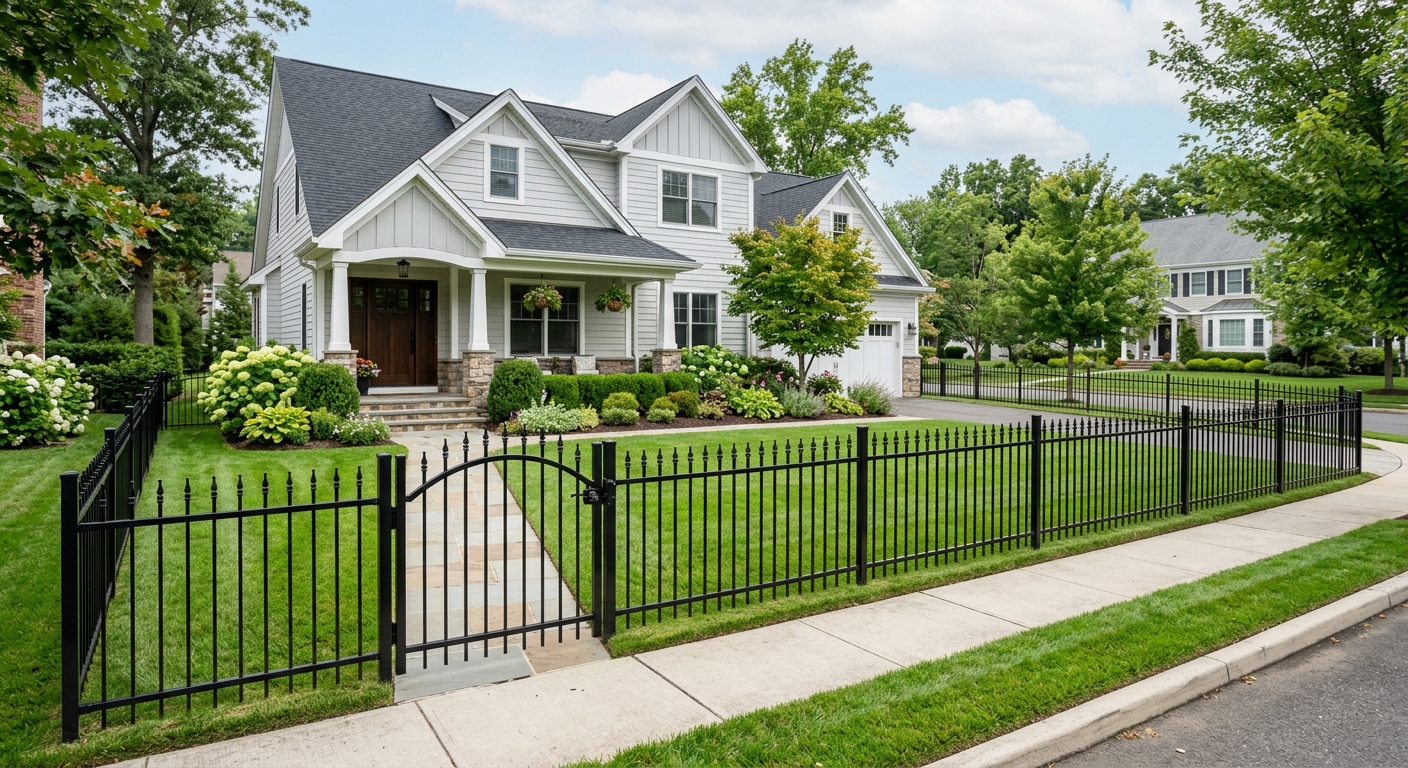
Fencing options and costs in Eringate-Centennial-West Deane
Fencing options in Eringate-Centennial-West Deane vary a lot, even when homes look similar from the street. With a 2021 population of 18,588 in the area (Statistics Canada, 2021 Census), there’s steady demand from homeowners and property managers who want privacy, pet safety, and clear property boundaries. In Toronto’s housing mix, many lots are fenced to define backyard space and protect outdoor areas—every additional fence line is essentially a local “workfront” for contractors.
Local climate is a big reason costs in the Toronto economic region don’t stay “one-size-fits-all.” Southern Ontario’s frost line is commonly treated around 42”–48”, so for common 6–8 ft privacy fences, posts typically need to be set 3.5–4 ft deep to reduce frost heave risk. That requirement nudges quotes upward versus driven-post fences, because concrete-set posts increase labour time and ready-mix costs. At the same time, Toronto-area building practice favours heavier post sizing and closer panel spacing for solid fences to limit racking from seasonal wind and snow loading.
In Eringate-Centennial-West Deane (especially around the Humber corridor and the busier residential stretches near local arterials), trades activity is often highest for privacy upgrades, replacement of older wood fences, and gate installs tied to renovations. Below is a quick, homeowner-friendly comparison to help you map material choice to budgeting before you review itemised quotes.
| Material |
Lifespan |
Maintenance |
Privacy Rating |
Price per Linear Foot |
Price Range |
| Pressure-treated pine (standard wood) |
10–15 years |
Stain or seal every 2–3 years; inspect fasteners |
High (solid panels) |
$65–$120 |
$65 – $120 |
| Cedar (natural rot resistance) |
15–25 years |
Light staining/sealing every 2–4 years; clean mildew |
High (solid boards) |
$75–$130 |
$75 – $130 |
| Vinyl / PVC (no-maintenance) |
25–35 years |
Rinse as needed; check posts for impact damage |
Medium to High (solid options) |
$75–$130 |
$75 – $130 |
| Chain-link (galvanized steel) |
20–35 years |
Occasional rinse; tighten hardware |
Low (open mesh) |
$45–$85 |
$45 – $85 |
| Aluminum ornamental |
25–40 years |
Rinse; inspect gate latches and hinges |
Low to Medium (ornamental infill) |
$90–$160 |
$90 – $160 |
| Composite / recycled material |
20–30 years |
Minimal; occasional wash; check for warping at impact points |
High (solid styles) |
$90–$160 |
$90 – $160 |
Prices are estimates only and vary by project scope, site access and material selection.
What affects the price of fencing in Eringate-Centennial-West Deane
In Eringate-Centennial-West Deane, quotes for the same fence can swing by 30–50% because the “hidden” drivers aren’t just material—Toronto-area labour, footing depth, and how crews manage frost-protected installs change the total build effort. Two homeowners can both choose wood privacy fencing, but if one yard needs deeper concrete-set posts, extra gate framing, and utility coordination, the installed cost reflects that reality.
First, frost line depth sets how deep posts must be set. In cold Ontario conditions, contractors typically plan for posts to go about 4–6 inches below the design frost depth. Practically, that often means posts are set roughly 1.5–2.0 m into the ground depending on local soil and fence height, which increases excavation time, length of materials, and concrete use—so “budget” fencing can climb into the mid-to-upper bands faster than people expect. For many projects, that’s the difference between sitting near a wood band like $65–$120 versus reaching the higher end once heavier rails, braces, and solid panel hardware are included.
Second, wind and racking risk influences post size and spacing. While Ontario doesn’t have the extreme exposure of the Prairies, tall solid fences still benefit from tighter spacing (often 6–8 ft centres) and sturdier framing. For comparison, chain-link is frequently in the $45–$85 band because it uses lighter posts and simpler tension hardware, while solid vinyl/wood privacy typically lands closer to $75–$130 or higher depending on panel density.
Concrete examples from Toronto-area installs: (1) clay-heavy soils can require more excavation stability and careful backfill, increasing crew time; (2) properties with long uninterrupted runs reduce per-gate labour, while frequent jogs or returns add layout and extra posts; (3) demolition of an existing fence often adds disposal and haul time, pushing the overall quote upward. Finally, older housing-stock yards may have older buried lines or non-standard prior fence footprints, which affects locate coordination and layout accuracy.
| Price Factor |
Why It Matters |
Cost Impact |
| Fence length in linear feet |
The primary driver for posts, rails, panels, and labour hours. |
Largest swing—often 50–70% of the total. |
| Post depth required |
Frost line determines hole depth and post length to prevent heaving. |
Concrete-set work can add significant material and labour time. |
| Post setting method |
Concrete vs. gravel pack vs. driven posts changes stability. |
Concrete usually costs more up front but reduces long-term movement. |
| Material choice |
Wood, cedar, vinyl, and chain-link differ in hardware, thickness, and setup. |
Switching from chain-link to privacy-grade vinyl/wood often raises the band. |
| Gate count and type |
Walk-through vs. drive-through gates require stronger framing and hinges. |
Each gate can add a large fixed-cost amount plus alignment labour. |
| Grade and terrain |
Slopes require stepped footings or raked panel layouts. |
More labour for layout and custom cutting/positioning. |
| Old fence removal and disposal |
Demolition, hauling, and proper disposal add time and equipment use. |
Often adds a noticeable line-item to the quote. |
| Permit fees and survey / property line locate |
Some fence heights and locations trigger permits; accurate boundaries prevent rework. |
Can add setup time, especially if a locate is required first. |
Permits & regulations in Ontario
In Ontario, fences may require a building permit when they exceed local height thresholds. In practice, a fence above about 2.0 m (6.5 ft) at the rear often triggers permit requirements, while front or corner-area fences are commonly regulated at roughly 1.0–1.2 m (3–4 ft). Municipal setback rules and property line restrictions still apply regardless of whether a permit is required. Before you dig any post holes, you also must arrange utility locates through Ontario One Call to avoid damaging buried services.
For homeowners in Eringate-Centennial-West Deane, the safest workflow is to verify your property boundaries before the first post is set. If you do not already have a recent survey, request a property pin locate so you can confirm where your fence should run. This helps prevent boundary disputes with neighbours—something that becomes expensive once materials are installed.
Step-by-step contractor verification (do this before signing):
- Licence: ask for the contractor’s Ontario business details and confirm the correct licensing/registration where applicable via the provincial or related online business registry entry they provide.
- Liability insurance: request a Certificate of Insurance showing general liability appropriate to fencing work.
- WSIB/WCB: confirm coverage for workers (or provide proof of clearance where relevant for the business and employees assigned).
- Insurance documents: ensure the COI lists the correct legal name and address for the contractor.
- Put it in writing: make sure the quote and contract reference insurance and coverage responsibility.
On what typically DOES require a permit: taller fences (around the 2.0 m rear threshold), fences in corner-front areas at the regulated heights, and any project that municipal review flags due to location or height. What typically does NOT: short, lower fences on compliant property lines with no special conditions—still subject to bylaw and setback rules.
Choosing the right fence material for Eringate-Centennial-West Deane
Choosing the right fence material in Eringate-Centennial-West Deane comes down to your priorities: privacy, low maintenance, budget, and how long you want to avoid repairs. Pressure-treated pine is the budget-friendly option, but in Toronto’s freeze–thaw cycles you should plan for staining or sealing every 2–3 years to limit grey weathering and keep moisture out of boards and end grain. Cedar often looks better and resists rot more naturally, yet it still benefits from periodic maintenance (usually staining/sealing every 2–4 years) to keep colour and reduce moisture-related warping.
Vinyl/PVC is popular for low maintenance because it doesn’t need staining, but it can be more susceptible to cracking if the material is stressed or impacts occur in extreme cold. Chain-link is the lowest cost and tends to have the longest practical life, though it provides limited privacy unless you add privacy slats or a screen. Aluminum ornamental is rust-resistant and attractive, but it offers less privacy—so it’s usually chosen for curb appeal and boundary definition rather than full backyard screening.
For all taller privacy fences, post depth matters in Toronto. Because frost heave is a real risk around the 42”–48” frost depth range, concrete-set posts are typically recommended for 6–8 ft fences. That means material savings don’t always mean lower total cost; the footing and labour often dominate. If you’re comparing options, consider a typical swing: choosing chain-link in the $45–$85 band can be substantially cheaper than a solid wood or vinyl privacy fence in the $75–$130 band. The difference is justified when you need privacy, stronger panel framing, and longer-term stability where winter moisture and freeze–thaw stress are constant.
Wind and snow load considerations also favour sturdier framing and proper bracing. Solid panels can act like sails; using appropriate post size, rails, and spacing helps keep fences plumb after storms and heavy wet snow events.
| Material |
Cold Tolerance |
Lifespan |
Annual Maintenance |
Best For |
Price Band |
| Pressure-treated pine |
Good (if correctly sealed and fasteners are rated) |
10–15 years |
1–2 hours (inspect; minor touch-ups); stain every 2–3 years |
Budget privacy |
$65–$120 |
| Cedar |
Good (resists rot in damp cycles) |
15–25 years |
1–2 hours (wash/inspect); seal/stain every 2–4 years |
Premium natural look |
$75–$130 |
| Vinyl / PVC |
Very good in cold (impact protection matters) |
25–35 years |
5–20 minutes (rinse; hardware checks) |
Low maintenance privacy |
$75–$130 |
| Chain-link |
Excellent (galvanized steel) |
20–35 years |
5–15 minutes (rinse; tighten hardware as needed) |
Safety boundary with minimal visual bulk |
$45–$85 |
| Aluminum ornamental |
Excellent (no rust) |
25–40 years |
10–20 minutes (rinse; check gate latches) |
Curb appeal and boundary definition |
$90–$160 |
| Composite / recycled |
Good (less rot; handle impacts) |
20–30 years |
5–15 minutes (wash/inspect); no staining |
Durable privacy with reduced upkeep |
$90–$160 |
How to choose a fencing contractor in Eringate-Centennial-West Deane
Picking a fencing contractor in Eringate-Centennial-West Deane is mostly about verification and clarity. Start by confirming Ontario coverage essentials: ask for their Certificate of Insurance (liability) and evidence of WSIB/WCB coverage for their workers (or a clearance letter where applicable). In practice, you can check for accuracy in the details—ensure the policy name matches the contractor’s legal name and the certificate lists the correct business address. If they can’t provide current documentation, treat that as a major risk.
Next, get 2–3 itemised written quotes instead of one lump-sum number. A strong quote breaks down labour and materials separately (posts, concrete or setting material, rails, panels, fasteners/hardware, gates, and accessories). It should also specify what the contractor includes for site work like excavation depth for frost protection, disposal of old fencing, and whether utility locate costs or permit handling are included or extra.
Warranty matters: ask for a clear workmanship warranty length and the product/manufacturer warranty terms. Confirm whether the warranty is transferable to the next homeowner, especially if you’re not planning to stay long.
On payment schedules, never agree to more than 10–15% upfront. Hold back the remainder until the final walk-through is complete and any punch-list items are resolved. Finally, require a written start date and completion estimate so you know what “on time” means for winter-ready installations.
- Request current Certificate of Insurance (liability) before work begins.
- Confirm WSIB/WCB coverage for assigned workers (or clearance documentation).
- Ask for an itemised breakdown: labour, posts, rails, panels, and concrete/setting materials.
- Verify excavation assumptions (typical Toronto frost-protected depth) are included in writing.
- Confirm whether disposal/hauling of old fencing is included.
- Check if permits are included or if you must apply separately.
- Make sure gate hardware type and quantities are specified (hinges, latches, bracing).
- Ask how they handle slopes: stepped vs. raked sections and who decides the final layout.
- Confirm the panel spacing and post spacing are designed for privacy and wind resistance.
- Require a workmanship warranty and the exclusions (e.g., impacts, misuse, neighbour disputes).
- Get colour/style details in writing for vinyl and composite fences.
- Set payment terms: max 10–15% upfront and a holdback until completion.
Red flags I see in Eringate-Centennial-West Deane: quotes that omit post depth/footing detail, refusing to provide insurance/coverage proof, “lowest price” bids with no disposal included, vague scope language like “all materials included” without listing concrete, and schedules that are only discussed verbally with no written timeline.
Frequently asked questions — fencing in Eringate-Centennial-West Deane
How do I compare fencing quotes?
When comparing quotes in Eringate-Centennial-West Deane, start by matching apples-to-apples: same height, same material grade (pressure-treated vs. cedar, or vinyl thickness), and the same post setting method. Ask for an itemised breakdown for posts, rails, panels, hardware, concrete/gravel setting, and gate construction. Also confirm stated excavation depth aligns with frost-protected best practice (Toronto-area installs commonly require deeper concrete-set posts for privacy fences). If one quote lands near the chain-link band of $45–$85 while another is in the privacy fence band $75–$130, make sure the scope actually matches (privacy boards vs. mesh, gate count, and whether removal/disposal is included).
How long does fence installation take in Eringate-Centennial-West Deane?
Typical residential fence installs in Ontario vary by length, access, and whether old fencing is being removed. For a straightforward run with no major grade changes, a crew can often complete a small-to-mid project within several working days. Longer privacy fences with multiple gates and concrete-set posts may take closer to a week or more due to layout, excavation, setting, panel/bracing, and final adjustments. Weather also matters: crews plan around heavy freeze conditions and excessive rain because wet, compactable backfill is important for stability. The best way to get an accurate timeline in Eringate-Centennial-West Deane is to request a written start date and completion estimate with assumptions stated (post depth, number of gates, and disposal included).
Can I install a fence on a slope in Eringate-Centennial-West Deane?
Yes, you can install a fence on a slope in Eringate-Centennial-West Deane, but it has to be designed correctly. Common approaches are stepped sections (where the fence changes height in “steps” following the grade) or raked panels (where the top follows the slope with matching adjustments). For privacy fences, stepped sections often look cleaner and reduce stress on rails, while raked layouts may require careful rail alignment. Your quote should specify which method is used and how it affects post depth and footing stability. If the yard slope changes require deeper excavation for some posts, that can raise costs even if the linear footage looks the same—because labour and concrete placement time increase.
What is the most weather-resistant fence for Eringate-Centennial-West Deane's climate?
In Toronto-area winter conditions, the most weather-resistant result usually comes from combining correct frost-protected post depth with a durable material. For many homeowners seeking strong long-term performance, vinyl/PVC or cedar privacy fences installed on concrete-set posts tend to hold up well through freeze–thaw cycles, wet winters, and summer drying. Vinyl generally offers excellent low maintenance, while cedar offers natural rot resistance and a premium look (though it still benefits from periodic sealing). Chain-link is also very durable for weather exposure, but it won’t provide privacy. Regardless of material, ask how the contractor will prevent frost heave by setting posts appropriately and ensuring proper backfill.
How do I prevent wood fence rot in Eringate-Centennial-West Deane?
To prevent rot in Ontario, you need to address moisture control at both the boards and the post holes. First, make sure treated wood is used correctly and that end grain is protected with proper sealing/staining. Second, keep water from pooling: avoid burying wood directly in soil contact and ensure the fence design promotes drainage. Third, correct post installation matters—concrete-set posts placed deep enough for frost protection help reduce heaving that can crack bottom rails and trap water. Finally, maintenance isn’t optional in our cycle of wet winters and thawing: plan for staining/sealing every 2–3 years for pressure-treated pine and about every 2–4 years for cedar, depending on exposure.
What is the cost per linear foot for fencing in Eringate-Centennial-West Deane?
Cost per linear foot in the Toronto economic region depends mainly on the material type and whether you’re building a privacy fence with solid panels. Typical installed price bands homeowners budget for are: wood fencing at about $65–$120 per linear foot, vinyl/PVC at about $75–$130, chain-link at about $45–$85, and aluminum/metal at about $90–$160. In Eringate-Centennial-West Deane, privacy fences often land toward the higher end of the band because concrete-set posts and heavier bracing are commonly required for long-term stability. Your final quote can shift based on gate count, grade changes, old fence removal, and whether permits and property line locating are needed.