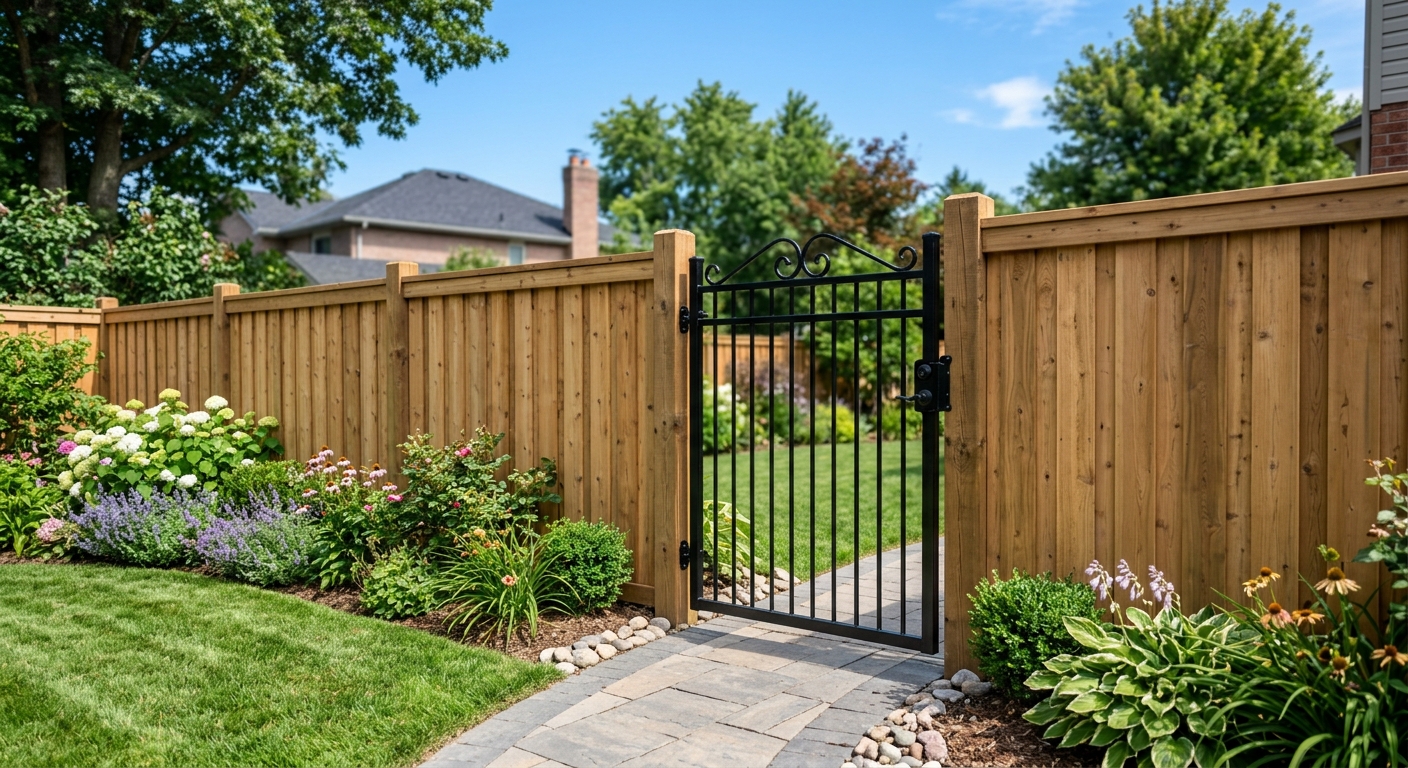
Fencing options and costs in Little Portugal
In Little Portugal, Ontario, homeowners rely on fencing for privacy, pet control and keeping snow drifting where it belongs. With a population of 15,559 (Statistics Canada, 2021 Census), the neighbourhood has a steady mix of older residential streets and newer infill—both create consistent fence demand whenever families update curb appeal or secure rear yards. In practice, fencing work is especially active in the pocket around Dundas St W and the laneway-side properties where back-yard access is tighter and gates are more common. Toronto’s housing stock also means yards often border busy walkways, so fence stability and panel alignment matter more than in rural areas.
Local climate is a major cost driver in the Toronto economic region: the commonly used Southern Ontario frost line is about 42"–48", which typically forces contractors to set posts at a minimum depth of roughly 3.5–4 feet for privacy fences. That depth, combined with clay and mixed soils common around the GTA, usually leads to concrete-set posts for best long-term performance—more labour and ready-mix costs, but fewer problems with heaving and leaning over the freeze/thaw cycle. Wind isn’t as extreme as the Prairies, yet taller solid fences still need proper post size and spacing to reduce racking.
Below are realistic price bands and expectations for common materials you’ll hear about from installers in Little Portugal, then you can use this to compare quotes before you sign anything.
| Material |
Lifespan |
Maintenance |
Privacy Rating |
Price per Linear Foot |
| Pressure-treated pine (standard wood) |
10–15 years |
Stain or seal every 2–3 years |
High (solid boards) |
$65–$120 |
| Cedar (natural rot resistance) |
15–25 years |
Light sealing/staining every 2–4 years |
High (solid boards) |
$75–$130 |
| Vinyl / PVC (no-maintenance) |
20–30 years |
Wash annually; no painting |
Medium to High (solid pickets/panels) |
$75–$130 |
| Chain-link (galvanized steel) |
20–40 years |
Occasional rinse; no coating wear like wood |
Low (visuals through mesh) |
$45–$85 |
| Aluminum ornamental |
25–40 years |
Wash as needed |
Low to Medium (decorative pickets) |
$90–$160 |
| Composite / recycled material |
20–30 years |
Low; periodic cleaning |
High (solid styles) |
$85–$150 |
Prices are estimates only and vary by project scope, site access and material selection.
What affects the price of fencing in Little Portugal
In Little Portugal and across the Toronto economic region, quotes for what looks like “the same fence” can vary by 30–50% because the hidden work isn’t the same: post depth, soil conditions, gate hardware, and how many lineal feet are truly involved after you account for corners and setbacks. Two contractors may price a privacy fence at different totals because one includes proper concrete-set footings in frozen ground while the other uses faster methods that can shift during Toronto’s freeze/thaw cycles.
Frost line depth is the big one. In Southern Ontario, the design frost depth is commonly handled with posts set about 4–6 inches below the design frost depth—often translating to roughly 1.5–2.0 m (4.9–6.6 ft) into the ground depending on soil and your fence height. That longer hole means longer posts and more concrete, which increases both material and labour. In cold seasons, you’ll also see contractors allocate more time for careful layout so panels land square and don’t rack when hardware is tightened.
Wind exposure still matters even in the GTA. For solid privacy styles, installers typically use heavier posts (and closer spacing) to resist uplift and racking, especially where the yard backs onto a wider street or there’s more open exposure. By comparison, coastal BC tends to push wood rot risk and careful coatings, but in Toronto the freeze/thaw cycle drives the structural costs more than pure rot.
Concrete examples from Little Portugal: (1) A 6–8 ft solid wood fence often lands closer to the $65–$120 range when posts are concrete-set and the job includes new gate hardware; skipping that depth can reduce the short-term cost but increases the likelihood of leaning. (2) Switching to vinyl can move you toward $75–$130 even when boards are similar, because premium rail systems and heavier post components are commonly used for straight runs that last.
On older streets, mature trees, narrow driveways, and limited side access can also raise labour time. If your yard is tight, crews spend extra time setting machinery, protecting landscaping, and removing old fence sections without damaging neighbour property—those details can be worth hundreds to over a thousand dollars.
| Price Factor |
Why It Matters |
Cost Impact |
| Fence length in linear feet — the primary cost driver |
Every extra foot adds materials (rails, pickets/panels) and labour |
Largest line-item driver; typically the biggest reason totals differ |
| Post depth required — frost line determines post length and hole depth |
Deeper holes + longer posts reduce heaving in Toronto winters |
Raises material and labour; often the key difference between “good” and “bare minimum” installs |
| Post setting method — concrete vs. gravel pack vs. driven posts |
Concrete-set posts stabilize in clay/mixed soils |
Concrete increases ready-mix and labour time; can cost more but improves long-term stability |
| Material choice — vinyl vs. cedar vs. chain-link |
Different costs per component and different lifespan/maintenance profiles |
Can shift you between the wood, vinyl and chain-link price bands |
| Gate count and type — walk-through vs. drive-through (double) |
Gates require stronger framing, hinges, latches and often extra posts |
Each gate increases hardware, install time and sometimes structural upgrades |
| Grade and terrain — sloped yards require stepped or raked panels |
Keeping the fence level/consistent can require custom adjustments |
Can add labour and waste; stepped panels often take longer to fit |
| Old fence removal and disposal |
Demolition, hauling and recycling/landfill fees vary |
Can be modest for easy access or significant for rotted sections and tight spaces |
| Permit fees and survey / property line locate |
Accuracy protects you from encroachment disputes |
Survey/locate and any applicable permit work adds cost but can prevent expensive rework |
Permits & regulations in Ontario
In Ontario, fence permit requirements usually depend on the fence height and location (rear vs. front/corner). As a rule of thumb in many GTA contexts, fences above about 2.0 m (6.5 ft) at the rear and above roughly 1.0–1.2 m (3–4 ft) in the front or corner often trigger a building permit. Regardless of permit thresholds, you must respect property lines and any applicable municipal setback bylaws.
Before a single post-hole is dug in Little Portugal, you should call for utility locates using Ontario One Call. Even if you’ve never had underground services, crews still need marked locations to work safely. Next, obtain a survey or confirm property line locations by using your property pins—this matters because small placement errors can lead to disputes with neighbours, especially on older lots with tighter boundaries.
Shared fence ownership and line-fence responsibility are governed by Ontario’s line-fence rules, so the boundary matters. If you’re working along a shared line, ask for clarity in writing on who is paying, who maintains, and where the fence sits.
To verify an Ontario contractor before work starts, check three things: (1) licence/registration where applicable through the appropriate provincial registry listings, (2) liability insurance with the contractor named as insured and adequate limits for construction work, and (3) WSIB clearance (or WCB coverage where relevant) via the contractor’s clearance letter or policy confirmation. Request certificates before signing, not after.
Note: permit thresholds can vary by municipality and fence specifics, so always ask your contractor to confirm what applies to your exact location and height.
Choosing the right fence material for Little Portugal
The best fence in Little Portugal is the one that matches your priorities—privacy, low maintenance, budget, and how long you want to avoid repairs—while handling Toronto’s freeze/thaw winter. Pressure-treated pine is the budget-friendly start, but it typically needs staining or sealing every 2–3 years to prevent fast weathering and greying. Cedar looks better longer and resists rot naturally, yet it still benefits from periodic staining to keep its appearance and reduce surface breakdown. Vinyl/PVC offers low maintenance and a clean look, but in extreme cold it can become brittle if installed with the wrong components or if the fence flexes without proper post support. Chain-link is usually the longest-life low-cost option, yet it won’t give the privacy most homeowners want in back yards. Aluminum ornamental provides durability and rust resistance, but it’s more about visual separation than real privacy.
For privacy fences in Southern Ontario, concrete-set posts are commonly recommended because posts must be set deep enough to reduce heaving at the frost line (roughly 42"–48" commonly referenced, with post holes placed deeper to account for frost). That depth is what drives labour and ready-mix costs; it’s also why many crews avoid “driven post” shortcuts for 6–8 ft fences on clay/mixed soils.
Wind and snow loads in the GTA aren’t coastal-level, but racking still happens when solid panels aren’t supported correctly. If your yard is exposed to prevailing breezes from wider streets or open corners, consider heavier framing and tighter spacing.
A practical example: if a vinyl privacy run comes in around the $75–$130 band and a cedar option is closer to the $65–$120 band, the premium can be justified when you want to avoid annual painting work and you value a straight, uniform look over 15–25+ years.
| Material |
Cold Tolerance |
Lifespan |
Annual Maintenance |
Best For |
Price Band |
| Pressure-treated pine |
Good, with proper sealing and stable post support |
10–15 years |
Inspect yearly; stain/seal every 2–3 years |
Budget-first privacy and curb appeal |
$65–$120 |
| Cedar |
Good; performs well through freeze/thaw with coating |
15–25 years |
Inspect yearly; seal/stain every 2–4 years |
Better aesthetics with moderate upkeep |
$75–$130 |
| Vinyl / PVC |
Good when installed with correct expansion allowances |
20–30 years |
Wash as needed (usually once per year) |
Low-maintenance privacy |
$75–$130 |
| Chain-link |
Excellent; galvanization resists Ontario winters |
20–40 years |
Rinse and check tension annually |
Security with maximum longevity |
$45–$85 |
| Aluminum ornamental |
Excellent; powder-coated and rust-resistant |
25–40 years |
Wash as needed |
Attractive boundary with minimal upkeep |
$90–$160 |
| Composite / recycled |
Good; depends on core/rails and installation quality |
20–30 years |
Low; periodic cleaning |
Solid look with reduced weathering |
$85–$150 |
How to choose a fencing contractor in Little Portugal
Choosing a contractor isn’t just about the lowest number—it's about reducing the chance of leaning posts, misaligned panels, and hardware failures after the first hard freeze. Start with proof: confirm the contractor is properly registered/licensed where required in Ontario for the work they perform, and ask for a current certificate of liability insurance. For worker coverage, request WSIB clearance (or the contractor’s WCB documentation as applicable) and verify you have a clearance letter you can read, not just an “in good standing” statement.
Next, get 2–3 itemised written quotes. You want line-by-line clarity for labour and materials (posts, rails, boards/panels, gates, hardware, concrete), not a vague lump sum. Make sure they specify how posts are set (concrete-set vs. gravel pack), the footing depth approach, and whether they include disposal of your old fence. If a permit is required due to height or location, ask whether the permit pull and documentation are included or billed separately.
Warranty also matters in Toronto’s conditions. Ask for the workmanship warranty length (how long they stand behind installation) and the product/manufacturer warranty for boards, rails and hardware. Also confirm whether warranties are transferable if you sell your home—this is often overlooked but valuable for homeowners.
For payment, don’t hand over large deposits. A safe rule is never more than 10–15% upfront, with the remainder scheduled for completion milestones. Hold back money until the fence is fully installed, gates operate smoothly, and cleanup is finished. Finally, require a start date and a completion estimate in writing so the project doesn’t stall mid-winter or during heavy neighbourhood traffic weeks.
- Provide a written itemised quote (materials + labour), not just a total.
- Specify post depth and method (concrete-set recommended for typical Toronto privacy heights).
- Show gate hardware details (hinge type, latch style, post reinforcement).
- Confirm disposal/haul-away is included for old fencing.
- Ask who pulls permits if required for your fence height/location.
- Verify liability insurance before any digging starts.
- Request WSIB clearance documentation or applicable worker coverage confirmation.
- Get the workmanship warranty in writing, including what failures are covered.
- Confirm product/manufacturer warranty terms and whether it’s transferable.
- Review schedule: start date, weather handling plan, and completion target.
- Confirm installation approach for sloped yards (stepped vs. raked panels).
- Check payment schedule: keep deposits to 10–15% and use completion holdback.
In Little Portugal, common red flags I see include: contractors refusing to put post depth and setting method in writing, quoting “wood fence” without identifying board thickness or rail sizes, trying to collect a large upfront payment, skipping proof of insurance/WSIB clearance, and not addressing property line verification or cleanup/disposal.
Frequently asked questions — fencing in Little Portugal
How do I find my property line before fencing?
In Little Portugal, the safest approach is to confirm your boundary before any digging. Start with your deed documents and then use your existing property pins (if accessible) to understand where the line-fence location is. If you can’t clearly identify the pins, book a survey or request a property line locate so you can see exact boundary points before posts are set. This helps prevent encroachment disputes, which are common when older lots have unclear markers. Also, before digging, call Ontario One Call for utility locates so contractors can work safely near services. A good fencing contractor should discuss line verification in their scope and include a plan for staying on your side of the property.
What's the most low-maintenance fence?
For Ontario homeowners who want the least ongoing work, vinyl/PVC and aluminum are usually the top choices. Vinyl privacy fencing typically needs little more than an occasional wash, while aluminum ornamental fencing is powder-coated and rust-resistant. If your priority is real backyard privacy in Little Portugal, vinyl often gives a better “day-to-day” experience than wood because you generally avoid the repeated staining cycle wood requires. Pricing depends on style and hardware, but vinyl/PVC commonly falls within the $75–$130 range in the Toronto market. Chain-link is also low-maintenance but doesn’t provide the same privacy as solid-panel styles.
How tall can my fence be in Little Portugal?
Fence height limits typically depend on where the fence sits (rear yard vs. front or corner) and whether permits apply. In Ontario practice, fences around 2.0 m (6.5 ft) at the rear and about 1.0–1.2 m (3–4 ft) at the front/corner are commonly where permit requirements may start. Because rules can vary with your exact location and municipal bylaw details, confirm your planned height with your contractor and ask whether a permit will be required for your specific dimensions. The safest way to avoid a rework is to get the design locked in (height, location, and material) before you order and before posts are installed.
Should fence posts be set in concrete here?
For typical privacy fences in the Toronto economic region, yes—concrete-set posts are commonly recommended because they reduce frost heave risk during Southern Ontario freeze/thaw cycles. With a commonly referenced frost line of about 42"–48", best practice is to set posts deeper so they sit roughly 4–6 inches below the design frost depth. That usually means posts set around 1.5–2.0 m into the ground, depending on conditions. In clay and mixed soils, concrete setting improves long-term stability compared with simple driven posts. It does raise labour and material costs, but it’s often what keeps a 6–8 ft solid fence straight. If someone quotes an unrealistically low install price, ask what they’re doing for post depth and setting method.
What's the best fence for privacy?
For privacy in Little Portugal back yards, a solid-panel privacy fence is the most effective, which usually points you toward pressure-treated pine, cedar, vinyl/PVC, composite, or a high-density solid metal/wood system. If you’re thinking 6–8 ft heights, make sure the contractor designs for racking resistance—proper post size, spacing, and (in Toronto conditions) concrete-set footings. Vinyl and cedar are popular for privacy because they keep a consistent visual line year-round when installed correctly. Pricing often lines up with the local bands: wood privacy installs often fall within $65–$120, while vinyl/PVC privacy frequently trends into $75–$130. Chain-link can be paired with privacy slats, but that adds maintenance and won’t match a solid fence’s look.
How do I compare fencing quotes?
Compare quotes by scope, not just total price. Ask each contractor to itemise labour and materials: post depth and setting method, rail sizes, board/panel type, concrete quantity, gate hardware, and whether disposal is included. Confirm whether permits are included if your fence height/location triggers them. Then compare warranties: workmanship coverage for install problems and product/manufacturer coverage for materials. Check payment schedules too—avoid contractors asking for more than 10–15% upfront, and prefer a holdback until completion. A quote that’s “cheaper” but uses shallower holes, weaker framing, or unclear gate hardware often costs more later when you fix leaning sections after winter.