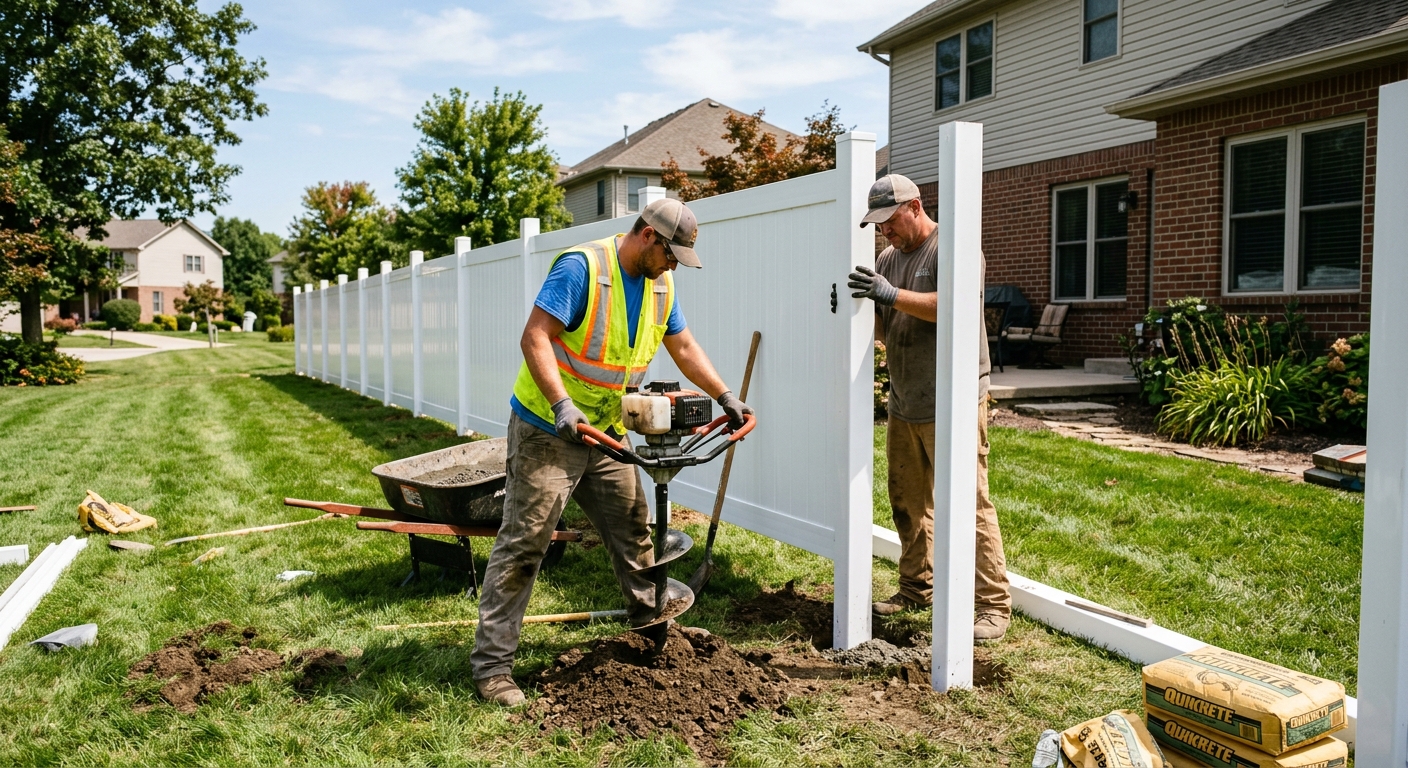
Fencing options and costs in Greater Sudbury
Greater Sudbury homeowners have plenty of choices for fencing, and the right pick usually comes down to privacy, maintenance comfort, and how exposed your yard is to wind-driven weather. With a 2021 population of 166,004 (Statistics Canada, 2021 Census), demand is steady year-round, especially in older established neighbourhoods and near the city’s lakefront where wind exposure can be punishing. Single-detached homes remain a major driver of fence projects because each property typically needs boundary definition, pet containment, and seasonal security upgrades—an ownership pattern that supports long-term local trade availability (Statistics Canada, 2021 Census). In the Northeast Ontario context, winters are long and freeze-thaw cycles are hard on fasteners, hinges, and post set-ups; in practice, this means more robust installation details than “summer-only” fencing gets.
In the Greater Sudbury market, you’ll typically see contractors pricing for deep frost conditions and for wind loading effects around open lots. That’s why post depth, concrete belled footings (where required), and tighter hardware choices can shift a quote even when the fence looks similar. Around areas like New Sudbury and Valley East—where lots can be wider and yards more exposed—privacy fences often cost more because they need bracing and well-set posts to resist racking. Once you factor in those on-site realities, it’s easier to compare materials fairly—so the table below shows realistic lifespan, maintenance, privacy, and per-foot pricing for common options.
| Material |
Lifespan |
Maintenance |
Privacy Rating |
Price per Linear Foot |
| Pressure-treated pine (standard wood) |
10–15 years |
Stain or seal every 2–3 years; check posts/rails after freeze-thaw |
High |
$80 – $130 |
| Cedar (natural rot resistance) |
15–25 years |
Optional sealant every 3–4 years; tighten hardware as needed |
High |
$95 – $145 |
| Vinyl / PVC (no-maintenance) |
20–30 years |
Rinse wash as needed; inspect for impact cracks in extreme cold |
High |
$85 – $140 |
| Chain-link (galvanized steel) |
25–35 years |
Occasional wash; replace any damaged mesh sections |
Low–Medium |
$55 – $90 |
| Aluminum ornamental |
30–40 years |
Wash seasonally; tighten brackets |
Low–Medium |
$95 – $150 |
| Composite / recycled material |
20–30 years |
Rinse and spot-clean; periodic hardware checks |
High |
$100 – $160 |
Prices are estimates only and vary by project scope, site access and material selection.
What affects the price of fencing in Greater Sudbury
In Greater Sudbury, quotes for what seems like the “same” fence can swing by 30–50% because the hidden cost drivers are installation details: post depth, hardware grade, and how the crew handles freeze-thaw movement. Across the Northeast Ontario region and northern Ontario generally, labour availability and the need for more concrete-setting and longer posts can push total pricing higher than you’d expect from material-only comparisons. Wind exposure also changes what’s considered “standard”—a fence that holds up in a sheltered back yard may need additional bracing, closer post spacing, or heavier rails on an open lot.
Frost line depth is a big one. For cold Ontario conditions, a practical rule contractors use is setting posts roughly 4–6 inches below the design frost depth to reduce heaving and seasonal movement. That often means posts installed about 1.5–2.0 m into the ground, which increases both material length and concrete/foundation work. Post setting also drives cost: concrete-set posts and belled footings take more time than gravel pack or driven-only methods. Wind exposure can add labour and materials too—especially where panels behave like sails, prompting tighter post spacing and sturdier frames.
Two local examples of how conditions affect your bill in Greater Sudbury: (1) if your yard has clay-heavy soil, a contractor may need more excavation and concrete to stabilize posts through freeze-thaw, raising the price versus sandy soil where drainage is faster; (2) if your fence runs near open areas with strong gusts off nearby open land, you may see a premium similar to the upper end of the $80 – $130 wood band because of additional bracing and heavier rails. If you’re comparing materials, the vinyl/PVC premium (often within $85 – $140) can be justified when you want to avoid repeated wood staining and recurring repairs after winter hardware loosens.
| Price Factor |
Why It Matters |
Cost Impact |
| Fence length in linear feet |
More length means more posts, rails, mesh/panels, and time per run |
Highest driver; scales total cost directly |
| Post depth required |
Frost line determines length and hole depth needed to prevent heaving |
Can increase material and excavation labour significantly |
| Post setting method |
Concrete vs. gravel pack vs. driven posts affects stability and longevity |
Concrete setting typically adds cost but reduces movement failures |
| Material choice |
Vinyl/PVC and aluminum have higher material cost than chain-link |
Shifts you between the typical wood, vinyl, chain-link, and aluminum bands |
| Gate count and type |
Gates require heavier posts, hinges, and precise alignment |
Multi-gate installs often add noticeable labour and hardware cost |
| Grade and terrain |
Sloped yards require stepped rails or raked panels |
Extra measuring, custom adjustment and sometimes extra parts |
| Old fence removal and disposal |
Demolition, hauling, and possible salvage affect time and fees |
Frequently adds a separate line item or increases total by several hundred+ |
| Permit fees and survey / property line locate |
Documentation and locating pins reduce encroachment risk |
Variable add-on; often lower than repair costs from disputes |
Permits & regulations in Ontario
In Ontario, fences above a height threshold—typically around 2.0 m (6.5 ft) at the rear and 1.0–1.2 m (3–4 ft) at the front or corner—often trigger a building permit requirement, depending on location and municipal requirements. Regardless of permit needs, your fence must respect property lines and municipal setback bylaws. If you plan to build or replace a fence near a property boundary, it’s smart to confirm the applicable bylaw for your exact street segment in Greater Sudbury before you sign a contract.
Before digging any post hole, call for utility locates using Ontario One Call (1-800-400-2255). Even if you’ve installed fences before, buried services can change over time. Also consider obtaining a survey or locating your property pins before installation to avoid encroaching on a neighbour’s yard.
Shared fence ownership and maintenance responsibilities are governed by provincial line-fences legislation. Typically, if a fence is shared, neighbours often share costs and ongoing maintenance responsibilities—but the details depend on the agreement and boundary situation.
Specific permit guidance you can act on: you DO usually need a permit when you’re exceeding typical height limits or building a larger-than-standard fence configuration in front/corner areas. You typically do NOT need a permit for small replacement sections that stay within common height thresholds, but you should still verify with the City of Greater Sudbury or your contractor’s permit pull process.
To verify your contractor before work starts, check: (1) Ontario business licence/contractor registration where applicable via the online city/provincial resources the contractor provides; (2) liability insurance—ask for a current certificate of insurance naming you as a certificate holder if your project requires it; (3) WSIB clearance/coverage documentation (or equivalent confirmation) and ensure the clearance is current. Request these documents up front and keep copies with your contract paperwork.
Choosing the right fence material for Greater Sudbury
Choosing the right fence material in Greater Sudbury is mostly about matching your priorities—privacy, low maintenance, budget, and lifespan—to what the climate will stress. Your winter freeze-thaw and wind exposure can loosen hardware and stress posts, so post depth and set-up matter as much as the board or panel material. Pressure-treated pine is the budget-friendly choice, but it typically needs staining or sealing every 2–3 years to reduce grey weathering and to keep the surface protected. Cedar looks great and resists rot better, but it still benefits from periodic sealing or staining to keep it from drying out and warping at the rails and picket edges.
Vinyl/PVC offers “no-stain” convenience and usually performs well in cold conditions, but extreme temperature shifts can make impact damage more noticeable—so you want good installation and quality components. Chain-link is the lowest-cost option in many cases and lasts a long time with minimal maintenance, but it won’t give you true privacy. Aluminum ornamental gives a clean, rust-resistant look with low maintenance; it’s mid-range in cost and commonly selected for curb appeal where privacy is less important. Composite/recycled products can offer privacy and durability, but confirm the system is rated for our freeze-thaw and wind stresses.
On frost protection, most crews will set posts deeper in Northeast conditions; where posts must be installed roughly 1.5–2.0 m into the ground to reduce movement, concrete-set posts are common for long-term stability. That’s why the “cheapest” option can become expensive if it fails early. For example, spending nearer the upper end of the wood band (about $80 – $130 per linear foot) may be more cost-effective over 10–15 years than choosing the cheapest chain-link run (often $55 – $90), only if you truly need privacy and a fence line that holds rigidly against gusts and racking forces.
| Material |
Cold Tolerance |
Lifespan |
Annual Maintenance |
Best For |
Price Band |
| Pressure-treated pine |
Good; proper grade and top protection needed |
10–15 years |
Seal/stain every 2–3 years; fastener checks after winter |
Budget privacy with a willingness to maintain |
$80 – $130 |
| Cedar |
Good; performs well with good post/rail installation |
15–25 years |
Seal/stain every 3–4 years; occasional hardware tightening |
Natural look, rot resistance, premium privacy |
$95 – $145 |
| Vinyl / PVC |
Very good; avoid impact and confirm rated components |
20–30 years |
Wash/rinse as needed; inspect post caps and connections |
Low-maintenance privacy |
$85 – $140 |
| Chain-link |
Good; steel holds up if galvanized coating is intact |
25–35 years |
Minimal—spot fixes if damaged |
Security and pets; visibility-friendly boundaries |
$55 – $90 |
| Aluminum ornamental |
Excellent; doesn’t rust |
30–40 years |
Wash and check fasteners periodically |
Curb appeal with light security |
$95 – $150 |
| Composite / recycled |
Good; verify system for freeze-thaw and wind |
20–30 years |
Low—rinse/clean; hardware checks |
Privacy without traditional wood staining |
$100 – $160 |
How to choose a fencing contractor in Greater Sudbury
To choose a fencing contractor you can trust in Greater Sudbury, start with three verifications: Ontario licensing/registration as required for their business, liability insurance, and workers’ compensation coverage. Ask for (1) a valid Ontario business registration or licence information, (2) a certificate of liability insurance (current, with project dates if possible), and (3) proof of coverage/clearance related to WSIB/WCB—then confirm it’s not expired. If you don’t know what to request, send a short message: “Please provide your certificate of insurance and proof of WSIB/WCB coverage, and your licence/registration info for this project.”
Next, get 2–3 itemised written quotes. You want a breakdown that separates labour and materials (posts, rails, mesh/panels, gates, hardware) and clearly states how long posts will be set and what post-setting method is included. Avoid comparing “lump sum only” bids because one contractor may be assuming gravel pack while another is pricing concrete-set posts and belled footings—those differences can explain major price gaps.
Read the scope line-by-line: what is excluded? Is permit pulling included if required? Is fence removal and disposal included (and where will it be hauled)? What is the guarantee on workmanship? Ask about warranty length for installation (often workmanship is separate from product warranty), whether the product warranty transfers to you if you sell the property, and what happens if a post moves after freeze-thaw within the first season.
For payment, don’t pay more than 10–15% upfront. Use a holdback until the job is complete and cleanup is done. Finally, insist on a written timeline: a start date, completion estimate, and what weather conditions could delay the schedule.
- Provide proof of current liability insurance before you sign.
- Confirm WSIB/WCB coverage (or clearance) is active for the job period.
- Get an itemised quote: posts, rails, panels/mesh, gates, hardware, and labour separated.
- Ask for exact post depth and post-setting method in writing.
- Confirm disposal/hauling is included or excluded, with a disposal location if known.
- Require scope clarity: permit pull included or your responsibility.
- Check warranty terms: workmanship duration, start date, and what voids coverage.
- Verify product specs: grade of wood, vinyl thickness/grade, chain-link coating, aluminum finish.
- Confirm gate hardware type and who provides adjustments/alignment after installation.
- Make sure setbacks and property line location steps are documented (survey pin locate vs. assumptions).
- Use a payment schedule with a holdback until final inspection/cleanup.
- Get a written schedule and a weather-delay policy.
Red flags to watch for in Greater Sudbury: contractors who won’t provide insurance/WSIB documentation; quotes that don’t specify post depth or setting method; a “no permit needed” answer without checking height thresholds for your location; payment requests of 50%+ upfront; and vague warranty language like “we’ll fix it if it fails” without a written workmanship period.
Frequently asked questions — fencing in Greater Sudbury
How deep should fence posts be for Greater Sudbury's frost?
In Greater Sudbury, frost and freeze-thaw cycles mean posts typically need to be set deeper than people expect. A common installation approach is setting posts about 4–6 inches below the design frost depth, which often works out to roughly 1.5–2.0 m into the ground for many residential layouts. Depth isn’t the only factor—how the post is set matters too. If the soil holds water or freezes unevenly, concrete-set posts with proper belled footings can reduce heaving and seasonal movement compared with gravel-only approaches. Your contractor should state the intended post depth and method in the written quote, not just “standard installation.”
Wood vs vinyl vs aluminum fence — which is best?
“Best” depends on whether you prioritize privacy, appearance, or maintenance. Wood (especially pressure-treated pine) can fit a tighter budget and still provides strong privacy, with typical installed pricing often landing around $80 – $130 per linear foot. Vinyl/PVC usually costs a bit more but is often chosen for low maintenance and long-term privacy, commonly around $85 – $140. Aluminum ornamental is excellent for curb appeal and long life with minimal rust risk, but it usually won’t provide the same privacy as picket or board fences. In Greater Sudbury, wind exposure and winter hardware stresses make installation quality (post depth and bracing) critical for any material. If you need privacy and want fewer recurring repairs, vinyl or cedar often wins; if you want an open look and security without heavy visual screening, aluminum is a strong choice.
Do I need a permit to build a fence in Ontario?
In Ontario, permits are commonly required when a fence exceeds typical height thresholds—often around 2.0 m (6.5 ft) at the rear and about 1.0–1.2 m (3–4 ft) at the front or corner—plus any municipal setback considerations. Whether you’re in Greater Sudbury’s residential areas near the core or on the outskirts, you should confirm the height and placement rules for your exact address before digging. Even if a permit isn’t required, you still must respect property lines and any local setback bylaw. Also, don’t start excavation until you’ve completed utility locates via Ontario One Call. A good contractor will either handle the permit pull (when needed) or clearly document whether it’s excluded from the quote.
How long does a wood fence last in Greater Sudbury?
A well-installed pressure-treated pine fence in Greater Sudbury typically lasts around 10–15 years, while cedar often runs longer—about 15–25 years—because it naturally resists rot better. Lifespan is heavily tied to freeze-thaw performance: posts set too shallow, inadequate concrete set-up, or poor drainage around the base can lead to early movement and rail sag. Maintenance matters too; staining or sealing about every 2–3 years (for pressure-treated pine) helps slow weathering and protects the surface. In practice, fences near more exposed backyards—where wind gusts repeatedly rack panels—often need earlier tightening and more frequent hardware checks. If your quote doesn’t specify post depth and post setting, you can’t reliably predict real lifespan.
Who owns and maintains a shared fence?
In Ontario, shared fence ownership and maintenance is generally governed by provincial line-fences legislation, but the details depend on where the fence sits relative to the boundary and how the fence was originally built or agreed upon. In many neighbourhoods around Greater Sudbury, neighbours assume a “good neighbour” arrangement, yet disputes happen when one side repairs or replaces without agreement. A practical approach is to confirm the boundary location (survey pins or a locate service) and put the responsibilities in writing if you’re sharing costs—especially if you’re replacing damaged sections. Your contractor can often help document the scope (what is being replaced and where). If you’re not sure whether your fence is truly shared, ask for a property line locate or survey confirmation before ordering materials.
How do I find my property line before fencing?
Before installing a fence in Greater Sudbury, you should identify property pins and verify the boundary line so you don’t build on a neighbour’s land. The most reliable route is a survey or a property-pin locate that references official boundary markers. If pins exist, contractors can often locate them and confirm alignment for your fence line, but you should verify it’s based on your property documentation—not just “eyeballing” from a sidewalk line. If you’re replacing an existing fence, don’t assume it’s correct; older fences were sometimes built with less precise information. Also remember utility locates through Ontario One Call are still required before digging post holes. Taking these steps up front is usually cheaper than resolving encroachment disputes later.