Fencing options and costs in Bridle Path-Sunnybrook-York Mills
Bridle Path-Sunnybrook-York Mills is a classic Toronto neighbourhood where homeowners want fences that blend with mature landscaping while still holding up through winters. With a 2021 population of 9,266 in the local profile area (Statistics Canada, 2021 Census), demand is concentrated among the families maintaining long, backyard lines, and fencing work is especially common where properties back onto parks, schools, or wider residential streets. In practice, this means fence quotes in Bridle Path-Sunnybrook-York Mills tend to be more design-led (style, gates, materials) than bargain-first, particularly because the Toronto housing stock includes many older lots with established boundaries and garden beds that need careful protection.
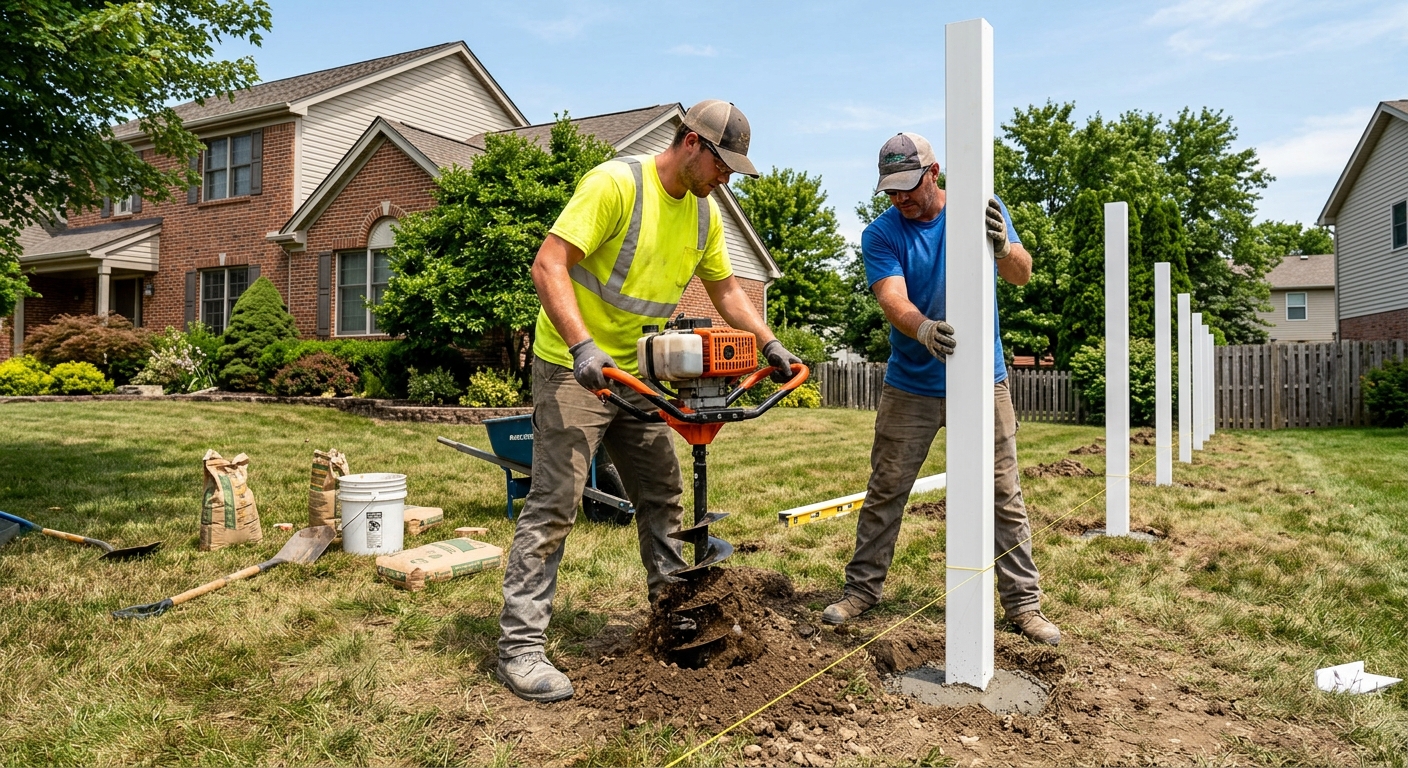
Pricing is shaped by Southern Ontario freeze conditions. Contractors typically set posts deeper to reduce frost heave risk; with the region’s frost line often treated at roughly 42"–48" (common best-practice planning), most crews use concrete-set posts rather than driven posts for 6–8 ft privacy fences. That increases labour and ready-mix costs, but it improves long-term straightness and reduces the “leaning” that shows up after several winters.
Trade activity is especially brisk around the York Mills / Sunnybrook corridor where lots are larger and back boundaries are frequently lined with mature trees, requiring more precise layouts and sometimes stepped sections to follow grade. If you’re deciding between privacy panels, low-visibility boundary fencing, or ornamental fronts, the comparison below will help you translate material choice into expected lifespan, maintenance, and typical installed pricing.
| Material |
Lifespan |
Maintenance |
Privacy Rating |
Price per Linear Foot |
| Pressure-treated pine (standard wood) |
10–15 years |
Stain/seal every 2–3 years |
High (solid panels) |
$65 – $95 |
| Cedar (natural rot resistance) |
15–25 years |
Light stain/finish every 2–4 years |
High (solid boards) |
$85 – $120 |
| Vinyl / PVC (no-maintenance) |
25–35 years |
Rinse only (occasional wash) |
High (solid styles) |
$75 – $130 |
| Chain-link (galvanized steel) |
20–35 years |
Minimal; rinse and inspect |
Low to medium (open mesh) |
$45 – $85 |
| Aluminum ornamental |
25–40 years |
Occasional rinse |
Low to medium (open pickets) |
$90 – $160 |
| Composite / recycled material |
20–30 years |
Low; periodic cleaning |
High (board-style composites) |
$95 – $145 |
Prices are estimates only and vary by project scope, site access and material selection.
What affects the price of fencing in Bridle Path-Sunnybrook-York Mills
In Bridle Path-Sunnybrook-York Mills, the same general fence “type” can come in 30–50% apart between contractors, even when your linear footage is identical. The difference is usually in the fundamentals: post depth and how posts are set, the panel design chosen to resist wind-driven racking, and how much site work (tree trimming, demolition, disposal, landscaping protection) is included. Toronto-area crews also price access differently—wider lots with paved driveways and careful boundary layouts cost more to mobilize than straightforward backyards, and that effect shows up quickly once you compare quotes.
Locally, the frost line drives the biggest structural variable. In cold Ontario, posts typically must be set about 4–6 inches below the planned frost depth to prevent heaving, which commonly means 1.5–2.0 m into the ground. That pushes crews toward concrete-set posts and longer materials, raising labour and ready-mix. By contrast, simply “driven posts” may reduce upfront cost but tend to shift over time on clay and mixed soils. Wind is less extreme than the Prairies, but Toronto still sees enough gust exposure that taller solid fences (wood or vinyl) often need heavier posts and tighter spacing (commonly 6–8 ft centres) to avoid sagging and uplift.
Two examples I see often in Bridle Path-Sunnybrook-York Mills: (1) a 6 ft privacy fence on clay often needs deeper holes and more concrete than the same length on looser sand, and (2) a sloped backyard along an established garden line can require stepped rails and extra labour, which pushes the project from typical wood bands (for instance $65–$120 per linear foot) closer to the upper range, especially when cedar or vinyl is selected. Meanwhile, chain-link jobs may start in the $45–$85 band, but add-ons like privacy slats, top rails, and removal can narrow the savings fast.
| Price Factor |
Why It Matters |
Cost Impact |
| Fence length in linear feet |
The more footage, the more posts, rails, fasteners, and labour time. |
Primary driver; directly scales total cost. |
| Post depth required |
Frost conditions govern how deep holes must be to prevent heaving. |
Deeper holes mean longer posts and more excavation/disposal. |
| Post setting method |
Concrete vs. gravel pack vs. driven posts affects stability and longevity. |
Concrete-set posts increase labour and ready-mix. |
| Material choice |
Vinyl/cedar are costlier per component than chain-link or pressure-treated pine. |
Often shifts the project between the $65–$120 and $75–$130 bands. |
| Gate count and type |
Gates require heavier hardware, bracing, and precise alignment. |
Each gate can add substantial labour/materials. |
| Grade and terrain |
Slope requires stepped or raked sections and extra layout time. |
More rails, labour, and waste than flat runs. |
| Old fence removal and disposal |
Demolition is labour-intensive and may require hauling and dumps fees. |
Can add a noticeable percentage to the quote. |
| Permit fees and survey / property line locate |
Some fence heights and locations may require review; property lines must be accurate. |
Adds administrative and professional locating costs. |
Permits & regulations in Ontario
In Ontario, permit needs can depend on fence height and where it sits relative to the property frontage. As a practical rule of thumb, fences above a height threshold—often around 2.0 m (6.5 ft) at the rear and roughly 1.0–1.2 m (3–4 ft) at the front or corner—may require a building permit (and you should confirm the exact requirement with your municipality’s rules before work starts). Regardless of height, you must respect property lines and any municipal setback bylaws. If your plan involves a tall privacy fence near a corner lot or you’re replacing an older fence that previously didn’t meet current standards, it’s especially important to verify early to avoid rework.
Before digging post holes, call for utility locates through Ontario One Call so you don’t hit buried services. Then, obtain a survey or locate your property pins. This helps prevent encroachment disputes, which can be a real issue in established Toronto neighbourhoods where boundary markers may be old or partly obscured by landscaping.
Licences and insurance matter in Ontario. To verify a contractor for your Bridle Path-Sunnybrook-York Mills project: (1) check their business information and registration details online; (2) request a certificate of liability insurance showing adequate limits for fencing work; and (3) ask for WSIB/WCB coverage documentation or a clearance letter if they’re eligible to provide it. Step-by-step, you want those documents before the contract is signed, not the day crews arrive.
Choosing the right fence material for Bridle Path-Sunnybrook-York Mills
Choosing fencing in Bridle Path-Sunnybrook-York Mills is mostly matching your priorities—privacy, low maintenance, budget, and how you want it to look for years—to materials that tolerate Toronto’s wet freeze-thaw cycles. Pressure-treated pine is usually the budget option, but wood fibres weather fast in the GTA climate: without staining/sealing every 2–3 years, you’ll see grey weathering and accelerated surface wear. Cedar costs more upfront, yet it’s naturally more resistant to rot and tends to hold its look better in damp seasons; it still benefits from periodic finishing.
Vinyl/PVC is popular with homeowners who want minimal upkeep—typically it just needs a rinse—but extreme cold snaps can make it feel brittle if the system is poorly installed (for example, weak post bases or inadequate rail support). Chain-link is the lowest-cost way to define boundaries and it lasts a long time, but it offers little privacy unless you add slats or plantings. Aluminum ornamental provides a clean, rust-resistant “front yard” look with mid-range pricing, though it won’t block views like a solid privacy fence. Composite/recycled products sit between wood and vinyl in performance and cost, and they’re often chosen for consistent board appearance.
Because Toronto’s frost line commonly requires posts to be set deeper (often roughly 1.5–2.0 m into the ground for typical planning), concrete-set posts are usually the safer choice for solid privacy styles, regardless of material. That’s the part people under-budget. In wind and snow seasons, proper post spacing and sturdy rails help prevent racking and keep panels straight after freeze-thaw movement.
A real dollar example: if you’re choosing a privacy fence, pressure-treated pine may land around the $65–$95 per linear foot range, while cedar or vinyl commonly climbs into the $85–$130 band. The higher price is justified when you value longevity, appearance, and less rework—especially on long runs where post stability matters as much as the picket or board itself.
| Material |
Cold Tolerance |
Lifespan |
Annual Maintenance |
Best For |
Price Band |
| Pressure-treated pine |
Good with correct staining and stable concrete-set posts |
10–15 years |
Stain/seal every 2–3 years; inspect hardware seasonally |
Budget privacy fences where you’ll maintain the finish |
$65 – $95 |
| Cedar |
Very good; performs well in wet-dry cycles |
15–25 years |
Light finish every 2–4 years; occasional cleaning |
Natural look with better rot resistance |
$85 – $120 |
| Vinyl / PVC |
Good when installed with proper support and bases |
25–35 years |
Low: rinse/clean; check for warping after extreme cold |
Low-maintenance privacy and long service life |
$75 – $130 |
| Chain-link |
Excellent; galvanized hardware resists Ontario weathering |
20–35 years |
Minimal; inspect tension and top rail hardware |
Security/boundary definition with budget control |
$45 – $85 |
| Aluminum ornamental |
Excellent; powder-coated systems handle winter well |
25–40 years |
Low: occasional rinse; spot-check fasteners |
Front-yard appearance without rust concerns |
$90 – $160 |
| Composite / recycled |
Good; stable board systems with proper post bases |
20–30 years |
Low: periodic washing; check for loose rails |
Consistent look with reduced upkeep |
$95 – $145 |
How to choose a fencing contractor in Bridle Path-Sunnybrook-York Mills
Choosing the right fence contractor in Bridle Path-Sunnybrook-York Mills starts with verifying coverage and understanding the quote details. In Ontario, you should confirm (1) liability insurance—request a certificate showing coverage appropriate for construction work, with your address named if possible; (2) WSIB/WCB coverage—ask for a clearance letter or confirmation of coverage status so you know the worker protections are in place; and (3) licensing/business registration details tied to the contractor’s operation. If a contractor can’t produce documentation promptly, that’s a major stop sign.
Next, ask for 2–3 itemised written quotes that break down labour, materials, post setting method, gate hardware, concrete/ready-mix allowance, and disposal. Avoid lump-sum-only quotes where it’s unclear whether old fencing removal is included, whether permits (if required) are pulled by the contractor, and whether utility locate costs are covered. Warranty is equally important: ask for the workmanship warranty length and confirm whether product warranties are manufacturer-backed and transferable if you sell the home.
For payment, never pay more than 10–15% upfront. Hold back the remainder until the job is complete, inspected, and cleaned up—especially for long privacy runs where alignment problems only show after a full day of drying and panel installation. Finally, request a written timeline: start date, number of days expected, and the completion estimate should match the scope.
- Ask for proof of liability insurance before scheduling excavation.
- Request WSIB/WCB clearance or coverage confirmation in writing.
- Confirm whether utility locates are arranged and who pays for them.
- Ensure quotes specify post depth and whether posts are concrete-set.
- Check that gate hardware (hinges/latches/locks) is listed with model or specs.
- Verify disposal/hauling of old fencing is included or called out as an add-on.
- Confirm if permits are required for your height/location and who pulls them.
- Make sure the quote notes protection for landscaping and any tree trimming limits.
- Look for stepped vs. raked panel plan where you have grade changes.
- Ask for warranty terms: workmanship length and what voids coverage.
- Get a written schedule and nuisance control plan (noise/working hours).
- Confirm the project includes final cleanup and debris removal from sidewalks/driveways.
Red flags in the Bridle Path-Sunnybrook-York Mills market: contractors who won’t specify post depth or setting method; quotes that don’t mention concrete/ready-mix quantities for deeper frost-protected holes; vague “we’ll handle it” answers about permits and utility locates; promises of unusually low pricing without line-by-line itemization; and no written workmanship warranty or refusal to provide insurance documentation before starting.
Frequently asked questions — fencing in Bridle Path-Sunnybrook-York Mills
How do I compare fencing quotes?
In Ontario (including Bridle Path-Sunnybrook-York Mills), compare quotes the way you’d compare bids for a structural project: look for post depth, post setting method (concrete-set versus gravel pack versus driven), and the exact panel style. A quote that’s lower but uses driven posts or shallower holes often “wins” on paper and loses after freeze-thaw movement. Make sure all prices are based on the same fence height, the same number of gates, and whether old fence removal and disposal are included. Also verify the material grade (pressure-treated vs. cedar, vinyl quality, aluminum thickness) and hardware specs (latches, hinges, posts). If one contractor estimates at the wood band (for example $65–$95 per linear foot) while another is in the vinyl range (roughly $75–$130), you should still be able to see what’s different line-by-line.
How long does fence installation take in Bridle Path-Sunnybrook-York Mills?
Most residential fence installs in Bridle Path-Sunnybrook-York Mills take about 1–3 days for the crew, assuming straightforward access and typical yard conditions. The biggest schedule drivers are how long it takes to excavate and set posts to frost-safe depth, plus curing time for concrete-set posts on long privacy runs. If you have multiple gates, slope/stepped panels, or tree-root constraints, allow extra time for layout and adjustments. If demolition and disposal are part of the project, add time for removal and hauling. Weather matters too: wet ground can slow excavation, and extreme cold can affect concrete work. A good contractor will give you a written start date and completion estimate aligned to your actual scope.
Can I install a fence on a slope in Bridle Path-Sunnybrook-York Mills?
Yes, fences can be installed on a slope in Bridle Path-Sunnybrook-York Mills, but the method matters. Contractors typically choose either stepped panels (stair-step design) or raked sections (following the slope angle), depending on the material and your visual preference. Stepped sections are common for privacy fences because they maintain a more consistent top line and minimize gaps. Raked designs can look cleaner on gentle grades but require more careful alignment to keep rails straight. In winter, proper post bases are still critical—sloped yards don’t change frost behaviour, so post depth and concrete-set stability remain key. Make sure your quote explicitly states how they’ll handle grade changes and whether extra materials and labour are included for stepped/raked runs.
What is the most weather-resistant fence for Bridle Path-Sunnybrook-York Mills's climate?
For Toronto-area winter conditions, the most “weather-resistant” result usually comes from combining durable materials with correct post installation. In Bridle Path-Sunnybrook-York Mills, vinyl/PVC and aluminum generally perform very well because they resist rot and rust, and they’re less sensitive to the damp-freeze cycles that affect wood. Cedar can also be highly resilient due to natural rot resistance, but it typically still needs periodic finishing to protect the surface. Chain-link is extremely long-lasting in Ontario weather, though it won’t provide the same privacy without additions. Whatever you choose, insist on concrete-set posts at the proper depth to reduce heaving risk; that foundation work is often what determines whether your fence stays straight after multiple winters.
How do I prevent wood fence rot in Bridle Path-Sunnybrook-York Mills?
Wood rot prevention in Bridle Path-Sunnybrook-York Mills is mostly about keeping wood dry and reducing contact with soil. Start with pressure-treated lumber installed correctly, and prioritize cedar if appearance and longevity are your goals. Ensure posts are properly concrete-set so the lower boards aren’t sitting in damp ground. Ventilation matters too: don’t fully trap moisture behind poorly fitted panels or leave end-grain exposed without a finish. On an ongoing basis, stain or seal on a maintenance cycle—often every 2–3 years in the GTA—so water doesn’t penetrate the surface. Finally, keep sprinklers from directly wetting fence faces and periodically check hardware so joints don’t open up and hold moisture.
What is the cost per linear foot for fencing in Bridle Path-Sunnybrook-York Mills?
Typical installed pricing in the Bridle Path-Sunnybrook-York Mills area is best understood by material bands. Wood privacy fences are commonly estimated around $65–$120 per linear foot depending on height, rail/post size, and whether you’re using cedar versus standard pressure-treated pine. Vinyl/PVC privacy fences often land in the $75–$130 per linear foot range, while chain-link is typically lower at $45–$85. Aluminum ornamental tends to be $90–$160 per linear foot. The final per-foot number can move based on gate count, post setting depth (concrete-set posts for freeze protection), slope/terrain complexity, and whether old fence removal and disposal are included. The most accurate way is to compare itemised quotes that match your exact scope.