Fencing options and costs in Parkwoods-Donalda
Parkwoods-Donalda is a neighbourhood where fencing gets planned as seriously as landscaping—because most lots are sized for family use and privacy, and because the area’s mature streets and established homes create steady repeat demand for replacements. With a population of 34,805 in the 2021 Census for the broader Parkwoods-Donalda area (Statistics Canada, 2021 Census), there’s constant turnover of wood fences as homeowners refresh front and backyard boundaries. Local housing stock is also dominated by detached properties, which typically means more perimeter fencing and more gate work per property—making fencing demand one of the most predictable home-improvement spends for homeowners here.
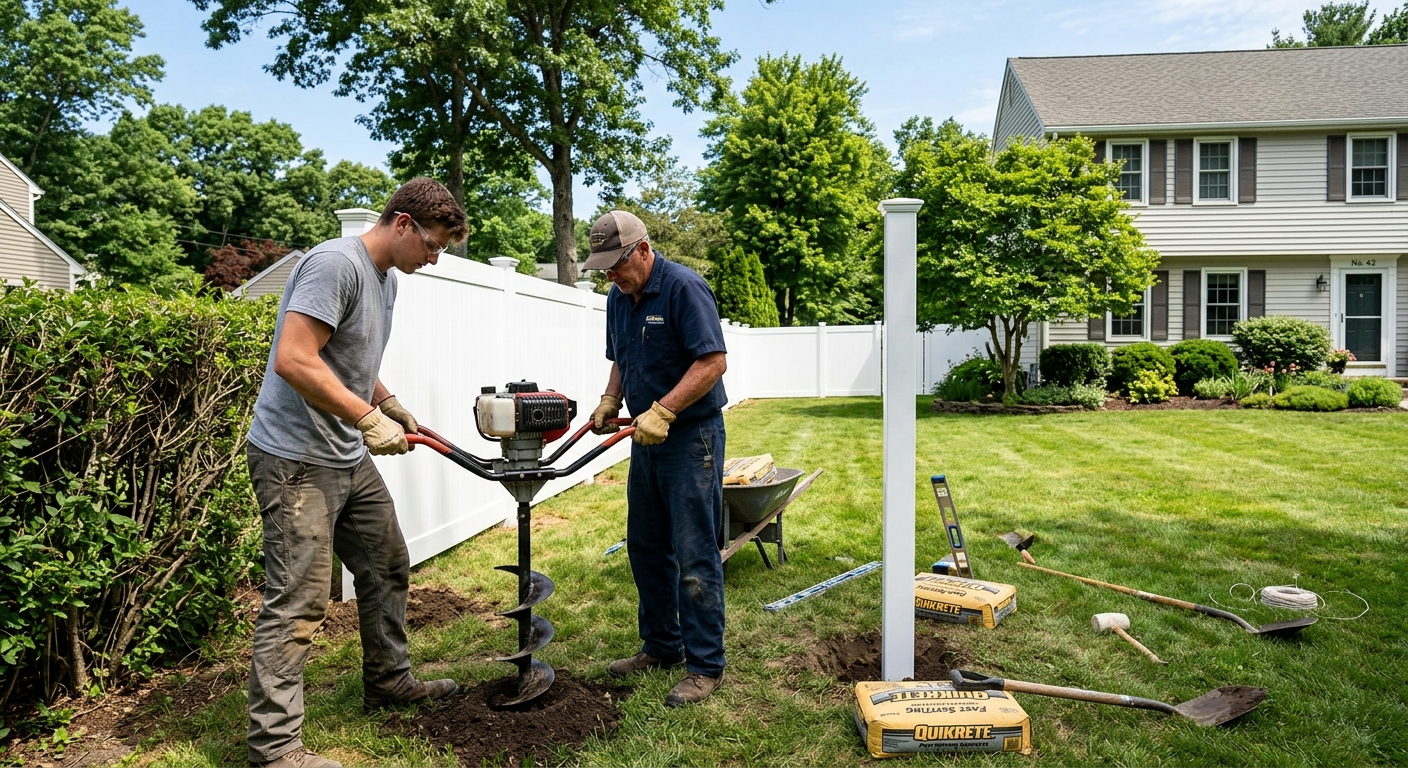
In Toronto’s climate, frost and freeze-thaw cycles have a direct effect on cost. The design frost line in Southern Ontario is commonly estimated around 42"–48", and contractors usually set fence posts deep enough to stay below that moving frost zone—often 3.5–4 feet deep for taller 6–8 ft privacy fences—then concrete-set posts rather than simply driving them. That depth and the ready-mix used for footing improve long-term stability, but they increase labour and material time.
Within Parkwoods-Donalda, fencing installs are especially common around the busier residential corridors near Donalda and the surrounding school routes, where homeowners frequently adjust privacy, safety, and dog runs. With that in mind, the table below compares the main materials you’ll see in this area, alongside typical lifespan, maintenance, privacy performance, and installed price ranges per linear foot.
| Material |
Lifespan |
Maintenance |
Privacy Rating |
Price per Linear Foot |
| Pressure-treated pine (standard wood) |
10–15 years |
Stain/seal every 2–3 years |
Good (solid boards) |
$65–$120 |
| Cedar (natural rot resistance) |
15–20 years |
Stain every 2–4 years (lighter schedule if left to weather) |
Good to very good (solid pickets) |
$80–$135 |
| Vinyl / PVC (no-maintenance) |
20–30 years |
Occasional rinse; no staining |
Very good (solid privacy panels) |
$75–$130 |
| Chain-link (galvanized steel) |
20–40 years |
Minimal; rinse and spot-check hardware |
Low (privacy requires inserts) |
$45–$85 |
| Aluminum ornamental |
25–35 years |
Minimal; rinse and tighten as needed |
Low to medium (open style) |
$90–$160 |
| Composite / recycled material |
25–35 years |
Occasional wash; inspect fasteners |
Very good (solid boards) |
$120–$190 |
Prices are estimates only and vary by project scope, site access and material selection.
What affects the price of fencing in Parkwoods-Donalda
In Parkwoods-Donalda, two quotes for what sounds like the “same fence” can land 30–50% apart because Toronto-area pricing is driven by installation risk, ground conditions, and how much of the job is labour-intensive versus straightforward. The key is that fencing isn’t just materials—it’s excavation depth, post setting method, hardware quality, and whether the contractor is also handling disposal, surveys/locates, and gate builds.
First, frost line depth is a major cost driver. In Southern Ontario, posts are commonly set about 4–6 inches below the design frost depth to prevent heaving. Practically, that often means posts going roughly 1.5–2.0 m into the ground for 6–8 ft privacy fences, with concrete-set footings and longer treated posts. That increases both material cost and labour time. Second, wind loads matter more than people expect: while Toronto isn’t the Prairies, solid privacy panels can still rack, so installers use heavier posts and closer spacing (often 6–8 ft centres) to reduce movement.
Concrete examples from local projects: a backyard with clay-heavy soil typically takes more time to dig and cleanly set holes, which raises labour versus looser topsoil. Likewise, an uneven lot near older properties can require stepped or raked panel layouts—more labour than a “flat-yard” install, even if linear feet are the same. Conversely, a short run of chain-link or ornamental with fewer posts can come in closer to the lower band (for example, chain-link often aligns with the $45–$85 range), while a full perimeter wood or vinyl privacy job with concrete-set posts commonly lands toward the higher end of the wood/vinyl bands (for example $65–$120 wood or $75–$130 vinyl depending on height and gate count).
Finally, local housing age affects baseline prep. Older fences often require more demolition, removal of embedded posts, and proper disposal—adding cost even when the new fence is a similar material.
| Price Factor |
Why It Matters |
Cost Impact |
| Fence length in linear feet |
Most costs scale directly with total perimeter. |
Highest impact (often 50%+ of total). |
| Post depth required |
Frost line sets excavation depth and post length. |
Can add substantial concrete and labour time. |
| Post setting method |
Concrete-set posts resist heaving and looseness. |
Concrete vs gravel pack vs driven posts changes labour and materials. |
| Material choice |
Vinyl, cedar and chain-link have different hardware and assembly. |
Shifts you between common bands (wood/vinyl/chain-link/aluminium). |
| Gate count and type |
Gates require heavier framing, hinges, latches. |
Adds labour and often increases cost per opening. |
| Grade and terrain |
Slopes require stepping, raking, or custom panel heights. |
More cuts, alignment time, and sometimes extra posts. |
| Old fence removal and disposal |
Embedded posts and debris add time and dump fees. |
Often a large “hidden” line item if excluded. |
| Permit fees and survey / property line locate |
Locates and surveys reduce the risk of encroachment disputes. |
May add administrative and site coordination costs. |
Permits & regulations in Ontario
In Ontario, fence permits can apply when you’re building taller fencing and when it’s located in certain areas (often the rear), but the common threshold homeowners run into is around 2.0 m (6.5 ft) at the rear and about 1.0–1.2 m (3–4 ft) at the front or corner. Municipal setback bylaws and property-line rules still govern where posts and rails can go, even when a permit is or isn’t required. For any Parkwoods-Donalda fence project, the safest approach is to confirm your height and location with your municipality before the first post hole.
Before digging, always call for utility locates through Ontario One Call so crews can mark underground services. Also, get a survey or at least have your property pins verified so you don’t accidentally build on a neighbour’s land (or end up disputing the fence line after the fact). Shared fence ownership and responsibilities are handled under provincial line-fences principles—so if you’re repairing a shared boundary, clarify who maintains and replaces sections, and whether you’re upgrading from a standard fence to a privacy style.
What typically requires a permit: building a fence above the local height threshold (commonly around 2.0 m rear, 1.0–1.2 m front/corner) or any project that involves exceptions. What typically does not: small, low fencing under the threshold on a confirmed property line, and straightforward replacements in the same location and height (still check with your contractor and municipality).
Step-by-step contractor verification for Ontario homeowners: request the contractor’s Ontario business licence (if applicable to their city area), confirm liability insurance with a current Certificate of Insurance showing your worksite/project, and verify WSIB/WCB coverage so you’re not exposed if someone is injured. Ask for proof directly (not a verbal claim): then match the dates and scope on the certificates, and ensure the insurer lists the contractor as the insured party.
Choosing the right fence material for Parkwoods-Donalda
Choosing the right fence material in Parkwoods-Donalda is mostly about matching your priorities—privacy, low maintenance, budget, and lifespan—to Toronto’s freeze-thaw season. Pressure-treated pine is usually the budget entry point, but it typically needs staining or sealing every 2–3 years to prevent grey weathering and premature surface breakdown. Cedar offers better natural rot resistance and often looks richer as it ages; it still benefits from maintenance, but many homeowners find it visually worth the effort. Vinyl/PVC is the low-work option once installed, and it handles the Toronto wet-dry cycle well, but extremely cold snaps can make certain parts more brittle if the fence is assembled without proper allowances for thermal movement. Chain-link is the longest-lasting low-cost boundary solution, but it doesn’t provide privacy unless you add slats or greenery.
Post depth matters regardless of material because the frost line drives the foundation. In Southern Ontario, posts are typically set 3.5–4 ft deep for taller privacy fences to reduce heaving risk, and that generally means concrete-set posts for long-term stability on clay/mixed soils common across the GTA. Aluminum ornamental fences won’t rust and perform well around winter salt spray, but they’re usually chosen for curb appeal rather than privacy.
As a practical money example: if your goal is privacy and you’re comparing wood at roughly $65–$120 per linear foot versus vinyl at about $75–$130, the vinyl option can be justified when you want to stop staining cycles and reduce long-term labour—especially if you expect to stay in your home for a decade or more. If you’re optimizing for upfront cost and don’t mind maintenance, pressure-treated pine often delivers the best value.
| Material |
Cold Tolerance |
Lifespan |
Annual Maintenance |
Best For |
Price Band |
| Pressure-treated pine |
Good when posts are concrete-set |
10–15 years |
Light inspection; stain/seal every 2–3 years |
Budget privacy and flexible custom looks |
$65–$120 |
| Cedar |
Good |
15–20 years |
Inspection; stain every 2–4 years (varies by exposure) |
Privacy with premium appearance |
$80–$135 |
| Vinyl / PVC |
Very good with correct installation tolerances |
20–30 years |
Occasional rinse; check hardware alignment |
Low-maintenance privacy |
$75–$130 |
| Chain-link |
Excellent |
20–40 years |
Minimal; rinse and tighten |
Security, dog runs, and budgets |
$45–$85 |
| Aluminum ornamental |
Excellent (no rust) |
25–35 years |
Minimal; rinse and inspect |
Curb appeal with boundary definition |
$90–$160 |
| Composite / recycled |
Good (assembled correctly) |
25–35 years |
Occasional wash; inspect fasteners |
Long-life privacy with reduced weathering |
$120–$190 |
How to choose a fencing contractor in Parkwoods-Donalda
Choosing a fencing contractor in Parkwoods-Donalda is about risk control as much as price. Start by verifying Ontario coverage basics: request the contractor’s liability insurance certificate (proof they’re insured to work around your property), confirm they have current WSIB/WCB coverage (so you’re protected if a worker is injured), and ensure they can provide their Ontario registration details as applicable. Don’t just screenshot a certificate—check that it’s current, that it shows the contractor as the insured party, and that the coverage dates include your scheduled start. For WSIB/WCB, the key is verifying active coverage for their employees, not subcontractor paperwork you can’t validate.
Next, get 2–3 itemised written quotes with a proper breakdown—labour, materials, post depth and setting method, concrete amount/footing approach, gate hardware, and whether old fence removal/disposal is included. A lump sum quote is harder to compare and easier to dispute later. Read exclusions line-by-line: ask whether utility locates, permits (if required), property line locate/survey assistance, and stump/soil grading are part of the scope.
Warranty matters too. Ask for (1) a workmanship warranty (how long they stand behind post alignment, sagging rails, and installation defects), (2) a product/manufacturer warranty for the fencing system, and (3) whether warranties are transferable if you sell.
For payment scheduling, avoid paying most of the job up front. In practice, don’t exceed about 10–15% upfront, then hold a portion until the fence is complete and passes a walkthrough. Finally, get a start date and a completion estimate in writing, including weather contingencies for frost and excavation conditions.
- Request proof of liability insurance and confirm coverage dates match your job window.
- Verify active WSIB/WCB coverage before work begins.
- Ask for a written scope that states post depth and post setting method (concrete vs gravel pack vs driven).
- Confirm who pulls permits (if required) and whether permit fees are included.
- Get a line item for old fence removal and dump disposal.
- Require an itemised gate quote (frame, hinges, latch, and any reinforcement).
- Ask how they handle slopes—stepped vs raked panels—and whether extra materials are allowed.
- Check warranty lengths in writing for both workmanship and product.
- Ensure quote includes hardware quality (fasteners, brackets, post caps, tensioning where needed).
- Confirm utility locates responsibility and documentation.
- Review colour/style options and how they handle substitutions if materials are delayed.
- Make sure the contract lists the payment schedule and final holdback amount.
Local red flags I often see around Parkwoods-Donalda: contractors who won’t state post depth or concrete-set requirements; quotes that exclude fence disposal but don’t mention it in writing; “all-in” pricing with no material list or gate hardware detail; refusing to provide insurance/WSIB/WCB proof; and starting excavation without confirming utility locates and property line alignment.
Frequently asked questions — fencing in Parkwoods-Donalda
How long does a wood fence last in Parkwoods-Donalda?
In Parkwoods-Donalda, a wood fence’s lifespan typically depends on how it’s set in the ground and how well it’s maintained through Toronto’s freeze-thaw cycles. For pressure-treated pine, many homeowners see around 10–15 years when posts are concrete-set and the fence is stained/sealed roughly every 2–3 years. If you choose cedar, lifespans often stretch to about 15–20 years due to improved rot resistance, though it still benefits from periodic staining. The biggest early-life failure I see isn’t the boards—it’s loosening at posts from frost heave, especially where concrete setting wasn’t used on deeper post holes. If you’re budgeting, wood privacy fences often fall in the $65–$120 range, but better post stability is what protects the investment.
Who owns and maintains a shared fence?
Shared fences in Ontario can be governed by provincial line-fences principles, but the practical answer usually comes down to how your lot and boundary were arranged and what agreements exist. Generally, if the fence is truly on the shared boundary and your neighbour shares responsibility, maintenance and replacement costs are typically shared according to the shared-fence arrangement. The most important step in Parkwoods-Donalda is to clarify boundary ownership and the exact line before any upgrades—especially if you’re converting a chain-link boundary to a solid privacy fence. If one neighbour wants a taller fence (and height thresholds may trigger permits in some cases), you’ll need to confirm what is permissible, who pays for the upgrade portion, and what the new standard includes.
How do I find my property line before fencing?
Don’t rely on old fence posts, neighbour “memory,” or the distance to the sidewalk—use proper verification. Start by locating your property pins from your survey, then confirm their positions with a qualified surveyor if needed. If you don’t have a survey, ask a contractor for property line guidance and arrange a locate/survey consult before digging post holes. This matters in Parkwoods-Donalda because a small encroachment can become a costly redo once the fence is built. Also call Ontario One Call before excavation to have underground utilities marked; even if it’s not about the fence line, it prevents dangerous surprises. Once pins are confirmed, installers can measure back from the boundary accurately and keep your fence aligned with local bylaws.
What's the most low-maintenance fence?
For most Ontario homeowners, vinyl/PVC privacy fences are the most low-maintenance overall. In Parkwoods-Donalda, vinyl typically requires only occasional rinsing and inspection of hardware—no staining schedule like pressure-treated pine and cedar. That said, low maintenance depends on correct installation: allowing for temperature movement and using the right post setting method helps prevent alignment issues over time. If you’re aiming for budget-friendly with minimal upkeep, chain-link is also easy to live with, but it won’t provide privacy unless you add slats or mesh. Price-wise, vinyl commonly sits around $75–$130 per linear foot, while pressure-treated wood often starts lower around $65–$120. The “maintenance difference” is what usually justifies vinyl for homeowners who don’t want to manage coatings.
How tall can my fence be in Parkwoods-Donalda?
In Ontario, fence height rules commonly become permit-relevant around certain thresholds—often about 2.0 m (6.5 ft) at the rear and roughly 1.0–1.2 m (3–4 ft) at the front or corner—though the exact requirement can depend on where and how the fence is built. For Parkwoods-Donalda homeowners, it’s important to check municipal bylaw requirements before ordering materials, because a rear privacy fence can require a permit even when the footprint looks “routine.” Also ensure you’re building on your property line and respecting setbacks. A good contractor will ask for the fence location plan, measure proposed height from grade, and confirm whether a permit application is required before digging. This avoids delays and rework after the panels are assembled.
Should fence posts be set in concrete here?
In Toronto-area conditions—including Parkwoods-Donalda—yes, concrete-set posts are usually the safer long-term choice, especially for taller 6–8 ft privacy fences. The reason is frost heave risk: Southern Ontario design practices commonly assume a frost line around 42"–48", and contractors typically set posts 3.5–4 feet deep to reduce heaving. Concrete improves stability in clay and mixed soils and holds the post firmly during freeze-thaw cycles. The trade-off is cost: deeper holes and concrete increase labour and materials, which is why installed privacy fences often land toward the higher end of the wood/vinyl bands (for example, $65–$120 wood or $75–$130 vinyl). Driven posts can be cheaper short-term but are more likely to shift over time if depth and soil conditions aren’t ideal.