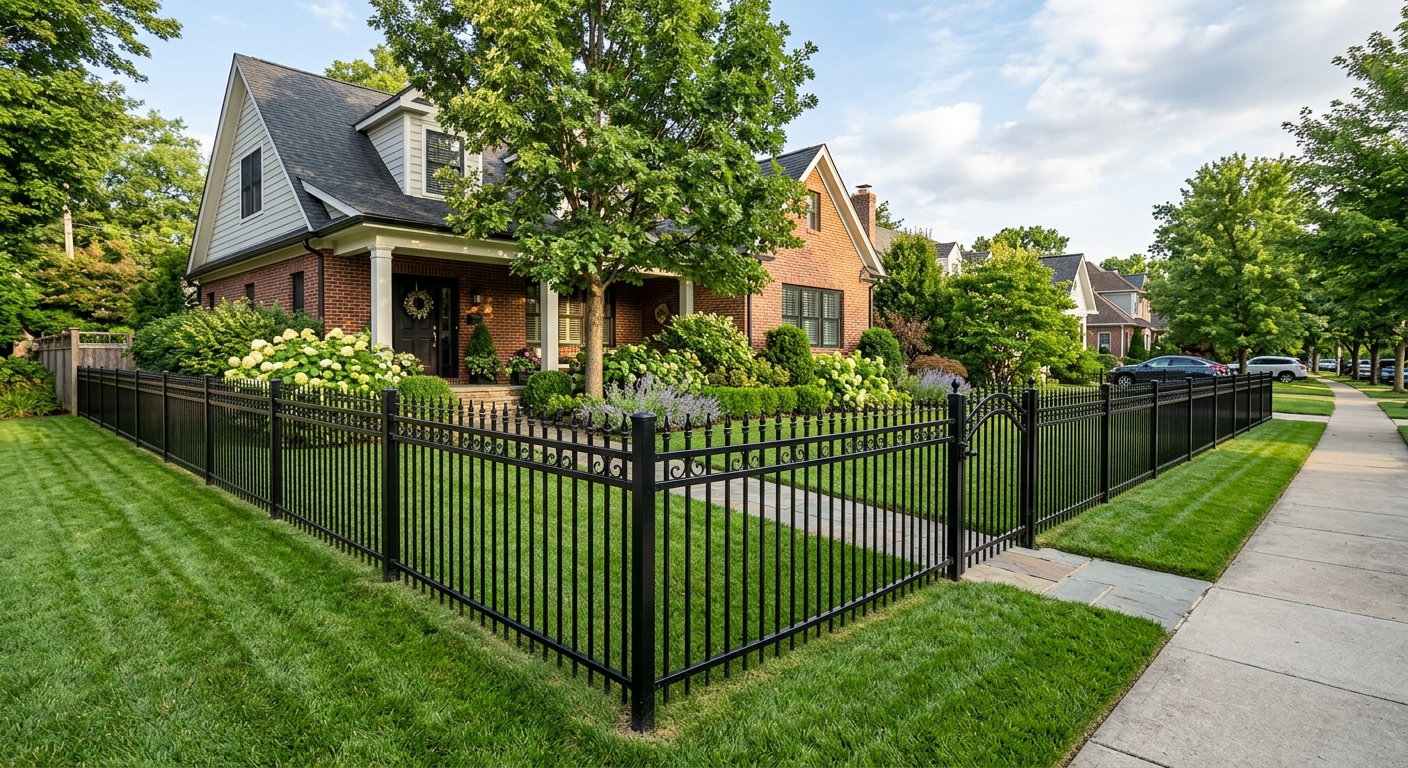
Fencing options and costs in Markstay-Warren
Markstay-Warren homeowners often start shopping fencing the moment they notice a gap in the backyard line, a growing dog-run need, or the first wind-bow in an older fence section. Here in Markstay-Warren, demand is especially steady because 90.1% of dwellings are single-detached houses—each lot with its own yard perimeter is a potential fence project. With a median household income of about $82,000 (Statistics Canada, 2021 Census), many families plan fencing as a multi-year, priority-based spend: secure the property first, then upgrade privacy or aesthetics when budgeting allows.
Pricing also reflects Northeast region conditions. Even though Markstay-Warren is Ontario, the same overall factors that tighten bids across cold regions apply: freeze–thaw cycles that can heave weakly set posts, and winter wind that can stress thin rails, wide pickets, and panel alignment. Where houses were built before 1981 (66.2% of homes), you’ll see more perimeter fences needing rework—either replacing short, undersized posts or correcting leaning runs that weren’t built for today’s hardware and wind resistance.
In practice, fenced-lot retrofits are most in demand around the core residential areas near Main Street and the surrounding residential blocks where many yards back onto open, windy corridors. If your fence line runs long, or you’re upgrading from a failing section to a taller privacy style, labour hours and material quantities rise quickly—so it helps to compare options before calling for quotes. Use the table below to benchmark realistic cost ranges per linear foot.
| Material |
Lifespan |
Maintenance |
Privacy Rating |
Price per Linear Foot |
| Pressure-treated pine (standard wood) |
10–15 years |
Stain/seal every 2–3 years; inspect posts annually |
Medium–High (solid panels) |
$80–$110 |
| Cedar (natural rot resistance) |
15–20 years |
Light staining every 2–3 years; fewer board replacements |
High (lapped pickets/solid boards) |
$95–$125 |
| Vinyl / PVC (no-maintenance) |
20–30 years |
Occasional wash only |
High (privacy/walled styles) |
$85–$140 |
| Chain-link (galvanized steel) |
25–35 years |
Minimal; check tension and coatings |
Low (open weave) |
$55–$90 |
| Aluminum ornamental |
25–40 years |
Occasional rinse; no rust |
Low–Medium (ornamental spacing) |
$95–$150 |
| Composite / recycled material |
20–30 years |
Wash as needed; occasional fastener check |
Medium–High (board styles) |
$110–$145 |
Prices are estimates only and vary by project scope, site access and material selection.
What affects the price of fencing in Markstay-Warren
Two bids for what looks like the same fence in Markstay-Warren can differ by 30–50% because the “same job” often isn’t the same foundation or finish. In cold, freeze–thaw climates, your quote is mostly driven by how posts are installed to resist movement, plus how materials are selected for straight runs, gates, and difficult terrain. Small changes—like adding a double gate, removing an old fence, or using heavier posts to keep alignment in high winds—add labour time and extra components.
Frost line depth is one of the biggest drivers. In practice, contractors typically set posts 4–6 inches below the design frost depth to prevent heaving; in Ontario and Alberta-type conditions this often means roughly 1.5–2.0 m into the ground, with concrete setting and longer posts. That increases both material (longer lumber/metal posts) and labour (deeper holes, more concrete, more equipment time). Wind exposure also matters: more open styles (like chain-link or ranch rail) generally cost less to withstand than tall, solid privacy panels that act like sails.
In Markstay-Warren, you’ll often see cost increase when upgrading older fences from the 1970s and early 1980s (66.2% of homes built before 1981). For example, if an existing run has shallow, rotted posts, replacement can swing a wood project from near the $80–$110 band up toward cedar or vinyl pricing once posts are rebuilt correctly. Conversely, if your yard is level and access is easy, chain-link can stay closer to the $55–$90 range because the installation is simpler and requires less heavy bracing.
Concrete examples: (1) sloped backyards that need stepped panels raise labour by adding cuts and extra hardware; (2) gate hardware for double drive-through gates adds hinges, latches, and stronger posts—often pushing a “standard run” into the mid-to-high end of the material band.
| Price Factor |
Why It Matters |
Cost Impact |
| Fence length in linear feet |
Most materials and labour scale directly with length. |
Major driver: drives total project cost linearly. |
| Post depth required |
Frost heave resistance depends on depth below freeze zone. |
Medium–major increase: longer posts and deeper holes. |
| Post setting method |
Concrete offers the most stability versus gravel pack alone. |
Medium increase: concrete, labour time, and cure planning. |
| Material choice |
Vinyl, cedar, aluminum and chain-link vary sharply in unit price. |
Major increase/decrease: selects which pricing band you’re in. |
| Gate count and type |
Double gates require stronger posts and upgraded hardware. |
Medium–major: hardware + extra labour + reinforcement. |
| Grade and terrain |
Slopes may require stepped sections or raked rails. |
Medium: more labour, more cuts, and tighter layout time. |
| Old fence removal and disposal |
Debris hauling, salvage handling, and labour time add up. |
Medium: can add days on larger runs. |
| Permit fees and survey / property line locate |
Unclear lines and missing locates lead to rework risk. |
Small–medium: varies, but prevents costly mistakes. |
Permits & regulations in Ontario
In Ontario, fences are usually governed by the Ontario municipal zoning bylaw and, when applicable, by building permit requirements tied to fence height and location. As a practical rule of thumb used by many homeowners: fences above about 2.0 m (6.5 ft) at the rear and 1.0–1.2 m (3–4 ft) at the front or corner often trigger a building permit requirement (the exact cut-offs can vary by municipality). The key is that you must respect property lines and any municipal setback rules—especially near corners where sightlines matter.
Before digging any post holes, call for utility locates so you don’t hit buried services. In Ontario, you can use Ontario One Call. Also, get a survey or at least a property pin locate before installation so your fence doesn’t creep onto a neighbour’s land. For shared fence ownership, provincial line-fences legislation outlines typical shared responsibility, but disputes still happen—so documenting where your posts sit relative to the boundary is smart.
Here’s what DOES require a permit more often: tall fence heights in regulated areas, fencing in front/corner areas above the typical height thresholds, and any project that the municipality flags for structural or safety review. What typically does NOT require a permit: shorter, standard-height backyard fences that stay within bylaw limits (though you still need to follow property-line setbacks).
To verify an Ontario contractor in Markstay-Warren, ask for their liability insurance certificate (with your address listed as additional insured if required) and confirm WSIB/WCB coverage for workers. Then review their licensing details via the appropriate Ontario registry sources they provide, and check the certificate expiry dates before scheduling. A clear, written scope and insurance paperwork upfront is a sign the contractor will handle inspections and any permit-related steps cleanly.
Choosing the right fence material for Markstay-Warren
Choosing the right fence in Markstay-Warren is less about “best material” and more about matching the material to your priorities—privacy, low maintenance, upfront budget, and expected lifespan in a cold, freeze–thaw environment. Pressure-treated pine is usually the lowest upfront option, but it needs staining or sealing every 2–3 years to limit grey weathering and protect board edges. Cedar looks great and naturally resists rot better, yet it still benefits from periodic maintenance to stay looking crisp and to prolong board life.
Vinyl/PVC is the low-maintenance favourite for many homeowners: you typically just rinse it and it won’t rot, but extreme cold can make thin sections more brittle if the system is not designed for it. Chain-link is the longest-lasting budget pick, but it won’t give privacy—so it works best where you’re protecting pets or defining boundaries rather than blocking view lines. Aluminum ornamental offers rust-free, tidy curb appeal with mid-range costs, while composite/recycled materials aim to blend durability with reduced staining.
For cold performance, the post installation matters as much as the material. Even the best fence can fail if posts aren’t set deep enough for Ontario freeze conditions—often meaning post holes sized for the required depth below frost and concrete setting where the design calls for it. In Markstay-Warren, concrete-set posts are common when you want maximum stability, especially on privacy panels and gate posts. Wind and snow load considerations also push upgrades: tall privacy fences and wide panels need sturdier framing and proper bracing to maintain alignment through winter.
Dollar example: if a wood privacy fence quotes in the $80–$110 per linear foot range but vinyl privacy comes in around the $85–$140 range, that extra cost can be justified when you want to avoid staining labour every few years and you plan to keep the fence long-term—particularly on runs that are hard to access.
| Material |
Cold Tolerance |
Lifespan |
Annual Maintenance |
Best For |
Price Band |
| Pressure-treated pine |
Good when posts are deep-set and hardware is corrosion-rated |
10–15 years |
Inspect; light re-stain/seal every 2–3 years |
Budget privacy with periodic upkeep |
$80–$110 |
| Cedar |
Good; boards hold up well through winter if sealed |
15–20 years |
Inspect; stain/light seal every 2–3 years |
Natural look + better rot resistance |
$95–$125 |
| Vinyl / PVC |
Very good; choose proper system for cold weather |
20–30 years |
Rinse as needed; check posts/hardware |
Low-maintenance privacy |
$85–$140 |
| Chain-link |
Excellent; winter won’t rot the coating |
25–35 years |
Low; occasional coating touch-ups if damaged |
Security and boundaries without privacy |
$55–$90 |
| Aluminum ornamental |
Very good; no rust from freeze–thaw |
25–40 years |
Rinse; check level and fasteners |
Curb appeal with light security |
$95–$150 |
| Composite / recycled |
Good; stable boards if installed correctly |
20–30 years |
Low; wash and inspect fasteners |
Maintenance-light privacy with wood-like look |
$110–$145 |
How to choose a fencing contractor in Markstay-Warren
Start by verifying the basics with every fencing contractor you contact in Markstay-Warren, Ontario: licensing/qualification (as applicable for the work they perform), liability insurance, and WSIB/WCB coverage for their workers. How to check: (1) ask for a current certificate of insurance and confirm the policy covers your project location and remains active during the install window; (2) request proof of WSIB clearance or WCB coverage for workers—then verify the clearance document details and expiry; (3) confirm any trade registration they reference, and make sure the company name on insurance matches the quote.
Next, get 2–3 itemised written quotes. You want a breakdown that separates labour, materials, post hardware, concrete setting, and any site prep. Avoid “lump sum only” quotes where the scope is vague. Read the exclusions: will they handle permit pulls if required, include utility locate fees (if applicable), and manage old fence removal and disposal? For warranty, ask for two pieces of coverage—workmanship warranty length and product/manufacturer warranty terms. Clarify whether warranties are transferable to you as homeowners and what happens if boards or posts fail due to installation issues.
Payment schedule matters: never pay more than 10–15% upfront. Hold back a portion until the job is fully complete, including final alignment, gate operation, and cleanup. Also request a start date and a completion estimate in writing so you’re not stuck waiting through winter weather delays.
- Request proof of liability insurance and confirm project address coverage.
- Ask for WSIB/WCB clearance or coverage documents and check expiry dates.
- Get an itemised quote (labour, materials, posts, concrete, gates, hardware).
- Confirm whether permit pulls are included if your height/location triggers it.
- Ask if utility locates and any re-locations are responsibility-covered.
- Clarify old fence removal and disposal (separate line item).
- Verify post setting method (concrete depth and spacing plan).
- Require gate hardware specs and confirm latch/hinge brand/type.
- Ask how they handle sloped yards (stepped vs. raked panels).
- Confirm warranty: workmanship duration and what it covers.
- Set payment terms: 10–15% max upfront, holdback until final walkthrough.
- Get a written timeline and weather-reschedule plan.
Red flags I commonly see in Markstay-Warren fencing jobs: quoting without showing how posts will be set for freeze conditions, refusing to provide insurance/WSIB documents, vague scopes that don’t list gate hardware or removal/disposal, rushing you to pay a large deposit, and promising exact completion without weather contingency terms.
Frequently asked questions — fencing in Markstay-Warren
Who owns and maintains a shared fence?
In Ontario, shared fence ownership and maintenance responsibilities are typically governed by provincial line-fences rules and any agreements between neighbours. In many cases, if a fence is truly on the boundary and is shared, both property owners may have responsibility for upkeep, repairs, or replacement—often proportionate to how the fence benefits each lot. For Markstay-Warren homeowners, the most important first step is confirming where the boundary is (property pins or a survey locate), because maintenance disputes often come down to whether the fence is entirely on one side or straddles the line. If you’re planning an upgrade, ask your contractor to document post locations and provide photos before concrete cures.
How do I find my property line before fencing?
Before you install a fence in Markstay-Warren, don’t guess from an old marker or neighbour’s measurements. The safest approach is to locate property pins or hire a land survey/locate if you don’t have a current survey. A property pin locate shows where boundary pins sit relative to your yard, which helps avoid encroachment complaints. Utility locates are also essential before digging any holes—use Ontario One Call so you don’t hit buried services. When you get contractor quotes, ask them how they will reference the boundary (string line from pins) and whether they’ll coordinate layout after the locate is complete.
What's the most low-maintenance fence?
For low maintenance in Ontario, vinyl/PVC is usually the top choice because it won’t rot and typically requires only occasional washing and hardware checks. In many Markstay-Warren projects, vinyl privacy tends to land around $85–$140 per linear foot depending on style and gate complexity, so it’s a premium over basic chain-link. If you want maintenance-light but a lower budget, chain-link is also very durable—often around $55–$90 per linear foot—but it provides little privacy unless you add planting or privacy slats. Whichever you pick, deep-set posts and proper bracing in freeze conditions are what keep maintenance low over time.
How tall can my fence be in Markstay-Warren?
Fence height limits in Ontario depend on where the fence is located (front yard, corner lot, rear yard) and on municipal bylaw rules. A common practical guidance many homeowners use is that fences over about 2.0 m (6.5 ft) in the rear and roughly 1.0–1.2 m (3–4 ft) in the front or corner may require a building permit. For Markstay-Warren residents, I recommend confirming the exact height allowance with the municipality before ordering materials—especially if you’re planning a tall privacy fence. If your fence triggers a permit, the permit process can affect timing and sometimes adds inspection steps.
Should fence posts be set in concrete here?
In Markstay-Warren and across cold Ontario, concrete-set posts are common when you want maximum stability against freeze–thaw movement—especially for privacy fences and gate posts that experience higher loads. Posts typically need to be set below the frost influence zone (often meaning about 4–6 inches below design frost depth), which can require deeper holes and longer posts. Setting posts in concrete helps resist seasonal shifting compared with gravel pack alone. That said, the best method depends on soil and the fence type. A reputable contractor should explain their post-depth and setting plan in the quote and show how it aligns with the freeze conditions so your fence doesn’t lean or separate after winter.
What's the best fence for privacy?
For privacy in Markstay-Warren, you’ll usually be happiest with a privacy style that uses solid boards or closely spaced pickets. Cedar and pressure-treated pine privacy fences can work well, but wood requires maintenance—typically staining or sealing every 2–3 years to slow weathering and keep boards looking good. Vinyl privacy is often the easiest “set-and-forget” option, and it typically prices around $85–$140 per linear foot depending on height, rails, and gate hardware. If you have a tall run exposed to winter winds, ensure the system includes adequate bracing and properly set posts so panels don’t rack. For pet/security with privacy, a hybrid approach (chain-link base with privacy inserts) can help, but it won’t match full privacy of solid panels.