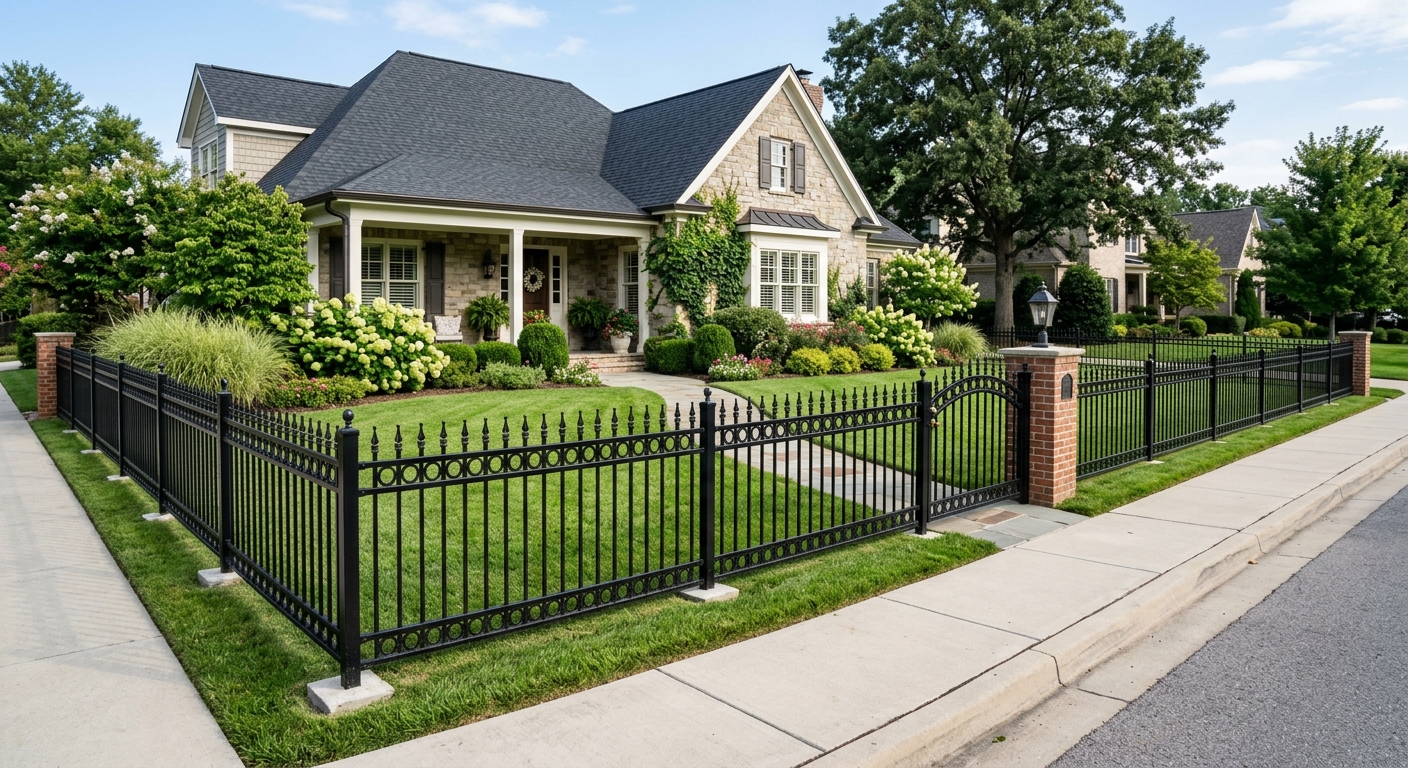
Fencing options and costs in Rockcliffe-Smythe
In Rockcliffe-Smythe, homeowners choose fencing based on privacy needs, curb appearance, and how well materials hold up to Toronto’s freeze–thaw cycles. With a population of 22,246 (Statistics Canada, 2021 Census), the area has a steady stream of property upgrades, and every detached home and growing backyard renovation creates demand for new panels, gates, and replacements. Rockcliffe-Smythe’s mix of older homes and ongoing infill also means you’ll see both brand-new layouts and retrofits where the existing line is out of square—often requiring additional labour for alignment and footing adjustments.
Toronto-area pricing is shaped less by “just material” and more by ground conditions and frost depth. In Southern Ontario, the design frost line is commonly taken around 42"–48", which pushes typical post holes down to roughly 3.5–4 feet to reduce the risk of frost heave. For 6–8 ft privacy fences, contractors usually recommend concrete-set posts (extra labour and ready-mix costs, plus longer posts), which is one reason quotes for the same length can differ from street to street. Access matters too: narrow driveways and fenced-in work areas can slow crews and increase equipment time.
In Rockcliffe-Smythe, trade demand is especially strong near the well-used residential lanes and near pockets where backyards face open yards and winter wind exposure, such as the areas adjacent to broader roadway corridors. Once you’re ready to compare materials side-by-side, use the table below as a practical starting point for budgeting in the Toronto market.
| Material |
Lifespan |
Maintenance |
Privacy Rating |
Price per Linear Foot |
| Pressure-treated pine (standard wood) |
12–18 years |
Stain/seal every 2–3 years |
High (solid boards) |
$65–$120 |
| Cedar (natural rot resistance) |
15–25 years |
Light staining 2–4 years (recommended) |
High (boards close together) |
$75–$135 |
| Vinyl / PVC (no-maintenance) |
25–35 years |
Occasional wash only |
High (solid infill) |
$75–$130 |
| Chain-link (galvanized steel) |
20–30 years |
Minimal; rinse and inspect tension |
Low to medium (privacy slats optional) |
$45–$85 |
| Aluminum ornamental |
30–40 years |
Wash as needed |
Low (decorative visibility) |
$90–$160 |
| Composite / recycled material |
25–30 years |
Occasional cleaning; no staining |
High (solid styles) |
$85–$150 |
Prices are estimates only and vary by project scope, site access and material selection.
What affects the price of fencing in Rockcliffe-Smythe
In Rockcliffe-Smythe and across the Toronto economic region, fence quotes for the same general plan can land 30–50% apart because contractors price three things differently: how deep they must set posts for frost, how they brace against wind and racking, and how much prep they include (layout, removal, disposal, and fine-tuning the line). Even when the material is the “same colour name,” the real cost drivers are the footing strategy, post sizing, hardware type, and whether gates are simple walk-through units or heavier double drive gates.
Frost line depth is the biggest Ontario variable. Best practice in Southern Ontario is to set posts about 4–6 inches below the design frost depth. With the commonly used 42"–48" frost line, that often works out to roughly 1.5–2.0 m (about 4.9–6.6 feet) of hole depth and concrete-set installation for 6–8 ft privacy fences. That means longer posts, more labour per hole, and ready-mix/aggregate costs. Locally, this is why solid wood or vinyl privacy can sit closer to the higher end of the wood band (up to around $120 per linear foot) or vinyl band (up to around $130 per linear foot), especially with heavy-duty posts spaced closer together.
Wind exposure also matters, though it’s not Prairie-level. In the Toronto area, taller solid fences need stronger bracing, closer post spacing (often 6–8 ft centres), and hardware that resists uplift during winter gusts. By contrast, chain-link projects often cost less because posts can be sized and set more efficiently for the same line length, typically landing nearer the $45–$85 per linear foot band.
Concrete examples in Rockcliffe-Smythe: (1) a backyard fence on clay/mixed soils frequently requires deeper, more stable footings than expected—raising labour and concrete; (2) slopes can require stepped or raked panel installation, increasing materials and installation time; (3) if a fence line runs behind a narrow side walkway with limited access, crews may need smaller dig equipment and more manual handling, which increases hours. In short, the housing-stock reality (older foundations, irregular lot lines, and established planting beds) can push a “straight run” into a more labour-intensive job with a noticeably higher installed total.
| Price Factor |
Why It Matters |
Cost Impact |
| Fence length in linear feet |
Determines number of posts, rails, and panels |
Highest driver; longer runs increase material and labour proportionally |
| Post depth required |
Frost heave risk sets hole depth and post length |
Deeper holes increase concrete and labour; typically adds the most cost on privacy fences |
| Post setting method |
Concrete-set resists movement better than gravel or driven posts |
Concrete and longer installation time pushes cost up versus simpler methods |
| Material choice |
Different components, longevity, and installation complexity |
Vinyl/PVC and cedar often cost more than chain-link; aluminum is usually mid-to-high |
| Gate count and type |
Gates need heavier hardware, frames, and alignment |
Each additional gate adds labour and cost; drive gates cost significantly more |
| Grade and terrain |
Sloped yards require raked/stepped installation and extra layout time |
Typically increases both materials waste and labour hours |
| Old fence removal and disposal |
Demolition time and hauling fees |
Can add a noticeable lump even when the new fence is modest |
| Permit fees and survey / property line locate |
Some projects trigger permits; accurate lines prevent disputes |
Small-to-moderate added cost, but avoids expensive rework later |
Permits & regulations in Ontario
In Ontario, fencing is generally governed by property line location, municipal setback rules, and height limits. A permit is often required when your fence exceeds the local threshold commonly treated as around 2.0 m (6.5 ft) at the rear and about 1.0–1.2 m (3–4 ft) at the front or corner, but the exact threshold can vary by municipality and fence location on the lot. For your Rockcliffe-Smythe project, the practical approach is: if you’re planning a tall privacy fence facing a street, installing on a corner lot, or building above typical “decorative front” heights, assume you may need a building permit and confirm the requirement with the City of Ottawa’s permit process before digging.
Before any post hole: call for utility locates (Ontario One Call). Even if you’ve “never had problems,” crews still need marks for buried services. Next, obtain a survey or at least have property pins located so your post line matches your boundary. This is the simplest way to prevent encroachment disputes and expensive corrections.
Shared fence ownership follows line-fence principles under Ontario legislation—neighbours can have different responsibilities depending on how the fence was established and whether it’s on the boundary.
To verify your contractor: confirm the business is registered/qualified to perform the work where applicable, ask for a certificate of insurance (liability) showing adequate coverage for fencing and property damage, and request evidence of WSIB coverage where required for the contractor’s workers. Look for clear documents before signing—if they can’t provide current insurance certificates or will only discuss coverage after you pay, that’s a major warning sign.
Choosing the right fence material for Rockcliffe-Smythe
Choosing a fence material in Rockcliffe-Smythe is really about matching your goals—privacy, low maintenance, and lifespan—to Toronto’s freeze–thaw winters. The region’s climate means posts must be set deep enough to resist movement, and solid panels need to be built with proper spacing and bracing to handle snow load and winter wind gusts. For many homeowners, pressure-treated pine is the budget entry point: it looks good and is easy to maintain, but it typically needs staining or sealing every 2–3 years to avoid greying and premature wear. Cedar offers better natural rot resistance and a warmer look, yet it still benefits from periodic maintenance to keep colour consistent and reduce surface checking.
Vinyl/PVC is the “set it and forget it” option—great for homeowners who want minimal upkeep. That said, extreme cold can make some thinner profiles brittle over time, so it’s important to choose quality rails and post systems sized for Ontario conditions. Chain-link is usually the lowest-cost fence type and lasts long, but it provides minimal privacy unless you add slats or a screen system. Aluminum ornamental is a good long-life aesthetic choice, but it’s not designed for privacy.
For post depth: with the commonly used Southern Ontario frost line of about 42"–48", most installations require posts set roughly 3.5–4 ft deep (often with concrete-set posts for 6–8 ft privacy). That concrete work is what keeps wood/vinyl fences from shifting after winter freeze–thaw. If you’re comparing budgets, a typical homeowner who wants privacy might spend around $65–$120 per linear foot for pressure-treated wood, but vinyl privacy usually trends around $75–$130 per linear foot; that extra cost is often justified when you value long-term low maintenance and want fewer future repairs. If you’re cost-sensitive, chain-link commonly lands in the $45–$85 per linear foot band, but you’ll likely add privacy elements if that’s your main goal.
| Material |
Cold Tolerance |
Lifespan |
Annual Maintenance |
Best For |
Price Band |
| Pressure-treated pine |
Good (with proper coating and ventilation) |
12–18 years |
Seasonal inspection; stain/seal every 2–3 years |
Lower upfront cost with acceptable upkeep |
$65–$120 |
| Cedar |
Good (natural resistance, still season-sensitive) |
15–25 years |
Light staining 2–4 years (recommended) |
Better look and rot resistance for privacy runs |
$75–$135 |
| Vinyl / PVC |
Very good (choose proper thickness/profile) |
25–35 years |
Wash and quick checks as needed |
Low maintenance privacy and clean appearance |
$75–$130 |
| Chain-link |
Excellent (galvanized steel performs well) |
20–30 years |
Minimal (inspect tension and coating) |
Security on a budget |
$45–$85 |
| Aluminum ornamental |
Excellent |
30–40 years |
Occasional wash only |
Front yard curb appeal with open visibility |
$90–$160 |
| Composite / recycled material |
Good (quality matters for cold impact) |
25–30 years |
Clean as needed; no staining |
Privacy with reduced upkeep |
$85–$150 |
How to choose a fencing contractor in Rockcliffe-Smythe
When you hire a fencing contractor in Rockcliffe-Smythe, verify three things up front: Ontario/municipal eligibility where applicable, liability insurance, and worker coverage. Ask for a certificate of insurance before work starts and ensure it covers both general liability and property damage (for example, coverage that clearly references on-site installation work). For workers, request proof of WSIB coverage where required, or equivalent confirmation that subcontractors are properly covered. If they say “we’re covered” but won’t show documents, push back—credible contractors provide paperwork without hesitation.
Next, get 2–3 written, itemised quotes—not lump sums. A proper quote breaks down labour and materials: post material and size, rails, panels, concrete/aggregate for footings, hardware (hinges, latch, tension for gates), and whether disposal is included. Confirm what’s excluded, too—common exclusions include permit handling, survey costs, re-locating irrigation lines, stump/roots removal, and any landscaping reinstatement after digging.
Warranty is another differentiator. Ask for a workmanship warranty (how long they stand behind install quality) and a product/manufacturer warranty (covering material defects). Clarify whether the warranty is transferable to future owners.
For payment, a safe schedule in Ontario is: never pay more than 10–15% upfront, pay the balance after milestones, and hold a portion back until the gate functions correctly and the fence line is fully complete. Also ask for a start date and a realistic completion estimate in writing—weather and frost can affect post-hole excavation timing, but delays should be communicated early.
- Ask for current certificate of insurance and verify coverage limits match fencing install risk.
- Request proof of WSIB coverage for their workers or confirmation that subcontractors are properly covered.
- Get 2–3 itemised quotes with labour + materials, including post hardware and concrete quantities.
- Confirm post depth assumptions tied to Ontario frost (concrete-set posts for tall privacy fences are common).
- Clarify whether disposal/removal of your old fence is included (hauling fees can add up).
- Check whether the quote includes utility locate coordination (Ontario One Call process).
- Verify gate scope: number of hinges, latch type, and whether it includes frames and proper alignment.
- Ask how they handle slopes—stepped versus raked panels—and how waste is handled.
- Confirm permit responsibility: who pulls it if required for your fence height/location.
- Look for a workmanship warranty length and what defects it covers (posts, alignment, hardware).
- Set a payment schedule with a holdback until gates latch properly and the line is finalized.
- Require start date and completion estimate in writing, plus how weather impacts scheduling.
In Rockcliffe-Smythe, common red flags include contractors who won’t provide insurance/WSIB documentation, quoting without specifying post depth or setting method, refusing to itemise labour and concrete quantities, asking for large upfront payments (beyond 10–15%), or delivering a vague scope that omits removal/disposal and permit responsibility—then charging “extras” later when frost-depth footings and access time increase.
Frequently asked questions — fencing in Rockcliffe-Smythe
How do I handle a fence dispute with a neighbour in Ontario?
If you’re dealing with a fence dispute in Rockcliffe-Smythe, start by treating it as a property-line and documentation issue, not an argument about “who wants what.” First, check your survey or have your property pins located so you can confirm where the boundary is. Then document everything: photos of the current fence position, dates of any events (wind damage, repairs, encroachment concerns), and any written messages between neighbours. Ontario line-fence responsibilities can vary depending on whether the fence is a shared boundary and how it was established, so keep the discussion factual and evidence-based. If there’s disagreement about height or placement, confirm the local permit/height thresholds before changing anything. If you need a resolution, consider mediation or legal advice rather than moving posts yourself—rework after a boundary correction can be expensive.
What fence style offers the best wind resistance in Rockcliffe-Smythe?
For Rockcliffe-Smythe’s Toronto wind and snow conditions, the most stable option is usually a solid privacy fence built with the right post sizing and spacing, plus concrete-set footings where needed for frost. Solid panels catch more wind pressure than open styles, so stability depends on structural choices: heavier posts (commonly 4x4 or 6x6 for wood systems) and tighter spacing—often around 6–8 ft centres—to prevent racking. Hardware matters too: use proper rails, tensioned fasteners, and gate frames that resist sag. In contrast, chain-link typically performs well against wind because it’s more breathable, but it won’t give privacy without added screens. If you’re budgeting, solid wood and vinyl privacy are often closer to the upper ends of the wood ($65–$120) and vinyl ($75–$130) bands once you include the extra post work.
How much does a fence cost in Rockcliffe-Smythe?
Fence cost in Rockcliffe-Smythe typically follows the Toronto market pricing bands, then shifts based on frost-depth footings, access, and gates. As a baseline, pressure-treated wood installations commonly start around the $65–$120 per linear foot range, while vinyl/PVC privacy usually trends about $75–$130 per linear foot depending on post size and panel style. Chain-link is generally the budget option at roughly $45–$85 per linear foot, and aluminum ornamental often falls around $90–$160 per linear foot. Your final number is usually driven by linear feet, number of gates (double drive gates cost more), and whether old fence removal and disposal are included. For privacy fences, concrete-set posts for the Ontario frost depth can add labour and ready-mix costs—this is why two “same length” quotes can differ even when materials appear similar.
How deep should fence posts be for Rockcliffe-Smythe's frost?
In Rockcliffe-Smythe and the broader Southern Ontario area, posts generally need to be set deep enough to avoid frost heave. A commonly used design approach is to set post holes about 4–6 inches below the design frost depth. With the local Southern Ontario frost line commonly taken around 42"–48", that usually results in about 3.5–4 feet of hole depth for many residential installs (and longer posts to suit). For taller 6–8 ft privacy fences, contractors often recommend concrete-set posts rather than driven posts or simple gravel packs because concrete and proper embedment reduce movement over repeated freeze–thaw cycles. Clay and mixed soils common around Toronto can also increase the importance of correct footing depth. Your contractor should state hole depth and setting method clearly in the quote before you sign.
Wood vs vinyl vs aluminum fence — which is best?
The “best” choice depends on whether you prioritise privacy, maintenance, or curb appearance. Wood (pressure-treated pine or cedar) can deliver strong privacy, typically in the $65–$120 range for standard wood installs and higher for cedar depending on finish and thickness. It usually needs staining or sealing every couple of years to maintain colour and reduce weathering. Vinyl/PVC is often the best match for low maintenance privacy; it’s frequently priced around the $75–$130 per linear foot band, and it typically requires only occasional cleaning. Aluminum ornamental is durable and long-life—often $90–$160 per linear foot—but it’s usually not designed for privacy because it’s open/visible. In Ontario’s winter conditions, all options must use the correct post embedment for frost depth; material performance improves when the structural installation is done right, especially at gate openings.
Do I need a permit to build a fence in Ontario?
In Ontario, many residential fences do not require a permit, but permits can be triggered by fence height and location. A common threshold used in practice is around 2.0 m (6.5 ft) at the rear and about 1.0–1.2 m (3–4 ft) at the front or corner, though the exact rule depends on municipal bylaws and where the fence sits on your property. In Rockcliffe-Smythe, if you’re planning a tall privacy fence near a street-facing side, or you’re building above the typical front/corner decorative height, it’s smart to verify with the City of Ottawa’s permitting process before installing. Also, no matter the permit requirement, call for utility locates before digging (Ontario One Call). If there’s any shared-boundary complexity, confirm property line details (survey or pin locate) to avoid encroachment disputes.