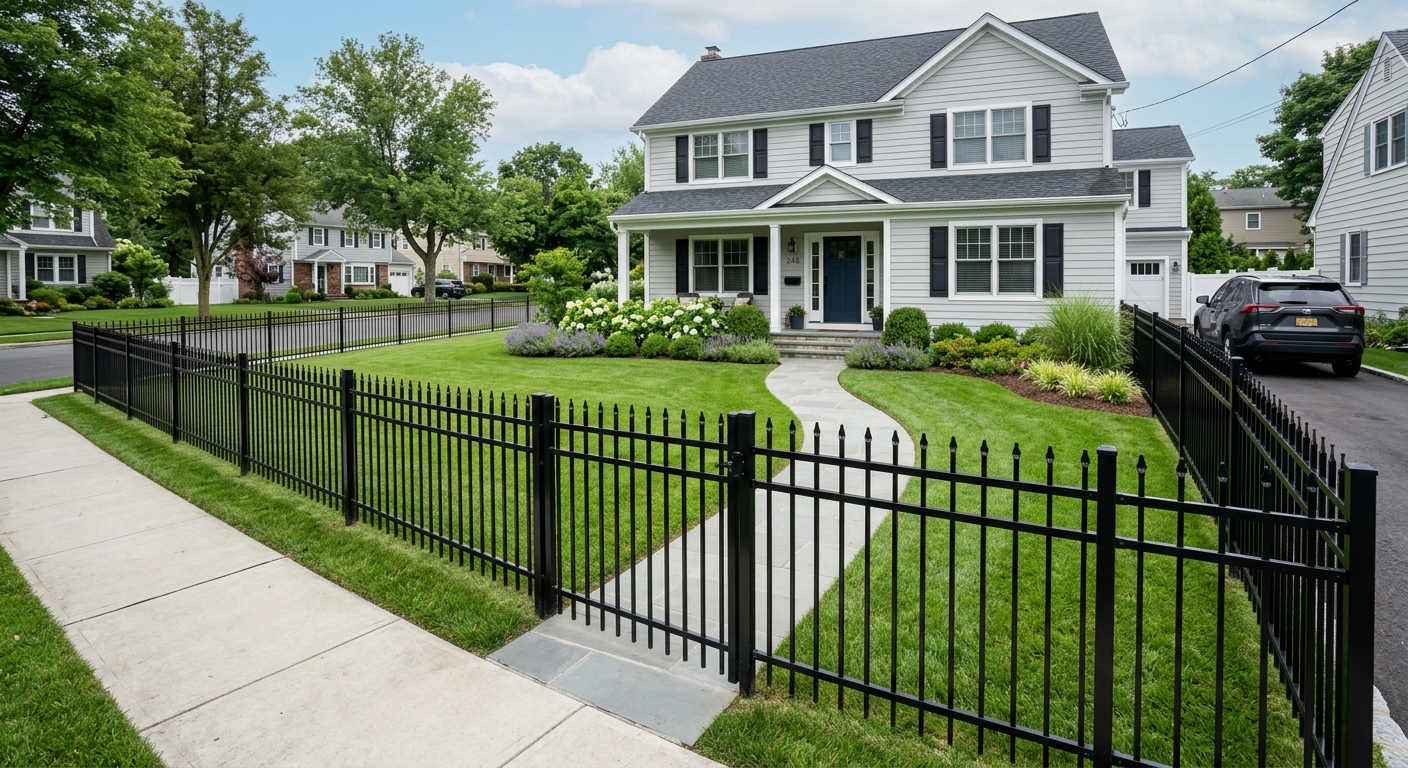
Fencing options and costs in Georgetown
Georgetown homeowners are increasingly investing in new fencing, and the demand is closely tied to how many homes there are to serve. With a population of 44,058 (Statistics Canada, 2021 Census), the town is small enough that consistent contractor availability matters, but large enough that common residential projects—backyards, side yards, and corner properties—get steady work. In the Toronto economic region, where housing density and lot patterns are varied, the biggest cost drivers tend to be fence height, how accessible the yard is, and whether posts must be concrete-set to perform well through freeze–thaw cycles. In Georgetown, neighbourhoods around areas like West Side Drive and the more established residential pockets tend to see frequent upgrades, especially when homeowners are also regrading landscaping or replacing older privacy rails.
Local weather plays a direct role in pricing. Southern Ontario frost is commonly planned around about 42"–48", which means most 6–8 ft privacy fences need posts set deep enough to avoid frost heave—typically a minimum of 3.5–4 feet deep. That depth, plus clay and mixed soils, usually pushes contractors toward concrete-set posts for long-term stability. At the same time, wind and snow loads influence panel sizing, post thickness, and spacing, especially for solid fences and gate openings.
Because of those factors, comparing materials side-by-side helps you set realistic expectations before you ask for quotes. See the typical cost bands and performance expectations in the table below.
| Material |
Lifespan |
Maintenance |
Privacy Rating |
Price per Linear Foot |
| Pressure-treated pine (standard wood) |
10–15 years |
Stain/paint every 2–3 years to reduce grey weathering |
High (solid boards) |
$65–$120 |
| Cedar (natural rot resistance) |
15–25 years |
Light sealing/staining every 2–4 years (appearance-driven) |
High (solid boards) |
$80–$135 |
| Vinyl / PVC (no-maintenance) |
20–30 years |
Rinse annually; rare repairs |
High (solid privacy styles) |
$75–$130 |
| Chain-link (galvanized steel) |
20–35 years |
Occasional tension/repair; no coating re-do needed |
Low (semi-visual barrier) |
$45–$85 |
| Aluminum ornamental |
25–40 years |
Wash as needed |
Medium (open pickets) |
$90–$160 |
| Composite / recycled material |
20–30 years |
Minimal washing; occasional fastening checks |
High (solid infill options) |
$95–$160 |
Prices are estimates only and vary by project scope, site access and material selection.
What affects the price of fencing in Georgetown
In Georgetown and across the Toronto economic region, you can see quote differences of 30–50% for what looks like the same fencing project. The gap usually comes from how deeply posts must be set for frost protection, the type of post setting method, and how complex the site is (access, gates, removal, and grading). Even when the chosen material is the same, contractors may size posts and hardware differently based on wind loads, panel type, and how many corners or gates your layout includes.
For Southern Ontario, the frost line is commonly planned around 42"–48". Best practice is to set posts about 4–6 inches below the design frost depth, which typically works out to 1.5–2.0 m into the ground depending on local conditions. In practice, that often means longer posts and more concrete—pushing labour time and ready-mix costs upward—especially for 6–8 ft privacy fences. If you choose a heavier solid material like cedar or vinyl privacy, the post and rail system must resist racking in spring thaw and wind events, which can increase the number of posts (often 6–8 ft centres on privacy styles).
Concrete examples from Georgetown-area work: (1) A straight 50 ft backyard run on level grade usually stays close to the base wood or vinyl bands (wood commonly starts around $65–$120 per linear foot installed), while (2) a similar-length fence with two gates, corner transitions, and removed old panels tends to climb fast because of extra labour and disposal. (3) On sloped lots near higher elevations of town, stepped or raked panels add fabrication time, which is one reason some projects drift toward the higher end of $75–$130 for vinyl/PVC even when the footage is unchanged. As a rough guideline, older housing stock often means more buried debris or uneven foundations along property edges, so excavation and post placement can take longer, which can add hundreds to a few thousand dollars depending on footing conditions.
| Price Factor |
Why It Matters |
Cost Impact |
| Fence length in linear feet |
Most labour and materials scale directly with total linear footage |
High |
| Post depth required |
Frost line planning dictates how long posts must be and how much excavation is needed |
High |
| Post setting method |
Concrete-set posts improve stability in clay/mixed soils but require additional labour and concrete |
Medium to High |
| Material choice |
Vinyl and cedar require different hardware, rail systems, and handling; chain-link uses different components |
Medium to High |
| Gate count and type |
Double-drive gates and heavier privacy gates need stronger posts and hinges |
Medium to High |
| Grade and terrain |
Slopes require stepping or raking to keep alignment, rails level, and pickets plumb |
Medium |
| Old fence removal and disposal |
Demolition time and hauling fees vary widely with material and access |
Medium |
| Permit fees and survey / property line locate |
Some fencing heights may trigger permit requirements; exact location avoids costly rework |
Low to Medium |
Permits & regulations in Ontario
In Ontario, fences above a height threshold often require a building permit—commonly around 2.0 m (6.5 ft) at the rear and about 1.0–1.2 m (3–4 ft) at the front or corner. Exact thresholds and local details can vary, but the practical takeaway for Georgetown homeowners is that taller privacy fences, especially on corner lots or near street-facing edges, are where permits most often come up. All fences must respect property lines and municipal setback requirements, and you should confirm your layout before any digging starts.
Before you install any posts, call for utility locates (Ontario One Call) so contractors can dig safely near buried services. If you haven’t recently located your property pins, consider obtaining a survey or a locate/confirmation before installing—this helps prevent encroachment disputes with neighbours, which can become expensive to correct after the fact. For shared fence ownership and maintenance, line-fence rules are governed by provincial line-fences legislation, so it’s smart to confirm who is responsible for repair and replacement—particularly if the fence affects a boundary segment.
How to verify your contractor in Ontario, step-by-step: (1) confirm their business is properly registered for the trade and request proof of liability insurance; (2) ask for WSIB/WCB coverage documentation for worker protection—then verify the certificate wording and effective dates; (3) request a clearance letter if applicable for your project; and (4) keep copies of certificates in your file. A reputable fence builder in Georgetown should provide these documents promptly and match the scope on the quote to what’s in writing.
Choosing the right fence material for Georgetown
Choosing the right fence material in Georgetown is mainly about matching what you want to live with (privacy, appearance, upkeep, and budget) to what Southern Ontario does to fences (freeze–thaw movement, snow loading, and damp seasons). Pressure-treated pine is often the best budget starting point, but it typically needs staining or painting every 2–3 years to slow grey weathering and keep boards looking even. Cedar offers natural rot resistance and usually looks better longer, yet it still benefits from periodic sealing to maintain appearance. Vinyl/PVC is the low-maintenance favourite because it doesn’t rot, but in extreme cold it can become brittle—good installation, proper post spacing, and quality products matter. Chain-link is the lowest-cost and long-lasting option, but it won’t give you the privacy most Georgetown homeowners want. Aluminum ornamental is durable and won’t rust, but it’s primarily for visibility and curb appeal rather than full backyard screening.
Post depth is a key decision across all materials. For Georgetown’s frost planning (around 42"–48"), posts are usually set deep enough that excavation goes well below the frost line—often 1.5–2.0 m into the ground—so concrete-set posts are commonly recommended for 6–8 ft privacy fences. That foundation work is what protects the investment when the ground heaves in spring and settles again over winter. Wind and snow can also affect rail sizing and panel stiffness, so heavier solid fences often need stronger posts and closer spacing.
For a practical dollar example: if you’re comparing privacy wood at $65–$120 versus vinyl at $75–$130 per linear foot installed, the $10–$25 per foot difference can be justified when you want fewer maintenance weekends and fewer repeat repairs. If your goal is maximum privacy and you plan to budget for staining, cedar or pressure-treated wood can still be the smarter long-term value.
| Material |
Cold Tolerance |
Lifespan |
Annual Maintenance |
Best For |
Price Band |
| Pressure-treated pine |
Good if sealed; can warp with poor maintenance |
10–15 years |
Inspect spring/fall; stain or paint every 2–3 years |
Best budget privacy with planned upkeep |
$65–$120 |
| Cedar |
Very good; handles wet seasons better than pine |
15–25 years |
Light sealing/staining every 2–4 years |
Premium look with better natural rot resistance |
$80–$135 |
| Vinyl / PVC |
Good; quality matters in extreme cold installation |
20–30 years |
Rinse annually; occasional hardware checks |
Low-maintenance privacy |
$75–$130 |
| Chain-link |
Excellent; resilient to temperature swings |
20–35 years |
Minimal; tension and spot repairs |
Security and pet containment with limited privacy |
$45–$85 |
| Aluminum ornamental |
Excellent; no rust in winter road-salt conditions |
25–40 years |
Wash as needed |
Curb appeal with partial visibility |
$90–$160 |
| Composite / recycled |
Good; can be sensitive to poor fastening/wrapping choices |
20–30 years |
Minimal washing; periodic fastener checks |
Clean appearance with less maintenance |
$95–$160 |
How to choose a fencing contractor in Georgetown
When you’re hiring a fencing contractor in Georgetown, start by verifying Ontario compliance documents and then demand clear, itemised paperwork. Confirm liability insurance by asking for a current certificate of insurance showing coverage limits and the effective dates. For worker protection, ask for WSIB/WCB clearance or coverage documentation—then check that the names and dates match the company you’re hiring. These checks matter because fence construction involves digging, working near property edges, and handling heavy materials.
Next, get 2–3 itemised written quotes rather than one “all-in” number. You want a breakdown that includes labour, material pricing, post installation method (especially concrete-set depth), rail and panel quantities, gate construction, and any hauling/disposal. Pay attention to what’s excluded: removal of an old fence, permit pull assistance, locating property line markers, and disposal fees are frequent sources of surprise costs. Also ask whether the quote includes utility locate coordination and whether they will confirm your post hole depth for frost.
Warranty should be in writing and split between workmanship and product. Ask the contractor how long the workmanship warranty lasts, whether it covers post movement or panel racking, and whether the manufacturer warranty is tied to the original purchaser (transferable or not). For payments, never pay more than 10–15% upfront; hold back a portion until key milestones are complete. Finally, request a start date and a completion estimate in writing so weather delays are clearly handled.
- Ask for proof of liability insurance and confirm coverage is current.
- Request WSIB/WCB clearance or coverage documentation for the installing crew.
- Verify the quote includes concrete-set posts where frost depth requires it.
- Confirm how posts will be measured and set (depth, spacing, and alignment method).
- Get an itemised labour + materials list (not a single lump-sum line).
- Clarify whether old fence removal and disposal are included.
- Ask if disposal follows local hauling practices and what’s included in “clean-up.”
- Confirm gate hardware type and whether double gates get reinforced posts.
- Ask who is responsible for permit pulls if your height triggers one.
- Ensure the scope specifies fasteners, rail sizes, and panel spacing for wind resistance.
- Get the workmanship warranty length in writing and what it covers.
- Set payment milestones: keep most funds for completion and punch-list sign-off.
In Georgetown, common red flags include contractors who (1) won’t provide insurance/WSIB/WCB documentation, (2) quote shallow “driven” posts for tall privacy fencing without frost-depth discussion, (3) offer vague scopes without linear-foot quantities and post spacing, (4) require large upfront deposits beyond 10–15%, and (5) refuse to put start/completion timing and warranty terms in writing.
Frequently asked questions — fencing in Georgetown
How much does a fence cost in Georgetown?
In Georgetown, most installed residential fencing typically falls within the local Toronto-region price bands. For example, wood privacy installations commonly land around $65–$120 per linear foot installed, while vinyl/PVC privacy is often in the $75–$130 range. Chain-link security fencing usually runs lower, about $45–$85, and ornamental aluminum tends to be higher, about $90–$160. Your total cost depends heavily on linear footage, how many gates you have, whether the yard is sloped, and—very importantly—whether posts are concrete-set to handle Southern Ontario frost. If your fence replaces an older one, removal and disposal can also shift the final number.
How deep should fence posts be for Georgetown's frost?
For Georgetown and the rest of Southern Ontario, frost planning is commonly based on a design frost depth around 42"–48". In practical terms, that means you generally set fence posts about 4–6 inches below the design frost depth to reduce the risk of frost heave. Because posts for 6–8 ft privacy fencing often need to reach roughly 1.5–2.0 m into the ground, many contractors recommend concrete-set posts—especially in clay and mixed soils—so the fence stays plumb and stable through winter thaw cycles. A contractor should explain their planned post depth, show the spacing they’re using for wind resistance, and confirm it matches your fence height and soil conditions.
Wood vs vinyl vs aluminum fence — which is best?
The “best” choice depends on your priorities. Wood (pressure-treated pine) is usually the most budget-friendly, typically starting around $65–$120 per linear foot installed, but it needs regular staining or painting (often every 2–3 years) to avoid grey weathering. Cedar improves appearance and offers natural rot resistance, often pushing the price higher. Vinyl/PVC is a low-maintenance option and is commonly priced around $75–$130 per linear foot installed; it won’t rot like wood, but quality installation and proper spacing matter in extreme cold. Aluminum ornamental is very durable and won’t rust, usually around $90–$160 per linear foot, but it typically provides less privacy than solid wood/vinyl panels. In Ontario winters, the correct post depth and solid footing design are just as important as material.
Do I need a permit to build a fence in Ontario?
Often, yes—especially for taller fences. In Ontario, fences above common height thresholds—typically around 2.0 m (6.5 ft) at the rear and about 1.0–1.2 m (3–4 ft) at the front or corner—may require a building permit. You also must follow property-line rules and municipal setback bylaws. For Georgetown homeowners, the safest approach is to ask your contractor to confirm whether your exact fence height/location triggers a permit and to document what they’re handling in the quote. Regardless of permit needs, you should ensure utility locates are called before digging (Ontario One Call) and consider a survey/locate so you don’t build on the wrong line. For shared boundaries, provincial line-fences legislation guides ownership and maintenance responsibilities.
How long does a wood fence last in Georgetown?
With proper installation and maintenance, a wood fence in Georgetown typically lasts about 10–15 years for pressure-treated pine, and often longer for cedar. The big variables are post footing depth, soil conditions, and upkeep. Because Southern Ontario has freeze–thaw cycles, posts that aren’t set deep enough (or aren’t concrete-set where needed) can shift over time, leading to loose rails and faster deterioration. If you stain or seal on a schedule—often every 2–3 years for pressure-treated pine—wood can hold up well against wet seasons and winter conditions. If you skip maintenance, you may still get several years, but the fence will usually grey faster and can show warping and joint failure sooner. A contractor should explain how they’ll handle posts for frost and what coating system they recommend.
Who owns and maintains a shared fence?
Shared fence ownership and maintenance responsibilities in Ontario are governed by provincial line-fences legislation. In practice, that means the boundary segment may be considered jointly owned, and both sides may have obligations depending on who originally built the fence and the agreement (or lack of agreement) between neighbours. For Georgetown homeowners, the best way to avoid conflict is to confirm boundary line location and then put expectations in writing with your neighbour before replacement—especially if you’re replacing only part of a fence, upgrading to a taller privacy style, or changing materials. A survey/locate can help prevent disputes. If the fence affects a shared boundary and repairs are needed, Ontario’s line-fence rules generally guide cost-sharing and maintenance duties, but the specifics can depend on the circumstances of your property line.