Fencing options and costs in Lincoln
Fencing in Lincoln is a practical upgrade for comfort and curb appeal, and local demand stays strong because many homes are detached: single-detached houses make up 69.8% of dwellings (Statistics Canada, 2021 Census). With 8,055 homeowner households—84.3% of all households owning—most fencing projects in Lincoln are driven by homeowners improving boundaries, privacy, and pets/security rather than rentals (Statistics Canada, 2021 Census). That ownership mix matters because detached lots typically need full perimeter coverage, plus gates and ongoing repairs as yards mature.
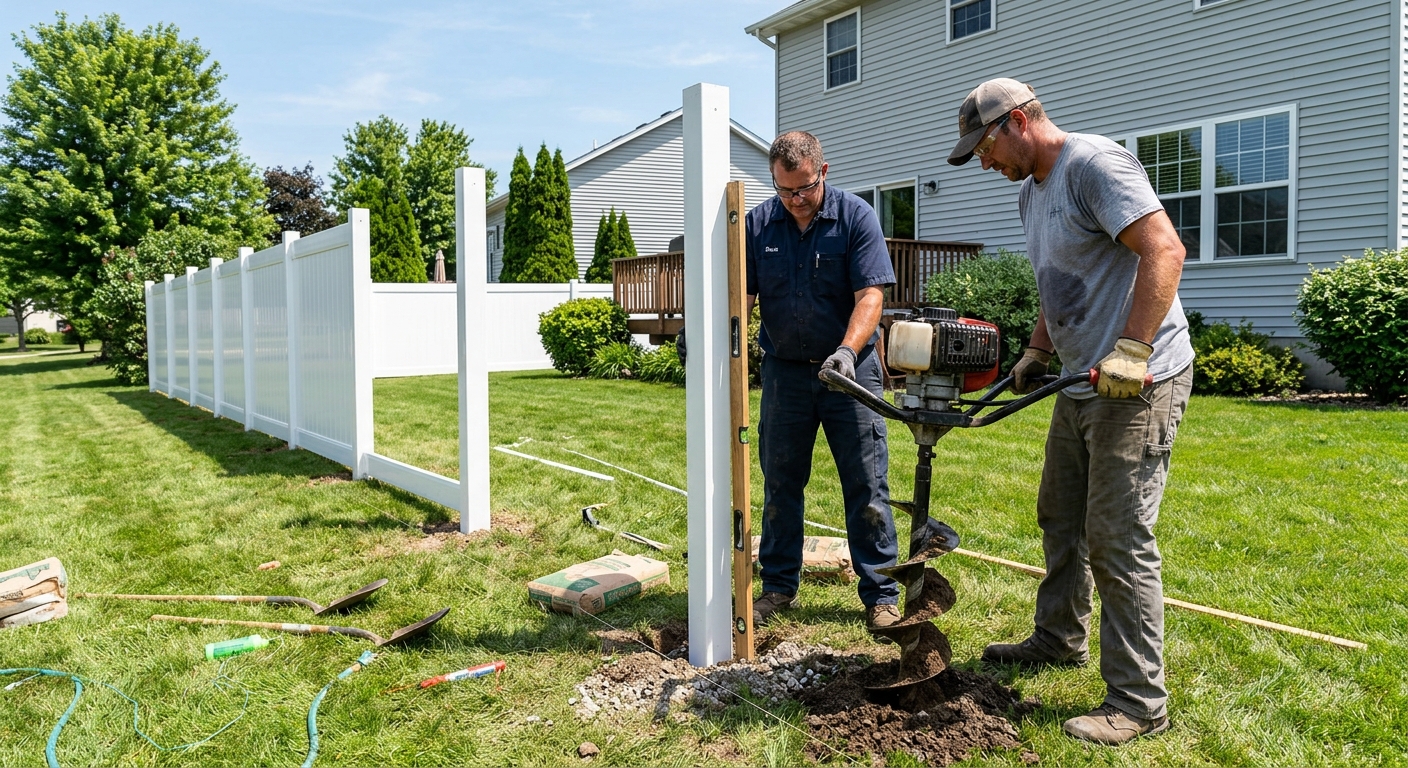
In the Hamilton–Niagara Peninsula, pricing is shaped by frost and freeze–thaw cycles. Ontario’s design frost penetration in the region is roughly 1.2 m (4 ft), so posts must be set below the frost line to reduce heaving and panel leaning over time. Most Lincoln-area residential builds use concrete-set posts with 36–42 inch (about 0.9–1.07 m) typical depths, and deeper in heavier clay pockets—adding drilling time, rebar/anchor hardware, and mix costs. Wind loads from hilltop or lakeshore lots can also push contractors toward heavier posts, closer bracing, or panel layouts that cost more than a “standard” backyard fence.
Trade volume is especially common around family neighbourhoods where backyards are fenced in for privacy—such as the mature residential pockets near the Lincoln-Museum area—plus growing streets where homeowners are replacing older, undersized posts. Once you understand the material and installation approach, it’s easier to compare realistic budget ranges against the table below.
| Material |
Lifespan |
Maintenance |
Privacy Rating |
Price per Linear Foot |
| Pressure-treated pine (standard wood) |
8–15 years |
Stain/paint every 2–3 years |
High (solid boards) |
$45–$80 |
| Cedar (natural rot resistance) |
12–20 years |
Seal/stain as needed (typically every 2–4 years) |
High (solid boards) |
$65–$110 |
| Vinyl / PVC (no-maintenance) |
20–30 years |
Rinse only; occasional panel replacements |
High (solid privacy styles) |
$70–$120 |
| Chain-link (galvanized steel) |
20–35 years |
Occasional tensioning/repairs |
Low (open mesh) |
$35–$60 |
| Aluminum ornamental |
25–40 years |
Wash as needed |
Low–Medium (decorative pickets) |
$80–$150 |
| Composite / recycled material |
20–30 years |
Low; no staining |
High (board designs) |
$85–$140 |
Prices are estimates only and vary by project scope, site access and material selection.
What affects the price of fencing in Lincoln
In Lincoln and the broader Hamilton–Niagara Peninsula, it’s common to see fencing quotes for the “same” job land 30–50% apart. The spread usually comes down to how deeply posts are set, whether the contractor uses concrete, the amount of bracing needed for wind performance, and how difficult your yard is to access. Two yards that both measure, say, 50 linear feet can still price very differently if one has firm topsoil and level grade, while the other has clay, slopes, and fence-line obstructions.
Frost line depth is the biggest structural cost driver. In southern Ontario, frost penetration is about 1.2 m (4 ft), so in practice posts are typically set 4–6 inches below the design frost depth to help prevent heaving. Where many homeowners expect “36–42 inches,” clay areas and uneven soil conditions often push contractors toward the deeper end, and the hole depth directly increases drilling time and concrete/mix use. That’s why long-term builds with concrete-set posts often land closer to the mid-to-upper end of the wood band (for example, $45–$80 for pressure-treated) or push into cedar pricing when aesthetics matter.
Wind exposure can add cost too. While Lincoln isn’t the most wind-battered part of Ontario, hilltop and lakeshore lots still experience gusts that stress panels. Contractors respond with closer post spacing, heavier rails, or designs that reduce sail area—especially if you’re upgrading from a lightweight fence. For context, chain-link may start around $35–$60 per linear foot, but solid privacy upgrades cost more because bracing and panel materials are heavier.
Three local examples that raise cost in Lincoln: (1) heavy clay that requires slower auger work and deeper concrete footings; (2) sloped backyards that need stepped/raked panels and extra hardware; and (3) older neighbourhood sections where access for a small skid-steer or trailer is limited, increasing labour time. Conversely, simpler costs go down where you have flat grade, clear material staging, and straightforward disposal of an old fence without surprises.
| Price Factor |
Why It Matters |
Cost Impact |
| Fence length in linear feet |
More fencing means more posts, rails, panels, and fasteners. |
Highest single variable |
| Post depth required |
Frost line dictates hole depth and post length to prevent heaving. |
Can add substantial concrete and labour |
| Post setting method |
Concrete-set posts resist freeze–thaw movement better than tamped backfill. |
Typically increases cost vs. gravel pack/tamped |
| Material choice |
Vinyl, cedar, and chain-link differ in material price and install complexity. |
Wide variation across bands |
| Gate count and type |
Drive-through and double gates require stronger frames and hardware. |
Often a major add-on |
| Grade and terrain |
Slopes require stepped or raked panels and extra bracing. |
Higher labour and material waste |
| Old fence removal and disposal |
Unloading/dumping fees and extra time for deconstruction. |
Moderate to high depending on condition |
| Permit fees and survey / property line locate |
Some higher fences need permits; locating prevents boundary disputes. |
Variable but can be meaningful |
Permits & regulations in Ontario
In Ontario, fence permits are often tied to height and location. Many properties need a building permit when installing fences above a height threshold—commonly 2.0 m (6.5 ft) for rear yards and around 1.0–1.2 m (3–4 ft) for front yards or corner side yards. Exact rules can vary by municipality, but in Lincoln homeowners should assume that taller privacy fences or anything affecting corner visibility will be scrutinized. Regardless of height, all fencing must respect property lines and municipal setback bylaws, and you should always verify where your fence will sit relative to your boundary.
Before any digging, you should call for utility locates through Ontario One Call. This is step one for safe post-hole excavation. Next, confirm your boundary with a survey or property line locate by using your property pins (especially important for older lots where boundary markers may have shifted or been obscured). Shared fence ownership rules are governed by Ontario’s line-fences legislation; where you share a boundary, communication with neighbours can affect both placement and long-term maintenance responsibility.
What typically DOES require a permit: installing a fence over the common height thresholds (and any significant fence structure that triggers municipal review), plus certain gate/driveway structures if they alter visibility or access. What typically does NOT: replacing an existing fence with a like-for-like height and design within bylaw limits.
To verify a contractor, ask for: (1) proof of Ontario business registration and licensing (where applicable) from their website or business paperwork; (2) a certificate of liability insurance; and (3) confirmation of WSIB/WCB coverage (or the correct exemption documentation if they qualify). Look for current dates and named coverage in the certificates, and request clearance letters where the insurer/coverage requires them—then keep copies with your contract.
Choosing the right fence material for Lincoln
Choosing a fencing material in Lincoln comes down to matching your priorities—privacy, low maintenance, budget, and lifespan—to what our winters and damp shoulder seasons do to fence materials. Pressure-treated pine is the entry option for many homeowners, but it typically needs staining or sealing every 2–3 years to reduce grey weathering and protect edges. Cedar looks great and resists rot naturally, yet it still benefits from sealing to maintain colour and reduce surface checking over repeated freeze–thaw cycles.
Vinyl/PVC is popular for low-maintenance lifestyles: it generally won’t need staining, and a rinse is often enough. However, in extreme cold snaps vinyl can become more brittle than wood, so installers must use the correct post spacing and appropriate hardware. Chain-link is the most cost-controlled option and lasts a long time because it doesn’t rot, but it offers little privacy unless you add slats or privacy screen fencing. Aluminum ornamental provides a clean, rust-resistant look and good durability, though it’s usually chosen for curb definition rather than privacy.
Regardless of material, Lincoln-area frost drives the installation details. With frost penetration around 1.2 m (4 ft), posts should be set below the frost line—often 4–6 inches below the design depth—and in most Hamilton–Niagara Peninsula residential builds, concrete-set posts are the standard for long-term stability. That concrete step increases labour and mix costs, but it’s what helps prevent leaning panels after freeze–thaw seasons.
A practical example: if your base privacy fencing budget targets the pressure-treated band ($45–$80), but you’re comparing to vinyl at $70–$120, the extra investment can be justified when you want to avoid repeat staining and you’ll stay in the home long enough to benefit from a 20–30 year material life. If you’re planning to sell sooner or you’re flexible on maintenance, cedar can be a middle path visually while still handling the climate well.
| Material |
Cold Tolerance |
Lifespan |
Annual Maintenance |
Best For |
Price Band |
| Pressure-treated pine |
Good (with proper sealing and correct post depth) |
8–15 years |
Light inspection; stain/paint every 2–3 years |
Budget-focused privacy |
$45–$80 |
| Cedar |
Good (naturally rot-resistant) |
12–20 years |
Seal/stain every 2–4 years |
Premium look with manageable maintenance |
$65–$110 |
| Vinyl / PVC |
Good when installed with correct hardware and spacing |
20–30 years |
Minimal—rinse/clean as needed |
Low-maintenance privacy |
$70–$120 |
| Chain-link |
Excellent (doesn’t rot) |
20–35 years |
Occasional tensioning and spot repairs |
Security and visibility |
$35–$60 |
| Aluminum ornamental |
Excellent (powder-coated) |
25–40 years |
Wash as needed |
Curb appeal with light security |
$80–$150 |
| Composite / recycled |
Good (designed for freeze–thaw durability) |
20–30 years |
Low—typically periodic cleaning |
Long-term privacy with no staining |
$85–$140 |
How to choose a fencing contractor in Lincoln
Choosing the right fencing contractor in Lincoln starts with verification and clarity. Ontario homeowners should confirm three things before signing: (1) liability insurance, so you’re protected if property is damaged; (2) WSIB/WCB coverage (or proper exemption documentation), so work-related injuries are handled correctly; and (3) the contractor’s business credentials. To check, request a certificate of insurance with your address/job site noted (where available) and confirm coverage limits. For WSIB/WCB, ask for the current clearance letter or evidence of coverage status, and verify the document’s active dates.
Next, get 2–3 itemised written quotes. A good quote breaks out labour and materials rather than hiding details in one lump sum. Ask whether the price includes post-hole digging, concrete or gravel pack, rails and hardware, gate frames, staining/sealing (for wood), and permit steps if applicable. Also confirm what’s excluded: utility locate costs, tree/root trimming, removal of concrete/rock, changing the fence line for accurate property boundaries, or disposal of an old fence.
Look closely at warranty terms. A workmanship warranty should be clearly stated (often 1–3 years), and manufacturer warranties should be separate for materials. Ask whether the warranty is transferable to a new owner if you sell.
For payment scheduling, avoid paying more than 10–15% upfront. Hold back a portion until the gate swings correctly, lines are straight, and cleanup is complete. Finally, require a start date and completion estimate in writing, including weather contingencies for Lincoln’s winter-to-spring schedule.
- Shows current proof of liability insurance (active certificate).
- Provides WSIB/WCB coverage or clearance letter status.
- Includes a detailed materials list (posts, rails, fasteners, gate hardware).
- States post depth and whether posts are concrete-set for frost stability.
- Breaks pricing into labour vs. materials (no vague “allowances”).
- Confirms whether utility locates are included or handled by you.
- States if permit pull (where required) is included.
- Specifies disposal/refuse handling for old fencing.
- Clarifies what happens if the boundary differs from expectations.
- Includes a workmanship warranty length and what it covers.
- Provides a start/completion timeline and weather plan.
- Uses a contract with scope, change-order process, and total price.
Concrete red flags I see in Lincoln: contractors who refuse to discuss post depth or concrete setting; quotes that don’t mention how they’ll handle frost heave risk; missing or outdated insurance/coverage documents; lump-sum pricing without a materials breakdown; and “too good to be true” offers that skip removal/disposal and then bill extras after digging starts.
Frequently asked questions — fencing in Lincoln
What fence style offers the best wind resistance in Lincoln?
In Lincoln, the most wind-resistant choices are typically solid privacy fences built with sturdy framing and appropriate post spacing. While open styles look lighter, they can still experience panel vibration in gusts, especially on hilltop or lakeshore lots. For best performance, contractors often use heavier posts and tighter bracing, with concrete-set posts for long-term stability through freeze–thaw cycles. A well-installed solid wood or vinyl privacy fence (with correct rails and hardware) usually performs better than lightweight pickets when wind is pushing laterally. If you’re comparing budgets, remember that solid styles usually sit in the higher wood/vinyl bands (for example, $45–$80 for pressure-treated installed, or $70–$120 for vinyl depending on height and layout).
How much does a fence cost in Lincoln?
Fence cost in Lincoln typically depends on linear footage, gate quantity, fence height, and—most importantly—how posts are installed for frost stability. As a practical guide, chain-link often lands around $35–$60 per linear foot, while pressure-treated wood projects commonly price in the $45–$80 range depending on style and site access. Vinyl privacy fences generally fall around $70–$120 per linear foot because materials and hardware are more expensive, plus the install needs to account for winter cold snaps. If you have clay soil, slopes, or a lot of obstructions, labour and concrete mix use can push pricing toward the upper part of these ranges. Always request an itemised quote so you can see what’s included for post depth, concrete, and gate hardware.
How deep should fence posts be for Lincoln's frost?
For Lincoln’s southern Ontario freeze conditions, fence posts should be set below the frost line to reduce heaving and leaning over time. Frost penetration in the Hamilton–Niagara Peninsula is roughly 1.2 m (4 ft), so installers typically place posts about 4–6 inches below the design frost depth. In many residential fence builds, that works out to using deeper post holes than people expect—often pushing into the range of 36–42 inches for common 6 ft fences, and deeper where clay or poor soil drainage is present. In practice, this means longer posts, more excavation, and often concrete-set installation as a standard approach for long-term performance through repeated freeze–thaw cycles. Your contractor should clearly state the planned post depth, concrete setting method, and how they’ll handle sloped grade.
Wood vs vinyl vs aluminum fence — which is best?
“Best” depends on your priorities. Wood (pressure-treated or cedar) can offer the best balance of cost and classic appearance, but wood generally requires periodic staining/sealing—often every 2–3 years for pressure-treated to prevent weathering and checking. Vinyl is usually best for low maintenance: you don’t stain it, and it typically won’t rot, but it costs more up front and must be installed with correct spacing and hardware for winter cold tolerance. Aluminum ornamental is excellent for durability and curb appeal, but it offers limited privacy compared with solid wood or vinyl privacy panels. In Lincoln’s market, many homeowners choosing privacy compare pressure-treated in the $45–$80 range with vinyl in the $70–$120 range; vinyl can be justified when you want to avoid repeated maintenance for decades. If you want privacy plus minimal upkeep, vinyl or composite often wins; if you want a classic look and can maintain it, cedar is a strong pick.
Do I need a permit to build a fence in Ontario?
In Ontario, permits are commonly required when fence height exceeds typical thresholds—often around 2.0 m (6.5 ft) for rear yards and approximately 1.0–1.2 m (3–4 ft) for front yards or corner areas, though exact municipal details can vary. Even when a permit isn’t required, you must follow municipal setback/bylaw rules and respect the property line. Before you dig, you should arrange utility locates via Ontario One Call, and it’s wise to confirm your boundary using your property pins or a survey to avoid encroachment disputes. If the fence shares a boundary with a neighbour, Ontario’s line-fences legislation governs shared-fence responsibilities and placement. A reputable Lincoln contractor should tell you whether your proposed height is likely to need a permit and who is pulling it.
How long does a wood fence last in Lincoln?
A wood fence’s lifespan in Lincoln is strongly affected by post depth, concrete setting, and maintenance habits. When posts are set below the frost line and installed correctly (often concrete-set for long-term stability in the Hamilton–Niagara Peninsula), pressure-treated wood commonly lasts about 8–15 years, while cedar often reaches 12–20 years due to its natural rot resistance. Without proper installation—especially if posts are too shallow—freeze–thaw movement can cause leaning and rail separation well before the wood itself “fails.” Maintenance also matters: pressure-treated fences typically need staining or sealing every 2–3 years to limit grey weathering and protect exposed edges and fasteners. If you’re budgeting, it helps to compare long-term total cost: a wood fence may be lower upfront (often within $45–$80 per linear foot), but plan for periodic upkeep to achieve the higher end of its lifespan.