Fencing options and costs in West Hill
In West Hill, Ontario, fence choices are shaped as much by winter freeze as they are by how you want your yard to feel year-round. With a 2021 population of 27,392 in the area (Statistics Canada, 2021 Census), there’s steady demand for backyard upgrades, especially as households modernize aging exterior features. Locally, you’re also more likely to see detached properties than in core high-rise neighbourhoods—each one is a potential long-term fencing customer, because privacy and curb appeal are both big drivers in the Toronto housing market (Statistics Canada, 2021 Census).
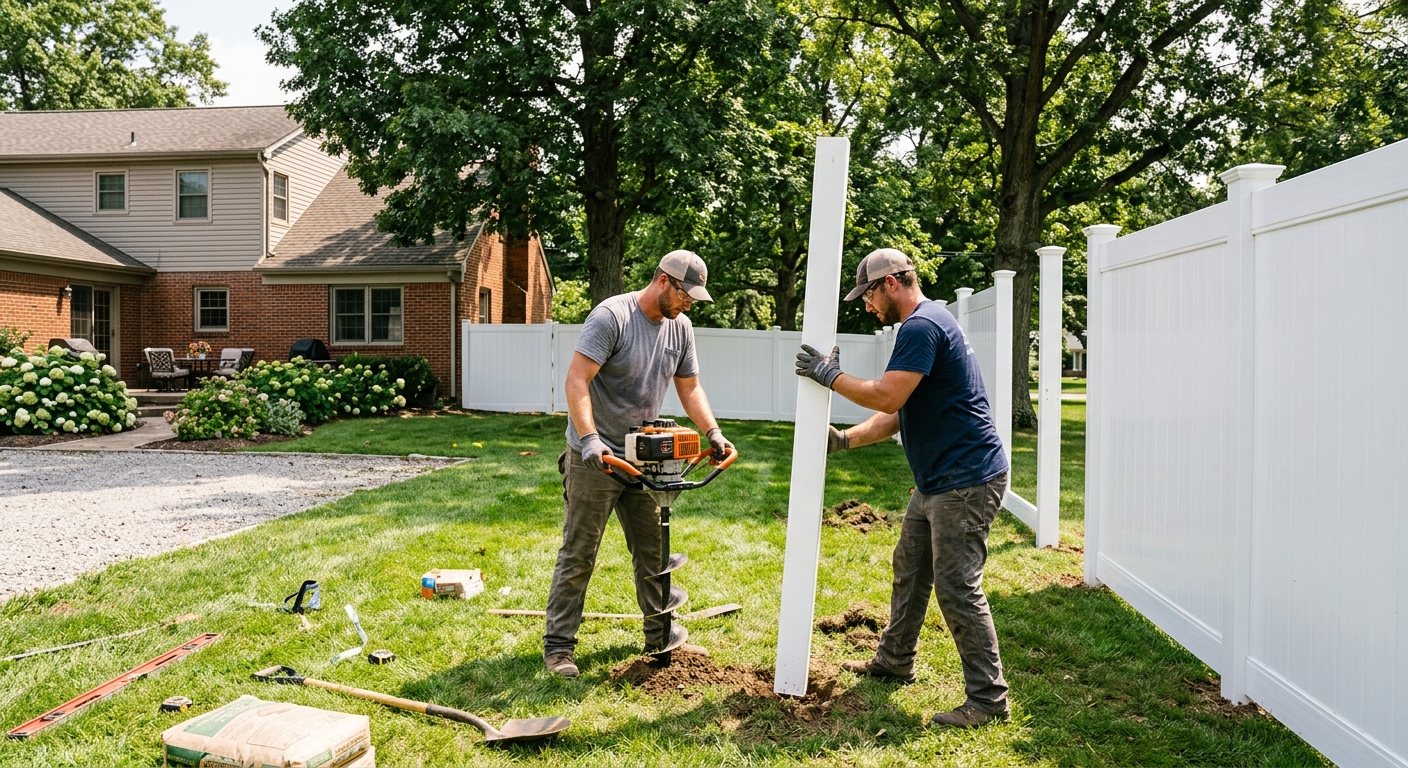
Pricing in the Toronto economic region typically clusters into the same material bands, but the final number swings with post depth, access, and whether the project needs old-fence removal. In Southern Ontario, the commonly used design frost line is about 42"–48", and best practice means setting posts roughly 4–6 inches below that depth—so most contractors plan for concrete-set posts on 6–8 ft privacy fences. That added labour and ready-mix cost is usually why wood and vinyl “look similar” at the sales stage but end up different once footing depth, spacing, and hardware are accounted for.
Trade activity is especially strong around the Highland Creek and West Hill Village edges, where lots tend to back onto ravines, parks, or busy side streets—conditions that increase wind stress and make solid panel bracing more important. Use the table below as a practical starting point for comparing options; then we’ll break down the pricing variables that swing your quote in real life.
| Material |
Lifespan |
Maintenance |
Privacy Rating |
Price per Linear Foot |
| Pressure-treated pine (standard wood) |
10–15 years |
Stain/seal every 2–3 years |
High (solid panels) |
$65–$120 |
| Cedar (natural rot resistance) |
15–25 years |
Light staining/cleaning every 2–4 years |
High (solid panels) |
$75–$135 |
| Vinyl / PVC (no-maintenance) |
25–35 years |
Occasional rinse (no staining) |
High (solid privacy styles) |
$75–$130 |
| Chain-link (galvanized steel) |
20–30 years |
Minimal; rinse and check tension |
Low (add slats for privacy) |
$45–$85 |
| Aluminum ornamental |
25–40 years |
Occasional wash; inspect gate hardware |
Medium (semi-private) |
$90–$160 |
| Composite / recycled material |
20–30 years |
Minimal; wash and inspect |
High (solid styles) |
$95–$160 |
Prices are estimates only and vary by project scope, site access and material selection.
What affects the price of fencing in West Hill
In West Hill and across the Toronto economic region, it’s common to see quotes for the “same” fence come in 30–50% apart because the real work isn’t the panel material—it’s the footings, the hardware, and how the contractor adapts the layout to your yard. In older West Hill pockets, it’s also typical to have line disputes, uneven grades, or deteriorated fence remnants that require careful removal and re-build, which adds labour time and disposal fees. Meanwhile, contractor availability can tighten around spring commissioning, so scheduling and crew allocation can shift the hourly cost even before materials are considered.
Toronto’s frost line directly sets post depth. Best practice in cold Ontario uses a depth strategy of setting posts about 1.5–2.0 m into the ground (roughly 4–6 inches below design frost depth) for many 6–8 ft privacy fences, which means deeper holes, longer posts, and concrete-set installation. That’s why wood “starts cheap,” but can move toward the $65–$120 band once proper footing is included. Wind doesn’t hit the Prairies level here, but solid panels still rack in strong gusts; that pushes you toward heavier posts and tighter spacing, especially in exposed corners.
Two practical West Hill examples: (1) a 60 ft privacy run that includes a double drive gate often costs noticeably more because it adds upgraded hinges, latch hardware, and heavier bracing—sometimes moving a wood estimate closer to the mid-range $75–$130 pricing once reinforcement is counted. (2) if your yard is sloped toward Highland Creek or has awkward ground levels, the layout may require stepped/raked panels or extra rail adjustments, adding labour that doesn’t show up in basic “linear foot” marketing.
These local factors are why I recommend comparing like-for-like quotes, not just the sticker price. Next, let’s break down the specific cost drivers your contractor should list line by line.
| Price Factor |
Why It Matters |
Cost Impact |
| Fence length in linear feet |
Most labour and material quantities scale directly with run length |
High (primary driver) |
| Post depth required |
Frost line determines hole depth and post length to prevent heaving |
Medium–High |
| Post setting method |
Concrete-set posts typically outperform gravel pack or driven posts in frost climates |
Medium–High |
| Material choice |
Vinyl, cedar, and chain-link differ in cost per post, rails, and hardware |
Medium |
| Gate count and type |
Drive-through double gates require heavier framing and stronger latching |
High |
| Grade and terrain |
Slope may require stepped panels or raked rails to keep privacy consistent |
Medium |
| Old fence removal and disposal |
Demolition time, haul-away, and unknown foundation remnants add cost |
Medium |
| Permit fees and survey / property line locate |
Some projects need permits and a locate prevents encroachment mistakes |
Low–Medium |
Permits & regulations in Ontario
In Ontario, fences aren’t a one-size rule, but many projects do trigger permit requirements depending on height and location. A common threshold homeowners run into is around 2.0 m (6.5 ft) for rear yard fence heights, while front or corner-area fences often fall under a lower height range (commonly about 1.0–1.2 m / 3–4 ft). Your municipality’s fence bylaw can also set details for corner visibility, property-line setbacks, and permitted materials. Before you dig in West Hill, confirm the applicable height and placement rules with the City of Toronto fencing and property standards guidance.
Utility locates are not optional: before installing any posts, call Ontario One Call to mark buried utilities and avoid damage. Separately, get a survey or at least a property-pin locate before you set fence lines—this is one of the easiest ways to prevent encroachment disputes with neighbours.
Where permitted work typically falls: if your planned fence exceeds the relevant local height thresholds (often around 2.0 m for rear yards), or if it’s in a location that needs additional review, you should expect a building permit requirement. Where work typically does not: shorter fences that stay within local height limits and follow property-line placement standards usually don’t require a permit, but you should still confirm.
To verify a contractor in West Hill, check (1) Ontario licence status through the relevant online registry for fencing/building trades, (2) liability insurance certificate of insurance naming you/your property as additional insured where appropriate, and (3) WSIB coverage (clearance letter or account status evidence) for workers performing the installation. A legitimate contractor should provide documents quickly and match them to your job scope.
Choosing the right fence material for West Hill
Choosing the right fence material in West Hill is mostly about balancing privacy, maintenance habits, and how the material performs through Southern Ontario winters and spring freeze-thaw. Pressurised-treated pine is usually the best budget entry point, but it does need proactive staining or sealing every 2–3 years to reduce grey weathering and surface checking. Cedar offers a warmer look and naturally resists rot better than many budget woods, yet it still benefits from periodic maintenance to keep the finish even and the boards protected.
For low-maintenance ownership, vinyl/PVC is a popular choice in the Toronto market because it doesn’t require staining. The trade-off is that it’s more expensive upfront, and in extreme cold you should select quality profiles and install with the manufacturer’s thermal expansion guidance so panels don’t warp. Chain-link is the longest-life “workhorse” option at the lowest cost, but it won’t deliver privacy unless you add slats or wind/privacy screening. Aluminum ornamental gives a clean, rust-resistant look and mid-range cost, but it’s not a solid privacy barrier. Composite/recycled systems sit between wood and vinyl in appearance and durability, and can be a great fit when you want strong boards with reduced upkeep.
Post depth matters no matter what you pick. Because the frost line commonly used in Southern Ontario is about 42"–48", installers typically set posts roughly 1.5–2.0 m into the ground for stability, and for 6–8 ft solid privacy fences, concrete-set posts are the safer default. That’s especially true on mixed soils where heave risk is more than a theoretical problem. A solid-panel fence also needs hardware and spacing that tolerate winter gusts and the occasional heavy snow load.
For a simple dollar example: if you’re comparing a basic pressure-treated privacy fence (often within the $65–$120 range) to vinyl privacy (often within $75–$130), the extra $10–$60 per linear foot can be justified when you want to avoid staining for a decade or more and you’re planning to stay in your home. Where cost doesn’t justify itself is when the vinyl solution is paired with incorrect post spacing or shallow footings—good installation is what protects your money.
| Material |
Cold Tolerance |
Lifespan |
Annual Maintenance |
Best For |
Price Band |
| Pressure-treated pine |
Good (with proper sealing) |
10–15 years |
Plan for staining every 2–3 years |
Budget privacy with active upkeep |
$65–$120 |
| Cedar |
Good (naturally rot-resistant) |
15–25 years |
Clean/maintain every 2–4 years |
Premium look, still budget-conscious |
$75–$135 |
| Vinyl / PVC |
Very good (use quality profiles/expansion) |
25–35 years |
Occasional rinse/inspection |
Low-maintenance privacy |
$75–$130 |
| Chain-link |
Excellent (galvanized steel) |
20–30 years |
Minimal (check tension and hardware) |
Security with minimal cost |
$45–$85 |
| Aluminum ornamental |
Excellent (coated finish) |
25–40 years |
Occasional wash and hardware check |
Attractive, rust-proof perimeter |
$90–$160 |
| Composite / recycled |
Good (board systems vary by brand) |
20–30 years |
Minimal wash and inspection |
Durable look with reduced upkeep |
$95–$160 |
How to choose a fencing contractor in West Hill
When you’re hiring a fencing contractor in West Hill, don’t rely on a photo gallery alone—verify credentials and protect yourself with clear paperwork. Start by confirming Ontario licence status through the appropriate online registry for the contractor’s trade scope. Next, request a certificate of liability insurance and make sure coverage is active for the work being performed. Finally, confirm WSIB coverage for workers on the job; ask for a WSIB clearance letter or evidence that matches the install date and crew roster. If a contractor won’t provide documents or provides generic screenshots, treat that as a serious warning.
Then get 2–3 itemised written quotes—not lump sums—so you can compare apples to apples. Look for line items that separate labour, posts (including depth and type), concrete/footings, rails and panels, gates and hardware, and any required demolition/disposal. Confirm whether permits are pulled and included in the quote, and whether property-line locate or survey costs are separate or bundled.
Warranty is another differentiator. Ask for the workmanship warranty length in writing, plus the product/manufacturer warranty details (and whether it’s transferable to you as the homeowner). On payment, use a schedule that keeps risk low: never pay more than 10–15% upfront, and hold back a portion until you confirm the gate operation, post plumb/level, and cleanup are complete. Get a start date and completion estimate in writing, especially if you’re scheduling around landscaping or pool openings.
- Ask for proof of WSIB coverage (clearance letter or equivalent) before work starts.
- Request a certificate of liability insurance and check dates/coverage.
- Confirm Ontario licence status relevant to their fencing/building work.
- Insist on an itemised estimate: posts, concrete, rails, panels, and gates separated.
- Verify post depth plan for freeze protection (not just “standard posts”).
- Ask how they handle sloped yards (stepped vs. raked) and who sets the final grade line.
- Confirm the concrete-set method and hole size/compaction approach.
- Require an allowance line for old fence removal/disposal if applicable.
- Check gate hardware upgrades (hinges, latches, bracing) for double gates.
- Ask whether survey/property line locate is included or recommended.
- Make sure disposal and site cleanup are explicitly included in the scope.
- Review timelines and holdback terms in writing before signing.
Red flags in West Hill include: (1) contractors who won’t discuss post depth or frost protection and instead propose shallow holes; (2) quotes that only list “material cost” without footing/concrete labour details; (3) asking for large upfront payments beyond 10–15%; (4) missing or expired insurance/WSIB paperwork; and (5) vague scope language like “or equivalent” with no specific fence system details.
Frequently asked questions — fencing in West Hill
How tall can my fence be in West Hill?
In West Hill and across Ontario, fence height is usually governed by a local municipal bylaw that considers both the yard location (rear vs. front/corner) and visibility requirements. A common guideline homeowners run into is around 2.0 m (6.5 ft) for rear yards, with lower limits for front or corner areas often around 1.0–1.2 m (3–4 ft). If you’re planning a solid privacy fence in the 6–8 ft range, you should still confirm the exact threshold and whether a building permit is needed for your location. Because West Hill properties vary (including lots closer to park edges), it’s smart to verify your plan before any holes are dug.
Should fence posts be set in concrete here?
For most West Hill privacy fences, yes—concrete-set posts are the safest default. Southern Ontario commonly uses a design frost line around 42"–48", and best practice is typically to set posts roughly 4–6 inches below that depth, which often results in posts set about 1.5–2.0 m into the ground. That depth and concrete help reduce frost heave risk on clay and mixed soils common around the GTA. Gravel pack or driven-post methods can sometimes be offered for shorter or lighter fences, but for 6–8 ft solid panels, concrete-set installation is what holds alignment through freeze-thaw cycles. It’s one reason quotes for privacy fences often land near the $65–$120 (wood) or $75–$130 (vinyl) bands once footings are done correctly.
What's the best fence for privacy?
The best privacy results in West Hill usually come from solid panel systems: vinyl/PVC privacy, cedar or pressure-treated wood privacy, and some composite board designs. Chain-link can be privacy-friendly only if you add slats or a dense screen, but it won’t match the coverage of a solid fence. For winter durability, prioritize correct post depth and spacing so the panels don’t rack under gusts and seasonal movement. If you’re comparing cost, wood privacy often starts around the $65–$120 range, while vinyl privacy commonly lands around $75–$130; the extra upfront cost can be worthwhile if you want minimal ongoing upkeep (no annual staining). A properly installed solid fence also adds noticeable yard comfort during late fall and early spring when the weather shifts quickly.
How do I compare fencing quotes?
To compare quotes in West Hill fairly, ask for an itemised breakdown—not a single lump sum—and make sure every quote includes the same scope: post depth and setting method (concrete vs. alternatives), fence height, post spacing, number and type of gates, and whether old fence removal/disposal is included. Confirm whether permits are part of the scope, and whether a property-line locate or survey is recommended or included. Don’t compare only the material brand; compare the installed system. Also check warranty language for workmanship and manufacturer coverage. If one quote is dramatically lower, it often means shallower footings, lighter posts, fewer rails, or missing gate hardware—shortcuts that show up later when the fence shifts through Toronto’s freeze-thaw season.
How long does fence installation take in West Hill?
Typical installation time in West Hill depends on run length, gate count, and how quickly footings can be excavated and set before panel work begins. For straightforward sections (single runs, minimal grade changes, and no complicated removals), many projects fall into a range of a few days, while longer fence lines with concrete-set posts and a double drive gate can stretch closer to a week or more. Weather matters because digging and concrete work need suitable conditions. If old fencing removal is included, add time for demolition, haul-away, and site reset. A good contractor will give you a start date and a written completion estimate that accounts for frost-safe footing practices and Toronto-area scheduling realities.
Can I install a fence on a slope in West Hill?
Yes, you can install a fence on a slope in West Hill, but the install method needs to match the grade changes. Common approaches include stepped panels (a stair-step profile) or raked rails that follow the slope while maintaining an even top line. The choice impacts privacy consistency, panel alignment, and how the fence handles wind stress. Stepped systems often cost a bit more because they require careful layout and measuring, and raked systems can require more framing adjustments depending on the product. Either way, correct footing depth is still essential—slope doesn’t remove frost protection requirements. Ask your contractor how they’ll manage grade and whether their pricing accounts for stepped or raked layout.