Fencing options and costs in Steeles
Steeles, Ontario is a busy in-between neighbourhood where lots of homeowners are planning improvements, and fencing is one of the most common projects we see. With a population of 24,623 (Statistics Canada, 2021 Census), there’s steady local demand for privacy screens and boundary fencing—especially in established residential pockets where rear-yard upgrades are popular. Detached homes are also a strong indicator of fence demand because each property typically needs a full perimeter or rear section, and new landscaping often triggers fence replacements.
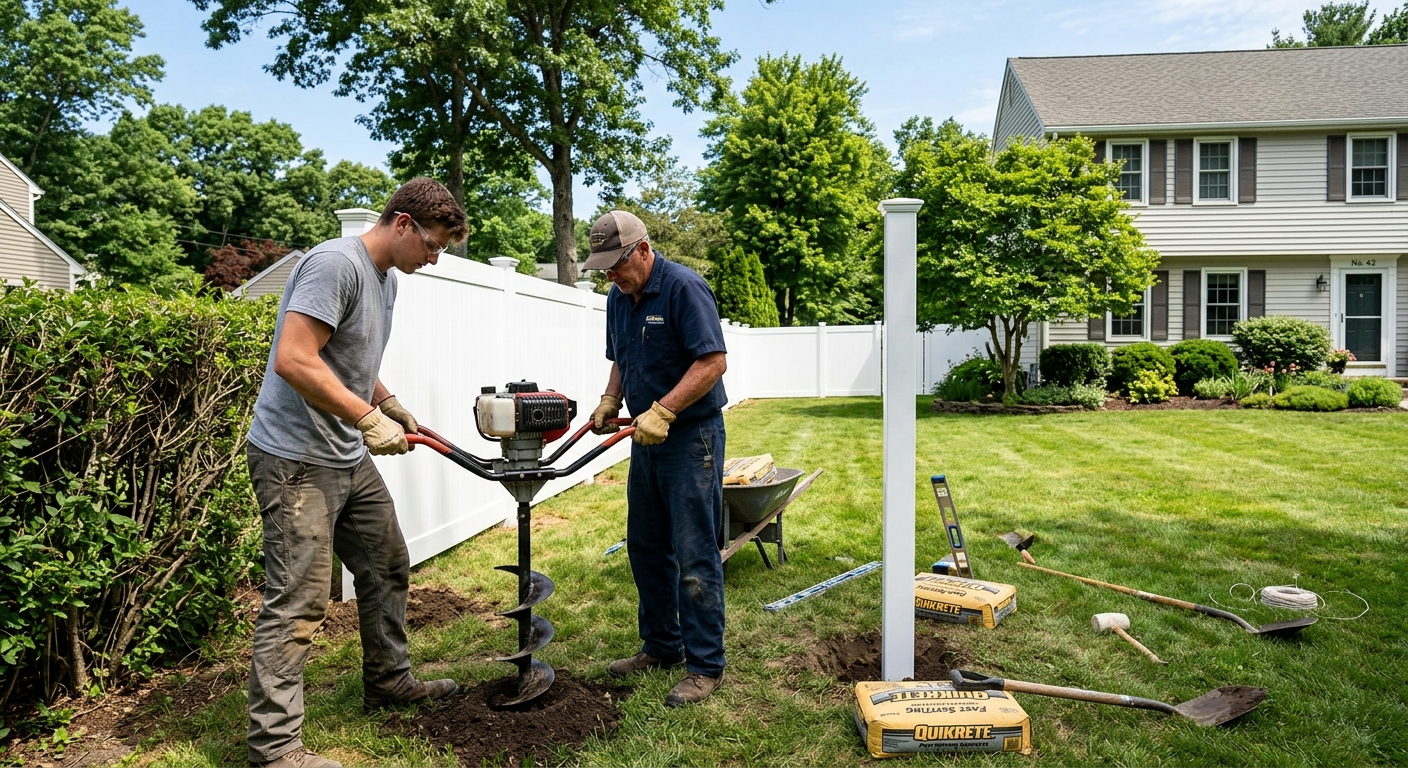
In the Toronto economic region, pricing is shaped by frost depth and local installation practice. Contractors generally set post holes deeper than many people expect—commonly minimum 3.5–4 feet—to reduce frost heave, particularly for 6–8 ft privacy fences. That means more excavation, more concrete-set posts, and longer material lead times on heavier panel systems. Wind is not as punishing as the Prairies, but we still account for racking on tall solid fences, so post size and spacing matter.
Demand is especially strong around the more residential streets near the York/Richmond Hill corridor and other established areas with mature trees and backyard renovations, where homeowners often upgrade from chain-link to wood or vinyl for privacy. If you’re comparing materials, use the table below to understand typical lifespan, upkeep, and installed cost per linear foot for Steeles.
| Material |
Lifespan |
Maintenance |
Privacy Rating |
Price per Linear Foot |
| Pressure-treated pine (standard wood) |
10–15 years |
Stain/seal every 2–3 years to slow grey weathering |
8/10 (solid panels); 6/10 (semi-open) |
$65 – $120 |
| Cedar (natural rot resistance) |
15–25 years |
Light sealing/staining as needed (often every 2–4 years) |
9/10 (solid panels) |
$80 – $130 |
| Vinyl / PVC (no-maintenance) |
25–30 years |
Rinse occasionally; no staining |
9/10 (solid privacy styles) |
$75 – $130 |
| Chain-link (galvanized steel) |
20–35 years |
Occasional wash; tighten hardware as needed |
2–4/10 (privacy needs slats) |
$45 – $85 |
| Aluminum ornamental |
25–40 years |
Low—wash and inspect fasteners |
3–5/10 (decorative pickets) |
$90 – $160 |
| Composite / recycled material |
20–30 years |
Minimal cleaning; avoid harsh impacts |
8–9/10 (privacy styles) |
$110 – $180 |
Prices are estimates only and vary by project scope, site access and material selection.
What affects the price of fencing in Steeles
In Steeles and the broader Toronto area, quotes for the “same” fence can swing by 30–50% because the install is rarely identical. A longer run, different post spacing, heavier gates, and how the contractor handles frost depth and soil conditions can all change labour time and material quantities. Even when the height and material look the same, an installer who sets posts for long-term stability will typically spend more time excavating and concrete-setting—costing more up front, but usually reducing early settlement and leaning.
In Southern Ontario, frost line depth is commonly estimated around 42"–48". In practice, most crews plan post holes about 4–6 inches below that design frost depth—so posts often land roughly 1.5–2.0 m deep in colder winters. That increases the length of posts, the amount of ready-mix/concrete, and the excavation size. It also influences the best hardware choices for tall fences. For 6–8 ft privacy fences, Toronto wind loading still matters, especially on solid panels: you’ll usually see tighter post spacing (commonly 6–8 ft centres) and heavier framing to reduce racking and uplift.
Concrete examples we see in Steeles: (1) A yard with clay-mixed soil often needs more concrete-set holes rather than a gravel pack, raising costs into the vinyl/wood bands such as $75–$130/linear foot for many installs. (2) If you’re replacing an older fence with difficult access along a narrow side yard, excavation and hauling can push wood projects toward the higher end (for example $65–$120), even before materials upgrades. (3) If you need a drive-through double gate, the extra reinforcement and hardware can move a project toward the metal range.
All of this is why material selection alone doesn’t explain the number—foundation method, soil, access, and gates do.
| Price Factor |
Why It Matters |
Cost Impact |
| Fence length in linear feet |
Every added foot increases posts, rails, and hardware |
Typically the largest portion of total cost |
| Post depth required |
Frost line determines hole depth and post length to prevent heaving |
Deeper holes increase labour and material |
| Post setting method |
Concrete-set posts resist movement better than simple driven posts |
Concrete setting usually adds cost, but improves stability |
| Material choice |
Vinyl/cedar can cost more than pressure-treated wood; chain-link uses cheaper panels |
Often shifts the project between typical bands (e.g., wood vs vinyl) |
| Gate count and type |
Drive-through double gates require stronger frames and more hardware |
Gates commonly add noticeable premium over standard runs |
| Grade and terrain |
Sloped yards require stepped bases or raked panels |
More labour and cutting/extra materials |
| Old fence removal and disposal |
Demolition, hauling, and disposal fees vary with waste load and access |
Can materially increase total project cost |
| Permit fees and survey / property line locate |
Some fence heights require permits; locating pins prevents boundary disputes |
Variable add-on depending on your specific layout |
Permits & regulations in Ontario
In Ontario, permits can apply when you plan a fence above common height thresholds. Typically, fences taller than about 2.0 m (6.5 ft) at the rear and 1.0–1.2 m (3–4 ft) at the front or corners may require a building permit. Separately, your fence must respect property lines and municipal setback bylaws, which can vary by street and lot configuration. Because Steeles projects often involve mature landscaping, it’s also common to need careful layout around trees and existing hardscape.
Before you dig any post holes, call utility locates through Ontario One Call to mark buried lines. Then plan your boundary confirmation: get a survey or property-line locate so you can install on the correct footprint and avoid encroachment disputes. In addition, shared fence ownership and responsibilities are handled through Ontario line-fences principles—so if your fence is truly on a boundary, you should confirm who pays for what before work begins.
Contractor verification matters: ask for their Ontario business/licence details where applicable and ensure you receive proof of liability insurance and WSIB coverage (or the appropriate coverage your contractor is required to carry). For certificates, look for the policy holder name, active dates, and coverage limits on the certificate of insurance. If you’re hiring a subcontractor, request their coverage clearance as well so your project isn’t delayed by missing documentation.
Choosing the right fence material for Steeles
Choosing the right fence material in Steeles comes down to matching your priorities—privacy, low maintenance, and lifespan—to the realities of Toronto’s freeze-thaw cycle. Pressure-treated pine is usually the lowest upfront option, but it needs staining/sealing every 2–3 years to limit grey weathering and protect against surface moisture. Cedar looks better longer and has natural rot resistance, yet it still benefits from periodic maintenance to keep its appearance and slow deterioration. Vinyl/PVC is popular for low upkeep: it doesn’t need staining, but in extreme cold it can become brittle if the system is poorly installed or if the fence is flexed by improper post spacing.
Chain-link is the longest-lived budget choice, often 20–35 years, but it won’t deliver real privacy unless you add slats or plant screen solutions. Aluminum ornamental fencing is rust-resistant and generally stable through wet winters, but it’s decorative rather than private.
Because Toronto commonly expects post holes around the frost line depth (with many contractors setting 3.5–4 feet deep for heavier privacy fences), concrete-set posts are often recommended for 6–8 ft installs. That foundation work is what keeps heavier rails and privacy panels from shifting. Wind and snow load aren’t as severe as more exposed regions, but tall solid fences still need proper framing and correct post size to avoid racking.
A practical example: if you’re deciding between standard wood and vinyl, a vinyl privacy system can land in the $75–$130/linear foot band where wood may fall into $65–$120/linear foot. The difference is often justified when you want to avoid maintenance on a busy schedule, and when your installation includes concrete-set posts that protect the whole structure long-term.
| Material |
Cold Tolerance |
Lifespan |
Annual Maintenance |
Best For |
Price Band |
| Pressure-treated pine |
Good when posts are concrete-set and wood is sealed |
10–15 years |
1–2 light checks; stain/seal every 2–3 years |
Lower upfront cost with solid privacy panels |
$65 – $120 |
| Cedar |
Good in freeze-thaw with proper panel elevation and sealing |
15–25 years |
1–2 checks; seal/stain every 2–4 years |
Premium look and better rot resistance |
$80 – $130 |
| Vinyl / PVC |
Good when properly braced and installed for Ontario cold |
25–30 years |
Minimal—wash and inspect fasteners |
Low maintenance privacy and clean lines |
$75 – $130 |
| Chain-link |
Very good in cold; galvanized components resist winter corrosion |
20–35 years |
Occasional wash and tightening |
Security with airflow and minimal cost |
$45 – $85 |
| Aluminum ornamental |
Good; corrosion-resistant with proper base installation |
25–40 years |
Minimal—wash and inspect |
Decorative perimeter with long-term stability |
$90 – $160 |
| Composite / recycled |
Good; resists rot and moisture cycling when installed correctly |
20–30 years |
Low—cleaning and spot checks |
Privacy with reduced rot risk |
$110 – $180 |
How to choose a fencing contractor in Steeles
Choosing the right contractor in Steeles starts with documentation. Confirm Ontario business details (where applicable) and ask for proof of liability insurance before work begins; the certificate of insurance should show your contractor as the insured, include active dates, and list coverage limits. For worker coverage, request WSIB coverage confirmation. If subcontractors are involved, insist that your contractor provides clearance or evidence that their team is properly covered—this avoids delays and protects you if an injury occurs on-site.
Next, get 2–3 itemised written quotes. You want line-by-line pricing for labour and materials, not just a lump sum. Make sure the quote spells out: post depth strategy, whether posts are concrete-set, hardware type, fence height, rail count, gate count, and how slopes are handled (stepped vs raked). Clarify exclusions: is permit work included if required, is old fence removal included, and what’s the disposal/hauling plan? A good quote states start date, completion estimate, and an installation schedule.
Warranty is another big differentiator. Ask for (1) workmanship warranty length, (2) product/manufacturer warranty details, and (3) whether the warranty is transferable to future owners—common for privacy fence systems in stable Toronto neighbourhoods. Payment schedule matters too: never pay more than 10–15% upfront. Use a holdback until the job is complete and inspected, with final payment tied to cleanup and handover of warranty documentation.
- Verify WSIB coverage and request proof before signing.
- Confirm liability insurance is current and ask for the certificate.
- Check the quote includes post depth and setting method (concrete-set vs gravel vs driven).
- Request an itemised labour/material breakdown (not a single total).
- Confirm fence height measured from finished grade and how slopes are handled.
- Ensure gate hardware is specified (hinges, latch type, reinforcement).
- Ask whether permit pulls are included when thresholds are exceeded.
- Clarify old fence removal, stump/gravel cleanup, and disposal fees.
- Confirm property-line approach: survey/locate assumptions should be documented.
- Ask for a workmanship warranty in writing (length and scope).
- Avoid paying more than 10–15% upfront; hold back until punch-list complete.
- Get a written timeline with start and completion dates.
In Steeles, the most common red flags are: quotes that don’t specify post depth or concrete-setting; using driven posts on a 6–8 ft privacy fence without discussing frost heave; missing or expired insurance/WSIB documentation; vague “permit by customer” language when your design may trigger a permit; and contracts that don’t define warranty terms or exclude disposal/removal without clear pricing.
Frequently asked questions — fencing in Steeles
How do I prevent wood fence rot in Steeles?
To prevent wood rot in Steeles (and across Ontario’s freeze-thaw winters), focus on moisture control and installation quality. The biggest driver is how posts are set: for privacy-height fences, use concrete-set posts set below the frost-affected zone so the fence doesn’t rack and leave gaps that trap water. Keep wood panels offstanding ground moisture where possible, and ensure good panel drainage (no ponding at the base). Pressure-treated pine should be stained/sealed every 2–3 years to limit grey weathering and surface moisture uptake. Cedar resists rot better, but it still needs maintenance to protect exposed surfaces. Finally, use proper fasteners and spacing—tight contact points can accelerate localized moisture retention.
What is the cost per linear foot for fencing in Steeles?
In Steeles, fencing typically prices within established local bands that depend on material and install complexity. As a rule of thumb, pressure-treated wood is commonly in the $65–$120 per linear foot range, while vinyl/PVC privacy systems tend to land around $75–$130 per linear foot. Chain-link often comes in lower at $45–$85 per linear foot, and aluminum ornamental usually sits higher at $90–$160 per linear foot. Your final figure can move within the band based on post depth, concrete-setting, gate count, and whether old fence removal and disposal are included. If you need concrete-set posts for a tall privacy fence, that foundation work is a major reason pricing doesn’t always match the lowest “material-only” expectations.
Should I repair or replace my old fence in Steeles?
In Steeles, you’ll usually repair when the damage is limited to a few rails or pickets and the posts are still solid—no leaning, no significant wobble, and no widespread rot at the bases. Replacement is smarter when posts have shifted from frost heave, when rot is present along multiple boards, or when hardware is failing across many sections (hinges, connectors, and fasteners). Tall privacy fences often suffer when post spacing or setting depth was inadequate in the past; once the fence starts moving, repairs tend to chase the problem. A practical approach is to ask for an on-site assessment that checks post stability, rail fastening, and the bottom edge of panels. If you’re looking at replacing anyway, upgrading to proper concrete-set posts for long-term stability can reduce repeated repairs.
How do I handle a fence dispute with a neighbour in Ontario?
If there’s a dispute in Steeles or elsewhere in Ontario, start with facts and a respectful paper trail. Confirm the intended fence location against property lines using your survey/locate (or commission a locate if you don’t have one). If the fence is on or near a boundary, Ontario line-fences principles often govern shared responsibilities, which is why it’s important to understand whether your fence is truly a shared boundary fence. Document everything: photos, measurements, and any previous agreements. Communicate in writing and propose a joint inspection or shared solution when appropriate. If you can’t resolve it directly, speak with the right professional for boundary clarification; avoid moving or demolishing portions until you’re sure about the property line to prevent escalation.
What fence style offers the best wind resistance in Steeles?
For wind resistance in Steeles, the “best” style depends on whether you prioritize solid privacy or controlled airflow. Solid fences can catch wind, so they need heavier framing and properly sized posts with correct spacing. In practice, taller privacy fences perform better when the structure uses adequate post sizes, tighter post centres (commonly 6–8 ft), and correct concrete-set footings to resist uplift and racking. If your area experiences stronger gusts due to lot shape (open corners, wider backyards, or setbacks), consider options with some airflow—like semi-privacy boards or selective panel designs—or ensure your contractor braces and reinforces the rails correctly. Well-installed chain-link with proper tension can also resist wind movement but won’t provide the same privacy.
How much does a fence cost in Steeles?
Total fencing cost in Steeles depends on length, height, material, gate count, and how much groundwork is required. For typical budgeting, many homeowners see project pricing fall within the same per-linear-foot bands: wood around $65–$120/linear foot, vinyl/PVC around $75–$130/linear foot, chain-link around $45–$85/linear foot, and aluminum ornamental around $90–$160/linear foot. Your final total can increase when concrete-set posts are required for frost stability (common for privacy-height fences), when you need drive-through double gates, or when the contractor must remove an old fence and haul/dispose of debris. If you share your approximate linear footage and whether you want privacy or security, contractors can estimate a realistic total rather than guessing based on material price alone.