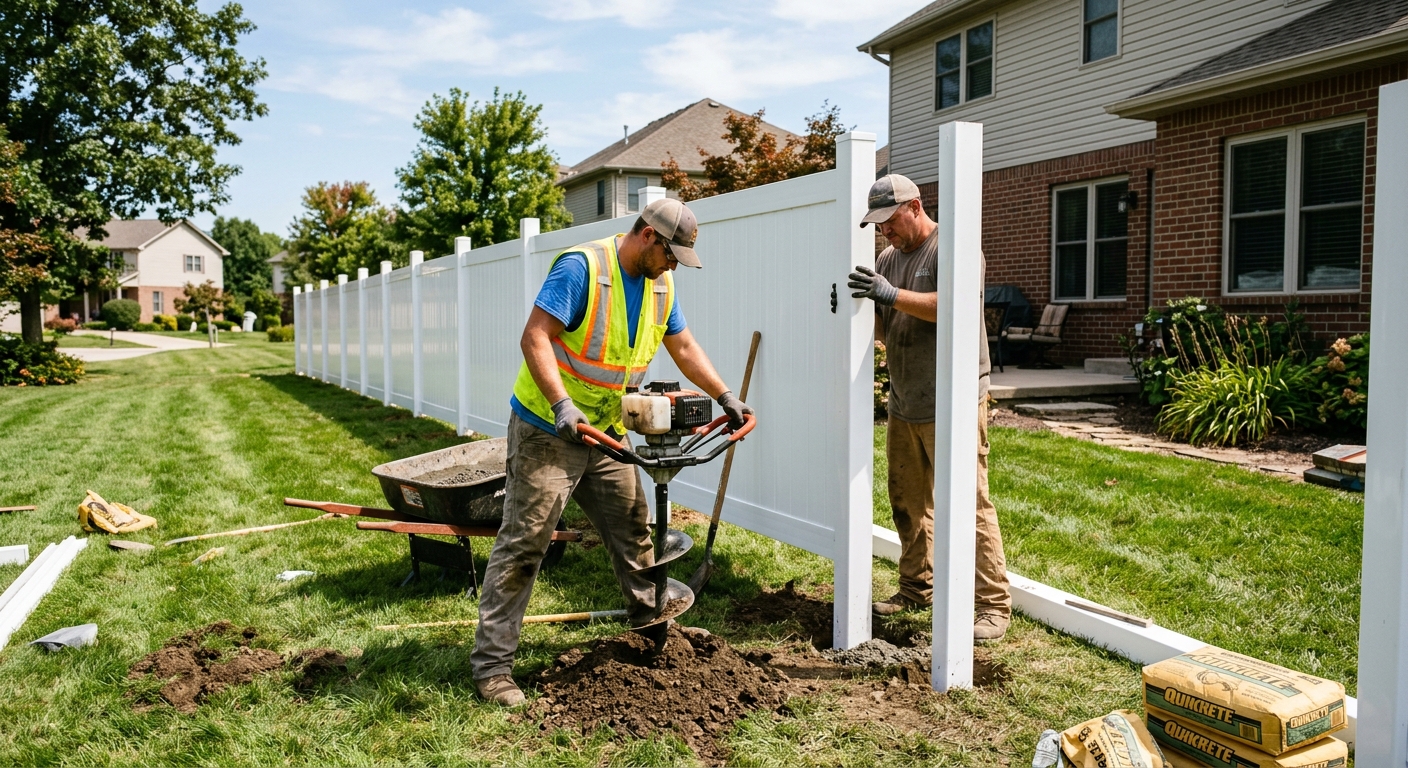
Fencing options and costs in Victoria Hills
Victoria Hills is a growing residential community, and with a 2021 population of 10,533 (Statistics Canada, 2021 Census), there’s steady demand for new fencing and fence replacement as homeowners upgrade privacy and curb appeal. In a neighbourhood where many households are in long-term family homes and renovations, a fence isn’t just “perimeter”; it’s part of day-to-day comfort—especially for backyards used year-round. In Toronto’s broader housing market, detached and semi-detached properties tend to drive the highest replacement activity, because they more often need longer runs, gates, and perimeter detailing as gardens mature and boundaries get re-established.
In the Toronto economic region, fencing costs are shaped by Southern Ontario freeze-thaw cycles. Local best practice assumes the frost line is commonly taken around 42"–48", which means posts typically need to be set at least 3.5–4 feet deep to reduce frost heave—particularly for 6–8 ft privacy fences. That depth, plus clay/mixed soils common in the GTA, is why most contractors recommend concrete-set posts over driven-only solutions. Labour availability also matters: when crews are busy, scheduling can affect install timelines, and access limitations (driveways, fences to be removed, and narrow side yards) can add hours and hauling costs.
In Victoria Hills, demand is especially strong around established residential pockets where mature landscaping and tree lines mean contractors must plan around roots and elevations. With those realities in mind, the table below compares common materials and typical installed pricing you’ll see in this area.
| Material |
Lifespan |
Maintenance |
Privacy Rating |
Price per Linear Foot |
| Pressure-treated pine (standard wood) |
10–15 years |
Stain/seal every 2–3 years |
High (solid boards) |
$65 – $120 |
| Cedar (natural rot resistance) |
15–20 years |
Light staining every 2–4 years |
High (solid boards) |
$75 – $130 |
| Vinyl / PVC (no-maintenance) |
20–30 years |
Occasional wash only |
High (solid privacy styles) |
$75 – $130 |
| Chain-link (galvanized steel) |
20–30 years |
Occasional rinse; repair bent sections |
Low (unless topped/closed mesh) |
$45 – $85 |
| Aluminum ornamental |
25–40 years |
Minimal cleaning |
Medium (ornamental pickets) |
$90 – $160 |
| Composite / recycled material |
20–30 years |
Low; wash as needed |
High (board-style products) |
$75 – $130 |
Prices are estimates only and vary by project scope, site access and material selection.
What affects the price of fencing in Victoria Hills
Even when two homeowners request the “same” fence in Victoria Hills or nearby GTA areas, quotes can diverge by 30–50% because the real drivers are rarely the fence boards alone. Contractors price the full installation system: excavation depth, post-and-footing method, gate hardware, wind-rated spacing, and how much extra labour is needed for demolition and debris removal. In the Toronto economic region, crews also account for the local pace of work—so the same material can look different on a budget line versus a schedule-completed install.
Frost protection is a major reason posts cost more here. In cold Ontario, contractors commonly set posts about 4–6 inches below the design frost depth to help prevent heaving during freeze-thaw cycles. Practically, that often means posts are set roughly 1.5–2.0 m into the ground for tall privacy fences, with concrete footings and longer posts—raising both labour and ready-mix costs. Wind and racking still matter even without Prairie-level exposure, so privacy panels may need tighter post spacing and larger framework. By comparison, simple chain-link runs can be cheaper because they rely on lighter frameworks and typically less intensive post setting.
Concrete examples from this market: (1) a 60 ft wood privacy line often lands near the wood backbone band of $65 – $120 per linear foot when posts are concrete-set and the fence is solid; (2) switching to a vinyl privacy panel may increase material cost into the $75 – $130 band, but the reduced future maintenance can make the difference feel smaller over time. A slope can also change the scope—stepped construction usually adds labour compared with a flat grade. And if your old fence is leaning and needs full removal, hauling and disposal can push the total noticeably upward.
| Price Factor |
Why It Matters |
Cost Impact |
| Fence length in linear feet |
Determines number of posts, rails, panels, and total hardware |
Largest driver; scales directly with total material and labour |
| Post depth required |
Frost line sets hole depth and post length to prevent heaving |
Concrete and excavation time add significant cost |
| Post setting method |
Concrete vs. gravel pack vs. driven posts affects stability |
Concrete-set usually increases upfront cost but improves longevity |
| Material choice |
Different panel weights, framing requirements, and corrosion resistance |
Vinyl/wood typically cost more than chain-link; metal can be higher |
| Gate count and type |
Gates require heavier frames, hinges, latches, and often bracing |
Each additional gate can meaningfully raise total installation cost |
| Grade and terrain |
Slope requires stepping/racking and additional layout time |
More labour and more waste material at cuts |
| Old fence removal and disposal |
Demolition, safe handling, and hauling add project time |
Can add several hours and disposal fees depending on quantity |
| Permit fees and survey / property line locate |
Some fence heights and locations require extra verification steps |
Small-to-moderate added expense; can prevent costly rework |
Permits & regulations in Ontario
In Ontario, fencing requirements depend on height, location, and local setback rules. As a general rule of thumb in many municipalities, fences above a height threshold—commonly around 2.0 m (about 6.5 ft) at the rear and about 1.0–1.2 m (roughly 3–4 ft) near the front or corner—often trigger a building permit requirement. You’ll also need to respect property lines and any municipal setback bylaws, especially for corners and through-lot sightline areas where visibility matters.
Before digging any post hole, call for utility locates through Ontario One Call (the same process as “locates before you dig” requirements). This protects you and your contractor from hitting buried services. For boundary accuracy, obtain a survey or at least confirm property pins/markers with a professional locate—because even a small encroachment can turn a “simple fence” into a dispute with neighbours. Shared fence responsibilities are governed by Ontario’s line-fences legislation and local neighbour arrangements; when a fence is truly shared, maintenance obligations are commonly expected between parties, but the exact split can depend on circumstances and how the fence was established.
To verify your contractor in Victoria Hills: confirm they carry liability insurance and WSIB coverage for workers (or applicable WCB coverage), and request clearance information directly. Also ask for proof of their Ontario business registration and any applicable contractor licensing/permit-handling experience before work starts. A good contractor can also tell you—upfront—whether your specific fence height and placement likely require a permit, rather than discovering it mid-install.
Choosing the right fence material for Victoria Hills
Choosing the right fencing material in Victoria Hills comes down to your priorities: privacy, low maintenance, budget predictability, and lifespan in Ontario weather. Pressure-treated pine is typically the budget option, but it needs staining or sealing every 2–3 years to prevent grey weathering and moisture-driven wear. Cedar looks better and naturally resists rot, yet it still benefits from maintenance to keep its colour and reduce surface cracking over time.
Vinyl/PVC is the most “set-and-forget” option—great for homeowners who want minimal upkeep—but extreme cold can make panels more sensitive to improper post spacing or mounting methods, so the install must be planned correctly for Toronto’s freeze-thaw. Chain-link is usually the most affordable and long-lasting choice, but it offers limited privacy unless you add a screen element (which changes both cost and look). Aluminum ornamental fencing has a mid-range to higher upfront cost, resists rust, and performs well in our winters, but it’s not a true privacy fence.
Because Toronto commonly uses a frost line estimate around 42"–48", concrete-set posts are often recommended for taller fences so they don’t heave during winter. That means whichever material you pick, the post system matters as much as the boards—especially for 6–8 ft privacy fences with heavier panels. In snowier seasons, clearances at the bottom also affect how the fence sheds wind-driven snow and how quickly ice build-up occurs near gates.
A practical example: if you budget around the wood backbone of $65 – $120 per linear foot, you might accept periodic staining; if privacy and convenience are the priority, vinyl is commonly priced into the $75 – $130 band, and the higher upfront cost can be justified by skipping yearly or biennial staining work.
| Material |
Cold Tolerance |
Lifespan |
Annual Maintenance |
Best For |
Price Band |
| Pressure-treated pine |
Good with proper staining; can grey and cup if neglected |
10–15 years |
Inspect and plan for staining every 2–3 years (not yearly) |
Budget-focused privacy with willingness to maintain |
$65 – $120 |
| Cedar |
Good; more resilient to rot and moisture cycling |
15–20 years |
Light cleaning; stain every 2–4 years |
Premium look with moderate maintenance |
$75 – $130 |
| Vinyl / PVC |
Good when installed with correct spacing and mounting |
20–30 years |
Wash as needed (often 1–2 times per season) |
Low maintenance and consistent appearance |
$75 – $130 |
| Chain-link |
Excellent; galvanized coating handles winter well |
20–30 years |
Rinse; tighten hardware and replace damaged links |
Security/containment with maximum longevity |
$45 – $85 |
| Aluminum ornamental |
Excellent; no rust |
25–40 years |
Minimal cleaning; check for loose fittings |
Front-yard curb appeal with light visibility |
$90 – $160 |
| Composite / recycled |
Good; stable boards when installed correctly |
20–30 years |
Low; wash as needed |
Eco-leaning homeowners seeking low maintenance privacy |
$75 – $130 |
How to choose a fencing contractor in Victoria Hills
Start by verifying Ontario coverage and credentials before signing. Ask for their Ontario business information and confirm the company can provide a current certificate of insurance showing general liability (and include the right insured details if you need it). For worker coverage, request proof of WSIB/WCB coverage for anyone working on your site; a contractor should be able to provide documentation showing accounts are active or provide a clearance/coverage letter where applicable. You’re looking for current, not outdated, paperwork—especially for crews that pour concrete, operate equipment, or do demolition.
Next, get 2–3 written, itemised quotes that break out labour and materials rather than a single lump sum. A proper estimate should show post material and length, post-setting method (concrete-set versus gravel pack versus other), rails, pickets/panels, gate hardware, and whether disposal is included. Pay attention to exclusions: will they locate utilities, handle permit paperwork, or remove and haul the old fence? Warranty clarity matters too—confirm the workmanship warranty length, the product/manufacturer warranty period, and whether warranties are transferable if you sell the home.
For payment schedule, don’t overpay. Aim to keep upfront deposits around 10–15% and use a holdback until completion and final walk-through. Ask for a start date and a completion estimate in writing, because weather, frost conditions, and crew scheduling all affect timelines in Ontario.
- Request proof of liability insurance and ensure it’s valid for your project dates.
- Verify WSIB/WCB coverage for workers (request documentation, not verbal confirmation).
- Get licence/permit responsibility clearly stated in the contract (who pulls permits if required).
- Ask how they handle utility locates before digging post holes.
- Require post-setting method details (concrete-set for frost resistance on privacy runs).
- Insist on itemised breakdown: posts, rails, panels/pickets, hardware, labour, and disposal.
- Confirm gate framing/bracing specs and latch/hinge hardware quality.
- Review grade approach for sloped yards (stepped vs. raked) and how that affects the billable length.
- Check if they include layout, string-line measurements, and property line verification steps.
- Clarify warranty terms: workmanship coverage duration and product warranty details.
- Set a payment schedule capped at 10–15% upfront, with a holdback until final acceptance.
- Get start/completion dates in writing, including weather contingencies.
Concrete red flags we see in Victoria Hills: vague “we’ll handle it” insurance claims without certificates, quotes that omit post depth and concrete setting method, lump-sum pricing with unclear disposal/haul-away terms, no written warranty details for workmanship, and contractors asking for large deposits (more than 10–15%) before any measurable work begins.
Frequently asked questions — fencing in Victoria Hills
Who owns and maintains a shared fence?
In Victoria Hills and across Ontario, shared fence responsibilities are typically handled under provincial line-fences legislation and local neighbour arrangements. If a fence is truly on or intended to serve as a common boundary, it may be treated as shared, which usually means both property owners have an interest in upkeep and replacement costs. Practically, the “who pays what” depends on whether the fence is jointly agreed, how it was originally built, and what each neighbour expects for maintenance. Before you replace anything, confirm the exact location and whether the boundary is shared—survey pins or a professional locate can prevent costly encroachment disputes. If you’re budgeting, remember that a privacy fence often needs concrete-set posts in this frost-prone region, so shared cost discussions should include the full install system, not just the pickets.
How do I find my property line before fencing?
The safest approach in Ontario is to verify property pins or obtain a survey before digging. In Victoria Hills, even small alignment errors can cause disputes with neighbours, especially where a fence is placed along a boundary for privacy or backyard use. Start by locating your property pins/markers (or checking with your existing survey paperwork). If you’re not confident, hire a professional to locate and mark the property line properly—this gives you a clear construction reference for posts and gate positions. Before any post holes are dug, ensure utility locates are completed (Ontario One Call) so there are no surprises with buried services. When you compare quotes, ask how the contractor handles layout and whether they require written confirmation of the line locate before installation. That step is one of the most important “quality controls” because it prevents rework that can erase any savings.
What's the most low-maintenance fence?
In Ontario’s freeze-thaw climate, vinyl/PVC and aluminum are often the lowest-maintenance options for homeowners in Victoria Hills. Vinyl privacy styles are popular because they typically need only periodic washing, and they don’t rot or rust like wood can. Aluminum ornamental also requires minimal upkeep beyond occasional cleaning and a quick check of fittings. If you’re comparing pricing, vinyl privacy installations in this Toronto market often fall into the $75 – $130 per linear foot backbone, while wood privacy may start in the $65 – $120 band but usually requires staining/sealing every 2–3 years. Chain-link can be low-maintenance and very durable, but it won’t give privacy on its own. For truly low maintenance, the key is not just the material—it’s also proper post setting and spacing so the fence doesn’t rack over winter.
How tall can my fence be in Victoria Hills?
Fence height limits in Ontario depend on where the fence is located (front corner/yard vs. rear yard) and local municipal rules. As a general guideline commonly used in Ontario, fences above about 2.0 m (around 6.5 ft) at the rear and about 1.0–1.2 m (roughly 3–4 ft) near the front or corner often require a building permit. In Victoria Hills, you should treat corner visibility areas carefully, because sightline rules can restrict height even when the backyard would otherwise allow it. The correct path is to confirm your lot’s location and the planned height with your contractor and/or through municipal permit requirements before installation. When you request a quote, ask whether permit pulling is included, and what documentation you’ll need. This helps avoid a situation where you’ve already built the fence to the wrong height and must adjust it at added cost.
Should fence posts be set in concrete here?
For many fencing projects in Victoria Hills, yes—especially for 6–8 ft privacy fences. Toronto-area best practice is influenced by Southern Ontario frost depth, commonly estimated around 42"–48", which means posts are typically set about 4–6 inches below the design frost depth to reduce heaving risk. That often puts post setting closer to 1.5–2.0 m into the ground. Because of that, concrete-set posts are usually recommended for long-term stability on privacy fences where heavier panels create more leverage against the post. Concrete increases material and labour costs, but it prevents the common winter problem of leaning or lifted sections. If you’re comparing quotes, insist they specify post depth and post setting method—not just board type. A chain-link run may sometimes use simpler methods depending on soil and layout, but for privacy the safer long-term choice is usually concrete-set posts.
What's the best fence for privacy?
The best privacy fence for Victoria Hills is typically a solid board system—wood (pressure-treated pine or cedar) or vinyl/PVC privacy styles—built with enough post strength and correct spacing for Ontario wind and freeze-thaw. For most homeowners, the “best” choice balances solid coverage with a stable installation system: concrete-set posts for frost protection and proper framework to reduce racking. Wood privacy provides a classic look, but pressure-treated pine usually needs staining/sealing every 2–3 years to keep it performing. Cedar resists rot better and offers an improved appearance, with maintenance still recommended every few years. Vinyl privacy is a strong choice when low upkeep is a priority; it often lands in the $75 – $130 per linear foot backbone, whereas wood privacy frequently starts in the $65 – $120 band. If you tell your contractor your privacy goal (full coverage vs. partial, gate frequency, and yard grade), they can recommend the most cost-effective layout for your specific situation.