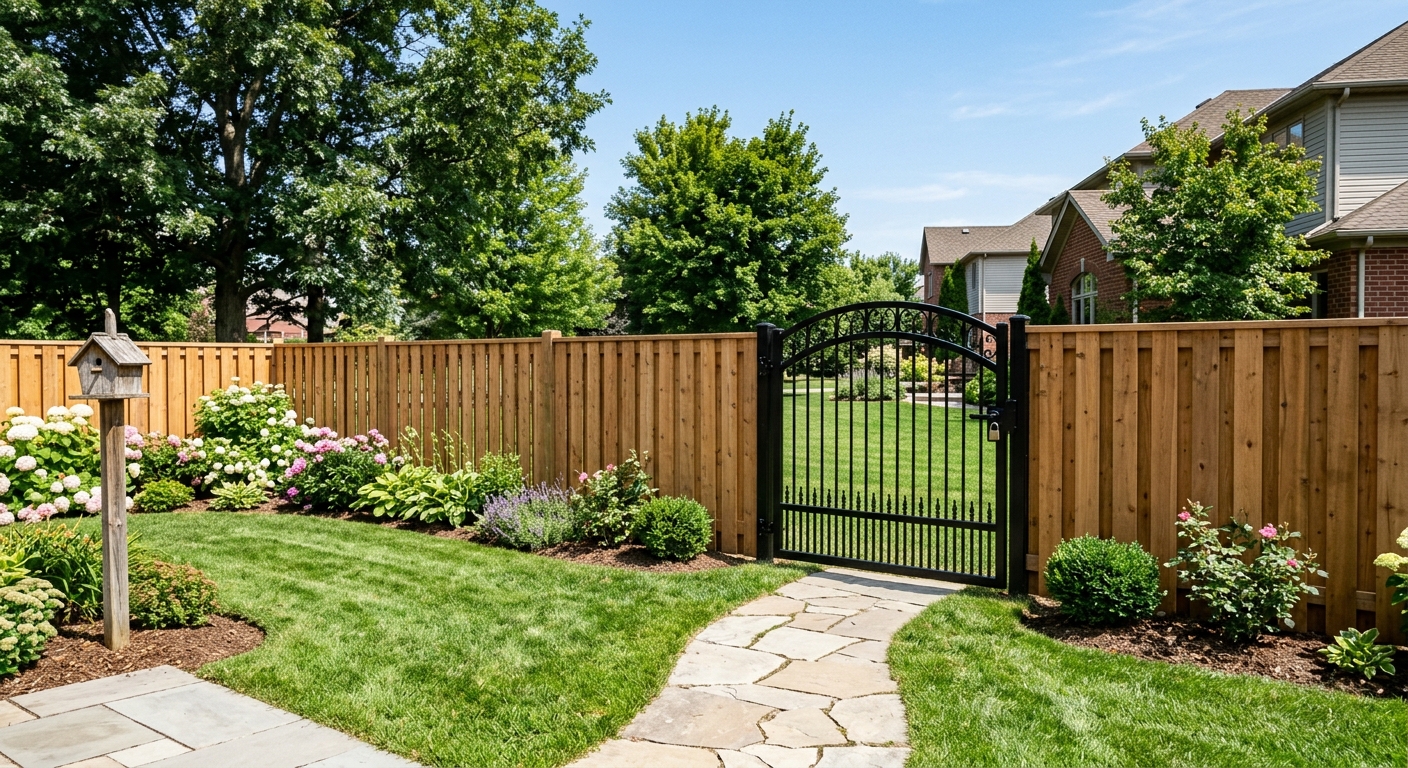
Fencing options and costs in Kincardine
Kincardine homeowners typically shop for fencing based on privacy, curb appeal, and how long the fence will look good through the lake-season freeze-thaw cycle. With 80.2% of local dwellings being single-detached homes, each detached property is a likely candidate for a backyard privacy upgrade or front-yard boundary refresh. That demand is also supported by a high share of homeowner households (79.9% of households own), so many projects are replacements rather than first-time builds.
In the Stratford–Bruce Peninsula region, Kincardine quotes can swing noticeably because the frost line is a primary cost driver: posts must be set below the winter frost zone to prevent heaving in clay and mixed soils common around Perth, Grey, and Bruce counties. In practice, residential installations often set posts about 0.9–1.2 m (3–4 ft) deep with concrete footings, which increases both labour time and materials. Wind exposure matters too—open fields and Lake Huron shoreline lots can create “sail” effects with solid privacy boards, so contractors may tighten post spacing and use sturdier hardware.
Trade activity tends to be especially strong in and around the downtown core and family neighbourhoods along the harbour and residential edges where yards are narrower and gates are more common. With these realities in mind, here’s how the main material options typically compare on lifespan, upkeep, and installed pricing per linear foot.
| Material |
Lifespan |
Maintenance |
Privacy Rating |
Price per Linear Foot |
| Pressure-treated pine (standard wood) |
10–15 years |
Stain/seal every 2–3 years; periodic hardware checks |
Medium to high (good with solid boards) |
$55 – $85 |
| Cedar (natural rot resistance) |
15–25 years |
Annual inspection; stain or oil every 2–3 years |
High (excellent with close board spacing) |
$65 – $95 |
| Vinyl / PVC (no-maintenance) |
25+ years |
Rinse wash; replace any cracked boards after extreme impacts |
High (solid privacy styles) |
$75 – $115 |
| Chain-link (galvanized steel) |
20–30 years |
Occasional tension checks; minimal cleaning |
Low (security only) |
$35 – $55 |
| Aluminum ornamental |
20–30 years |
No rust; wash annually; tighten hardware as needed |
Low to medium (decorative pickets) |
$90 – $150 |
| Composite / recycled material |
20–30 years |
Minimal wash; address local impact damage as it occurs |
Medium to high (panel style options) |
$85 – $135 |
Prices are estimates only and vary by project scope, site access and material selection.
What affects the price of fencing in Kincardine
Even when you’re comparing the “same fence” across Stratford–Bruce Peninsula and other parts of Ontario, it’s common to see quote differences of 30–50%. The biggest reason isn’t the material alone—it’s how the site forces contractors to build for Kincardine’s winters. Posts must be installed below the frost line so they don’t heave in freeze-thaw cycles. In southern Ontario, that typically means setting posts about 4–6 inches (10–15 cm) below the design frost depth, and many residential installs land around 1.5–2.0 m into the ground depending on soil and design. That extra excavation time, deeper post length, and concrete use can push costs higher than you’d expect from a “short fence” estimate.
Wind exposure also changes labour and hardware. While Alberta-style prairie winds aren’t the same here, open farm fields and Lake Huron shoreline areas can still create higher lateral loads. For privacy wood or vinyl, contractors often tighten post spacing and use heavier rails or upgraded brackets—so the fence acts like a sturdier structure instead of a sail.
Here are a few concrete examples that regularly move price up or down in Kincardine:
- A long run with three line gates typically adds more posts, hinges, and bracing, which is why a “simple” wood run can drift from the $55–$85 band toward the upper end once hardware and concrete-set posts are included.
- Clay-heavy ground on a waterfront or slope-edge lot may require more careful digging and extra concrete to stabilize posts, increasing labour versus a sandy, easier-to-dig yard.
- If you choose vinyl / PVC, the material can sit in the $75–$115 band, but the deeper frost-based post setting still applies—so you don’t “escape” the excavation cost.
Finally, older housing stock matters: with 60.7% of homes built before 1981, many properties have older boundary lines, buried debris, and uneven ground that can slow post-hole work and increase removal/disposal scope, turning a straightforward install into a more labour-intensive one.
| Price Factor |
Why It Matters |
Cost Impact |
| Fence length in linear feet |
More sections means more posts, rails, and fasteners. |
Largest overall driver; strongly affects total project cost. |
| Post depth required |
Frost line determines post length and hole depth to prevent heaving. |
Deeper holes increase excavation, concrete, and materials. |
| Post setting method |
Concrete-set posts resist movement better than shallow/gravel methods. |
Concrete increases both material and labour time. |
| Material choice |
Vinyl/wood demand different rail systems; chain-link needs tensioning. |
Material premiums can move you from the chain-link band toward higher wood/vinyl ranges. |
| Gate count and type |
Gates need stronger frames, hinges, and sometimes diagonal bracing. |
Walk gates are moderate; double/drive-through gates add cost quickly. |
| Grade and terrain |
Slopes require stepped or raked panels and additional layout time. |
Extra labour and sometimes more material to maintain consistent height. |
| Old fence removal and disposal |
Hauling, debris sorting, and disposal fees add to the scope. |
Can add a noticeable add-on, especially for mixed materials. |
| Permit fees and survey / property line locate |
Location verification prevents encroachment and rework. |
May add small-to-moderate costs but reduces long-term risk. |
Permits & regulations in Ontario
In Ontario, fence rules are tied to municipal by-laws and (for some heights/locations) may trigger a building permit. As a practical rule of thumb, fences above a height threshold—often around 2.0 m (6.5 ft) at the rear and roughly 1.0–1.2 m (3–4 ft) at the front or corner—can require a permit. Regardless of whether a permit is required, you must respect property lines and any municipal setback requirements that apply in Kincardine.
Before any digging, verify buried utilities. Call Ontario One Call for locate services so contractors know where power, gas, communication and other lines run. Homeowners should also obtain a survey or locate property pins before installing to avoid encroaching disputes—especially if you’re replacing an older boundary fence that may have drifted over time.
Shared fence ownership is governed by Ontario line-fence principles: where a fence is shared or used by both properties, costs and maintenance responsibilities typically follow the “use and benefit” relationship and local arrangements.
Licensing checks you can do in minutes:
- Ask for the contractor’s proof of Ontario business registration (and any trade licensing if applicable to their work scope).
- Request a certificate of liability insurance and confirm the coverage amount matches the project size.
- Verify WSIB coverage (or WCB status where applicable) and look for a clearance letter when requested.
- Use the contractor registry/search tools where available, and ensure the certificate includes the correct legal business name.
What “typically” does NOT require a permit: lower fences that fall under local height limits and are staying within existing approved lines. What DOES commonly require a permit: taller fences, corner/edge installations exceeding local thresholds, and any project that changes the approved boundary layout.
Choosing the right fence material for Kincardine
Choosing a fence in Kincardine is really matching material to what matters most to you: privacy, low maintenance, budget, and how the fence handles cold-season stresses. Pressure-treated pine is usually the budget entry point, but it needs staining or sealing roughly every 2–3 years to prevent the grey weathering and to keep boards from drying out. Cedar offers a better natural appearance and rot resistance, but it still benefits from periodic oiling or staining—especially where wind-driven rain hits. Vinyl / PVC is popular for no-fuss ownership because you can typically rinse it instead of sanding and staining, but very cold snaps can cause cracking if impact damage occurs.
Chain-link is the lowest-cost route and often the longest-life option for security, but it offers essentially no privacy for backyards where you want visual screening. Aluminum ornamental sits in the middle-to-higher range and doesn’t rust, but it’s mainly for curb appeal and boundary definition rather than privacy. In exposed or open lots, post design still matters as much as the panel: on the Stratford–Bruce Peninsula side of Ontario, posts are commonly concrete-set for frost protection, with depths often landing around 1.2 m or more depending on soil and layout; a deeper, well-set post foundation is what prevents heaving rather than changing materials alone.
A local “value” example: if you’re choosing between pressure-treated pine and vinyl / PVC for a long privacy run, pine might land around the $55–$85 band while vinyl often sits closer to the $75–$115 range. That extra upfront for vinyl can be justified when you want to avoid repeated staining and you’re planning to stay in the home long enough for wood maintenance to become a recurring task—particularly on properties where yard access makes maintenance visits inconvenient. Snow load and winter wind gusts also favour properly spaced posts and rails for any solid privacy system so panels don’t rack.
| Material |
Cold Tolerance |
Lifespan |
Annual Maintenance |
Best For |
Price Band |
| Pressure-treated pine |
Good (with proper staining/fasteners) |
10–15 years |
Light inspection; stain/seal every 2–3 years |
Budget-conscious privacy with regular upkeep |
$55 – $85 |
| Cedar |
Good (still needs weather protection) |
15–25 years |
Inspect annually; oil/stain every 2–3 years |
Natural look and rot resistance |
$65 – $95 |
| Vinyl / PVC |
Good (manage impact; keep posts well set) |
25+ years |
Rinse/wash as needed; check for cracks after impacts |
Low-maintenance privacy and clean appearance |
$75 – $115 |
| Chain-link |
Excellent (galvanized) |
20–30 years |
Minimal; occasional tension/hardware check |
Security and pet containment |
$35 – $55 |
| Aluminum ornamental |
Excellent (powder-coated) |
20–30 years |
Wash annually; tighten hardware if needed |
Front-yard curb appeal with light boundary definition |
$90 – $150 |
| Composite / recycled |
Good (strong panels; avoids rot) |
20–30 years |
Rinse wash; replace damaged boards if impacts occur |
Privacy panels with reduced upkeep |
$85 – $135 |
How to choose a fencing contractor in Kincardine
When you hire a fencing contractor in Kincardine, verify coverage before you sign. For Ontario projects, ask for proof of liability insurance (certificate of insurance showing the contractor’s legal name and the coverage limits) and confirm WSIB coverage status. If they’re using sub-contractors or crews, the responsibility for worksite safety should still be clearly documented—so request either proof of clearance or the current status documentation as applicable. You can also confirm the business details via online sources where available, and match the certificate names to the contract.
Next, get 2–3 itemised written quotes rather than lump sums. A solid quote breaks costs into labour, posts/footings, rails and hardware, gates, and material line items so you can compare apples-to-apples. Carefully read what’s excluded: old fence removal, disposal, site grading, utility locates, post replacement if ground is unsuitable, and any permit work if it applies. If the fence is at or above local height thresholds, ask whether the quote includes permit pull and documentation.
For warranty, separate workmanship from product warranty. Ask how long the crew’s workmanship warranty lasts (for example, for post setting and alignment) and how the manufacturer warranty applies to boards and rails. Also ask if the warranty is transferable if you sell the home.
Finally, manage payment: never pay more than 10–15% upfront for fencing, and hold back a reasonable portion until the job is complete and cleaned up. Get a start date and completion estimate in writing, including weather considerations for excavation and concrete setting.
- Confirm liability insurance and that the policy covers fencing installation work.
- Confirm WSIB/WCB status (ask for a clearance letter if they provide one).
- Demand an itemised quote (posts, concrete/footings, rails, panels, hardware, gates).
- Verify post depth and setting method in the written scope (especially frost protection).
- Ask who pulls utilities locate and whether Ontario One Call documentation is handled.
- Check whether old fence removal and disposal are included.
- Ensure the quote states gate hardware type and whether double gates include bracing.
- Ask how they handle slopes (stepped vs. raked panels) and whether extra material is included.
- Verify permit pull responsibility where local height rules may require it.
- Confirm warranty terms for workmanship and product, in writing.
- Require the payment schedule (10–15% max upfront) and completion holdback.
- Get start/completion dates, and what happens if frost prevents concrete setting.
In Kincardine, red flags I’d watch for include: vague “material and labour” wording with no post-depth or concrete detail, refusing to provide proof of insurance/coverage, quotes that don’t mention gate hardware specs, asking for large upfront payments, and treating property line locations as “your problem” without discussing locate/survey confirmation.
Frequently asked questions — fencing in Kincardine
Do I need a permit to build a fence in Ontario?
In Ontario, whether you need a permit depends on your fence height, placement and local municipal by-laws. A practical rule many homeowners run into is that taller fences—often around 2.0 m (6.5 ft) in the rear and roughly 1.0–1.2 m (3–4 ft) in the front or at corners—can require a building permit in many Ontario municipalities. Even when a permit isn’t required, you still must follow property line rules and any setbacks.
For Kincardine, the safe approach is to ask your contractor to confirm the applicable height/location requirement before you schedule excavation. Also remember utility locates are essential before digging post holes (Ontario One Call). A reputable fence installer will tell you upfront whether permit pull is included, and they’ll document the scope so you’re not surprised later.
How long does a wood fence last in Kincardine?
Wood life in Kincardine is strongly tied to how posts are set for frost protection and how often the wood is maintained. For pressure-treated pine, many homeowners realistically plan on about 10–15 years when the fence is built with proper post setting and regular staining/sealing. Cedar typically lasts longer—often 15–25 years—because of its natural rot resistance, but it still needs periodic oil or stain to manage weathering.
Cold Ontario winters drive expansion and contraction, so if posts weren’t set deep enough (or without proper concrete setting where needed), you can see leaning or gaps sooner. That’s why pricing differences can be noticeable: the cost isn’t just the boards—it’s the labour and concrete for deep-set posts below the frost line. If you’re budgeting, pressure-treated wood is commonly quoted within the $55–$85 range per linear foot depending on height, rails and gates.
Who owns and maintains a shared fence?
In Ontario, shared fence ownership and maintenance typically follow shared benefit—where a fence serves both properties and the arrangement is understood by both sides. The practical question is whether the fence is a “party fence” on the boundary and how both owners use it (for example, a fence separating two backyards). If it’s truly shared, both parties usually have responsibilities for upkeep, and cost-sharing is commonly worked out based on usage and agreement.
Because older fences sometimes drift or were built after property lines weren’t located precisely, you should confirm the line before deciding who pays for repairs. In Kincardine, I recommend starting with a property pin locate or survey check, then discuss maintenance scope in writing. If you replace a shared fence, document who owns what and what each party is contributing to avoid disputes later.
How do I find my property line before fencing?
The most reliable approach is to locate your property pins (from an existing survey, or by having pins located/confirmed) before you install posts. Many disagreements happen because an older boundary fence was built slightly off-line and then became “accepted” over time. In Kincardine, where a large share of homes are older, it’s especially common to see boundary ambiguity due to outdated or worn-out markers.
For your process: (1) pull your original survey if you have it, (2) ask for pin/marker confirmation before layout, and (3) only then mark the fence line for a contractor to build to. A good fencing contractor will also explain how they plan the layout around the pins and setbacks. Remember that even with proper line work, you still need Ontario One Call utility locates before digging any post holes.
What's the most low-maintenance fence?
For most Kincardine homeowners who want “set it and forget it,” vinyl / PVC is usually the lowest-maintenance choice. Unlike wood, it doesn’t require staining or sealing, and it generally only needs periodic washing. Many vinyl installations are quoted within the $75–$115 per linear foot range depending on height, style (privacy vs. semi-privacy) and gate complexity.
That said, “low maintenance” doesn’t mean “no maintenance.” After storm impacts, you may need to check for cracked boards or displaced hardware. Foundation and post setting still matters because frost heaving can move fence lines regardless of panel material. If you want a very durable, low-maintenance option with security focus, chain-link is also low-effort—often in the $35–$55 range per linear foot—but it won’t give the privacy most homeowners want on lake-season lots.
How tall can my fence be in Kincardine?
Fence height limits are primarily set by municipal by-laws and depend on where the fence is located (front yard, rear yard, corner lot) and the style. A commonly used guideline in Ontario is that rear-yard fences may be allowed to be taller—often around 2.0 m (6.5 ft)—while front yard or corner locations are often restricted closer to 1.0–1.2 m (3–4 ft). When you exceed the local thresholds, a permit may be required.
Because Kincardine-specific application can vary with lot position, best practice is to ask your contractor to confirm the height rule for your exact yard location before ordering material. Also consider wind exposure along open edges and Lake Huron-adjacent properties: taller privacy fences can feel more “solid” in the wind, so it’s smart to ensure proper post spacing and hardware upgrades are included in your quote—not just the panel height.