Fencing options and costs in Mississauga
Mississauga homeowners have plenty of fencing options, but the “right” one usually comes down to privacy needs, how much upkeep you’ll tolerate, and how long you want the fence to look good. With 37.1% of dwellings in the area being single-detached homes (Statistics Canada, 2021 Census), there’s consistent demand for back-yard privacy and side-yard boundary fencing—each detached property is essentially a fencing project waiting to happen. And because 37.9% of homes in the area were built before 1981 (Statistics Canada, 2021 Census), it’s common to see older fences being replaced due to post rot, warping rails, and sagging gates.
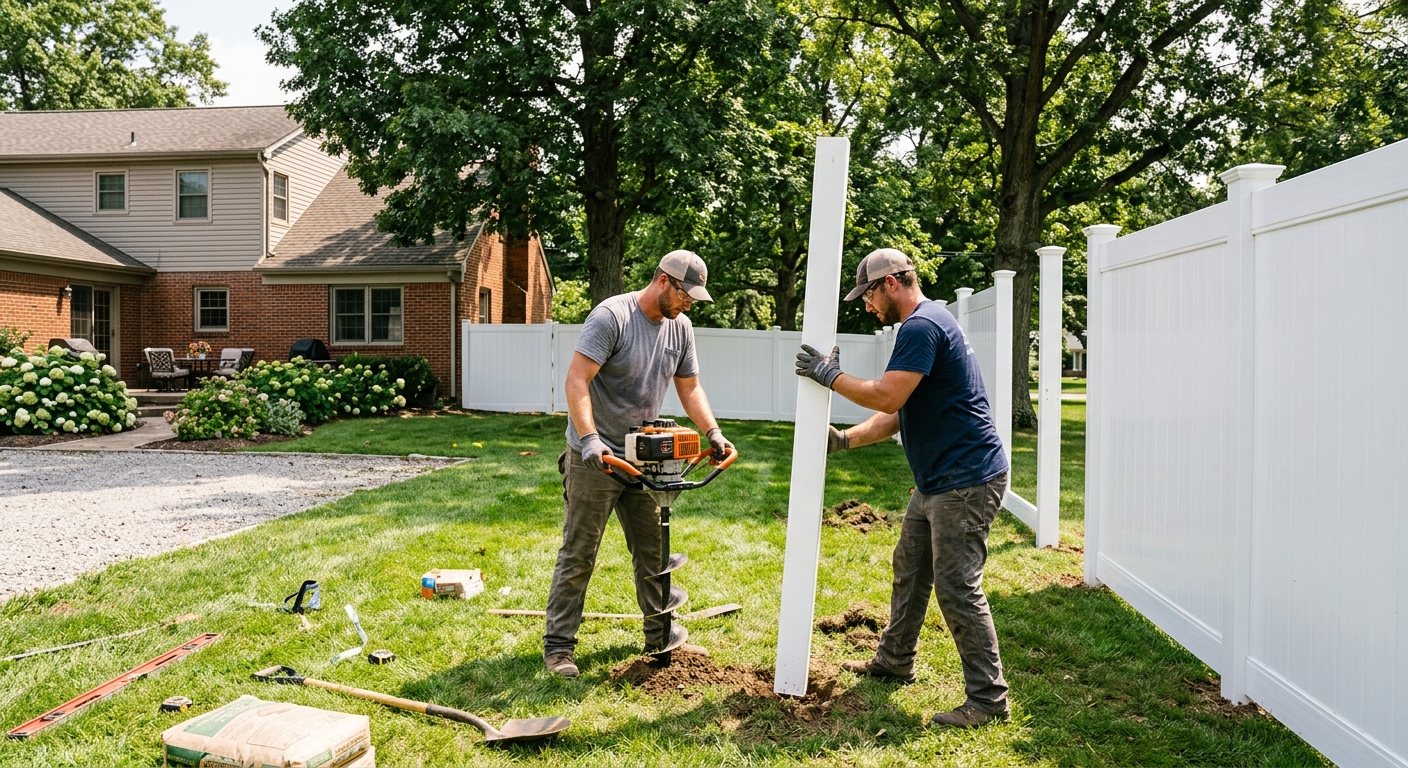
In the Greater Toronto Area, pricing is shaped by climate and local installation practice. Frost in Southern Ontario is commonly planned around 42"–48", so posts typically need to be set deep (often about 3.5–4 feet) and frequently concrete-set to reduce frost heave and maintain straight lines through freeze–thaw cycles. Contractors also factor in wind load and the tendency for taller privacy fences to rack, which pushes crews toward heavier posts, closer spacing, and more robust hardware in neighbourhoods with open pockets.
In Mississauga, trade activity is especially strong around established family areas with many detached lots—such as Erin Mills and Meadowvale—where homeowners often add privacy, replace aging boards, and upgrade gates for side access. Below is a practical comparison of common materials, expected performance, and typical installed price bands for Mississauga, so you can start aligning the quote you receive with your goals before moving on to price drivers.
| Material |
Lifespan |
Maintenance |
Privacy Rating |
Price per Linear Foot |
Price Range |
| Pressure-treated pine (standard wood) |
12–18 years |
Stain/seal every 2–3 years; replace warped rails selectively |
High (solid boards) |
$18–$30 |
$65,000–$120,000 |
| Cedar (natural rot resistance) |
15–22 years |
Light staining every 2–3 years; occasional board/rail swaps |
High (solid boards) |
$22–$35 |
$75,000–$130,000 |
| Vinyl / PVC (no-maintenance) |
25–30 years |
Wash as needed; inspect fasteners for extreme cold movement |
High (solid privacy panels) |
$24–$42 |
$80,000–$140,000 |
| Chain-link (galvanized steel) |
20–30 years |
Rinse/straighten occasionally; tension adjustments |
Low–Medium (add slats for privacy) |
$12–$20 |
$45,000–$85,000 |
| Aluminum ornamental |
25–35 years |
Occasional wash; hardware checks |
Low–Medium (open pickets) |
$18–$36 |
$90,000–$160,000 |
| Composite / recycled material |
25–35 years |
Minimal; periodic cleaning and visual inspections |
High (solid composite boards) |
$24–$45 |
$85,000–$150,000 |
Prices are estimates only and vary by project scope, site access and material selection.
What affects the price of fencing in Mississauga
In Mississauga and the wider Toronto economic region, it’s not unusual for quotes for what sounds like the “same” fence to swing by 30–50%. The biggest reason is that fencing isn’t priced as a simple product—it’s a package of foundation work (post depth, concrete, labour), materials (rails, pickets/panels, hardware), and site realities (access, disposal, and how many gates you need). When one contractor includes concrete-set posts and another assumes lighter post installation, you’ll feel that gap immediately in the total.
Local ground conditions matter too. Frost line planning for Southern Ontario is commonly around 42"–48", so best practice is usually to set posts about 4–6 inches below the design frost depth to prevent heaving. That typically means posts set about 1.5–2.0 m into the ground, which increases labour time, requires longer posts, and raises ready-mix and material costs—especially for 6–8 ft privacy fences where uplift and racking are bigger concerns. Wind is also a pricing factor: while Ontario isn’t the same extreme exposure as the Prairies, taller solid fences still demand closer spacing and heavier components in gustier pockets.
Two common Mississauga examples: (1) replacing a fence in an older neighbourhood with clay-heavy soils often means more concrete and more careful post alignment, because loose footing fails faster; (2) backyards with longer runs and restricted side access (narrow driveways, parked cars, or landscaping) raise crew time, so even with the same materials you may see a higher end-of-band price. If you’re choosing between a chain-link option (often guided by the $45–$85 style band) and a vinyl privacy system (often guided by the $75–$130 style band), the difference is usually justified by the added labour for robust corner posts, gate framing, and deeper concrete-set footings.
| Price Factor |
Why It Matters |
Cost Impact |
| Fence length in linear feet |
Every additional foot adds posts, rails, panels/pickets and fasteners |
High (primary driver) |
| Post depth required |
Frost line determines hole depth and how deep posts must be set |
High |
| Post setting method |
Concrete-set posts resist frost heave better than gravel packs or driven posts |
Medium–High |
| Material choice |
Vinyl, cedar, and chain-link each have different hardware, installation time and durability |
Medium–High |
| Gate count and type |
Double-drive gates require stronger frames and heavier hinges/latches |
Medium–High |
| Grade and terrain |
Slopes require stepping or raking; uneven ground increases layout time and waste |
Medium |
| Old fence removal and disposal |
Hauling and demolition time varies with debris volume and access |
Low–Medium |
| Permit fees and survey / property line locate |
Some projects require permit review and official line confirmation |
Low–Medium |
Permits & regulations in Ontario
In Ontario, fence rules are mostly about your municipality’s by-laws plus where the fence sits relative to property lines and setbacks. As a practical guideline many Mississauga homeowners encounter, fences above a height threshold—often 2.0 m (6.5 ft) at the rear and 1.0–1.2 m (3–4 ft) near the front or corner—may require a building permit depending on location and circumstances. Because exact thresholds and processes can vary by where the fence is installed (front/corner/rear) and the details of the lot, your contractor should confirm whether a permit is required before they dig post holes.
Before digging, you must arrange utility locates. In Ontario, call Ontario One Call so underground services are marked; this is essential before any augering or excavation. Also, obtain a survey or at minimum a property line locate to confirm pin positions—this avoids encroachment disputes with neighbours, which are especially common on older lots where fences may have been built “by eye” over the years.
Shared fence responsibilities generally align with provincial line-fences legislation: where fences are treated as shared, neighbour arrangements can dictate maintenance, but you should confirm expectations in writing (even a simple agreement) to prevent misunderstandings after repairs or replacements. For contractor verification in Mississauga, ask to see their Ontario licence details (if applicable to their trade scope), request a certificate of insurance showing liability coverage, and confirm WSIB/WCB coverage for workers. You can typically confirm insurance through the certificate provided, and you can verify clearance status when a contractor supplies a clearance letter for the work.
Choosing the right fence material for Mississauga
Choosing fence material in Mississauga is about matching your priorities to how Southern Ontario behaves season to season. Pressure-treated pine is usually the budget starting point, but it needs staining or sealing every 2–3 years to prevent grey weathering and to slow surface checks. Cedar is a step up in appearance and natural rot resistance; it still benefits from maintenance, but it commonly holds up better in damp periods and looks more consistently “finished” between coats. Vinyl/PVC is low-effort day-to-day—no sanding or staining—and it’s popular for homeowners who want a tidy look without annual upkeep. The trade-off is that in extreme cold, vinyl can be more prone to movement at fasteners if the installation details aren’t solid, so proper post setting and hardware matter.
Chain-link is the longest-life value option when privacy isn’t the main goal. If you add privacy slats you’ll get a cleaner backyard feel, but it won’t be as solid as a solid wood or vinyl privacy fence. Aluminum ornamental is mid-range in cost and offers corrosion resistance with a modern, light look; however, it provides limited privacy.
Because Toronto-area frost planning commonly targets about 42"–48", concrete-set posts are usually recommended for stable long-run alignment on 6–8 ft fences. A concrete-set approach helps reduce frost heave and keeps panels from leaning, which is especially important for tall privacy fences in neighbourhoods with gusty conditions. For a dollar example: if vinyl privacy is near the mid-to-upper range of typical $75–$130 style bands, it can cost roughly 20–40% more than pressure-treated wood, but the “no staining” benefit and longer service life can justify the upgrade if you’d otherwise spend time and money on refinish cycles.
| Material |
Cold Tolerance |
Lifespan |
Annual Maintenance |
Best For |
Price Band |
| Pressure-treated pine |
Good with proper treatment and deep set posts |
12–18 years |
0.5–1 day/year plus staining/sealing every 2–3 years |
Budget privacy and straightforward repairs |
$65–$120 |
| Cedar |
Very good; handles wet/dry swings well |
15–22 years |
Light cleaning; staining/sealing every 2–3 years |
Premium look with rot resistance |
$75–$130 |
| Vinyl / PVC |
Good when installed with correct tolerances |
25–30 years |
Minimal—wash as needed; check fasteners after hard winters |
Low-maintenance privacy |
$75–$130 |
| Chain-link |
Excellent; galvanized steel performs in cold cycles |
20–30 years |
Minimal—visual checks and occasional tension adjustments |
Security and pet containment on a budget |
$45–$85 |
| Aluminum ornamental |
Excellent; won’t rust in Ontario winters |
25–35 years |
Minimal—wash and inspect hardware |
Decorative curb appeal with open fencing |
$90–$160 |
| Composite / recycled |
Very good; engineered for freeze–thaw durability |
25–35 years |
Minimal—cleaning and periodic inspections |
Long-life privacy without staining |
$85–$150 |
How to choose a fencing contractor in Mississauga
For fencing in Mississauga, the right contractor should be easy to verify and easy to compare. Start by confirming Ontario business licensing for their trade scope (where applicable), then insist on liability insurance and proof of WSIB/WCB coverage so you’re not exposed if a worker is injured on your property. Ask for the certificate of insurance and the WSIB/WCB clearance or coverage documentation; you should be able to see them before work begins and they should match the company name that will sign your estimate.
Next, get 2–3 itemised written quotes rather than a single lump sum. You want a breakdown that separates labour, materials, and line items such as concrete for set posts, gate hardware, rail/panel components, and any disposal charges. Read the exclusions carefully: does the quote include permit pulls if required, property line confirmation, utility locating call costs, old fence removal, or topsoil restoration/grade backfill after digging?
Warranty also matters. A workmanship warranty should be stated clearly (often for installation issues), and product warranties should list coverage duration and what’s excluded (for example, damage from impact). Check whether the warranty is transferable to future homeowners.
Finally, keep the payment schedule sensible. Never pay more than 10–15% upfront; hold back a portion until the fence is complete and gates operate correctly. Get a written timeline including a start date and estimated completion window, since weather and curing time for concrete can affect scheduling in Southern Ontario.
- Ask for insurance certificate with liability limits and verify it matches the contracting business name.
- Request WSIB/WCB clearance/coverage documentation for all workers who will be on site.
- Get quotes that include labour + materials as separate line items (no “all-in” only pricing).
- Confirm whether posts will be concrete-set and what depth/hole size is included.
- Ensure gate count, gate type (single or double), and hardware are explicitly listed.
- Ask who pulls permits (if required) and whether permit fees are included.
- Confirm whether old fence removal and disposal is included or treated as an extra charge.
- Verify how they handle sloped yards (stepped vs raked panels) and whether grading impacts price.
- Ask for a layout plan showing measurements, post spacing, and corner/terminal locations.
- Review warranty terms: workmanship length, exclusions, and whether it’s transferable.
- Clarify payment schedule (target 10–15% max upfront) and what earns the final payment.
- Require a written schedule that accounts for concrete curing time and winter frost considerations.
Red flags I commonly see with fencing contractors in Mississauga include: quoting only a total price without listing concrete/post setting details, refusing to provide insurance or WSIB/WCB proof, vague scopes like “fence supply and install” with no mention of gates or disposal, and collecting large deposits (more than 15%) before any materials are ordered or layout is complete.
Frequently asked questions — fencing in Mississauga
How long does a wood fence last in Mississauga?
In Mississauga, a well-built wood fence often lasts around 12–18 years for pressure-treated pine, and roughly 15–22 years for cedar when it’s installed correctly with stable post depth for freeze–thaw conditions. The Toronto-area frost planning (commonly around 42"–48") means posts need to be set deep enough to reduce frost heave; if posts are too shallow or only gravel-packed, you’ll see leaning and premature rot sooner. Maintenance also drives lifespan: staining/sealing every 2–3 years helps prevent grey weathering and surface cracking. If your yard has damp shade or heavy snow contact on lower rails, budget a couple of targeted board/rail replacements within the overall lifespan rather than expecting one “set it and forget it” outcome.
Who owns and maintains a shared fence?
For shared fencing situations in Ontario, responsibilities are typically governed by line-fences principles and how the neighbour-to-neighbour agreement is handled in practice. In some cases, both parties share ownership and the ongoing maintenance burden; in other cases, one neighbour may maintain the fence with the other contributing to costs depending on the original arrangement. In Mississauga, the most reliable approach is to confirm what you share (and where) before ordering materials: your property line locate or survey helps ensure the fence is on the correct side. If you’re replacing an older “shared” fence, put maintenance expectations in writing—especially for repairs after winter damage—so you’re not surprised by cost discussions mid-season.
How do I find my property line before fencing?
Before you dig, start with a survey if you have one from when the home was purchased or refinanced. If you don’t, request a property line locate using the pins/markers for your lot so your fence aligns with the legal boundary. This is particularly important in Mississauga because older fencing and long-standing placements sometimes aren’t on the actual line. Also, call Ontario One Call for utility locates before post-hole work. When you’re comparing fencing quotes, ask contractors whether they rely on existing survey paperwork you provide or whether they coordinate a locate. A clear property line plan protects you from paying for rework if a dispute arises.
What's the most low-maintenance fence?
For most Mississauga homeowners, vinyl/PVC privacy fences are the lowest-maintenance option, followed closely by composite/recycled materials. Vinyl typically needs only occasional washing and hardware checks, while wood requires periodic staining or sealing to slow weathering and reduce surface cracking. That reduced upkeep can be worth the higher upfront cost: for example, if pressure-treated wood is often guided by the $65–$120 style band, vinyl privacy can land closer to the $75–$130 style band depending on height, post type, and gate count. Even “low-maintenance” systems depend on correct installation—deep, stable post setting and proper bracing keep panels aligned through Toronto freeze–thaw cycles.
How tall can my fence be in Mississauga?
Fence height limits in Ontario are usually tied to municipal by-laws and the location of the fence (front yard, corner lot area, rear yard). As a commonly referenced guideline, fences above roughly 2.0 m (6.5 ft) at the rear and about 1.0–1.2 m (3–4 ft) near the front or corner may require a building permit in many situations. In Mississauga specifically, your best step is to confirm requirements for your lot’s location and corner conditions with your contractor or the municipality before ordering materials. When contractors quote, ask them to state whether a permit is anticipated for your height and where the fence sits. This prevents delays if inspection or permit conditions are triggered.
Should fence posts be set in concrete here?
In Mississauga, concrete-set posts are often recommended for privacy fences because Southern Ontario freeze–thaw cycles can push shallow foundations out of alignment. With frost planning commonly around 42"–48", best practice is usually to set posts about 4–6 inches below the design frost depth, which often results in roughly 3.5–4 feet hole depth and deeper post length. Concrete-setting costs more than simple driven posts, but it improves long-term stability by resisting frost heave and keeping rails level, especially for 6–8 ft fences. If a contractor proposes a “fast” installation method with driven posts only, ask for the post depth and soil conditions they’re assuming. Your quote should clearly describe the setting method.