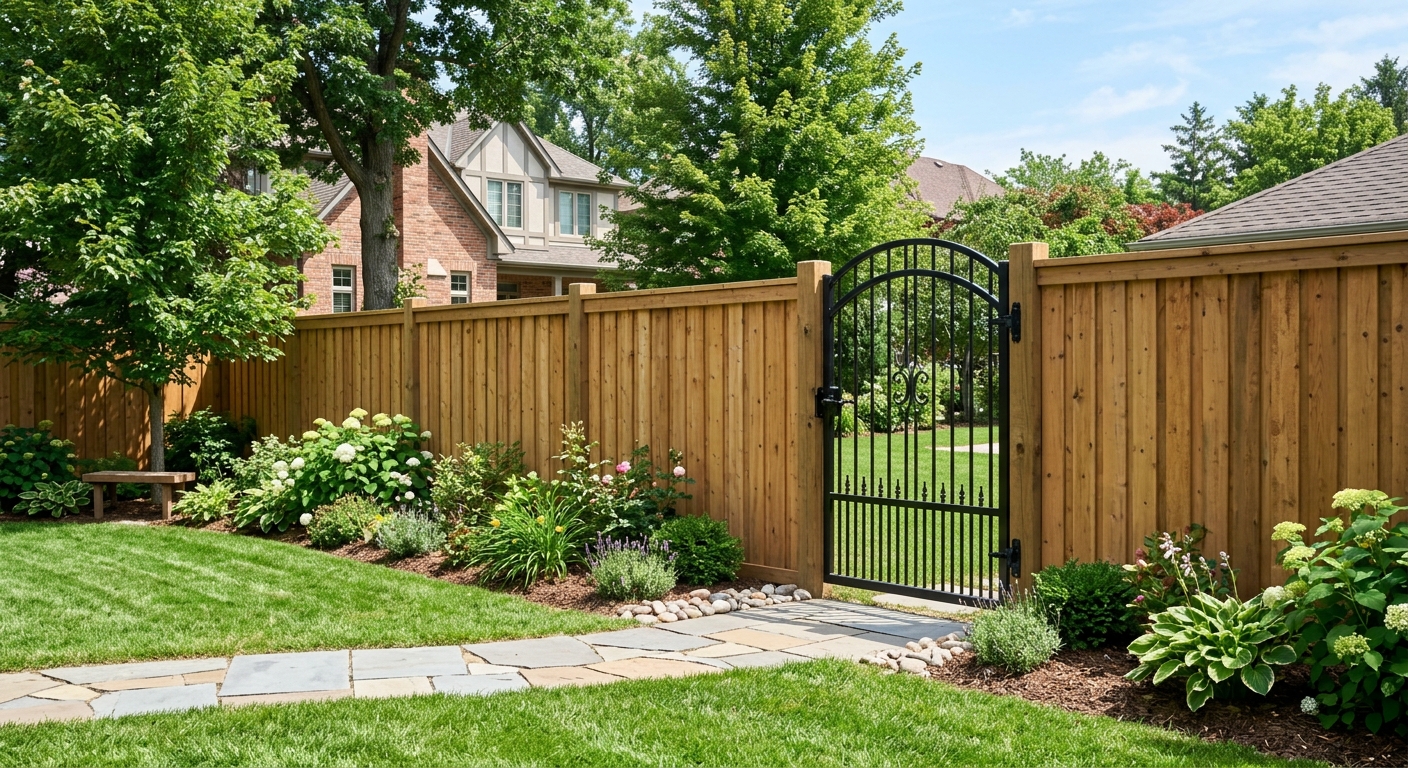
Fencing options and costs in Markland Wood
In Markland Wood, choosing the right fence usually comes down to how you want it to perform through Toronto’s winters and how much upkeep you’re willing to handle. With a population of 10,554 (Statistics Canada, 2021 Census), the neighbourhood has a steady mix of family lots, and detached homes remain a big driver of fencing demand—every new privacy upgrade or backyard refresh tends to spark competing contractor schedules. Toronto-region pricing also reflects the reality that frost doesn’t just “freeze”—it heaves if posts aren’t set deep enough, especially for taller solid fences.
In Southern Ontario, contractors commonly plan around a frost line of about 42"–48". For 6–8 ft privacy fences, that translates to setting posts roughly 3.5–4 ft deep using concrete-set methods, particularly in the heavier clay and mixed soils typical in the GTA. That requirement increases labour time and ready-mix costs, but it’s one of the main reasons well-built fences stay plumb through repeated freeze–thaw cycles.
Trade demand is especially noticeable in busy pockets where backyards back onto collector streets or where homeowners are adding privacy along rear lot lines—around the larger residential stretches off Burnhamthorpe Road and the Markland Wood/Eringate corridor. If you’re comparing options right now, the table below shows typical lifespan, maintenance expectations, privacy feel, and price ranges you’ll see for installed material-and-labour work.
| Material |
Lifespan |
Maintenance |
Privacy Rating |
Price per Linear Foot |
| Pressure-treated pine (standard wood) |
10–15 years |
Stain or seal every 2–3 years |
Good (solid boards) |
$12–$25 |
| Cedar (natural rot resistance) |
15–25 years |
Light staining/refresh every 2–4 years |
Excellent (solid cedar) |
$16–$33 |
| Vinyl / PVC (no-maintenance) |
25–35 years |
Rinse as needed (no paint/stain) |
Excellent (solid or semi-opaque) |
$14–$32 |
| Chain-link (galvanized steel) |
20–30 years |
Occasional tension/repairs |
Low (privacy only with slats/vines) |
$9–$20 |
| Aluminum ornamental |
25–40 years |
Wash and inspect hardware |
Low to medium (best for visibility) |
$17–$40 |
| Composite / recycled material |
20–30 years |
Minimal cleaning; no staining |
Good to excellent (solid panels) |
$16–$36 |
Prices are estimates only and vary by project scope, site access and material selection.
What affects the price of fencing in Markland Wood
It’s normal to see the same basic fence concept priced 30–50% differently across the Toronto area. In Markland Wood, that spread usually comes from how deep posts must be set for frost, how much material a crew needs to match wind-stability requirements, and whether a contractor includes concrete, removal, and line locating in the base quote. Labour availability in peak season also affects how fast crews can mobilize, which can change the total even when your materials list looks identical.
The biggest cost lever is frost-line performance. In Southern Ontario, contractors typically set posts about 4–6 inches below the design frost depth to prevent heaving. In cold Ontario conditions, that often means digging and setting roughly 1.5–2.0 m into the ground for many tall privacy fences. Concrete-set posts mean longer posts, more excavation, and added ready-mix—so even if wood or chain-link is the cheaper material, the “installed” number can climb. By contrast, chain-link with lighter posts can sometimes use less intensive hardware (though frost depth still governs your footings).
Wind and panel design matter too, even if Toronto isn’t the same extreme exposure as the Prairies. Taller solid privacy fences (wood or vinyl) need heavier posts and tighter spacing, especially near open corners or where snowdrifts pile against the fence. Coastal BC’s wet cycles don’t apply here, but Toronto’s freeze–thaw still punishes poorly set posts and untreated end grain—leading to repairs that drive “hidden” costs.
Two common local examples: (1) a 6 ft privacy fence on a clay-heavy rear lot often costs more than the same run on sandy soil because concrete-set holes take longer; (2) replacing an older sagging fence with new concrete footings can increase your project by several thousand dollars compared with simply re-stretching panels, because excavation and disposal add up. If you’re budgeting, Toronto’s wood fence installation band is often $65–$120 per linear foot equivalent, while vinyl/PVC privacy commonly lands around $75–$130 for installed work depending on height and post sizing.
| Price Factor |
Why It Matters |
Cost Impact |
| Fence length in linear feet |
The primary driver—more runs means more posts, rails, fasteners, and labour hours. |
High (often 50%+ of total variation) |
| Post depth required |
Frost line dictates footing depth and post length to prevent heaving and leaning. |
High (can add labour + concrete) |
| Post setting method |
Concrete-set vs gravel pack vs driven posts changes excavation, materials, and stability. |
High (concrete-set usually costs more) |
| Material choice |
Vinyl and composite cost more upfront; cedar costs more than standard pine; chain-link is cheaper but less private. |
Medium to High |
| Gate count and type |
Walk-through gates are one set-up; double drive-through gates require stronger frames and hardware. |
Medium to High |
| Grade and terrain |
Slope typically requires stepped/raked panels which means extra rails, layout time, and sometimes custom heights. |
Medium |
| Old fence removal and disposal |
Demolition, hauling fees, and repair work to gates/adjacent surfaces can be significant. |
Medium |
| Permit fees and survey / property line locate |
Some fence heights trigger permits; unclear boundaries can lead to delays or changes. |
Low to Medium |
Permits & regulations in Ontario
In Ontario, fences can fall under permit rules depending on height and location. As a practical baseline for homeowners in Markland Wood, fences above a typical threshold—commonly around 2.0 m (6.5 ft) at the rear and about 1.0–1.2 m (3–4 ft) at the front or corner—often require a building permit. Exact thresholds can vary by municipal bylaw and where your fence sits, so your contractor should verify the requirements before digging begins. Regardless of permit needs, your fence must respect property lines and any applicable setback bylaws.
Before anyone digs post holes, you should arrange utility locates using Ontario One Call to avoid hitting buried services. You’ll also want a survey or a property-line locate to confirm your boundary pins. This step matters because fencing disputes in the GTA often start with “assumed” lines rather than verified markers.
Shared fence ownership and maintenance are generally guided by Ontario line-fences principles (how neighbours share responsibility). If you’re replacing an older boundary fence, agree in writing on what portion each side maintains and who pays for upgrades.
What typically DOES require a permit: taller solid fences above the local threshold, fences on corner lots with visibility concerns, or projects that alter established boundary conditions. What typically does NOT: small decorative fences under the threshold, or like-for-like replacement at the same height (still verify locally). For contractor vetting, check they have the right Ontario business registration for the trade, provide a certificate of insurance (liability), and confirm WSIB coverage or the applicable provincial worker coverage status. Ask for the COI and clearance details before work starts, and keep copies for your records.
Choosing the right fence material for Markland Wood
Choosing a fence material in Markland Wood is really about matching material to your priorities—privacy, low maintenance, lifespan, and upfront cost—within Toronto’s freeze–thaw climate. Pressure-treated pine is usually the budget-friendly route, but it needs regular staining or sealing every 2–3 years to reduce grey weathering and protect end grain. Cedar looks better and naturally resists rot, often extending service life, but you still need maintenance to keep it looking sharp and to limit surface cracking over time.
For low-maintenance owners, vinyl/PVC is a strong choice: it typically requires only occasional rinsing. The trade-off is higher initial cost, and in extreme cold it can become more brittle if installed with improper expansion gaps or if it’s forced rigid. Chain-link is the most economical and longest-lived in many cases, but it doesn’t provide privacy unless you add slats or plant screening. Aluminum ornamental is rust-resistant and clean-looking with minimal upkeep, but it’s not for full privacy—wind and sightlines come through.
For taller privacy fences, Toronto’s frost line typically means concrete-set posts are the safer standard, especially around 6–8 ft heights. Concrete-set posts plus heavier post sizing help resist racking in snow-loaded conditions. Where wind presses on solid panels, spacing and bracing affect stability as much as the fence material itself.
Dollar example: if a pressure-treated pine privacy fence is quoted in the $65–$120 band and cedar comes closer to the higher end of wood or cedar pricing, you’re usually paying more for appearance and longevity. When the cedar premium prevents a mid-cycle replacement or reduces staining upkeep, the extra cost can make sense for long-term homeowners in Markland Wood—especially on backyards where fence access is limited and repairs are disruptive.
| Material |
Cold Tolerance |
Lifespan |
Annual Maintenance |
Best For |
Price Band |
| Pressure-treated pine |
Good with proper end-seal and concrete-set posts |
10–15 years |
Seasonal inspection; stain/seal about every 2–3 years |
Budget privacy with typical upkeep |
$65–$120 |
| Cedar |
Good; holds up well in Ontario moisture cycles |
15–25 years |
Inspect annually; stain/refresh every 2–4 years |
Longer-lasting privacy and better curb appeal |
$80–$140 |
| Vinyl / PVC |
Very good when installed with correct expansion and spacing |
25–35 years |
Rinse/clean as needed (usually yearly or less) |
Low-maintenance privacy |
$75–$130 |
| Chain-link |
Excellent for cold exposure |
20–30 years |
Tension checks; minor repairs as needed |
Security with a limited budget |
$45–$85 |
| Aluminum ornamental |
Excellent; no rust concerns |
25–40 years |
Wash and inspect hardware yearly |
Clean look, safety, and visibility |
$90–$160 |
| Composite / recycled material |
Good; tolerates cold well with correct installation |
20–30 years |
Minimal cleaning; occasional inspection |
Premium privacy with low upkeep |
$90–$170 |
How to choose a fencing contractor in Markland Wood
When you hire a fencing contractor in Markland Wood, you want proof—not promises. First, verify Ontario licensing/registration appropriate to the contractor’s trade responsibilities and ask for their certificate of liability insurance (it should list you correctly as an additional insured where applicable, and show active coverage). Next, confirm worker coverage: in Ontario, ask for WSIB clearance or the correct clearance documentation for their workers. If the contractor claims they’re “covered,” ask to see the clearance letter before signing. A reputable crew will provide these documents quickly.
Get 2–3 itemised written quotes—ideally showing labour hours, material grade/brand, post size, post spacing, footing method (concrete-set vs other), gate hardware, and disposal. Avoid lump-sum quotes that don’t specify what’s included. Read the exclusions: will they handle permit pulls if required, manage locate marking protection, and include removal and hauling of the old fence? For warranty, ask for both workmanship warranty duration and manufacturer product warranty. Confirm whether warranties are transferable to future owners.
For payment scheduling, never pay more than about 10–15% upfront. Use a holdback until the gate alignment, line posts, and final cleanup are complete. Also get a written start date and completion estimate—Toronto-area fence projects can move quickly in spring, but good contractors still document timelines.
- Check liability insurance and keep the COI on file.
- Request WSIB clearance documentation (not just a claim).
- Ask what post depth they install for your fence height and soil conditions.
- Confirm concrete-set posts for 6–8 ft privacy fences and frost protection approach.
- Ensure the quote lists post size, rail count, and panel/board spacing.
- Verify whether line locating/survey verification is included or how encroachment risk is handled.
- Confirm utility locate coordination (Ontario One Call) before digging.
- Ask if permit fees and permit pulling are included if required by height/location.
- Get a clear scope for old fence removal and disposal fees.
- Require itemised gate hardware specs (hinges, latches, frame material).
- Review warranty: workmanship length, product warranty, and transferability.
- Use a payment plan with a holdback until final alignment and cleanup are done.
Common red flags I see in the Markland Wood market: contractors who won’t show WSIB/insurance documents before contract signing, quotes that ignore frost-depth and footing method details, “free” site visits that turn into vague lump sums with no scope sheet, pressured payment terms that demand a large upfront deposit, and a lack of clarity on property line/location—especially when fences run close to shared boundaries.
Frequently asked questions — fencing in Markland Wood
Do I need a permit to build a fence in Ontario?
In Ontario, a fence may require a building permit depending on its height and whether it’s located toward the front/corner versus the rear yard. A common homeowner rule of thumb in Markland Wood is that rear privacy fences above about 2.0 m (6.5 ft) and front/corner fences above roughly 1.0–1.2 m (3–4 ft) often trigger permit requirements, but the exact decision is based on your local bylaws. If your plan is for a taller solid privacy fence, don’t assume it’s “just a fence”—ask your contractor to confirm permit requirements in writing. Also, before any post holes are dug, utilities must be located through Ontario One Call. For pricing context, permit-related steps can add small amounts to the overall budget, but the bigger cost driver is usually concrete-set posts in the frost-protected footing approach—often overlapping with fence installation bands such as wood at $65–$120 and vinyl around $75–$130.
How long does a wood fence last in Markland Wood?
A wood fence’s lifespan in Markland Wood usually depends less on the wood species and more on how it’s installed for Toronto winters. Pressure-treated pine commonly lasts about 10–15 years when posts are set properly for frost depth and end-grain is protected. Cedar often stretches to 15–25 years because it handles moisture and rot better, but it still needs periodic maintenance to stay looking good. The biggest failure mode I see is insufficient post depth or cheap footing—freeze–thaw cycles can cause heaving and leaning if the hole depth and concrete setting aren’t right for the frost line. If you’re replacing an older fence that leaned after winter, it’s usually worth pricing a contractor who builds with concrete-set posts and the right post size for a privacy layout. Budget-wise, wood installation is often in the $65–$120 band, but better footings and materials can push closer to the upper end for long-term stability.
Who owns and maintains a shared fence?
For shared fences in Ontario, responsibility is typically handled under Ontario line-fences principles rather than a “one size fits all” municipal rule. In plain terms: if the fence is considered a boundary/shared structure, neighbours may share costs and ongoing maintenance according to the applicable rules and what’s agreed between the parties. In Markland Wood, boundary disputes most often come from unclear property lines—so get a locate/survey confirmation before replacement work. When replacing, I recommend putting expectations in writing: which side provides materials, whether each neighbour pays their portion, and what happens if one homeowner upgrades the fence height for privacy. Contractors should also document the scope clearly so you can prove what was built on which boundary segment. If your shared fence replacement involves taller privacy panels that require permit review, plan for that administrative step in the budget—though the core cost swing is still usually footing and materials, rather than the permit itself.
How do I find my property line before fencing?
Before fencing in Markland Wood, don’t rely on the distance “from the sidewalk” or old markings—use property-line tools. The safest process is to obtain a survey (or have pins located) so you can identify boundary corners and line pins. If you have a survey from the past, it can still be useful, but confirm it’s current and legible. Once you identify where you’re building, a contractor can help you lay out the fence line with correct offsets and footing positions. This is critical because disputes typically arise when fencing is installed even slightly over the boundary. Also, plan for utilities: call Ontario One Call before digging post holes. As for cost, property-line locate/survey can add a bit to your project, but it often prevents bigger delays and rework that can outweigh the expense—especially for privacy fences where concrete-set posts and taller panel layouts raise the cost of correcting mistakes.
What's the most low-maintenance fence?
For low maintenance in Ontario, vinyl/PVC is often the easiest option: no staining and minimal upkeep beyond periodic rinsing. Aluminum ornamental also performs well with simple washing and hardware checks. Chain-link is low maintenance in terms of cleaning and repair frequency, but it doesn’t provide privacy unless you add slats or live screening, which creates its own upkeep. For wood, cedar and pressure-treated pine both require periodic maintenance to avoid weathering, and privacy-style boards add more surface area to protect. In the Markland Wood climate, the “installed” foundation matters too: a low-maintenance surface won’t help if posts heave or gates don’t stay aligned after freeze–thaw cycles. Budget-wise, you’ll usually pay more upfront for vinyl/PVC compared with standard wood—often reflected in the Toronto-area bands where vinyl/PVC privacy is commonly around $75–$130 versus wood installation typically $65–$120.
How tall can my fence be in Markland Wood?
Fence height limits in Ontario depend on location (rear yard versus front/corner) and local bylaw requirements. As a homeowner starting point, many Toronto-area rules use approximately 2.0 m (6.5 ft) as a common rear threshold and about 1.0–1.2 m (3–4 ft) for front or corner areas—taller fences often trigger permitting review. Markland Wood lots are frequently tight, so consider not only height but also how wind loads can rack taller solid panels during snow season. Also remember: a taller fence isn’t just more boards—it usually requires heavier posts, closer post spacing, and frost-protected concrete-set footings, which increases installed cost. If you’re planning 6–8 ft privacy, expect quotes influenced by concrete setting and post sizing; many homeowners land in the wood band $65–$120 or vinyl band $75–$130 depending on material and gate count. Your contractor should confirm the exact height cap for your parcel before you start digging.