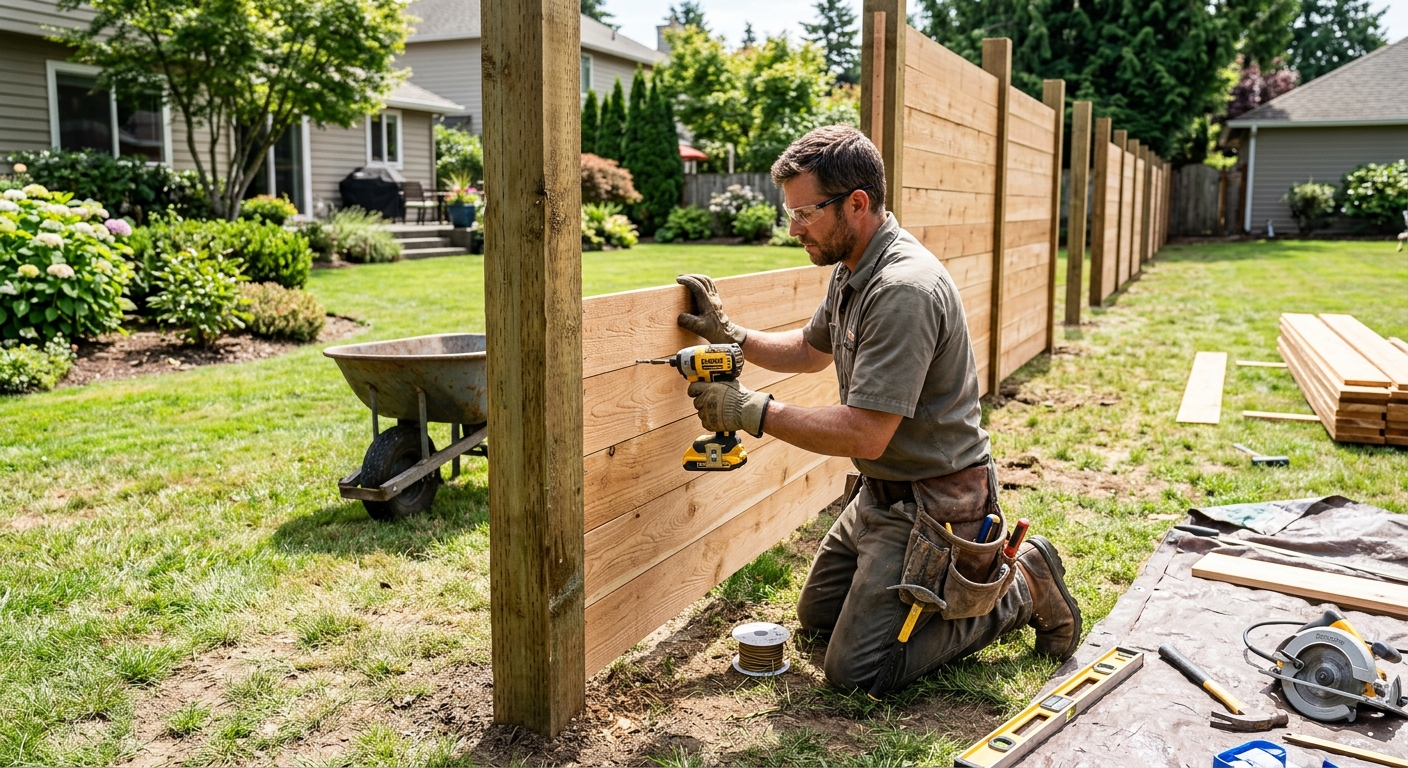
Fencing options and costs in Agincourt North
Agincourt North, Ontario is where backyard living is a big deal—and that makes fencing a year-round project for homeowners. With a population of 29,113 (Statistics Canada, 2021 Census), you’ll see steady demand across the neighbourhood as families replace aging boundaries and add privacy for patios and pools. Toronto-area housing stock also means a lot of detached and semi-detached backyards are being updated over time, and those property boundaries are exactly what fencing contractors get booked for most often.
In the Toronto economic region, frost depth and mixed soils strongly shape both design and cost. The frost line in Southern Ontario is commonly treated as about 42"–48", so for most 6–8 ft privacy fences, posts are typically set roughly 3.5–4 ft deep to reduce the risk of frost heave. That usually pushes projects toward concrete-set posts (and properly sized hardware), which increases labour and ready-mix costs versus simple driven posts.
Wind isn’t as punishing as the Prairies, but it still affects how fences perform—solid panels and tall structures need stiffer framing, closer post spacing, and sometimes heavier rails to resist racking. In pockets like Agincourt’s established residential streets near Markham Road, thicker privacy fences are especially in demand because homeowners want calmer yards for outdoor dining and play areas. From there, the best way to compare options is to look at typical lifespan, upkeep, privacy performance, and the installed price bands you’ll see in local quotes.
| Material |
Lifespan |
Maintenance |
Privacy Rating |
Price per Linear Foot |
| Pressure-treated pine (standard wood) |
10–15 years |
Stain/seal every 2–3 years |
High (solid) |
$18 – $30 |
| Cedar (natural rot resistance) |
15–25 years |
Stain every 2–4 years (fewer issues than pine) |
High (solid) |
$22 – $40 |
| Vinyl / PVC (no-maintenance) |
20–30 years |
Wash as needed; no staining |
High (solid) |
$25 – $45 |
| Chain-link (galvanized steel) |
20–30 years |
Occasional rinse; check tension |
Low–Medium (open mesh) |
$12 – $22 |
| Aluminum ornamental |
25–35 years |
Occasional cleaning |
Low–Medium (open pickets) |
$20 – $45 |
| Composite / recycled material |
20–30 years |
Low; clean only |
Medium–High (depends on panel) |
$28 – $55 |
Prices are estimates only and vary by project scope, site access and material selection.
What affects the price of fencing in Agincourt North
In Agincourt North and the wider Toronto area, two quotes for what looks like the same fence can differ by 30–50% because the “hidden” drivers—post depth, setting method, hardware spec, and site constraints—aren’t always treated equally. A contractor who prices to basic driven-post methods may be cheaper upfront, but in our frost-heavy conditions, many homeowners quickly learn why long-term stability costs more.
Start with the frost line. In Southern Ontario, the design frost depth is commonly treated around 42"–48", so post holes are typically excavated with enough depth to set posts about 4–6 inches below the design frost depth. Practically, that often means posts going 1.5–2.0 m into the ground. For a tall privacy fence, that drives longer posts, more excavation time, and usually concrete-set installations—meaning higher labour and ready-mix costs. If your yard has clay or mixed soils (common around the GTA), concrete setting and proper backfill become even more important.
Wind also matters for panel stiffness. While the GTA isn’t the open-exposure wind belt you hear about on the Prairies, solid panel fences still need closer spacing and heavier framing to resist racking and uplift. By contrast, chain-link typically stays lighter and cheaper because it tolerates wind better, and it’s less sensitive to “tight” spacing requirements.
Concrete examples from Toronto-area work: (1) a 60 ft run of solid 6 ft privacy fence often lands in the wood band (commonly $65–$120 installed per linear foot depending on spec), but switching to a sturdier vinyl build with concrete-set posts can push you toward the vinyl/PVC band ($75–$130 installed per linear foot). (2) Adding two gates—especially a double drive gate—can add significant framing and hardware costs even when the fence footage is the same. (3) If you’re on a sloped lot, stepped or raked panels add labour and material waste, so the “same linear feet” assumption can understate true cost. In older housing areas, you can also see more frequent demolition/disposal because older boards fail at the posts, changing the time required.
| Price Factor |
Why It Matters |
Cost Impact |
| Fence length in linear feet |
The primary driver for materials, posts, rails, and labour |
High (direct proportional cost) |
| Post depth required |
Frost line determines hole depth and post length to prevent heaving |
Medium–High (more excavation and longer posts) |
| Post setting method |
Concrete vs gravel pack vs driven posts affects stability and labour |
Medium–High (concrete increases material + labour time) |
| Material choice |
Vinyl and cedar typically cost more than pine; chain-link and aluminum vary |
High (materials often dominate the delta) |
| Gate count and type |
Double drive gates need stronger frames, hinges, and latches |
Medium–High (hardware and reinforcement) |
| Grade and terrain |
Slopes require stepped or raked panels and additional layout work |
Medium (extra labour and cut waste) |
| Old fence removal and disposal |
Demolition time, hauling, and possible concrete footing removal |
Medium (can add several hours to a day) |
| Permit fees and survey / property line locate |
Ensures compliance and reduces encroachment disputes |
Low–Medium (depends on your municipality’s requirements) |
Permits & regulations in Ontario
In Ontario, many fence projects require a permit when the height crosses common thresholds—often around 2.0 m (6.5 ft) at the rear and about 1.0–1.2 m (3–4 ft) in the front or at corners (exact requirements can vary by location and fence type). Regardless of height, you must respect property lines and municipal setback bylaws so the fence doesn’t encroach on a neighbour’s land or a required right-of-way.
Before you dig any post holes, always arrange utility locates through Ontario One Call. Hitting an underground service can stop work immediately and create expensive rework. If you’re not certain where your property pins are, obtain a survey or a locate so you can align the fence to your boundary, not assumptions or old measurements.
For shared boundary disputes, Ontario’s line-fences principles influence how costs and responsibilities are handled, but the practical step is documenting agreements in writing and keeping communications calm and factual.
Contractor verification should be part of your homeowner checklist in Agincourt North. Ask for: (1) your fencing contractor’s Ontario licence/registration information (as applicable), (2) a current certificate of liability insurance naming you as the interested party where possible, and (3) proof of WSIB coverage (or the acceptable equivalent coverage status). You can verify coverage directly through the certificate details and the relevant online clearance tools, then keep copies with your quote and contract. Finally, confirm in writing whether they’re pulling any required permit and whether that cost is included.
Choosing the right fence material for Agincourt North
Choosing the right material in Agincourt North is mostly about balancing privacy, maintenance, and how well the fence survives Toronto’s freeze-thaw cycles. Pressure-treated pine is typically the lowest upfront option, but it needs staining or sealing every 2–3 years to limit grey weathering and surface checking. Cedar costs more than pine but offers better natural rot resistance and a nicer look, usually with a longer comfortable service life if you keep up with staining as needed.
For low maintenance, vinyl/PVC is a common choice because it doesn’t require paint or stain. The trade-off is that extreme cold snaps can make some boards more brittle over time, so you want quality components and correct post spacing and framing so the panels aren’t under stress. Chain-link is the lowest budget option and generally performs well over the long run, but it won’t give you the privacy rating you get from solid wood or vinyl. Aluminum ornamental looks sharp and won’t rust, but because it’s open, it’s best for boundary definition rather than blocking views.
In Toronto practice, the frost line around 42"–48" means concrete-set posts are commonly recommended, especially for 6–8 ft privacy fences. That said, the exact depth should match your local conditions and soil, but it’s typical to set posts about 1.5–2.0 m into the ground. Wind resistance is also tied to stiffness: solid fences need heavier rails and closer spacing (often 6–8 ft centres), while chain-link is naturally more wind-tolerant.
A realistic budgeting example: if a 60 ft privacy run in pressure-treated pine lands near the wood band (often $65–$120 installed per linear foot), a switch to vinyl/PVC can land higher—commonly in the $75–$130 installed range. That difference is often justified when you expect to stay in the home long-term and want to avoid repeated staining and faster board replacement cycles.
| Material |
Cold Tolerance |
Lifespan |
Annual Maintenance |
Best For |
Price Band |
| Pressure-treated pine |
Good with proper seal/stain and solid post anchoring |
10–15 years |
Seasonal check; stain/seal every 2–3 years |
Lowest initial cost with acceptable upkeep |
$65 – $120 |
| Cedar |
Good; performs well through freeze-thaw when maintained |
15–25 years |
Seasonal check; stain every 2–4 years |
Natural look, better rot resistance |
$75 – $130 |
| Vinyl / PVC |
Good if framed properly and not over-flexed |
20–30 years |
Wash as needed; inspect for cracking and alignment |
Low maintenance privacy |
$75 – $130 |
| Chain-link |
Very good (low wind resistance stress on structure) |
20–30 years |
Rinse; check tension and posts |
Security and boundary definition |
$45 – $85 |
| Aluminum ornamental |
Excellent (no rust) with proper footings |
25–35 years |
Occasional cleaning; check hardware |
Attractive curb-side boundaries with visibility |
$90 – $160 |
| Composite / recycled |
Good; consistent material in cold cycles |
20–30 years |
Low; wash and inspect annually |
Longevity with minimal upkeep |
$85 – $150 |
How to choose a fencing contractor in Agincourt North
Choosing the right contractor in Agincourt North starts with confirming they’re legitimately covered and accountable. In Ontario, you should ask for proof of liability insurance (request the certificate of insurance and confirm coverage dates), and confirm WSIB coverage status for their workers (or the acceptable equivalent clearance status). Where possible, verify through the insurer’s certificate details and any online clearance tools referenced on their documents. If they can’t produce current certificates, treat it as a serious warning sign—no paperwork often means no coverage when something goes wrong.
Next, get 2–3 itemised written quotes. Don’t accept a single lump sum unless the scope is fully described. A proper quote breaks down labour and materials and clarifies how posts are installed (concrete-set vs gravel pack vs driven), post spacing, hardware type, and whether the price includes gate frames, hinges and latches. Include demolition and disposal explicitly: will they haul the old fence away, and are there any extra charges for concrete removal or unusual access?
Warranty terms matter. Ask for the workmanship warranty length (how long they stand behind installation) and the product/manufacturer warranty (what material defects are covered). Also ask whether warranties are transferable if you sell the home.
For payments, never pay more than 10–15% upfront. Hold back a portion until the full fence is complete and inspected. Get a start date and a completion estimate in writing so timing is enforceable.
- Request proof of liability insurance and confirm coverage dates before work starts.
- Verify WSIB coverage status (or clearance status) for their crews.
- Ask whether they pull permits and what’s included in their quote.
- Get quotes broken into labour, materials, posts/hardware, and demolition/disposal.
- Confirm post depth and setting method for Toronto frost conditions (concrete-set for privacy is common).
- Ensure gate pricing includes the full frame and reinforcement, not just basic boards.
- Confirm who marks the property line and whether they do survey/locates or rely on yours.
- Ask how they handle utility locates and scheduling with Ontario One Call.
- Check for a written workmanship warranty and what it covers.
- Clarify product warranty and whether it transfers to the next homeowner.
- Use a payment schedule with a holdback until final walkthrough and completion.
- Get the start date and completion window in writing, including weather contingency notes.
Red flags I see in the Agincourt North market include: (1) contractors refusing to detail post depth and footing approach for frost, (2) quotes that don’t specify whether they set posts in concrete for tall/privacy fences, (3) “cash only” or large upfront deposits beyond 15%, (4) no written scope for disposal and demolition, and (5) warranties described vaguely (“lifetime”) without workmanship terms or exclusions.
Frequently asked questions — fencing in Agincourt North
How do I handle a fence dispute with a neighbour in Ontario?
If you’re dealing with a fence dispute in Agincourt North, start by verifying the boundary first, not the opinions. Request proof of your property line (survey or property pin locate) and compare it to where the fence sits. Ontario’s line-fences rules influence how responsibilities can be shared, but the most productive path is evidence: dates of the original fence, photos, any agreements, and what the fence actually affects (access, height, maintenance). Then communicate in writing—keep emails polite and factual.
Before either party digs, ensure utility locates are completed through Ontario One Call. If the disagreement is height-related or involves permit requirements, ask a contractor to confirm compliance with municipal bylaw height thresholds. If it can’t be resolved, consider mediation or legal advice rather than escalating the work, especially because rework after posts are set is costly.
What fence style offers the best wind resistance in Agincourt North?
In Ontario’s Toronto region, wind typically isn’t the severe, constant load we see in the Prairies, but racking still happens with tall solid fences. For best wind resistance in Agincourt North, consider chain-link or open aluminum designs because the material lets wind pass through and reduces uplift forces. If privacy is your goal, use a properly framed solid privacy fence with solid posts, correct rail sizing, and tighter spacing (often 6–8 ft centres) rather than relying on flimsy panels.
Also, make sure posts are concrete-set to reduce movement during freeze-thaw. A well-built privacy fence can perform very well, but installation quality is what prevents “waving” and loosened rails after the first couple seasons.
How much does a fence cost in Agincourt North?
In Agincourt North, your installed cost depends on height, materials, post depth, gate count, and whether old fence removal is included. As a practical guide, wood installations often land around $65–$120 per linear foot, while vinyl/PVC is frequently $75–$130 per linear foot for similar privacy heights. Chain-link tends to be the lowest at about $45–$85 per linear foot, and aluminum/metal generally sits around $90–$160 per linear foot.
For tall fences, the frost line drives deeper holes and commonly concrete-set posts, which raises labour and ready-mix costs. That’s why “same length, same height” quotes can still differ—some contractors price for different footing specifications. Always compare itemised quotes, not just total price.
How deep should fence posts be for Agincourt North's frost?
For fence posts in Agincourt North, plan for Toronto-area frost considerations. The Southern Ontario frost line is commonly treated around 42"–48", so contractors typically excavate deeper enough that posts end up roughly 3.5–4 feet down for many privacy fence applications. In practice, that often means posts set about 1.5–2.0 m into the ground for 6–8 ft fences, with concrete setting being the common best practice on clay and mixed soils.
Don’t rely on a “one size fits all” rule if your yard has unusual soil or a steep slope. The correct depth and setting method should be based on the fence type, height, and local soil conditions—and it should be clearly stated in your contract.
Wood vs vinyl vs aluminum fence — which is best?
“Best” depends on what you want most. Wood (pressure-treated pine or cedar) can give excellent privacy and looks great, but it usually requires maintenance—often staining or sealing every 2–3 years for pine to slow weathering. Cedar lasts longer but still benefits from periodic maintenance. Vinyl/PVC offers low maintenance and strong privacy, typically costing more upfront (commonly in the $75–$130 per linear foot range). In winter, vinyl can crack if framing is weak or panels are over-stressed, so proper spacing and stiff rails are key.
Aluminum ornamental is best for curb-friendly boundaries, visibility, and long life, and it doesn’t rust—though it won’t provide the same privacy as solid wood or vinyl. For Toronto yards that need privacy plus durability through freeze-thaw, concrete-set posts with a well-framed privacy system usually deliver the smoothest long-term results.
Do I need a permit to build a fence in Ontario?
In Ontario, permits are often required when fence height exceeds common thresholds—frequently around 2.0 m (6.5 ft) for rear fencing and about 1.0–1.2 m (3–4 ft) for front or corner locations, but details can vary by municipality and fence placement. Even when a permit isn’t required, you still must follow property line requirements and municipal setback bylaws. In Agincourt North, it’s smart to ask your contractor to confirm permit needs in writing.
Before any digging, complete utility locates via Ontario One Call, and verify your boundary with a survey or locate if you’re unsure. If your contractor is properly set up, they can tell you whether they’ll pull permits (and whether that cost is included) and confirm compliance before work starts.