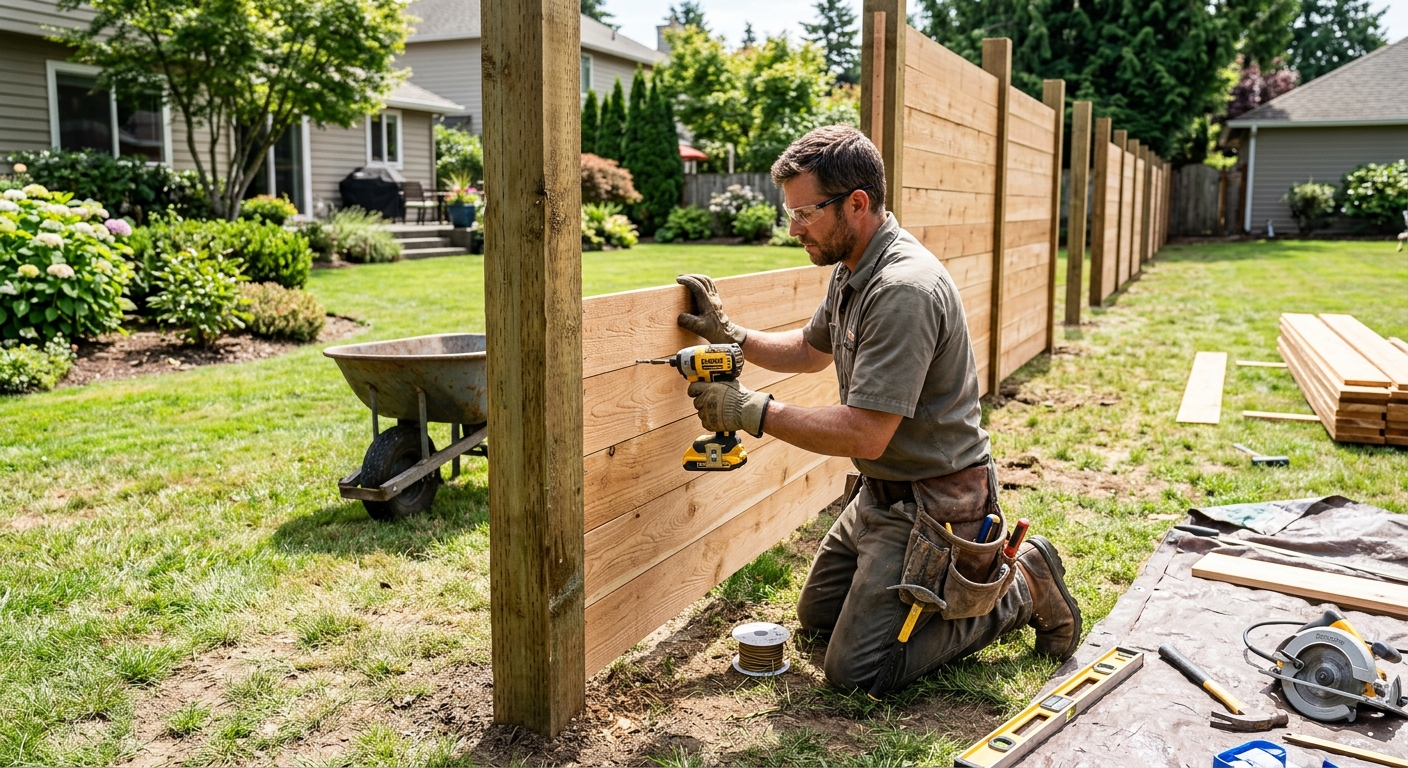
Fencing options and costs in Silver Heights
In Silver Heights, homeowners often start comparing fences because a new boundary line changes both curb appeal and day-to-day privacy. With a population of 8,235 (Statistics Canada, 2021 Census), demand is driven by how many homes are actively maintained and refreshed each year—fences are one of the most common exterior upgrades. The Toronto economic region also means a steady pace of renovation and infill, so local crews are familiar with typical backyard access issues, buried services, and the mix of clay and mixed soils found around the Greater Toronto Area.
Pricing in Toronto-area projects is heavily shaped by freeze-thaw and how deep posts must be set. In Southern Ontario, the frost line is commonly estimated around 42"–48", and best practice usually requires posts set about 4–6 inches below that depth to help prevent frost heave—especially for taller 6–8 ft privacy fences. That typically pushes most contractors toward concrete-set posts rather than simple driven posts, which increases labour time and ready-mix costs but improves stability. Wind in the GTA isn’t as extreme as open areas on the Prairies, but solid panels still need adequate post size and spacing to resist racking.
In Silver Heights, work is especially in demand around the more established residential pockets near local collector roads, where homeowners tend to upgrade privacy fencing for backyard use. Next, use the comparison table below to line up material choices with expected service life and typical price ranges in the Toronto tier.
| Material |
Lifespan |
Maintenance |
Privacy Rating |
Price per Linear Foot |
| Pressure-treated pine (standard wood) |
10–15 years |
Stain/seal every 2–3 years |
High (solid boards) |
$65–$120 |
| Cedar (natural rot resistance) |
15–25 years |
Light staining or seal as needed (typically every 2–4 years) |
High (solid boards) |
$75–$130 |
| Vinyl / PVC (no-maintenance) |
20–30 years |
Occasional wash; no staining |
High (solid privacy panels) |
$75–$130 |
| Chain-link (galvanized steel) |
20–40 years |
Minimal; rinse and inspect annually |
Low (privacy requires inserts/mesh) |
$45–$85 |
| Aluminum ornamental |
25–40 years |
Occasional cleaning; inspect gate hardware |
Low to medium (open pickets) |
$90–$160 |
| Composite / recycled material |
25–35 years |
Wash; less frequent sealing than wood |
High (solid or semi-solid styles) |
$90–$160 |
Prices are estimates only and vary by project scope, site access and material selection.
What affects the price of fencing in Silver Heights
In Silver Heights and throughout the Toronto economic region, it’s common to see quotes for the “same” fence differ by 30–50% once details are accounted for. The reason is that fencing is labour-and-site sensitive: post holes, material handling, gates, removal of an old fence, and how much concrete and hardware you need all swing total cost quickly. Even with similar materials, Toronto-area projects are rarely identical because the ground conditions (often clay with mixed fill), backyard access, and property-line complexity change the installation approach.
First, post depth matters. With Southern Ontario frost depth estimates around 42"–48", posts typically need to go about 4–6 inches below that frost depth to reduce heaving risk. Practically, that often means 1.5–2.0 m of embedment, which pushes you into concrete-set posts and longer posts—raising both material and labour. Second, wind and panel racking still matter for tall solid fences: Toronto doesn’t have Prairies-level exposure, but a 6–8 ft privacy run can rack in gusts if post spacing is too wide or rails are undersized. Third, other climates show why details count: coastal BC’s wet conditions accelerate wood rot if wood isn’t properly treated, while the GTA’s freeze-thaw makes proper hole preparation and post setting critical.
For local examples: (1) a straight 80 ft run on level ground with ready access may land in the mid wood or vinyl bands (e.g., $65–$120 or $75–$130 for the Toronto tier), but adding two gates and removal can push labour up fast. (2) A sloped yard that requires stepped panels or raked bottoms adds extra measuring, additional rails, and sometimes custom post heights, increasing labour. If you’re replacing an older fence, disposal and potential replacement of damaged base rock or buried debris can add more.
Because Silver Heights homes are renewed on an ongoing basis, many homeowners are upgrading from older, simpler builds to fences engineered for better freeze-thaw performance—meaning the quote that seems higher usually reflects correct post embedment, better hardware, and the right panel system for long-term stability.
| Price Factor |
Why It Matters |
Cost Impact |
| Fence length in linear feet |
Most materials and labour scale directly with footage |
High (the primary driver) |
| Post depth required |
Frost conditions determine embedment depth and post length |
Medium to High |
| Post setting method |
Concrete-set posts cost more but reduce failure from frost heave |
Medium |
| Material choice |
Vinyl, cedar, and chain-link price differently and drive different hardware |
Medium |
| Gate count and type |
Gates require heavier frames, hinges, latches, and sometimes bracing |
High |
| Grade and terrain |
Slopes require stepped systems, extra rails, and tighter installation tolerances |
Medium |
| Old fence removal and disposal |
Haul-away, cut-down, and disposal time increase with fence age and hardware |
Medium to High |
| Permit fees and survey / property line locate |
Locates and any required documentation reduce risk of encroachment disputes |
Low to Medium |
Permits & regulations in Ontario
In Ontario, fences can require a building permit depending on height and location. As a practical rule of thumb, fences above about 2.0 m (6.5 ft) at the rear and above about 1.0–1.2 m (3–4 ft) at the front or corner often trigger permit requirements, particularly when you’re near streetscape-facing property lines. Setbacks are also key: your fence must respect property lines and municipal setback bylaws. Before you dig any post holes, arrange utility locates through Ontario One Call. That step isn’t optional—hitting buried services can halt the job and create serious safety risk.
To avoid disputes, get a survey or at least a property pin locate before installing. Neighbour arguments in the GTA frequently come down to “where the line actually is,” not fence style. Shared fence ownership rules are handled under provincial line-fences legislation, so if there’s an existing shared boundary or your fence will replace a shared structure, document what’s being replaced and who pays for what.
How to verify your contractor in Silver Heights: confirm they carry liability insurance and provide a clearance/coverage document for WSIB (for workers). Ask for the certificate of insurance (showing you as certificate holder if possible), then check their Ontario licence/registration status through the appropriate online registry and ensure the insurance dates are current. Finally, request the written scope that lists what’s included (permit pulling, disposal, and the exact fence heights) so responsibilities are clear before work starts.
Choosing the right fence material for Silver Heights
Choosing a fence material in Silver Heights is mostly about matching your priorities—privacy, low maintenance, and realistic lifespan—to local conditions. In the Toronto climate, freeze-thaw affects anything that relies on untreated end-grain or weak post setting. Pressure-treated pine is typically the most budget-friendly option, but it still needs staining/sealing to limit grey weathering and keep boards looking good. Cedar costs more than pine up front, but its natural rot resistance gives a more attractive appearance and usually a longer service life when installed with proper post embedment.
Vinyl/PVC is popular for low maintenance: wash it occasionally and you avoid the repeated staining cycle. The trade-off is cold-weather handling—extreme cold can make some boards more brittle, and poor installation (like inadequate post spacing) can worsen issues. Chain-link is the lowest-cost long-life route, but it won’t deliver privacy without additions such as privacy slats or an upgraded mesh/infill system. Aluminum ornamental is rust-resistant and mid-range in price, but it’s open by design, so privacy is limited.
For Toronto frost considerations, concrete-set posts are usually the best long-term choice for 6–8 ft privacy fences because embedment depth is driven by frost heave risk. If you’re comparing budgets, that’s where the money is justified: for example, a vinyl privacy fence commonly sits in the $75–$130 band, while pressure-treated wood is often closer to $65–$120. If you expect to keep the fence 15+ years and want to avoid recurring staining, the additional upfront cost frequently makes sense.
| Material |
Cold Tolerance |
Lifespan |
Annual Maintenance |
Best For |
Price Band |
| Pressure-treated pine |
Good when posts are properly embedded and boards are sealed |
10–15 years |
Inspect seasonally; plan for staining/sealing every 2–3 years |
Lowest upfront cost with solid privacy (solid-board styles) |
$65–$120 |
| Cedar |
Very good; performs well through Ontario freeze-thaw when sealed as needed |
15–25 years |
Light stain/seal as needed, typically every 2–4 years |
Natural look with better rot resistance |
$75–$130 |
| Vinyl / PVC |
Good; best with correct spacing and hardware for temperature swings |
20–30 years |
Minimal—wash/rinse and check fasteners |
Low-maintenance privacy |
$75–$130 |
| Chain-link |
Excellent in cold; galvanized steel resists corrosion |
20–40 years |
Low—annual inspection and rinse |
Security and boundary definition (with optional privacy inserts) |
$45–$85 |
| Aluminum ornamental |
Excellent; designed for cold cycles |
25–40 years |
Low—clean and inspect gate hardware |
Attractive curb appeal with light visibility |
$90–$160 |
| Composite / recycled material |
Good; stable panels with proper installation |
25–35 years |
Low—wash and inspect |
Privacy with reduced upkeep vs. wood |
$90–$160 |
How to choose a fencing contractor in Silver Heights
When you’re hiring a fencing contractor in Silver Heights, verify coverage before the first post-hole gets dug. In Ontario, you want three things: liability insurance, WSIB coverage for workers, and clear evidence the contractor is properly registered/licensed for the work they’re doing. Practically, you can check by (1) requesting the certificate of insurance and confirming the coverage is current and relevant to fencing/installations, (2) confirming WSIB/WCB clearance documentation for active workers, and (3) checking the contractor’s Ontario registration status through the appropriate online registry search. Don’t rely on verbal assurances—ask for documents and keep copies.
Next, get 2–3 itemised written quotes (not a lump sum). A good quote separates line items: excavation, post setting/concrete, rails and hardware, the fencing material, gates, removal/disposal, and any site restoration like regrading. Also ask: is permit pulling included if required for your fence height and location? If you’re near a front or corner area, a permit may apply depending on height, so clarify responsibilities up front.
Warranty matters too. Ask for the workmanship warranty length (how long they stand behind installation) and the manufacturer/product warranty (what covers material defects). Find out whether warranties are transferable to future owners. For payment, never pay more than 10–15% upfront, and use a holdback until the fence is complete and inspected. Finally, require a start date and completion estimate in writing, including weather-related contingencies for freeze-thaw and ground conditions.
- Confirm the contractor’s liability insurance certificate is current and includes fencing installation activities.
- Request WSIB clearance documentation and confirm coverage is active for the period of the job.
- Verify Ontario registration/licence status via the appropriate online registry.
- Insist on itemised pricing: posts, concrete, rails, panels, gates, and labour broken out.
- Ask whether posts are concrete-set for frost-depth stability in Southern Ontario.
- Clarify the post spacing and fence height tolerances to prevent racking and wind uplift.
- Confirm permit pulling is included or excluded, and who pays if a permit is required.
- Check whether old fence removal and disposal are included (and where it’s hauled).
- Request gate hardware details (hinge type, latch quality, and whether double gates are braced).
- Ensure grade/terrain solutions are specified (stepped or raked panels, not “we’ll figure it out”).
- Get the exact warranty terms in writing: workmanship duration and any manufacturer limits.
- Use a payment schedule with a holdback until final cleanup and gate adjustments are done.
Red flags I commonly see in Silver Heights include: quotes that omit concrete/post embedment depth details, “cash-only” or no-insurance arrangements, refusing to provide itemised scope (just one lump number), vague warranties (“best effort”) with no written terms, and starting work without confirming property line locations and utility locates.
Frequently asked questions — fencing in Silver Heights
Should I repair or replace my old fence in Silver Heights?
In Silver Heights, the decision usually comes down to post integrity and whether failures are localized or structural. If only a few boards are split or the rails are loose, repair can be cost-effective—especially when the posts are still solid and the fence line hasn’t shifted. However, if you’re seeing leaning sections, repeated loosened fasteners, or rot at the bottoms of boards, it’s often cheaper long-term to replace. Also consider how the original posts were set: in Southern Ontario’s freeze-thaw conditions (frost depth commonly estimated around 42"–48"), weak embedment can lead to gradual heaving. If you’re upgrading for privacy (solid boards) and stability, replacement to concrete-set posts often avoids repeated patchwork.
How do I handle a fence dispute with a neighbour in Ontario?
Start by grounding the dispute in the property line, not opinions. In Ontario, fences must respect property boundaries and any municipal setback rules, so request a property pin locate or a survey if the line is unclear. Then document what each party agrees to: fence height, whether it’s a shared line, and who is responsible for repair versus replacement. If you have an existing shared fence, provincial line-fences legislation is relevant, and most practical solutions come from written agreements on cost-sharing and scope. Keep communication calm and in writing—photos, measurements, and the contractor’s written estimate help. If you can’t agree, pause major work (like digging new posts) until the boundary is clarified to avoid expensive rework and potential encroachment issues.
What fence style offers the best wind resistance in Silver Heights?
For wind resistance in the Toronto area, the key is reducing “sail” effect and improving panel-to-post rigidity. In practice, well-built solid privacy fences with correct post size, appropriate post spacing, and sturdy rails typically perform best because they rack less when installed with proper embedment. If your yard is more exposed (open corners, wider setbacks, or where gusts channel), consider styles with heavier framing or a semi-solid design to reduce drag. Chain-link can withstand wind loads very well but doesn’t provide privacy unless you add mesh/slats. Whatever style you choose, ensure posts are properly set below frost influence—concrete-set posts are commonly recommended for long-term stability in Southern Ontario, particularly for 6–8 ft fences.
How much does a fence cost in Silver Heights?
Fence cost in Silver Heights generally follows the Toronto economic region pricing tiers, with final totals depending on linear footage, gate count, ground conditions, and whether concrete-set posts are required. As a quick reference, pressure-treated wood installations often fall around $65–$120 in the local tier, while vinyl/PVC privacy commonly lands around $75–$130. If you’re choosing chain-link for security, budgets are often closer to $45–$85, and aluminum ornamental typically trends higher at $90–$160. Taller solid fences with gates and removal are where quotes separate most—those site-specific details can move totals significantly.
How deep should fence posts be for Silver Heights's frost?
In Southern Ontario, posts are typically set at a depth that accounts for frost heave risk. With frost line estimates commonly around 42"–48", the best practice approach is to set posts about 4–6 inches below that design frost depth. In practical terms, many installations in the Toronto region end up needing roughly 1.5–2.0 m of embedment for 6–8 ft privacy fences, especially in clay and mixed soils. That depth usually means longer posts and concrete-set foundations, which improves stability over the freeze-thaw cycles. Always confirm with your contractor’s site plan (and local soil conditions) rather than guessing—proper depth is one of the biggest predictors of whether a fence stays plumb over time.
Wood vs vinyl vs aluminum fence — which is best?
“Best” depends on what you value most in Silver Heights. Wood (pressure-treated pine or cedar) can look great and deliver high privacy with solid boards, and it typically aligns with lower upfront budgets in the $65–$120 tier for many wood installs. The trade-off is maintenance: wood usually needs staining/sealing every 2–3 years to limit weathering and keep it looking uniform. Vinyl/PVC is the low-maintenance choice in the $75–$130 tier, with occasional washing and less recurring upkeep, though it still needs correct installation details in cold weather. Aluminum ornamental often suits people who want curb appeal and durability with less rust risk; it’s usually in the $90–$160 tier, but it offers lower privacy because of open pickets. If privacy is your priority, vinyl or wood privacy styles generally win; if appearance plus longevity matters more than privacy, aluminum is a strong option.