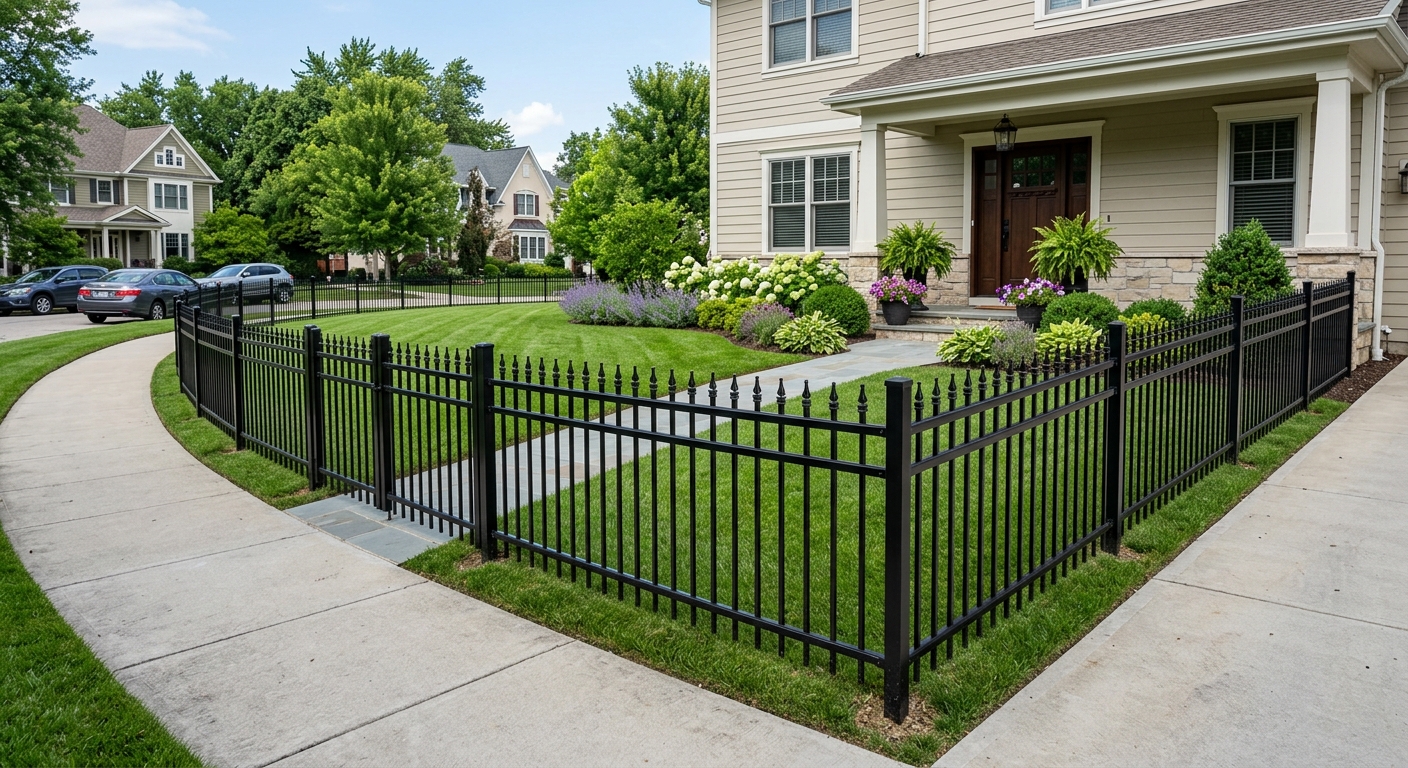
Fencing options and costs in Niagara
Niagara homeowners have plenty of choices when it comes to fencing, but the final bill usually comes down to a few local realities. With a population of 31,180 in Niagara (Statistics Canada, 2021 Census), demand is steady across St. Catharines, Niagara Falls and the wider Hamilton–Niagara Peninsula. In practice, the strongest predictor of who hires a fencing contractor is the number of detached homes—each property is a potential long-term boundary upgrade. That’s important because most Niagara lots aren’t “flat and easy”: older neighbourhoods around areas like Port Dalhousie (St. Catharines) and mature residential pockets often have uneven grades, more difficult access for augers, and occasional gate retrofits.
Cost is also shaped by southern Ontario weather. Posts must be set below the design frost depth—commonly with 36–42 inch (about 0.9–1.1 m) post depths for typical 6 ft residential fences, and deeper in clay soils—so panels don’t lean over time. Because the region experiences repeated freeze–thaw cycles, concrete-set posts are the standard for long-term stability, which raises labour and mix costs compared with simply tamped backfill. Wind exposure near lakeshore and hilltop lots can also push contractors toward tighter post spacing or sturdier panel designs.
Below is a practical cost comparison for common fence types in Niagara, with lifespan and maintenance expectations to help you pick the right option before you request quotes.
| Material |
Lifespan |
Maintenance |
Privacy Rating |
Price per Linear Foot |
| Pressure-treated pine (standard wood) |
12–20 years |
Stain/seal every 2–3 years; inspect rails and pickets after winters |
High (solid board) |
$20 – $30 |
| Cedar (natural rot resistance) |
20–30 years |
Light staining/clearing every 2–4 years; periodic tightening |
High (solid board) |
$25 – $40 |
| Vinyl / PVC (no-maintenance) |
25–35 years |
Rinse as needed; check posts and lattice for impact damage |
Medium–High (depends on panel style) |
$28 – $45 |
| Chain-link (galvanized steel) |
25–40 years |
Minimal; occasional re-tension and coating touch-ups |
Low (security only) |
$16 – $25 |
| Aluminum ornamental |
30–40 years |
Occasional wash; inspect for bent sections |
Low–Medium |
$35 – $55 |
| Composite / recycled |
25–35 years |
Minimal; clean with mild detergent, replace damaged boards |
High (solid styles) |
$32 – $52 |
Prices are estimates only and vary by project scope, site access and material selection.
What affects the price of fencing in Niagara
In the Hamilton–Niagara Peninsula, it’s common to see the “same” fence project come in 30–50% apart across Niagara, Hamilton and St. Catharines, even when the fence type looks identical on paper. The difference is usually the post and site work: the depth and method of setting posts, how much concrete is required, how long drilling takes in clay, and how difficult access is (driveway gates, narrow side yards, overhead lines, or steep backyard approaches). That labour intensity changes the quote quickly—especially in winters that leave ground hard, or in older neighbourhoods where equipment can’t get close to the fence line.
Frost penetration sets how deep posts must be set. In southern Ontario, frost penetration is about 1.2 m (4 ft), and pro installations typically set posts 4–6 inches below the design frost depth. Practically, that often pushes post depths to about 1.5–2.0 m into the ground for many long-term builds, which means longer posts, deeper holes and concrete setting—raising material and mix costs. Post depth also affects drilling time and auger wear in heavier soils.
Wind exposure can further affect design choices. Even though Niagara isn’t as open as much of the Prairies, lakeshore and hilltop lots still need sturdier rails or tighter post spacing to prevent panel racking and damage after snow loads. Where you choose a “budget” system like pressure-treated wood, you may also see more ongoing upkeep versus cedar or vinyl.
For example, if a pressure-treated installation is priced from the wood backbone band ($45–$80 per linear foot in labour/material context), moving to cedar can add cost, but it’s often justified by longer lifespan and better weathering in the freeze–thaw cycle. Likewise, if vinyl/pvc is priced from the vinyl backbone band ($70–$120), the higher upfront cost can make sense for homeowners prioritizing low maintenance and consistent appearance.
| Price Factor |
Why It Matters |
Cost Impact |
| Fence length in linear feet |
Every additional foot adds posts, rails, hardware and labour time |
Largest driver—can move total cost by thousands of dollars |
| Post depth required |
Frost line depth determines post length and hole depth |
Deeper posts increase drilling and material quantities |
| Post setting method |
Concrete vs. gravel pack vs. driven posts changes stability and labour |
Concrete setting typically adds labour and mix cost |
| Material choice |
Vinyl vs. cedar vs. chain-link affects unit cost and system build |
Can swing the quote substantially (e.g., wood vs vinyl) |
| Gate count and type |
Double gates require stronger frames and more hardware |
Often adds time, brackets, and alignment labour |
| Grade and terrain |
Slopes require stepped or raked panels and more layout time |
More cutting and measuring increases installation cost |
| Old fence removal and disposal |
Dismantling and hauling adds labour and dump fees |
Can add a meaningful day-rate cost to the project |
| Permit fees and survey / property line locate |
Some tall fences and corner/rear requirements may need extra approvals |
Small but real administrative and location costs |
Permits & regulations in Ontario
In Ontario, fence rules are typically enforced through municipal by-laws, and a permit is often required when you exceed the height threshold used in local regulations. As a baseline, fences above about 2.0 m (6.5 ft) at the rear and around 1.0–1.2 m (3–4 ft) at the front or corner commonly trigger permitting requirements. Even when a permit isn’t required, your fence still must be built within the property line and respect municipal setbacks.
Before any post hole is dug, you must call for utility locates. In Ontario, homeowners and contractors use Ontario One Call so utility companies can mark buried services. If you install without locates and hit a line, the risk is yours and it can create major repair delays. Next, consider obtaining a survey or, at minimum, a professional property-line locate based on your pins. This reduces the chance of encroachment disputes with neighbours—an issue I see often when fences were previously installed “by feel” in older Niagara lots.
Work that typically DOES require a permit: building a fence that exceeds the applicable height thresholds (especially at the rear, corner or front situations where limits are lower), and any project that materially changes an existing fence location. Work that typically does NOT require a permit: like-for-like replacement within the permitted height limits on the same footprint, assuming it meets setback rules.
To verify contractor credentials, ask for proof and check it yourself: (1) Ontario licence/registration details via the applicable online registry your contractor should provide for their trade, (2) liability insurance certificate of insurance naming you as an additional insured where applicable, and (3) clearance/coverage for WSIB (Workplace Safety and Insurance Board) for the contractor and any subcontractors. Don’t accept expired certificates—get current dates in writing before work starts.
Choosing the right fence material for Niagara
Choosing the right fence material in Niagara is mostly about matching your priorities—privacy, low maintenance, budget and lifespan—to how southern Ontario winters treat wood and how the Hamilton–Niagara Peninsula market builds fences around frost depth. Pressure-treated pine is usually the lowest upfront option. However, to avoid grey weathering and early splitting, you’ll generally need staining or sealing every 2–3 years and you should budget time for touch-ups. Cedar offers better natural rot resistance and usually looks better over time, but it still needs periodic maintenance to protect its colour and edges.
Vinyl/PVC is the “set it and forget it” choice. It doesn’t need staining, and it resists rot, which is a big win in freeze–thaw cycles. The trade-off is higher upfront material cost and the importance of proper installation—posts and rails still must be set correctly below frost depth, and extreme cold plus impact can crack panels if the system is undersupported. Chain-link is the most budget-friendly and has a long service life, but it won’t give you privacy unless you add screening or slats. Aluminum ornamental fencing is attractive and rust-resistant, yet it’s not a privacy solution and can require a more robust layout where wind loads are higher on hilltop or lakeshore lots.
For post depth: because frost penetration is about 1.2 m (4 ft), Hamilton–Niagara installs typically aim posts below the frost line to prevent heaving and leaning. In practice, that means deeper holes and often concrete-set posts for long-term stability, especially in clay soils common locally. If you want a long-lasting privacy fence, cedar or quality pressure-treated with concrete-set posts is often the best balance. As a rough example, upgrading from chain-link to a solid wood or cedar privacy system can add thousands, but it’s justified when you need actual screening from street views and winter winds.
| Material |
Cold Tolerance |
Lifespan |
Annual Maintenance |
Best For |
Price Band |
| Pressure-treated pine |
Good when properly sealed and installed |
12–20 years |
Low–moderate: light cleaning and inspection; stain as needed every 2–3 years |
Budget privacy with a clear maintenance plan |
$45 – $80 |
| Cedar |
Excellent; naturally resists rot |
20–30 years |
Moderate: periodic sealing/staining every 2–4 years |
Premium look, strong weather performance, privacy |
$55 – $95 |
| Vinyl / PVC |
Very good; can be impacted if undersupported |
25–35 years |
Very low: rinse and check hardware after freeze–thaw seasons |
Low-maintenance privacy or semi-private styles |
$70 – $120 |
| Chain-link |
Good; galvanized resists weather |
25–40 years |
Low: occasional tension check and spot coating |
Security around pools/pets with minimal cost |
$35 – $60 |
| Aluminum ornamental |
Excellent; doesn’t rust like steel |
30–40 years |
Low: wash and inspect for bends |
Front yard curb appeal with light security |
$80 – $150 |
| Composite / recycled |
Good; performs well in cold when installed correctly |
25–35 years |
Low: mild cleaning and occasional component replacement |
Privacy with durable boards and low upkeep |
$75 – $130 |
How to choose a fencing contractor in Niagara
When you hire a fencing contractor in Ontario, verification matters because frost-depth installation errors are expensive to fix. Start with Ontario licensing/registration for the contractor’s trade category (ask for their registration details and confirm through the relevant online registry). Next, request a certificate of liability insurance and verify it’s current—your contractor should be able to name you as an additional insured where required by your agreement. For worker coverage, confirm they have current WSIB (Workplace Safety and Insurance Board) clearance/coverage for their staff and any listed subcontractors. If they won’t provide documentation, that’s a major warning sign.
Get 2–3 itemised written quotes instead of a lump sum. A proper estimate should break out material costs (posts, rails, panels, hardware, concrete) and labour costs (layout, augering/drilling, post setting, assembly, gate build). Also check what’s excluded: permit pull responsibility, utility locate fees, survey/locate costs, disposal of old fencing, and any extra charge for rocky soil or steep access. Ask whether post depth, concrete setting, and post spacing meet the winter conditions in the Hamilton–Niagara Peninsula; you should see these details in the scope.
For warranty, ask for two parts: workmanship warranty (how long the installer stands behind alignment, rail failure, post setting) and product/manufacturer warranty. Confirm whether the warranty is transferable if you sell your home. On payment, never pay more than 10–15% upfront; use a holdback tied to completion and final inspection. Finally, require a start date and completion estimate in writing, including what weather conditions might delay the schedule.
- Confirm Ontario trade registration details and that the quote is in the contractor’s legal name.
- Verify certificate of insurance dates before work begins; request liability limits.
- Request WSIB clearance/coverage information for the contractor and any subs.
- Ask for the planned post depth and setting method (concrete-set vs backfill/gravel pack).
- Confirm post spacing for wind-load conditions and panel stiffness.
- Ensure utility locate responsibility is clearly stated before digging starts.
- Get a site-access plan for narrow side yards, driveways and any equipment limitations.
- Require the quote to list material grades (e.g., cedar quality, vinyl system grade).
- Ask whether gates include hardware, hinges and self-closing (if desired).
- Check disposal: specify who hauls away old fencing and whether dump fees are included.
- Review warranty terms in writing (workmanship vs manufacturer) and transferability.
- Set payment milestones: small deposit, then progress payments with final holdback until completion.
Concrete red flags I see in Niagara: quotes that avoid stating post depth and whether posts are concrete-set, no WSIB/liability paperwork provided, a “lump sum” with no itemisation for concrete, rails or gates, refusing to list exclusions (permits/locates/disposal), and a payment request that asks for most of the money up front with no timeline in writing.
Frequently asked questions — fencing in Niagara
What's the most low-maintenance fence?
In Niagara and across Ontario’s freeze–thaw seasons, vinyl/PVC is usually the lowest-maintenance option: no staining and minimal seasonal work beyond occasional rinsing and a quick hardware check after winter. Aluminum ornamental is also low-maintenance, but it’s not typically chosen for privacy. Chain-link is low-effort too, yet it won’t give privacy unless you add slats or screening. If you want “low-maintenance privacy,” vinyl/PVC often wins despite the higher upfront budget—commonly within the vinyl backbone range of $70 – $120 (per linear foot context). The key to keeping any fence low-maintenance is correct post depth below the frost line and a stable post setting method so panels don’t rack over time.
How tall can my fence be in Niagara?
Fence height limits in Niagara follow municipal by-law rules, but Ontario’s typical threshold that often triggers permitting is around 2.0 m (6.5 ft) at the rear and about 1.0–1.2 m (3–4 ft) at the front or corner. The exact allowance can vary by yard location and site conditions, so you should confirm with the local by-law before ordering materials. If you’re planning to build taller than those baselines—especially near a corner lot—expect the possibility of a permit requirement. Even when a permit isn’t needed, staying within property lines and setbacks matters. If your contractor is quoting without asking where the fence sits (front/corner/rear), you should ask follow-up questions before signing.
Should fence posts be set in concrete here?
For most long-term residential fences in the Hamilton–Niagara Peninsula, concrete-set posts are the standard recommendation because frost penetration is about 1.2 m (4 ft) and repeated freeze–thaw cycles can heave posts that aren’t deep and well set. Professional installations often set posts below the frost line (commonly by drilling deeper and aiming roughly 4–6 inches under the design frost depth) and then use concrete to help prevent movement in clay-heavy or moisture-variable soils. That adds labour and concrete cost, but it reduces the chances of leaning panels after a few winters. If a quote offers “tamped backfill only” while also assuming deep frost exposure, it’s worth questioning. Expect the installation to reflect this winter requirement—especially if you’re choosing a privacy fence where stability matters most.
What's the best fence for privacy?
Best privacy in Niagara usually means a solid panel system with close pickets/boards or a privacy screen style. Pressure-treated pine and cedar are common privacy choices because they create a full visual barrier, and they can be built strong enough for Ontario wind and snow loads when posts are properly set. Vinyl/PVC privacy panels can also deliver excellent privacy with minimal maintenance, but the upfront cost is higher, often aligning with the vinyl backbone range of $70 – $120 (per linear foot context). Chain-link is generally the opposite for privacy; it’s for security and boundary definition rather than screening views. If wind is an issue on your property (lakeshore or hilltop lots), ask about post spacing and rail bracing—privacy fences should resist racking during winter.
How do I compare fencing quotes?
When comparing quotes in Niagara, don’t just compare the total price—compare the scope. Look for itemised line items for posts, rails, panels, gates, concrete/mix, labour, layout, and disposal of old fencing. Confirm post depth targets and the setting method (concrete vs gravel pack vs other). Check whether the contractor includes utility locates responsibility and any permit pull if your fence height triggers it. A quote that’s much cheaper may be using shallower holes or skipping concrete where it’s needed for frost stability. Also confirm warranty wording: workmanship vs product warranty, and whether it’s transferable. For budget context, wood installations often sit in the $45 – $80 range, while vinyl/PVC commonly falls into $70 – $120, so differences should correspond to material and installation quality—not missing line items.
How long does fence installation take in Niagara?
Most residential fence installs in Niagara take anywhere from 1–3 days once materials are onsite and the ground conditions allow proper post drilling. A straightforward run with no removal, limited grading, and one gate is typically faster. Projects with old fence removal, multiple gates, sloped yards requiring stepped or raked panels, or difficult access can stretch timelines. Weather matters too: heavy rain or frozen ground can slow augering and concrete setting. Utility locates can affect scheduling because digging must wait for markings. A quality contractor will provide a start date and completion estimate in writing and explain weather-based contingencies. If you’re planning a taller privacy fence that may need a permit, that approval timeline can be an additional lead-time item before construction can begin.