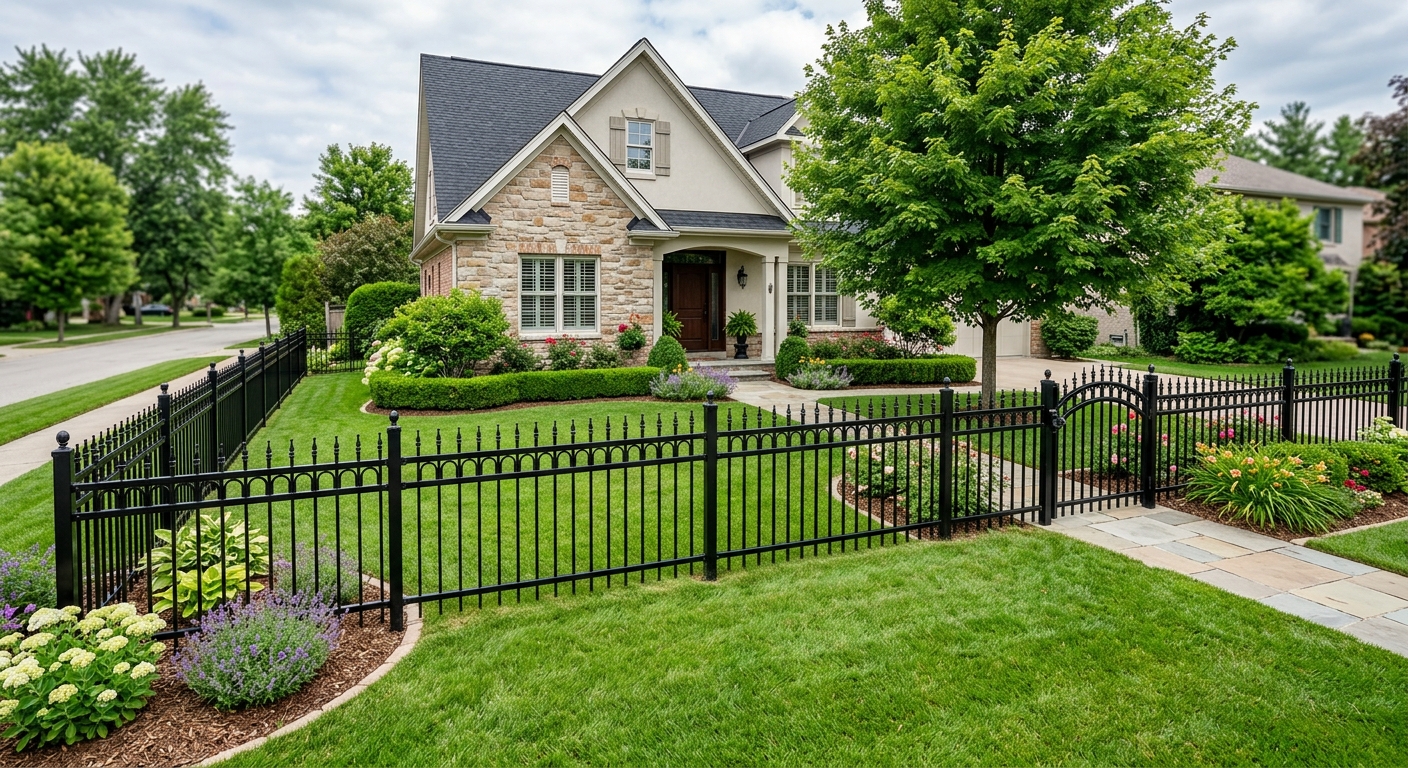
Fencing options and costs in Markham
Markham homeowners typically choose fencing based on privacy, curb appeal, and how well the fence will hold up through Ontario winters. With 338,503 people in the city (Statistics Canada, 2021 Census) and 56.2% of dwellings being single-detached homes, there’s a steady, year-round demand for boundary fencing—especially for properties where yards back onto parks, schools, or busy collectors. For many families, the real decision isn’t “which fence looks best,” it’s which option stays straight and serviceable once the frost comes and goes.
In the Toronto region, pricing is strongly shaped by how posts are installed. The frost line in Southern Ontario is commonly estimated around 42"–48", so contractors typically set posts a minimum of 3.5–4 feet deep for taller 6–8 ft privacy fences to reduce frost heave risk. That means more excavation time, longer posts, and more concrete—so “same height” fences can differ materially in total cost. Markham’s soil mix (often clay over mixed subgrade) also pushes many installers toward concrete-set posts for stability.
Installation demand is especially high in fast-growing residential pockets and established communities where property lines are clear and yards are fenced early in upgrades—areas around Cornell, Greensborough, and parts of Markham Village see frequent fence replacements after storm damage or aging wood. With that local context, here’s a practical comparison to help you budget before you request itemised quotes.
| Material |
Lifespan |
Maintenance |
Privacy Rating |
Price per Linear Foot |
| Pressure-treated pine (standard wood) |
10–15 years |
Stain/seal every 2–3 years |
High (solid boards) |
$65–$120 |
| Cedar (natural rot resistance) |
15–25 years |
Light staining as needed every 3–4 years |
High (solid boards) |
$75–$130 |
| Vinyl / PVC (no-maintenance) |
20–30 years |
Occasional wash; no painting |
High (solid privacy panels) |
$75–$130 |
| Chain-link (galvanized steel) |
20–35 years |
Minimal; rinse/inspect tension |
Low–Medium (with privacy slats) |
$45–$85 |
| Aluminum ornamental |
25–40 years |
Minimal; wash as needed |
Low (open pickets) |
$90–$160 |
| Composite / recycled material |
20–30 years |
Occasional cleaning |
High (solid styles) |
$85–$150 |
Prices are estimates only and vary by project scope, site access and material selection.
What affects the price of fencing in Markham
Even when you’re comparing “a 6 ft privacy fence,” Markham quotes can vary by 30–50% across the Toronto economic region. The reason is that fencing price isn’t just material—it’s labour intensity driven by how deep posts must go, how many corners you have, and whether the contractor needs to pour concrete, step panels, or remove and dispose of an old fence. In practice, two crews can quote the same length but spend very different time on trenching, post alignment, and hardware upgrades for wind and snow loading conditions common around local parks and open corners.
Post depth is the big driver. Frost line estimates for Southern Ontario are commonly taken around 42"–48", and best practice is to set posts about 4–6 inches below the design frost depth to reduce frost heave. That typically puts posts roughly 1.5–2.0 m (about 5–6.5 ft) into the ground. For taller fences (6–8 ft), that depth often means longer posts and concrete-set footings, which increases ready-mix and labour time. In terms of budget planning, wood privacy installations in this tier often land in the $65–$120 band, while vinyl/PVC privacy typically trends closer to the $75–$130 band because of higher material and hardware.
Concrete examples from Markham jobs: (1) a backyard line on compacted clay can require extra digging and additional concrete to stabilize posts, adding labour; (2) a property with multiple gates and latches (especially drive-through access) raises material and install time; (3) a sloped yard with racked sections can require different panel lengths and more layout time. Markham housing stock also matters—18.5% of homes were built before 1981 (Statistics Canada, 2021 Census), and older lots often have mature trees, irregular fences, and more line adjustments during replacement, which can lift the quote even when the footage is similar.
| Price Factor |
Why It Matters |
Cost Impact |
| Fence length in linear feet |
More posts, more rails, more labour time |
Largest driver of total price |
| Post depth required |
Frost line determines hole depth and post length |
Higher depth = higher material + excavation |
| Post setting method |
Concrete vs. gravel pack vs. driven posts |
Concrete-set posts cost more but improve stability |
| Material choice |
Vinyl vs. cedar vs. chain-link affects hardware and install speed |
Vinyl/PVC and cedar usually cost more than chain-link |
| Gate count and type |
Walk-through vs. drive-through (double) needs heavier frames |
Gates can add a major share of the budget |
| Grade and terrain |
Slopes need stepped or raked panel layouts |
More layout time and sometimes extra materials |
| Old fence removal and disposal |
Hauling, deconstruction, and stump/anchor removal |
May add disposal and labour fees |
| Permit fees and survey / property line locate |
Locates prevent encroachment disputes and correct setbacks |
Varies by municipality and project height/scope |
Permits & regulations in Ontario
In Ontario, fence rules can vary depending on height and location on your property, but many fences above a certain height threshold—often around 2.0 m (6.5 ft) at the rear and about 1.0–1.2 m (3–4 ft) at the front or corner—may require a building permit. You still must respect property line location and municipal setback bylaws, even when a permit isn’t required. Practically, Markham homeowners replacing older fencing should confirm height, location, and any backyard/side-yard constraints before digging.
Step one: before any post hole is dug, arrange utility locates using Ontario One Call. This is non-negotiable because you need to avoid underground services like hydro, gas, and telecom lines. Step two: obtain a survey or do a professional property-pin locate (or equivalent) so you install on your side of the line and avoid disputes with neighbours. Step three: if the proposed fence height triggers a permit threshold or your contractor is planning modifications that affect the footing plan, confirm permit requirements before installation begins.
Shared fence ownership is addressed under Ontario’s line-fence principles and related provincial rules, but the safest approach is a written agreement with your neighbour when a fence sits on or near a boundary.
When hiring contractors, verify they hold an Ontario licence (where applicable for the work they perform), carry liability insurance, and have WSIB/WCB coverage. Ask for a clearance letter/coverage confirmation and review it with the certificate of insurance (COI) documents; if you’re unsure, request the business name and certificate details that match the quote.
Choosing the right fence material for Markham
Choosing the right material in Markham is really about matching your priorities—privacy, low maintenance, budget, and lifespan—to Toronto-area conditions: freeze-thaw cycles, occasional wind-driven snow, and moist spring weather. Pressure-treated pine is usually the budget-friendly start, but it typically needs staining or sealing every 2–3 years to slow down grey weathering and prevent surface checking. Cedar costs more upfront yet often gives better early appearance and natural rot resistance; it still benefits from periodic maintenance, especially where water collects at post bases.
Vinyl/PVC is popular because it’s essentially low maintenance—no sanding or painting—but it’s not “maintenance-free forever.” In extreme cold snaps, some vinyl can be more prone to brittleness if installed with poor hardware spacing or if posts/rails aren’t aligned correctly. Chain-link is the lowest initial cost and tends to last well, but privacy is limited unless you add privacy slats or a mesh screen. Aluminum ornamental looks sharp and won’t rust, but it offers the least privacy because it’s open.
For Toronto frost-line realities, all taller solid fences should account for post depth. With the region commonly using about 42"–48" frost depth and setting posts well below that, concrete-set posts are often recommended for long-term stability. That’s especially true for 6–8 ft privacy fences where heavier panels can rack without solid footing.
Dollar-wise, if your goal is privacy and you’re comparing wood to vinyl, the price difference is often justified. A typical wood privacy install may fit roughly the $65–$120 range, while vinyl privacy often lands in the $75–$130 band; homeowners usually choose vinyl when they want fewer recurring maintenance visits and more consistent colour/appearance through multiple seasons.
| Material |
Cold Tolerance |
Lifespan |
Annual Maintenance |
Best For |
Price Band |
| Pressure-treated pine |
Good with proper sealing and hardware |
10–15 years |
Low to moderate (check stain annually; re-stain every 2–3 years) |
Lowest upfront cost for privacy |
$65–$120 |
| Cedar |
Good; performs well around freeze-thaw |
15–25 years |
Low (usually inspect yearly; stain every 3–4 years) |
Natural look with better rot resistance |
$75–$130 |
| Vinyl / PVC |
Very good if installed correctly |
20–30 years |
Minimal (wash as needed; inspect posts/rails) |
Low-maintenance privacy |
$75–$130 |
| Chain-link |
Excellent |
20–35 years |
Minimal (tension and spot-rust checks) |
Security and long service life |
$45–$85 |
| Aluminum ornamental |
Excellent (won’t rust) |
25–40 years |
Minimal (wash and occasional hardware check) |
Front-appearance fences with curb appeal |
$90–$160 |
| Composite / recycled |
Good; depends on product build quality |
20–30 years |
Low (cleaning; inspect for fastener issues) |
Privacy with reduced maintenance |
$85–$150 |
How to choose a fencing contractor in Markham
To choose a contractor in Markham you can trust, start by verifying Ontario licensing and coverage. Ask for proof of liability insurance and confirm the certificate lists the correct company name and your project address (or job location area). For worker protection, request WSIB/WCB coverage confirmation—ideally a current clearance letter or coverage document—so you’re not exposed if someone is injured on your property. If you can’t get clear evidence, that’s already a warning sign.
Next, get 2–3 itemised written quotes (not a lump sum). A good fence quote should break out: material line items, post setting method (concrete-set vs. other approach), hardware/fasteners, gate pricing, corner/line changes, and removal/disposal. If your quote doesn’t specify whether permit pulls are included, it’s incomplete. Ask for scope language that lists what’s excluded (tree removal, stump grinding, replacing damaged landscaping, or extra excavation) so you don’t get surprise charges.
Warranty matters, too. Confirm the workmanship warranty length (how long the contractor stands behind straight posts, secure rails, and correct grading), the product manufacturer warranty (for vinyl, composite, or metal components), and whether it’s transferable if you sell the home. Payment structure should be conservative: never pay more than 10–15% upfront. Hold back part of the balance until completion and final cleanup.
Finally, request a start date and completion estimate in writing, including factors like weather delays and inspection steps. Fencing is usually quick, but in Ontario, excavation and curing schedules affect the timeline.
- Ask for proof of Ontario licence/registration where applicable to their scope
- Verify liability insurance (COI) is current and the named insured matches the quoting company
- Request WSIB/WCB clearance/coverage confirmation
- Get 2–3 quotes that are itemised by materials, labour, and gates
- Confirm post setting method and depth plan (especially for 6–8 ft privacy fences)
- Ask whether demolition of old fencing and hauling/disposal is included
- Clarify if permits are included or “permit required” is billed separately
- Check if a survey/property line locate is included or excluded
- Ensure the quote specifies privacy style (board spacing, panel type) and hardware grade
- Request written warranty terms: workmanship + manufacturer coverage
- Set payment schedule with a holdback until final inspection/cleanup
- Get schedule details: start date, install days, and weather contingency notes
Common red flags in Markham: crews who won’t show insurance or WSIB/WCB documents; quotes that omit post-setting depth and concrete details; “all-in” pricing with no line items for gates or removal; unclear warranty language; and contractors who ask for large deposits (well above 10–15%) before work begins.
Frequently asked questions — fencing in Markham
What's the best fence for privacy?
For most Markham backyards, a solid-board wood privacy fence or a vinyl/PVC privacy fence is the best balance of privacy and long-term performance. Wood gives a classic look but typically needs staining or sealing every 2–3 years to reduce weathering in Ontario’s freeze-thaw cycles. Vinyl/PVC costs more up front, but many homeowners prefer it because it stays consistent in appearance and requires minimal maintenance through winter and spring melt. If you’re budgeting, wood privacy installs often fall into the $65–$120 range, while vinyl privacy commonly trends in the $75–$130 band. For stability, make sure your contractor plans concrete-set posts at appropriate depth for the frost line.
How do I compare fencing quotes?
In Markham, you want apples-to-apples quotes. Ask each contractor to itemise labour, materials, post setting method, and gates, and confirm the linear footage and number of posts/corners are calculated the same way. Pay special attention to how they plan to handle post depth and footing—many projects are priced differently because frost heave risk drives deeper concrete-set installs. Also check what’s included for demolition and disposal of your old fence, and whether permits/property line locate are covered or excluded. A “cheaper” chain-link price can look attractive, but if privacy boards or slats are needed for your goal, the effective cost changes. Compare warranty language and payment terms too, not just the final number.
How long does fence installation take in Markham?
Most straight runs with simple gate counts can be installed in a few days, but the timeline depends on layout complexity and ground conditions. Concrete-set posts add scheduling considerations because excavation and concrete placement take time and may require coordination around curing and weather. In Markham, winter conditions can slow digging and finishing, while spring thaw can affect footing stability if the soil is too wet. If your yard has slopes that require raked or stepped panels, layout and cutting takes longer. Typical residential projects are often completed within about 3–7 working days, assuming materials are on hand and access is clear. Ask for a written start date, completion estimate, and the weather contingency plan.
Can I install a fence on a slope in Markham?
Yes, you can install a fence on a slope in Markham, but you need a plan. Most contractors use stepped fencing (separate “tiers” at different heights) or raked panels that follow the grade. Which method is best depends on the fence type: solid privacy fences often look best with a stepped layout for consistent top lines, while some panel systems can be raked within the manufacturer limits. The key is to keep post depth correct at the frost-line depth while adjusting the above-ground height for grade changes. That’s another reason quotes can vary—raked/stepped work adds labour and layout time. Your contractor should also clarify where the fence will start relative to your property pins or locate points to avoid setbacks.
What is the most weather-resistant fence for Markham's climate?
For Ontario’s freeze-thaw cycles, a well-installed privacy fence with concrete-set posts is the foundation of durability—regardless of whether you choose wood, cedar, or vinyl/PVC. Among materials, vinyl/PVC is often considered the most “weather-stable” long-term because it doesn’t rot and doesn’t require repainting. Cedar and pressure-treated pine can also perform well, but they require more periodic maintenance to manage surface weathering and reduce moisture-related problems. Chain-link is extremely durable for wind and weather, though it won’t give privacy unless you add slats or screens. For budget reference, wood privacy commonly fits the $65–$120 range, while vinyl/PVC privacy often lands around $75–$130. Proper post depth and hardware quality usually matter more than brand names.
How do I prevent wood fence rot in Markham?
Wood rot prevention comes down to keeping water away from the parts that stay damp. First, ensure posts are installed with proper concrete-set footing where appropriate—this keeps the base from sitting in fluctuating wet soil and reduces heave-driven stress on the wood. Second, use the right grade and treatment for exterior ground contact where required, and seal/stain on a schedule; in Markham’s Ontario winters and humid springs, many homeowners plan staining every 2–3 years for pressure-treated pine. Third, make sure water can’t pool at the bottom rails by allowing drainage and checking that panels are level/true, not sagging. Finally, choose hardware designed for outdoor use (corrosion-resistant fasteners) so the connection points don’t trap moisture.