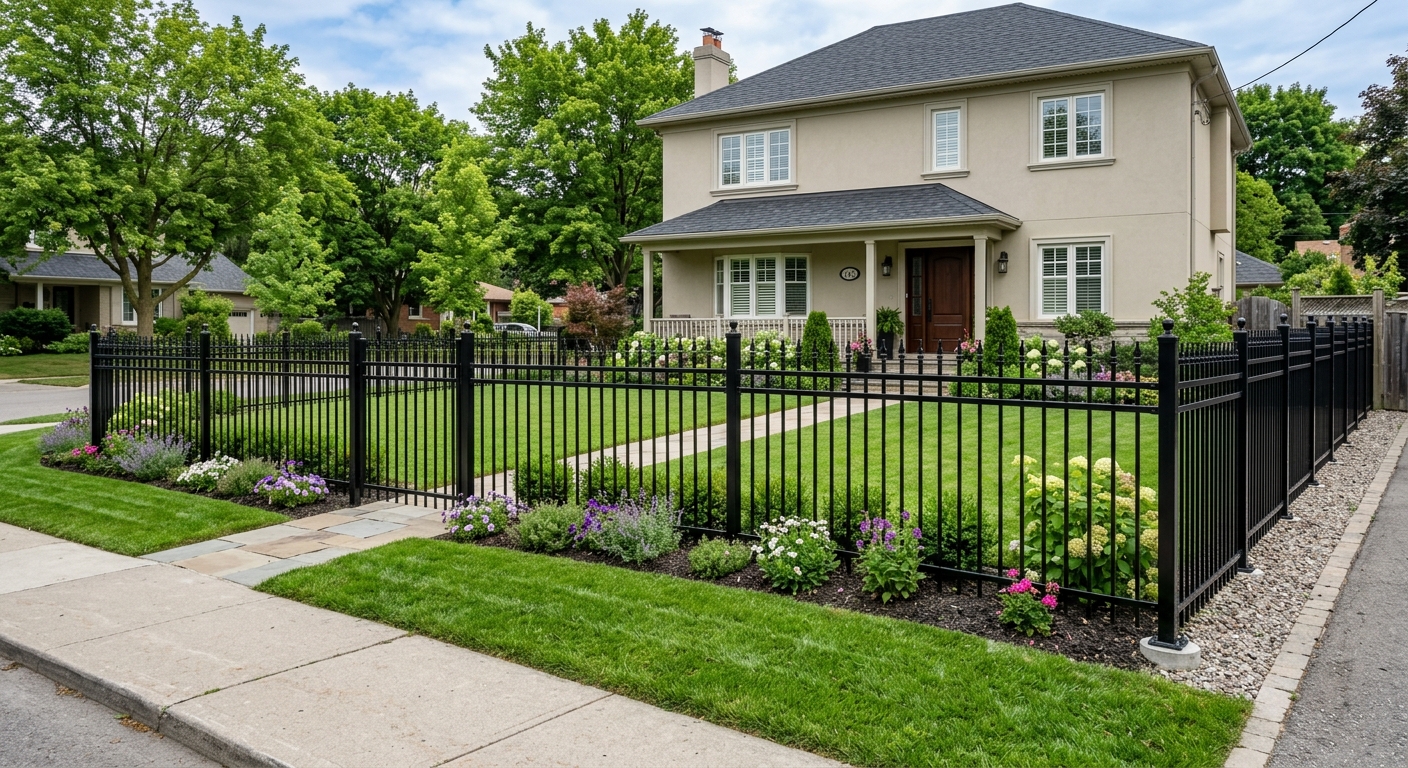
Fencing options and costs in Terrace Bay
Terrace Bay, Ontario homeowners usually want fencing that looks good year-round and holds up to Northwest weather. With a population of 1,528 (Statistics Canada, 2021 Census) and a strong homeownership base—555 homeowner households, representing 77.6% of households—there’s steady local demand for new builds, backyard privacy upgrades, and replacement runs as older boards wear out. Terrace Bay’s housing stock is also older on average: 80.4% of dwellings were built before 1981 (Statistics Canada, 2021 Census), which means many properties still have legacy fencing layouts that are due for either partial repairs or full replacement.
In Northwestern Ontario, installed cost is shaped heavily by exposure. Frost penetrates deeper than in southern Ontario, so most fences require posts set close to 4 ft (1.2 m+) below grade (often with concrete setting) to resist frost heave. Wind is another pricing factor: even though the area is forested, open stretches near the waterfront and highway corridors can create pressure that pushes contractors toward sturdier builds—heavier panels, closer post spacing, and more robust footings.
In Terrace Bay, tradespeople often see especially high demand around the hamlet core and Lakeside/shoreward properties, where yards are more exposed and privacy fences are commonly requested. From there, the next step is comparing your options by material, lifespan, and typical per-foot installed ranges—see the table below.
| Material |
Lifespan |
Maintenance |
Privacy Rating |
Price per Linear Foot |
| Pressure-treated pine (standard wood) |
10–15 years |
Stain/seal every 2–3 years |
High (solid board) |
$55–$90 |
| Cedar (natural rot resistance) |
15–20 years |
Light staining/clear seal every 2–4 years |
High (solid board) |
$70–$105 |
| Vinyl / PVC (no-maintenance) |
20–30 years |
Occasional wash; no staining |
High (solid panels) |
$80–$120 |
| Chain-link (galvanized steel) |
25–40 years |
Minimal; rinse as needed |
Low–Medium (privacy slats optional) |
$35–$65 |
| Aluminum ornamental |
25–40 years |
Occasional wash; inspect hardware |
Low–Medium (open pickets) |
$80–$140 |
| Composite / recycled material |
20–30 years |
Wash only; minor panel replacement possible |
High (board-style) |
$95–$135 |
Prices are estimates only and vary by project scope, site access and material selection.
What affects the price of fencing in Terrace Bay
For the same overall fence height and length, quotes in Northwest Ontario can vary by 30–50% depending on how contractors build for local conditions and exposure. In practice, that difference comes from post depth, footing choices, labour hours for excavation, and how wind-impacted layouts are engineered. Terrace Bay’s demand is steady, but the climate makes “small” scope changes expensive—more corner posts, deeper holes, and extra bracing quickly stack up.
First, frost line depth controls how deep posts must be set. In colder Ontario regions, posts often need to go roughly 4–6 inches below the design frost depth to prevent frost heave. That typically means 1.5–2.0 m of embedment, which raises material cost (longer posts) and labour (bigger holes and more concrete). Second, wind exposure influences layout: open or highway-adjacent runs often need closer post spacing and heavier panels, similar to how builders design in other exposed parts of the Prairies. Third, wood performance matters: coastal-style wet cycles accelerate grey weathering and rot if the correct treatment and maintenance schedule aren’t followed.
Concrete examples from common Terrace Bay projects: (1) Replacing a 50 ft run of fence with similar materials can cost more if the contractor removes old posts and sets new ones with concrete instead of gravel packing—because each hole takes longer and requires more backfill and concrete. (2) Upgrading from chain-link (often $35–$65) to vinyl (often $80–$120) may be justified where you need visual privacy and solid-board wind resistance; however, on a sheltered backyard lot, the higher material price may not deliver extra value.
Lastly, older yards with uneven grading—common in pre-1981 neighbourhood streets—can require stepped installation or raked panels, which increases labour time and increases the likelihood of extra posts for alignment.
| Price Factor |
Why It Matters |
Cost Impact |
| Fence length in linear feet |
Labour, posts, rails, and fasteners scale directly with footage. |
High (primary driver) |
| Post depth required |
Frost protection dictates embedment; deeper holes require longer posts. |
High |
| Post setting method |
Concrete setting increases materials and excavation time versus gravel packing. |
Medium–High |
| Material choice |
Vinyl and cedar typically cost more than chain-link; aluminium is mid-to-high. |
Medium–High |
| Gate count and type |
Drive-through (double) gates need stronger frames, hinges, and latching. |
Medium |
| Grade and terrain |
Slope requires stepped panels or raked rails; uneven sites add labour and waste. |
Medium |
| Old fence removal and disposal |
Cutting, hauling, and possible recycling/disposal fees add time and cost. |
Medium |
| Permit fees and survey / property line locate |
Locates prevent encroachment disputes; some fence builds require documentation. |
Low–Medium |
Permits & regulations in Ontario
In Ontario, permit requirements typically kick in for taller fences: a common rule of thumb used by many municipalities is that fences above about 2.0 m (6.5 ft) at the rear and around 1.0–1.2 m (3–4 ft) at the front or corner often require a building permit. Even when a permit is not required, every fence must follow property lines and municipal setback bylaws. Because setback rules can vary by municipality and lot type, Terrace Bay homeowners should confirm the fence height and placement with the local bylaw contact before digging.
Before any post-hole excavation, arrange utility locates. In Ontario, homeowners and contractors should call Ontario One Call so buried services are marked; this is essential even if you think the area is “clear.” Also consider getting a survey or at least locating the property pins/official boundary points before installation—this protects you from encroachment disputes when adjacent owners disagree on where the line is.
Shared fence ownership and responsibility generally follows provincial line-fences legislation, with common expectations that parties share maintenance costs for a fence on the boundary (when applicable). For step-by-step contractor verification in Terrace Bay: (1) request their Ontario licence number and confirm it via the appropriate provincial online registry; (2) ask for a certificate of liability insurance showing your jobsite coverage; (3) ensure they have current WSIB/WCB coverage documentation or a clearance letter, and confirm the clearance is valid for the period of work. Make sure those documents match the company name that will appear on the contract.
Choosing the right fence material for Terrace Bay
Picking the right fence material in Terrace Bay is about matching your priorities—privacy, low maintenance, budget, and lifespan—to Northwest Ontario’s freeze-thaw cycles and wind exposure. Pressure-treated pine is usually the lowest upfront option, but it’s not “set and forget.” Without staining or sealing every 2–3 years, boards can grey quickly and degrade sooner. Cedar offers better natural rot resistance and a nicer look, but it still benefits from periodic staining/clear seal to stay attractive through wet winters.
Vinyl/PVC is popular for low maintenance: you’ll typically just wash it and inspect fittings. The catch is that extreme cold can make some components brittle if installed incorrectly; solid frost-depth post setting and proper expansion allowance matter. Chain-link is the most budget-friendly and tends to last the longest with minimal upkeep, but it provides limited privacy unless you add privacy slats or plant screening. Aluminum ornamental is durable and rust-resistant, but it’s not a privacy fence by default.
In Northwest conditions, concrete-set posts are often the safer approach because frost can push movement if the embedment and base are wrong. That said, exact embed depth should follow the project’s frost considerations and soil conditions—especially where clay or mixed soils exist around the Terrace Bay area.
Wind and snow also influence panel choice: solid boards and vinyl require solid bracing and appropriate post spacing to reduce flex and racking. If you’re comparing options, a typical decision point is upgrading from chain-link at $35–$65 per foot to cedar at roughly $70–$105 per foot. That extra cost is justified when you want true visual privacy, fewer wind-driven view lines, and a fence that visually integrates with older, detached housing yards common locally.
| Material |
Cold Tolerance |
Lifespan |
Annual Maintenance |
Best For |
Price Band |
| Pressure-treated pine |
Good with proper staining and correct post embedment |
10–15 years |
1–2 small checks; stain/seal every 2–3 years |
Budget privacy with manageable upkeep |
$55–$90 |
| Cedar |
Excellent rot resistance in wet cycles |
15–20 years |
1 inspection; stain/clear seal every 2–4 years |
Attractive privacy for homeowners who maintain |
$70–$105 |
| Vinyl / PVC |
Good if installed correctly in cold weather |
20–30 years |
Wash as needed; inspect for hardware tightness |
Low maintenance privacy in exposed yards |
$80–$120 |
| Chain-link |
Very good; corrosion resistant when galvanized |
25–40 years |
Minimal; rinse/debris removal |
Security with limited visibility needs |
$35–$65 |
| Aluminum ornamental |
Excellent for cold and wet |
25–40 years |
Occasional wash; tighten hardware |
Curb appeal and boundary demarcation |
$80–$140 |
| Composite / recycled |
Good; depends on panel quality and fasteners |
20–30 years |
Wash only; spot-check posts/rails |
Privacy without repeated staining |
$95–$135 |
How to choose a fencing contractor in Terrace Bay
Start by verifying the basics that protect you in Terrace Bay: Ontario licensing (when applicable for the trade and work type), liability insurance, and WSIB/WCB coverage. Ask the contractor for (1) their Ontario licence details and business registration info; (2) a certificate of insurance with your jobsite listed or clearly described in the policy; and (3) WSIB/WCB clearance documentation or a current clearance letter that matches the dates of the scheduled work. Don’t accept photos of documents—request PDFs or original certificates so you can review them.
Next, get 2–3 itemised written quotes with a labour + materials breakdown rather than a single lump sum. A strong quote clearly shows: fence length measured in linear feet, post spacing, post depth/footing method, concrete quantities if used, rail configuration, gate hardware, and how corners and slopes are handled. Read the scope for what’s excluded: permit pulling, utility locate costs, soil disposal, and old fence removal. For warranty, insist on two parts—workmanship warranty (how long they stand behind the build) and product/manufacturer warranty (what the material manufacturer covers). Ask whether warranties are transferable if you sell the home.
For payment schedule, avoid paying the full amount early: a typical safe structure is 10–15% upfront for materials, with a holdback until completion and final cleanup. Finally, get the start date and completion estimate in writing, and confirm weather contingencies—frost and rain can impact excavation and concrete cure times.
- Confirm the fence length and layout in writing (include photos of your stakes/corners).
- Require post depth and footing method details (concrete-set vs gravel pack).
- Ask how they handle frost-risk areas and mixed soils.
- Ensure the quote lists gate type (walk-through vs double) and hinge hardware.
- Get a line item for utility locate call and any marking costs (as applicable).
- Confirm whether old fence removal and disposal are included.
- Check whether they handle property line locate/survey recommendations.
- Request warranty length for workmanship and whether it’s prorated.
- Get the product brand/model for boards, posts, rails, and fasteners.
- Ask about picket/board spacing and privacy configuration (solid vs staggered).
- Set a payment schedule with a holdback until the walkthrough/acceptance.
- Verify they will provide a written start date and completion target.
Common red flags in Terrace Bay include: vague quotes that don’t specify post depth or footing method; promises of “standard holes” without concrete where frost protection is needed; missing or expired insurance/WSIB/WCB paperwork; refusing to provide a written scope and warranty terms; and pushing for large upfront payments with no completion holdback.
Frequently asked questions — fencing in Terrace Bay
How deep should fence posts be for Terrace Bay's frost?
In Terrace Bay and other parts of Northwest Ontario, you should plan for below-frost embedment to reduce movement from frost heave. In this region, frost penetrates deeper than southern Ontario, so it’s common to set posts close to 4 ft (1.2 m+) below grade, with many builds requiring roughly 1.5–2.0 m of post length into the ground depending on design frost depth and soil conditions. The practical goal is to place the base below the frost line and avoid shallow holes that can shift in freeze-thaw cycles. A reputable contractor will state the embedment and footing method in the quote (for example, concrete setting vs a specified gravel pack), and explain how they deal with clay or mixed soils.
Wood vs vinyl vs aluminum fence — which is best?
“Best” depends on whether you prioritise privacy, upkeep, or appearance. Wood (pressure-treated pine or cedar) gives strong privacy and looks traditional, but pine usually needs staining every 2–3 years to prevent grey weathering; cedar needs periodic sealing too. Vinyl/PVC typically wins for low maintenance, and it can provide a solid privacy profile, but it must be installed with proper cold-weather handling and sturdy, below-frost post setting. Aluminum ornamental is durable and rust-resistant, with little maintenance, but it’s usually more decorative than private because it’s often open picket. If you want a concrete cost anchor, vinyl privacy often sits around $80–$120 per linear foot installed, while chain-link security may start around $35–$65. For most Terrace Bay yards, builders steer people toward vinyl or cedar when long-term privacy with less upkeep is the goal.
Do I need a permit to build a fence in Ontario?
In Ontario, permits are commonly required for fences above certain height thresholds, such as around 2.0 m (6.5 ft) at the rear and roughly 1.0–1.2 m (3–4 ft) in the front or at corners, though exact enforcement can vary by municipality and lot context. Even without a permit, you still must follow property line rules and municipal setback requirements. Before digging post holes, ensure utility locates are done through Ontario One Call. Terrace Bay homeowners should also consider a survey or at least locating property pins to avoid boundary disputes. When getting quotes, ask whether the contractor includes permit pull support (if applicable) and who is responsible for paperwork—good contractors will spell that out clearly in the scope.
How long does a wood fence last in Terrace Bay?
With proper installation and maintenance, wood fencing in Terrace Bay typically lasts about 10–15 years for pressure-treated pine and roughly 15–20 years for cedar. Longevity depends on below-frost post setting, correct drainage at the base, and how often you re-seal or stain. The Northwest climate brings deep freeze-thaw cycles and wet winters, which can accelerate weathering if boards aren’t protected. If you choose pine, plan on a staining/sealing routine every 2–3 years; for cedar, expect upkeep every 2–4 years to keep it looking good and to slow breakdown. A major value point: a cheaper fence installation can cost more over time if posts were set too shallow or if concrete setting was skipped where it’s needed for frost resistance.
Who owns and maintains a shared fence?
For fences on a boundary, shared ownership and maintenance responsibilities are typically handled under Ontario’s line-fences principles. In many cases, if a fence is considered a boundary fence, adjacent property owners share responsibility for upkeep and repairs, but the exact application can depend on where the fence sits and how it’s classified. The safest path in Terrace Bay is to confirm the boundary location (using property pins or a survey) and document what the fence is intended to cover. When planning a replacement, speak with the neighbour early and agree in writing on costs, timelines, and what “like-for-like” means for material and height. Your contractor can often provide a scope that helps you compare options fairly between properties.
How do I find my property line before fencing?
Before installing a fence in Terrace Bay, start with the property’s legal description and any existing survey documentation. If you don’t have a recent survey, arrange for property pins/markers to be located, or consider hiring a surveyor for a locate or confirmation. This is important because even small misplacements can create disputes—especially on older lots common in the region, where fences were often built long before current homeowners took over maintenance. You can also use municipal or title records, but those often won’t replace a physical locate of pins on the ground. When you get a quote, ask the contractor whether they require proof of the property line location, and whether they’ll coordinate with the locate plan. Utility locates are still necessary before any digging, even after you identify the boundary.