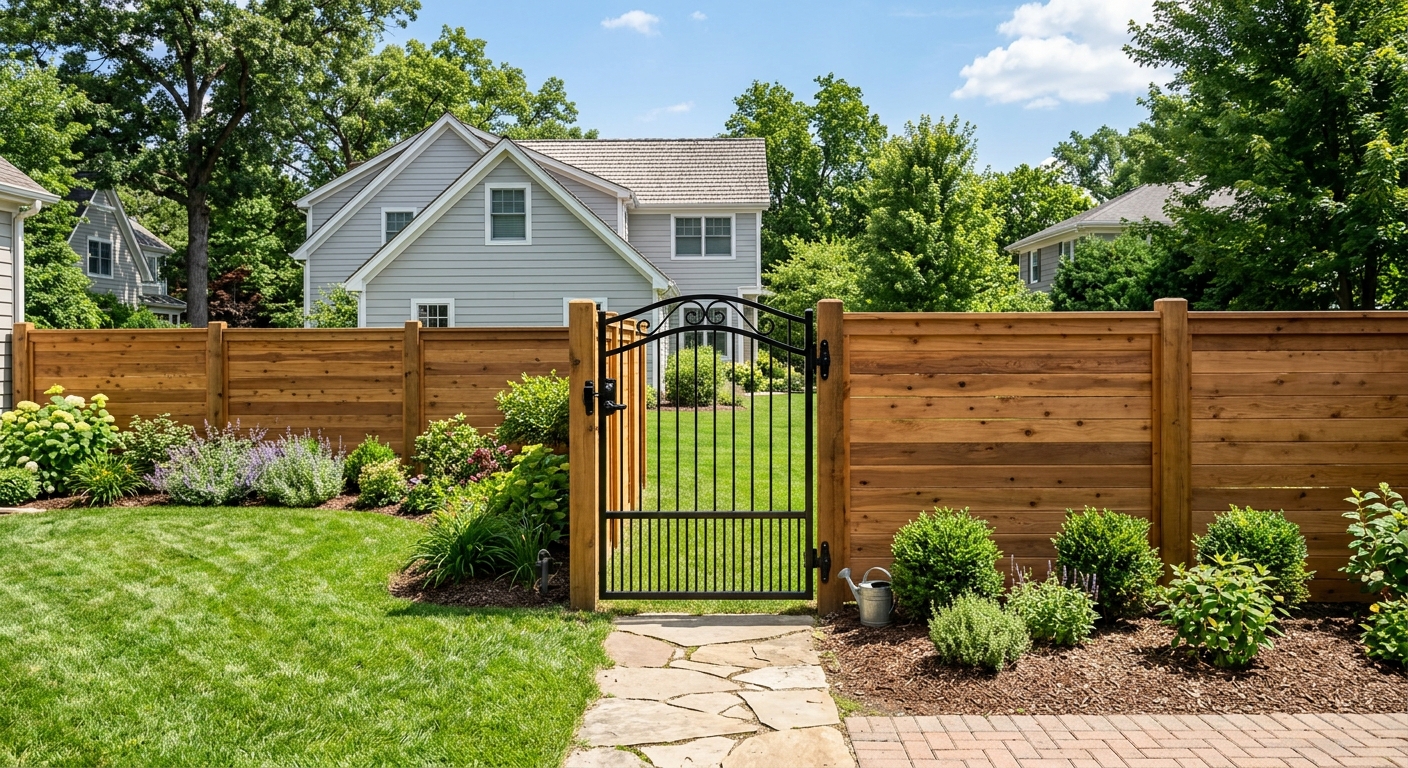
Fencing options and costs in Listowel
In Listowel, a fence is one of the first “curb comfort” upgrades homeowners notice, and it’s especially popular because the town has an established base of owner-occupied homes—there are 7,530 residents in the 2021 Census (Statistics Canada, 2021 Census). In practical terms, that steady owner base creates consistent demand for privacy fencing, gate installs, and fence repairs after storm damage. It also means more local trades are familiar with common site conditions around town: mature trees, varying lot grades, and the freeze–thaw cycle that affects how posts settle.
Costs in the Toronto economic region are shaped less by “fancy designs” and more by construction fundamentals. Contractors typically set posts using concrete because the common Southern Ontario frost-line assumption is about 42"–48", and taller privacy fences (wood or vinyl) usually need deeper, more stable footings to prevent frost heave. That depth, plus Ontario-style panel spacing for wind resistance, pushes labour and material costs higher than what people expect from “simple” driven-post installs.
Where the trade is especially in demand in Listowel is the family-housing pocket near the downtown core and along residential streets where lots are narrower and gates get used daily—walk-through and drive-through gate work adds labour and hardware. With those local realities in mind, the table below compares the most common fence types by lifespan, maintenance, privacy, and typical price-per-linear-foot ranges for this area.
| Material |
Lifespan |
Maintenance |
Privacy Rating |
Price per Linear Foot |
Price Range |
| Pressure-treated pine (standard wood) |
10–15 years |
Stain/seal every 2–3 years; hardware checks |
High (solid panels) |
$65–$120 |
$65 – $120 |
| Cedar (natural rot resistance) |
15–20 years |
Light staining/clear-coating every 2–4 years |
High (board-on-board/solid styles) |
$80–$135 |
$80 – $135 |
| Vinyl / PVC (no-maintenance) |
20–30 years |
Rinse wash-down; occasional fastener checks |
High (solid privacy styles) |
$75–$130 |
$75 – $130 |
| Chain-link (galvanized steel) |
20–35 years |
Low; occasional tightening and coating touch-ups |
Low–Medium (open mesh) |
$45–$85 |
$45 – $85 |
| Aluminum ornamental |
25–40 years |
Low; rinse and spot-check hardware |
Low–Medium (decorative pickets) |
$90–$160 |
$90 – $160 |
| Composite / recycled material |
20–30 years |
Low; wash-down and occasional repairs |
High (solid privacy styles) |
$95–$160 |
$95 – $160 |
Prices are estimates only and vary by project scope, site access and material selection.
What affects the price of fencing in Listowel
In Listowel, two homeowners can receive quotes for the “same length” fence and still see 30–50% differences once the details get priced in. That spread is common across the Toronto area because crews price risk differently: post-setting depth, soil conditions, and whether your line requires extra hardware for wind and gate movement. Even if you’re in a smaller town, the labour and materials reality is still tied to the Toronto economic region’s availability, scheduling, and the prevailing best-practice approach to frost protection.
First, Southern Ontario frost-line depth matters. Contractors typically set posts about 4–6 inches below the assumed design frost depth, to help prevent heaving during winter freeze–thaw cycles. Practically, that often means posts going roughly 1.5–2.0 m into the ground. Deeper holes mean longer posts, more concrete, and more excavation time. Second, wind and the need to resist racking affects panel style and spacing. For privacy fences, local practice often uses heavier posts and tighter spacing—especially in exposed pockets or where yards back onto open corridors.
Concrete examples from Listowel sites: a clay-heavy backyard usually requires more careful excavation and larger concrete footings, adding time versus looser, sandier soils. A sloped lot near natural grade changes can increase labour because panels may need to be stepped rather than “hacked off,” raising material handling and installation time. If you already have an old fence, removal can add to the budget through haul-away and disposal, but it can lower costs versus rebuilding on top of failing posts.
These factors also interact with price bands. A pressure-treated wood privacy fence often starts around $65 – $120 per linear foot when access is straightforward; however, with concrete-set posts and a multi-gate layout, vinyl or PVC can land in the $75 – $130 range because the deeper, heavier post system and labour are similar. Done right for Ontario winters, the premium is often the difference between a fence that stays plumb after the first big thaw and one that needs re-leveling within a couple of seasons.
| Price Factor |
Why It Matters |
Cost Impact |
| Fence length in linear feet |
Most materials and labour scale directly with length |
Highest driver; can double the budget when length doubles |
| Post depth required |
Frost line determines hole depth and post length |
Deeper footings increase concrete, excavation, and materials |
| Post setting method |
Concrete set provides better long-term stability than driven posts |
Concrete-set typically adds labour and ready-mix costs |
| Material choice |
Vinyl vs. cedar vs. chain-link changes labour, longevity, and hardware |
Material price swings can push projects toward higher bands |
| Gate count and type |
Gates need bracing, different hinges, and heavier framing |
More gates often increases cost disproportionately |
| Grade and terrain |
Slope requires stepped/raked panels and extra labour |
Increases install time and may raise material waste |
| Old fence removal and disposal |
Haul-away, labour, and restoration of the work area |
Can add a meaningful line-item even if the new fence is basic |
| Permit fees and survey / property line locate |
Some heights trigger permitting; locating reduces encroachment risk |
Varies by scope; can add costs but protects against rework |
Permits & regulations in Ontario
In Ontario, fences above a height threshold—often around 2.0 m (6.5 ft) at the rear and about 1.0–1.2 m (3–4 ft) at the front or corner—may require a building permit, depending on location and municipal bylaws. Even when a permit isn’t required, you still must respect property lines and any municipal setback rules that apply to your lot.
Before you dig any post holes, call for utility locates through Ontario One Call to mark buried services. After that, confirm your property line using a survey or a locate that references your property pins. This matters because fences installed a few feet off-line can trigger removal demands and expensive “fix-it” work—particularly when neighbours dispute the boundary.
Shared fence ownership and responsibilities are handled under Ontario line-fence principles: the neighbourly rule-of-thumb is that when a fence is shared, both parties typically share maintenance responsibilities, but the “who pays for what” can depend on where the fence sits and what was agreed historically.
To verify a contractor for your Listowel project, ask for: (1) proof of relevant Ontario licensing/registration where applicable (and ensure the trade is eligible for the work being proposed), (2) liability insurance, and (3) clearance evidence of WSIB coverage where workers are involved. You can check insurance documents by reviewing the current certificate of insurance, confirming it names you/your property as required, and matching the certificate dates to your project timeline; for workers’ coverage, request a clearance letter or proof of clearance and verify it’s current.
Choosing the right fence material for Listowel
Choosing the right material for a Listowel fence comes down to your priorities: privacy, low maintenance, budget, and the reality of Ontario winters. Pressure-treated pine is the most budget-friendly entry point, but it typically needs staining or sealing every 2–3 years to reduce grey weathering and surface checking. Cedar looks warmer and resists rot better, yet it still benefits from periodic sealing to keep it looking tidy after snow, salt, and spring thaw.
For true low maintenance, vinyl/PVC is a popular choice in this Toronto-area climate. It won’t rot, and you usually just rinse it, but extreme cold can make some lower-quality products brittle, so you want proper post spacing and compatible fasteners. Chain-link is the lowest-cost option and tends to outlast most homeowners’ expectations, but it provides minimal privacy unless you add slats or plant screens. Aluminum ornamental fences hold up extremely well and won’t rust like bare steel, but they’re best when you want a defined boundary rather than full privacy.
Post depth is where material decisions meet Ontario frost logic. For taller fences, contractors commonly concrete-set posts to manage the freeze–thaw cycle; with the Southern Ontario frost-line assumption (about 42"–48"), you often need roughly 1.5–2.0 m of post embedment. That’s why “cheap” driven-post approaches can fail early in cold snap conditions. Wind and snow load also influence hardware and spacing: privacy panels rack more than open designs, so heavier posts and closer centres help.
As a concrete example: if a cedar privacy fence is priced around the mid-to-upper wood/cedar range and includes concrete-set posts, it can be justified versus pressure-treated pine when you factor in ongoing staining labour and material wear. The initial difference is often small compared with the cost of re-leveling a fence after winter movement.
| Material |
Cold Tolerance |
Lifespan |
Annual Maintenance |
Best For |
Price Band |
| Pressure-treated pine |
Good with proper sealing and hardware |
10–15 years |
1–3 hours to inspect; stain/seal every 2–3 years |
Budget-friendly privacy with regular upkeep |
$65–$120 |
| Cedar |
Good; needs protection from surface graying |
15–20 years |
1–3 hours to inspect; seal/stain every 2–4 years |
Better look and rot resistance with moderate upkeep |
$80–$135 |
| Vinyl / PVC |
Very good when installed with correct spacing |
20–30 years |
Rinse wash-down; occasional fastener checks |
Low maintenance privacy |
$75–$130 |
| Chain-link |
Excellent for cold; durable coating |
20–35 years |
Low; periodic tightening and spot checks |
Security, pet containment, long service life |
$45–$85 |
| Aluminum ornamental |
Excellent in freeze–thaw |
25–40 years |
Low; rinse and spot-check hardware |
Boundary definition with curb appeal |
$90–$160 |
| Composite / recycled |
Good; depends on product quality and installation |
20–30 years |
Low; wash-down and occasional repairs |
Privacy with reduced maintenance |
$95–$160 |
How to choose a fencing contractor in Listowel
Choosing a fencing contractor in Listowel should start with proof, not promises. For Ontario projects, verify three things: (1) licensing/registration where applicable for the type of work, (2) liability insurance, and (3) workers’ compensation coverage (WSIB/WCB coverage). How to check: request a certificate of liability insurance showing your project address (or at least the insured parties), confirm coverage is current (issue/expiry dates), and ensure limits are reasonable for construction work. For workers’ coverage, ask for a clearance letter or proof of clearance and verify the letter is current before work begins.
Next, get 2–3 itemised written quotes. You want a breakdown that clearly separates labour (excavation, post setting, panel/gate installation) and materials (posts, rails, fasteners, concrete, fencing panels, hinges/latches). Avoid lump-sum quotes that don’t list gate hardware choices or post-setting methods. Read the exclusions: is permit pulling included when needed, is old fence removal/disposal included, and is site restoration (grading, final cleanup) part of the scope?
Warranty matters. Ask for a workmanship warranty length and whether it covers post-setting settlement issues; also confirm the product/manufacturer warranty term and whether it’s transferable to you as the homeowner. For payment, never pay more than 10–15% upfront—then hold back a portion until substantial completion and a walkthrough. Finally, insist on a written start date and a completion estimate, especially in spring and fall when crews book up.
- Ask whether posts are concrete-set or driven, and request the embedment approach for frost protection.
- Confirm fence height, post spacing, and panel style match your privacy and wind expectations.
- Get an itemised materials list (rails, caps, hinges, latches, fasteners, concrete amount/approach).
- Confirm gate type (walk vs. double drive-through) and include bracing/hardware specifics in the quote.
- Ask who is responsible for Ontario One Call utility locates and where locates are documented.
- Verify the quote includes old fence removal and disposal if you need it.
- Check for a clear timeline: start date, material lead time, and completion estimate.
- Ensure the contract includes cleanup and final grade touch-up.
- Review the warranty in writing: workmanship coverage duration and what triggers it.
- Confirm payment schedule: maximum 10–15% deposit and holdback until completion.
- Ask for photos of similar Listowel/nearby projects or recent installs.
- Make sure permits (if required by height/location) are handled or clearly excluded.
Red flags to watch for in Listowel: quotes that ignore post depth and frost-set practices, “too good to be true” pricing with no excavation detail, refusal to provide a certificate of insurance and proof of workers’ coverage, missing line-items for gates and disposal, and contracts that don’t include a written scope, timeline, and warranty terms.
Frequently asked questions — fencing in Listowel
How deep should fence posts be for Listowel's frost?
In Listowel and throughout Southern Ontario, posts are typically set deeper than people expect because freeze–thaw can heave fence lines. A common best-practice approach uses the design frost line as a reference (often assumed around 42"–48"), then sets posts about 4–6 inches below that depth to reduce movement risk. In practical terms, that often means roughly 1.5–2.0 m of embedment for many privacy fence heights. For 6–8 ft privacy fences, most contractors recommend concrete-set posts rather than driven posts, especially in clay or mixed soils. When reviewing quotes, ask how deep the holes will be and whether concrete will be used—those details explain a lot of the real cost difference between “budget” and “built to last” installs.
Wood vs vinyl vs aluminum fence — which is best?
There isn’t one “best” for every Listowel yard, but there is a best fit for your priorities. If you want privacy and the lowest upfront cost, pressure-treated wood is often the entry point (commonly aligned with the wood installation band of $65 – $120 per linear foot), though it needs regular sealing to maintain its appearance in Ontario’s damp freeze–thaw. Cedar looks great and resists rot better, but you still do periodic upkeep. Vinyl/PVC is the low-maintenance privacy option in the Toronto region, generally landing in the $75 – $130 range; it’s durable, but proper post spacing and installation quality matter in extreme cold. Aluminum is excellent for long-term corrosion resistance and curb appeal; it’s usually mid-range to higher cost and provides less privacy than solid wood or vinyl panels.
Do I need a permit to build a fence in Ontario?
Often, you may need a permit for taller fences, particularly when you’re near common thresholds such as around 2.0 m (6.5 ft) at the rear and roughly 1.0–1.2 m (3–4 ft) near the front or corners. Whether you need one can depend on your lot and the specific municipal rules that apply in Ontario. For any fence project in Listowel, plan to confirm height and location before you start. Also remember you must respect property lines and setbacks, and you should call Ontario One Call before digging any post holes to avoid hitting buried services. A qualified contractor can usually tell you if your proposed height triggers permitting; ask them to state clearly whether permit pulling is included or excluded in the quote.
How long does a wood fence last in Listowel?
A wood fence’s lifespan in Listowel depends on material quality, installation method, and maintenance. Pressure-treated pine commonly lasts about 10–15 years with proper hardware and periodic sealing/staining, because Ontario winters stress the boards and the fasteners through moisture and freeze–thaw cycles. Cedar often extends that range to around 15–20 years thanks to better natural rot resistance, though it still needs maintenance to prevent rapid surface breakdown and unattractive graying. The bigger factor than most homeowners realise is post stability: if posts aren’t set deep enough (often around the frost-protected embedment range), you can see early leaning or gaps after winter movement. That’s why reputable installs will discuss concrete-set posts for privacy fence heights and soil conditions.
Who owns and maintains a shared fence?
In Ontario, shared fence ownership and maintenance responsibilities generally follow Ontario line-fence principles, but the practical answer depends on how the fence was established and where it sits relative to the boundary. If a fence is truly shared—often meaning it benefits both properties and lies along or with an agreed boundary—maintenance is frequently treated as a shared responsibility. However, disputes can arise if there’s no clear historical agreement or if a fence was installed on the wrong side of the property line. For a Listowel project, the safest approach is to confirm the property line first (survey/locate) before starting, then discuss responsibilities for repairs or replacement—especially for gates, braces, and damaged sections. A good contractor can document the alignment and help you prevent avoidable boundary issues.
How do I find my property line before fencing?
To find your property line in Listowel, don’t guess from landscaping or sidewalk edges. Start by checking your property documentation (often your survey certificate or any prior property plan you’ve received at purchase). If you don’t have a recent survey, arrange a locate based on your property pins—this is especially important before fence posts go in. Many homeowners also find it helpful to have a professional confirm the pin locations so the layout matches the legal boundary. Before digging, call Ontario One Call to mark underground utilities, and then plan your fence alignment around those marked areas. This reduces the risk of encroachment disputes with neighbours and prevents the expensive problem of removing and reinstalling fence sections after installation.