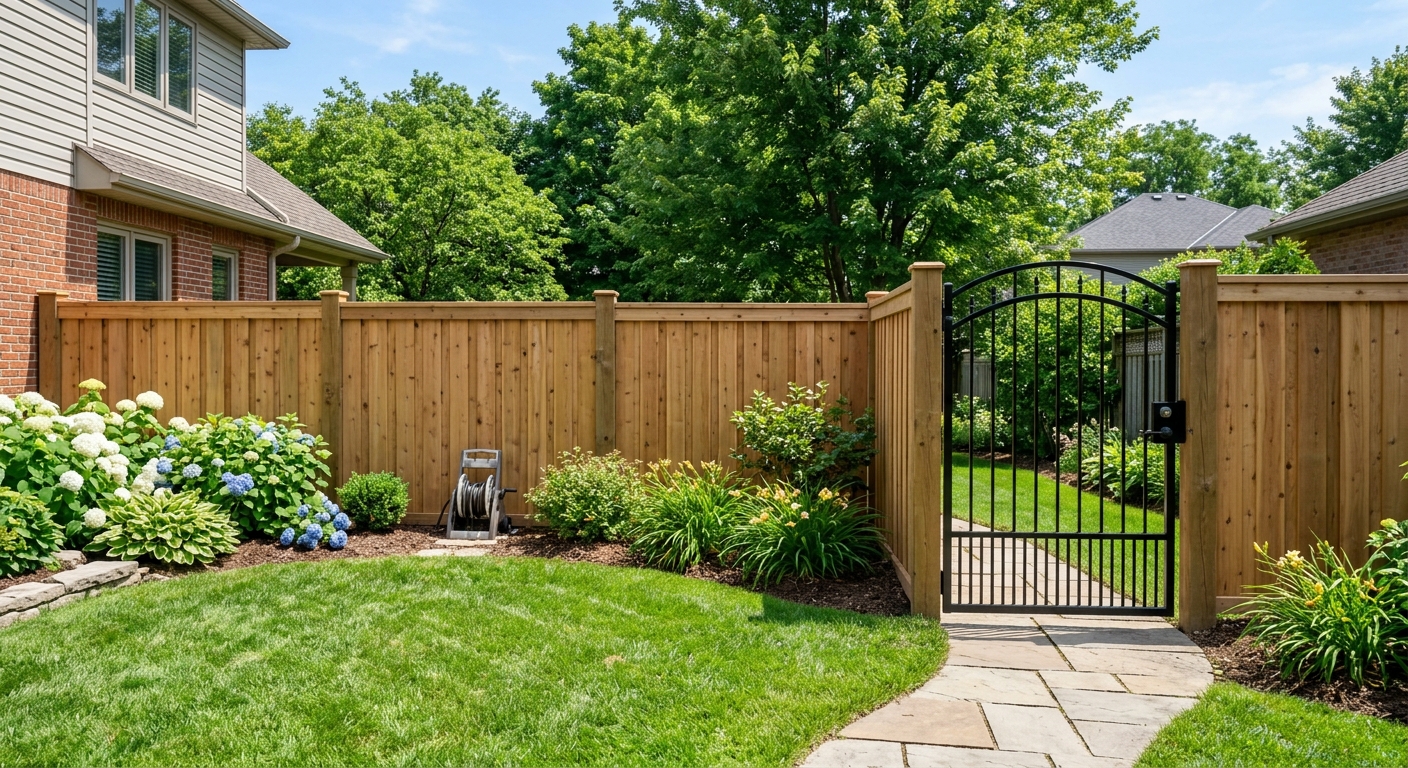
Fencing options and costs in Yonge-St.Clair
Yonge-St.Clair is one of those neighbourhoods in Toronto where backyard fences do more than mark property lines—they manage pets, create privacy between neighbouring lots, and help homeowners define outdoor space on busy streets. With a 2021 population of 12,528 residents in the local profile area (Statistics Canada, 2021 Census), demand tends to track with household turnover and home improvements. Toronto’s housing mix also matters for fencing demand; lots of detached and semi-detached homes in the surrounding area create a steady market for privacy upgrades and boundary replacements, especially after older fences wear out or no longer match modern expectations.
Cost in Toronto is shaped heavily by our freeze–thaw cycle and local installation practice. The common “design frost line” range in Southern Ontario is about 42"–48", which means privacy fences often need posts set a minimum of 3.5–4 feet deep. That depth, plus clay and mixed soils around the GTA, pushes most contractors toward concrete-set posts for stability—more labour and ready-mix costs than simple driven posts, but better resistance to heaving and leaning. For homeowners in more exposed pockets—such as along the busier corridors near Yonge Street and around corner lots—wind loads also influence panel style and post spacing.
Because materials and labour availability vary by neighbourhood access and job complexity, you’ll see different quote numbers for the same height and length in Yonge-St.Clair. Use the table below to benchmark typical options before you compare detailed, line-item quotes.
| Material |
Lifespan |
Maintenance |
Privacy Rating |
Price per Linear Foot |
| Pressure-treated pine (standard wood) |
10–15 years |
Stain/paint every 2–3 years |
High (solid picket / board) |
$65 – $120 |
| Cedar (natural rot resistance) |
15–20 years |
Seal/stain every 2–4 years |
High (board/solid styles) |
$75 – $135 |
| Vinyl / PVC (no-maintenance) |
20–30 years |
Rinse as needed; check hardware |
High (solid panel styles) |
$75 – $130 |
| Chain-link (galvanized steel) |
20–30 years |
Minimal; occasional tension checks |
Low–Medium (privacy slats optional) |
$45 – $85 |
| Aluminum ornamental |
25–40 years |
Wash periodically; no rust |
Low (open design) |
$90 – $160 |
| Composite / recycled material |
20–30 years |
Low; inspect posts and fasteners |
Medium–High (solid profiles) |
$85 – $150 |
Prices are estimates only and vary by project scope, site access and material selection.
What affects the price of fencing in Yonge-St.Clair
Two neighbours in Yonge-St.Clair can receive quotes that differ by 30–50% for what looks like the same fence—height, style, and “rough length” can be identical, but the installed reality is often different. In Toronto and across Ontario, the biggest drivers tend to be frost-set depth requirements, how posts are installed in clay/mixed soils, access for workers and equipment, and how many gates you’re adding. When contractors must schedule extra labour for concrete-set posts and traffic-safe staging, costs move up quickly—even if the material is unchanged.
Cold-weather installation is the core Toronto reason quotes vary. While the GTA does not face the extreme open-field wind exposure of the Prairies or coastal storm loads in BC, Southern Ontario’s design frost line (commonly taken at about 42"–48") still requires posts set roughly 4–6 inches below design frost depth to reduce heaving. That typically translates to about 1.5–2.0 m into the ground and longer posts. Concrete setting also means additional material (ready-mix) and labour steps (hole depth verification, backfill, and curing coordination). In Ontario, that’s why privacy fences often land toward the upper end of the wood and vinyl ranges (e.g., wood often aligns with the $65–$120 band and vinyl/PVC with the $75–$130 band), particularly when posts must be set in concrete.
Concrete examples from Yonge-St.Clair projects: (1) A 6–8 ft solid privacy fence in clay may require a full concrete-set approach, pushing per-linear-foot costs upward versus a gravel-pack option. (2) A backyard with tight side access can force hand digging and more time per post, raising labour even for the same material. (3) If you already have mature trees and unstable edging, contractors may adjust footing details and hardware to avoid future movement—again increasing labour time. With older housing stock and frequent fence replacements, the “hidden” scope items—like old fence removal—also commonly explain why two quotes differ materially.
| Price Factor |
Why It Matters |
Cost Impact |
| Fence length in linear feet — the primary cost driver |
More panels/posts/hardware translate to more labour and materials |
High; scales directly |
| Post depth required — frost line determines post length and hole depth |
Deeper holes reduce frost heave risk and require longer posts and more labour |
High in Southern Ontario |
| Post setting method — concrete vs. gravel pack vs. driven posts |
Concrete increases stability but adds materials and curing coordination |
Medium–High |
| Material choice — vinyl vs. cedar vs. chain-link |
Unit costs, expected durability, and hardware differ |
Varies; can swing overall estimate |
| Gate count and type — walk-through vs. drive-through (double) |
Gates require heavier framing, hinges, latches and often additional bracing |
Medium–High per gate |
| Grade and terrain — sloped yards require stepped or raked panels |
Stepping and fitting create extra labour and trim |
Medium |
| Old fence removal and disposal |
Demolition, haul-away, and site clean-up add time and disposal fees |
Medium (can be high) |
| Permit fees and survey / property line locate |
Accurate locating prevents encroachment disputes and may require documentation |
Low–Medium (project-dependent) |
Permits & regulations in Ontario
In Ontario, fence rules are mostly enforced through municipal by-laws and property-line requirements, and permits can come into play when you exceed certain height thresholds. A common guideline homeowners run into is that fences above roughly 2.0 m (6.5 ft) at the rear and 1.0–1.2 m (3–4 ft) at the front or corner often require a building permit or at least municipal approval, especially where visibility or lot coverage rules may apply. Even if a permit is not required for your exact height, your fence must still respect property lines and any municipal setback requirements.
Before you dig any post holes, you must call for utility locates (Ontario One Call). Hitting buried service lines is the kind of mistake that can shut a job down immediately. For peace of mind in Yonge-St.Clair, consider getting a survey or a property line locate based on your pins before installation—this helps avoid disputes when neighbouring property edges are unclear or when older fences were built slightly off-line.
Shared fence ownership rules are generally governed by Ontario line-fences legislation, which can affect how you split costs and what happens if one party wants changes.
To verify your contractor properly: check their Ontario business registration and confirm they carry liability insurance, and ask for proof of coverage for workplace protection (commonly WSIB for eligible workers). Request certificate of insurance and coverage details before work starts. If they claim a “permit not needed,” ask who determines that based on your lot conditions.
Choosing the right fence material for Yonge-St.Clair
Choosing the right fence material in Yonge-St.Clair is about matching your priorities—privacy, low maintenance, lifespan, and total budget—to how Toronto performs season after season. Pressure-treated pine is the entry point for many homeowners, but in Southern Ontario it typically needs staining or painting every 2–3 years to prevent grey weathering and protect against moisture. Cedar looks great and resists rot better than pine, but it still needs periodic sealing to keep it looking uniform. Vinyl/PVC is popular for “no paint” convenience; however, in extreme cold it can become brittle if the system is not installed correctly with proper bracing and quality hardware. Chain-link is the lowest upfront cost and lasts a long time, but it won’t give privacy unless you add privacy slats or plant screening. Aluminum ornamental adds curb appeal and won’t rust, but it’s not a privacy fence in the solid sense.
Toronto’s freeze line also affects material choice indirectly through post strategy. With a common Southern Ontario frost line of about 42"–48", privacy fence posts are often set roughly 3.5–4 feet deep (and sometimes more depending on exact site conditions) using concrete-set posts to reduce heaving. That means the project can be labour-heavy regardless of whether you select pine, cedar, vinyl, or composite. Wind and snow load concerns are usually manageable in the GTA compared with more exposed regions, but taller solid fences still require heavier posts and closer spacing to reduce racking.
Here’s where the price difference can be justified: if a solid privacy fence is trending toward the wood band (about $65 – $120 per linear foot range) and vinyl is closer to $75 – $130, the extra upfront cost for vinyl can make sense if you want minimal upkeep and prefer a consistent look through wet springs and long winters—especially when you’re already paying for frost-safe, concrete-set post work.
| Material |
Cold Tolerance |
Lifespan |
Annual Maintenance |
Best For |
Price Band |
| Pressure-treated pine |
Good with proper staining and hardware |
10–15 years |
2–3 year stain schedule (spot checks yearly) |
Budget-conscious privacy fences |
$65 – $120 |
| Cedar |
Good; benefits from sealing against moisture |
15–20 years |
Seal/stain every 2–4 years (visual checks yearly) |
Natural look with better rot resistance |
$75 – $135 |
| Vinyl / PVC |
Good when installed with correct bracing |
20–30 years |
Low—rinse; inspect hardware periodically |
Low maintenance and long-term appearance |
$75 – $130 |
| Chain-link |
Very good |
20–30 years |
Minimal—tension and coating checks |
Security with minimal budget |
$45 – $85 |
| Aluminum ornamental |
Excellent; won’t rust |
25–40 years |
Wash annually or as needed |
Appearance-focused boundary fencing |
$90 – $160 |
| Composite / recycled |
Good; quality profiles reduce warping risk |
20–30 years |
Low—inspect fasteners and post condition |
Mixed privacy/appearance with low upkeep |
$85 – $150 |
How to choose a fencing contractor in Yonge-St.Clair
Choosing a contractor is where many homeowners save time and avoid fence failures later. In Ontario, you should verify the contractor’s Ontario licence/registration as applicable to their business, plus liability insurance and workplace coverage (commonly WSIB for eligible workers). How to check each: (1) ask for their certificate of insurance and confirm it includes general liability for the project; (2) request WSIB clearance or proof of coverage where relevant; (3) verify the business name and contact details match the quote and paperwork; and (4) confirm the quote is signed and dated so you can rely on scope and pricing.
Get 2–3 itemised, written quotes (not just a lump sum). A good quote breaks down labour and materials—posts, rails, panels, concrete/fasteners, gate hardware, and delivery—so you can compare apples to apples. Read the scope carefully for exclusions: permit pull included or not, utility locates responsibility, disposal/haul-away for the old fence, and whether the quote includes regrading, topsoil touch-up, or concrete patches.
Warranty matters: ask for a workmanship warranty (how many years for installation issues) and a product/manufacturer warranty (materials only). Confirm whether warranties are transferable if you sell your home. For payment, never pay more than 10–15% upfront; hold back a portion until the work is complete and cleaned up. Finally, ask for a start date and a completion estimate in writing—if they can’t commit to a timeline, your landscaping and yard access can be disrupted for weeks.
- Provide their proof of liability insurance before scheduling any work.
- Show WSIB coverage/clearance if workers are employed under WSIB-eligible arrangements.
- Use itemised line items for posts, rails, concrete, fasteners, and gate hardware.
- State the post setting method (concrete-set vs gravel pack) and post depth assumptions.
- Include disposal/haul-away costs for old fencing if you need it removed.
- Confirm permit responsibility and which height scenarios trigger approvals.
- List what’s excluded (tree trimming, landscaping repairs, buried services repairs).
- Specify the exact material (pressure-treated grade, cedar board thickness, vinyl profile) and colour/finish.
- Provide a workmanship warranty term in writing and keep it in your final paperwork.
- Clarify payment schedule with a defined holdback until completion and cleanup.
- Walk the site with you for utility locating responsibilities and fence line confirmation.
- Confirm handling of slopes (stepped vs raked panels) and grade adjustment approach.
Red flags I commonly see in Yonge-St.Clair: (1) quotes that don’t specify post depth or setting method; (2) “cheap” prices that omit gate bracing or assume no concrete; (3) no certificate of insurance or unclear WSIB status; (4) refusal to provide a signed, itemised scope; and (5) requesting large deposits (well over 15%) before any materials are ordered or work begins.
Frequently asked questions — fencing in Yonge-St.Clair
How tall can my fence be in Yonge-St.Clair?
In Ontario, fence height limits are typically handled through municipal by-laws and depend on whether the fence is in the front/corner area or in the rear yard. A common rule of thumb homeowners encounter is that rear fences above about 2.0 m (6.5 ft) may require a building permit, while front or corner fences are often capped around 1.0–1.2 m (3–4 ft) without approval. Yonge-St.Clair is within Toronto, so the safest approach is to confirm your exact lot location and height with your contractor using your property details before you order materials. If you’re planning a tall privacy fence, ask for the permit/approval steps in writing and don’t start digging until you know the requirements for your specific siting.
Should fence posts be set in concrete here?
For many privacy fences in Southern Ontario—including Yonge-St.Clair—yes, concrete-set posts are often the best long-term approach. The common frost line range used for planning is about 42"–48", and contractors typically set posts roughly 3.5–4 feet deep (or about 1.5–2.0 m, depending on exact conditions) to reduce frost heave. That usually means concrete setting rather than simple driving or only gravel backfill, especially in clay or mixed soils. Concrete adds cost and labour, but it helps prevent post movement, leaning, and rack after freeze–thaw cycles. If you’re comparing quotes, check whether the contractor specifies post depth and concrete in the scope—this is often where “cheap” estimates quietly fail.
What's the best fence for privacy?
The best privacy fence usually depends on whether you want solid boards/pickets and how much maintenance you’re willing to do. For Yonge-St.Clair backyards, solid wood (like pressure-treated pine) is a popular budget choice, while cedar offers a more premium natural appearance. If you want low upkeep, vinyl/PVC is often chosen because it doesn’t require staining like wood; it typically falls in the $75 – $130 per linear foot range. If you’re comparing to wood privacy options, wood often aligns with about $65 – $120. For all privacy options, post depth and spacing matter as much as material—taller solid fences need proper frost-safe footings and adequate structural support to resist racking in Toronto wind.
How do I compare fencing quotes?
To compare fencing quotes in Ontario fairly, insist on itemised, written estimates that separate labour and materials. Look specifically for: post depth, post setting method (concrete vs gravel pack), panel style, rail quantity, gate hardware quality, and whether old fence removal and disposal are included. A quote that’s lower than the others may be skipping concrete set posts, reducing post size, using lighter hardware, or assuming easier access than your lot actually provides. For privacy fences in Toronto, confirm whether you’re in the typical wood band ($65 – $120) or vinyl/PVC band ($75 – $130) based on the exact materials listed. Finally, check warranty terms and payment schedule—those details often explain why “apples-to-apples” quotes still result in different outcomes.
How long does fence installation take in Yonge-St.Clair?
Timing depends mainly on fence length, gate count, site access, and whether old fence removal is included. A straightforward replacement with good side access can often be completed in a few working days for moderate lengths, while larger projects with multiple gates, complex slopes, or heavy concrete-set footing work can take longer. In Yonge-St.Clair, the freeze–thaw season means winter scheduling can also affect readiness and curing practices for concrete-set posts, so many contractors plan for better ground conditions in the warmer months. When you receive quotes, ask for a written start date and completion estimate. Also ask whether concrete cure time affects schedule and whether cleanup and final grade touch-ups are included in the timeline.
Can I install a fence on a slope in Yonge-St.Clair?
Yes, you can install a fence on a slope in Yonge-St.Clair, but the method matters for both appearance and structural stability. Most installers handle slopes with stepped panels (panel “stairs” following the grade) or with raked panels (one continuous angle). Stepped designs are often easier to keep straight for certain privacy styles, while raked sections can look more uniform but may require more careful fitting. Your slope also influences post lengths and footing depth—posts still need to be set to resist frost heave, so you can’t simply “shorten” all posts to match the slope. When comparing quotes, confirm whether the contractor is planning stepped vs raked installation and whether the estimate includes any extra labour for trimming, fitting, and hardware alignment.