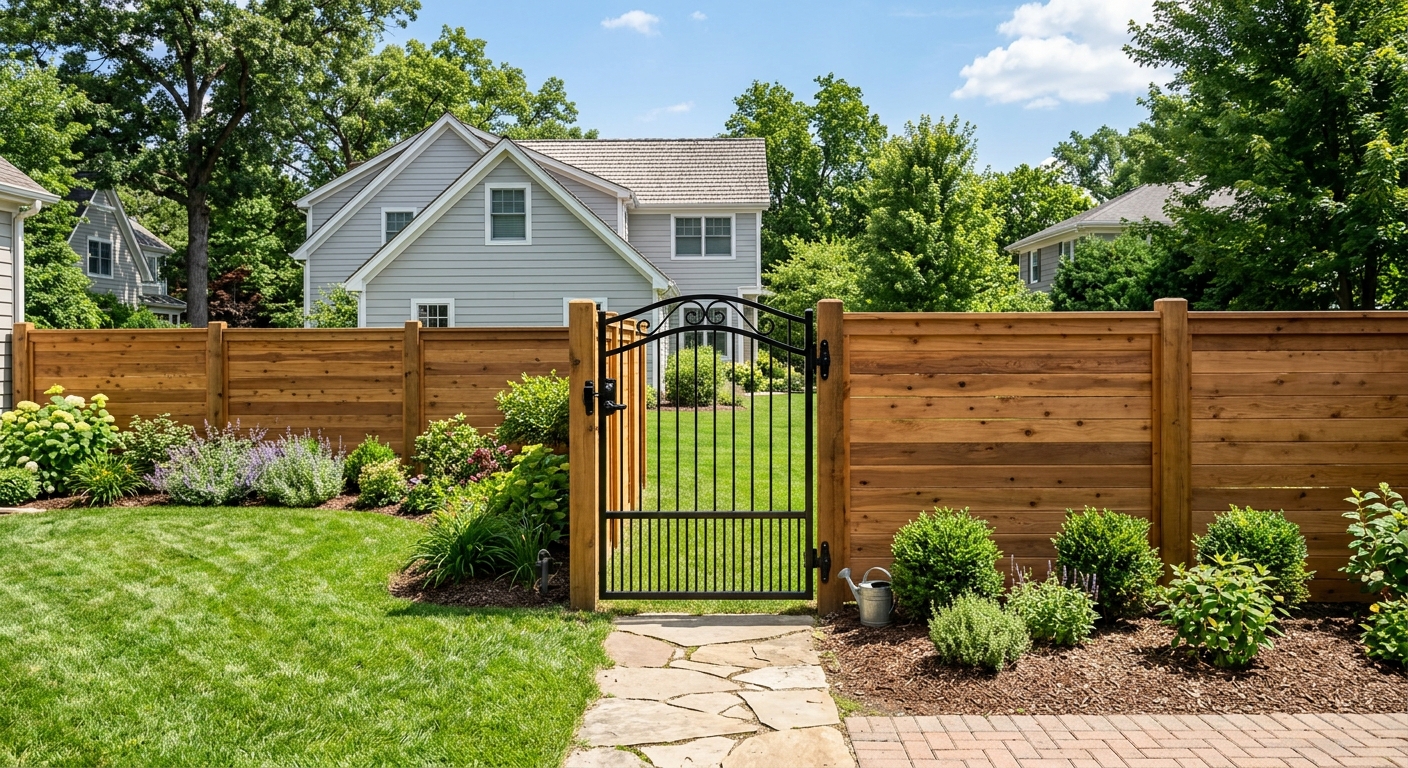
Fencing options and costs in Wawa
Wawa has its own fencing rhythm: lots of detached homeowners, long stretches of shoreline weather swings, and older housing stock that often means “fix-or-replace” decisions. With 2,705 residents in the 2021 Census (Statistics Canada, 2021 Census) and about 950 homeowner households (78.5% of households own), each detached property is a likely future fencing project, especially where front boundaries and side yards need upgrades. Just as important, 81.5% of dwellings are single-detached homes, so driveways, back yards, and corner lots are common repeat-work sites for fence contractors.
Cost in Wawa is influenced by Ontario’s cold-season ground movement. In practical terms, frost protection drives deeper post requirements and often pushes you toward concrete-set posts and longer materials, particularly for taller systems and wind-exposed runs. Labour availability can also tighten when multiple jobs overlap during the workable spring-to-fall window, which affects scheduling and equipment time for excavators and augers.
Trade demand is especially strong around residential pockets where yards are larger and fences span more frontage—many homeowners in and around Wawa’s central residential core request new back-yard privacy lines and replacement of older boards. When you price options side-by-side, you’ll see that wind and frost-ready construction can make “cheaper per foot” materials cost more over time if the wrong post depth or spacing is used. Use the table below as a planning benchmark for Wawa project budgeting, then match the material to how much privacy and maintenance you want.
| Material |
Lifespan |
Maintenance |
Privacy Rating |
Price per Linear Foot |
| Pressure-treated pine (standard wood) |
10–15 years (with proper staining) |
Stain/seal every 2–3 years; check posts after winters |
High (solid pickets/boards) |
$80–$120 |
| Cedar (natural rot resistance) |
15–20 years (still benefits from sealant) |
Light cleaning; stain/seal every 3–4 years |
High (solid boards) |
$95–$130 |
| Vinyl / PVC (no-maintenance) |
20–30 years |
Wash occasionally; inspect panels for impact |
Medium–High (depends on panel style) |
$95–$140 |
| Chain-link (galvanized steel) |
25–35 years |
Occasional coating touch-ups; tighten hardware |
Low (open mesh) |
$55–$85 |
| Aluminum ornamental |
30–40 years |
Wash and inspect fasteners; repaint if damaged |
Low–Medium (ornamental spacing) |
$95–$150 |
| Composite / recycled material |
20–30 years |
Minimal; occasional wash; avoid harsh impact |
High (board-style systems) |
$110–$150 |
Prices are estimates only and vary by project scope, site access and material selection.
What affects the price of fencing in Wawa
Even when two neighbours in Wawa choose the same “style” of fence, quotes can still swing by 30–50% across Northeast Ontario jobs because the real variables are ground conditions, post engineering, and how much labour time it takes to prep and set fence lines correctly. One crew may assume standard post depths; another will price for frost-safe construction, heavier gates, and extra excavation if the yard is rocky or sloped. That’s why material can look similar, yet the installed result differs in longevity and stability.
Frost protection is the big driver. In cold regions, posts typically need to be set about 4–6 inches (10–15 cm) below the design frost depth (and practically this often translates to roughly 1.5–2.0 m into the ground in colder Ontario and Alberta areas), which means longer posts, more excavation, and concrete in many installs. Wind exposure can also change how dense the fence framing is—heavier, solid privacy systems behave like sails, so contractors may tighten post spacing and upsize hardware, especially on longer straight runs.
Concrete examples from local quoting: (1) If your yard has frost-prone soil or areas that hold water, crews commonly increase concrete depth and use belled footings, raising the price factor even if the fence material stays the same. (2) If your fence line crosses a slope or driveway approach, stepped or raked panel adjustments add labour and sometimes extra rails, which can move a job from the $80–$130 wood range toward the higher end once gate work is included. (3) Replacing an old fence often adds hauling and disposal; removal can add significant time, especially when boards are aged and difficult to dismantle.
Local housing age also matters: with 86.8% of homes built before 1981 (Statistics Canada, 2021 Census), older property layouts and inconsistent boundary markers can mean more site work before a permit-ready installation.
| Price Factor |
Why It Matters |
Cost Impact |
| Fence length in linear feet |
The majority of labour and materials scale directly with length. |
High (largest driver) |
| Post depth required |
Frost determines hole depth and how long posts must be. |
Medium–High |
| Post setting method |
Concrete setting resists frost movement better than gravel-only in many soils. |
Medium–High |
| Material choice |
Vinyl, cedar, and chain-link have different hardware, fixing methods, and durability. |
Medium |
| Gate count and type |
Drive-through double gates need stronger posts, bracing, and often different hinges. |
High |
| Grade and terrain |
Slopes require raked panels/stepping and more layout time. |
Medium |
| Old fence removal and disposal |
Old materials add labour plus hauling/landfill or recycling fees. |
Medium |
| Permit fees and survey / property line locate |
Documentation and accurate locating prevent rework and disputes. |
Low–Medium |
Permits & regulations in Ontario
In Ontario, many fences above common height thresholds can require a building permit—typically around 2.0 m (6.5 ft) for rear yards and about 1.0–1.2 m (3–4 ft) for front or corner areas, depending on municipal rules and the location on your lot. Even when a permit isn’t triggered, you still must follow property line location rules, municipal setback requirements, and any provisions related to corner visibility near intersections. For Wawa homeowners, the practical takeaway is simple: confirm your fence height and placement with your municipality before digging.
Before any post hole is dug, you should arrange utility locates (Ontario One Call). This is essential even if you “know” where services are, because fence lines often run close to buried hydro, low-voltage lines, or drains. If you don’t have a current survey, get a property line locate or survey so the fence is installed on your side of the boundary and you avoid encroachment disputes.
Shared fence ownership and line-fences can fall under provincial line-fences legislation, so clarify who maintains what if you’re replacing a boundary fence.
Checklist to verify a contractor in Ontario: ask for their Ontario business and trade licensing info (where applicable), proof of liability insurance, and evidence they’re covered for workplace safety via WSIB/WCB. You can also request a clearance letter and confirm the certificate of insurance names match the work site. Step-by-step, look for (1) certificate of insurance, (2) workers’ compensation clearance, and (3) any licence registry listing or trade credentials the contractor states they hold.
Choosing the right fence material for Wawa
The right fence in Wawa comes down to your priorities: privacy, low maintenance, budget, and how long you want it to perform through freeze-thaw cycles and wind. Pressure-treated pine is the typical budget route, but it needs staining or sealing every 2–3 years to avoid grey weathering and to slow surface breakdown. Cedar looks great and naturally resists rot better, but it still benefits from periodic maintenance to keep its surface stable. Vinyl/PVC is the lowest-maintenance option in day-to-day ownership—no annual painting—but in extreme cold it can become brittle if the system isn’t engineered with proper post depth, bracing, and hardware.
In Wawa’s cold Ontario conditions, frost-safe post work matters more than most homeowners expect. Regardless of whether you choose wood, vinyl, or composite, deeper post installation and correct spacing are what prevent seasonal movement. Concrete-set posts are commonly used when the soil is frost-prone or when the design frost depth requires it; the cost increases because you’re paying for additional excavation and concrete, but you reduce the chance of leaning and costly straightening later.
Wind and snow loading also play a role. Solid privacy panels catch more wind force, so installers often use stronger posts and tighter framing. If budget is tight and you’re balancing airflow, chain-link or open styles can be more forgiving. A concrete example: if you’re comparing a wood privacy fence in the $80–$130 range to vinyl in the $85–$140 range, the vinyl jump can be justified where you want “wash-and-forget” ownership and you’re tired of re-staining in wet/snowy seasons. If you’re okay with maintenance, cedar in the mid-to-upper range can deliver a longer-lasting look without paying the full premium of vinyl.
| Material |
Cold Tolerance |
Lifespan |
Annual Maintenance |
Best For |
Price Band |
| Pressure-treated pine |
Good (with sealed, well-set posts) |
10–15 years |
Low to moderate (stain/seal every 2–3 years) |
Budget privacy with acceptable upkeep |
$80–$120 |
| Cedar |
Very good (naturally rot resistant) |
15–20 years |
Low to moderate (cleaning; seal every 3–4 years) |
Attractive privacy fence that lasts |
$95–$130 |
| Vinyl / PVC |
Good (depends on engineered bracing) |
20–30 years |
Very low (occasional wash) |
Low-maintenance, long-term boundary |
$95–$140 |
| Chain-link |
Excellent (galvanized resists corrosion) |
25–35 years |
Very low (tighten hardware as needed) |
Security on a budget |
$55–$85 |
| Aluminum ornamental |
Excellent (powder coating) |
30–40 years |
Low (wash; inspect fasteners) |
Decorative frontage without rust issues |
$95–$150 |
| Composite / recycled |
Good (impact resistance varies by system) |
20–30 years |
Very low (periodic wash) |
Privacy with minimal maintenance |
$110–$150 |
How to choose a fencing contractor in Wawa
Choosing a fence contractor in Wawa is mostly about proof: proof they’re legally able to do the work, proof they’re insured, and proof they price the job transparently. Start with Ontario credentials. Request their business/trade licence information (where applicable) and confirm liability insurance is active for the correct entity and the job location. Then ask for workplace safety coverage proof (WSIB/WCB) and, ideally, a clearance letter. You should be able to review certificates and match the names and limits to the scope they’re quoting.
Next, don’t accept vague “lump sum” pricing. Get 2–3 itemised written quotes that separate labour and materials, including posts, rails, hardware, gates, concrete, and removal/disposal. Compare the scope line-by-line: what’s excluded (e.g., tree trimming, rock removal, extra gate bracing), whether permits are included or excluded, and if property line locating or survey is part of the quote. Ask whether disposal of your old fence is included and where it’s hauled.
Warranty matters: confirm the workmanship warranty length (and what it covers), the manufacturer warranty on materials, and whether the warranty is transferable to you as the homeowner. Payment schedules should be conservative—never more than 10–15% upfront for labour planning and materials procurement, and hold back a portion until completion and walkthrough. Finally, ensure you receive a start date and an estimated completion window in writing.
- Confirm liability insurance is current and lists your jobsite.
- Verify WSIB/WCB coverage and ask for a clearance letter if available.
- Use a written, itemised quote (materials, labour, gates, concrete, removal).
- Check whether post depth/frost-safe installation is included in the scope.
- Confirm if permits are included or client responsibility.
- Clarify disposal/hauling of the old fence and any dump fees.
- Ask how the contractor handles buried utilities and how they schedule locates.
- Confirm warranty terms: workmanship length and manufacturer coverage details.
- Get gate specifics in writing (frame, latch, hinges, swing direction).
- Review payment schedule; keep upfront to 10–15% max.
- Ensure final measurements and layout are shown before excavation.
- Get a written timeline and weather contingency plan.
Red flags I see in Wawa include: contractors who won’t provide insurance/coverage proof; quotes that only state a price per “section” without post depth or concrete details; promises of “cheap” vinyl or composite without engineered bracing for cold; vague scope language that excludes removal/disposal; and payment requests that ask for most of the total upfront before any materials are delivered.
Frequently asked questions — fencing in Wawa
How do I find my property line before fencing?
In Ontario, you’ll want to verify your boundary before any post hole is dug—this is especially important in Wawa where older lots and mature landscaping can make informal “looks like the line” assumptions unreliable. Start by locating your property pins or boundary marks (if you have a survey package). If you don’t, book a property line locate or get a survey so your contractor can set string lines accurately. Also arrange utility locates through Ontario One Call before excavation. If you’re replacing an existing fence, measure and photograph current offsets, but don’t assume it’s on the correct line; fences can be built slightly over time and “carry” the mistake forward. A clear boundary helps avoid encroachment disputes and rework.
What's the most low-maintenance fence?
For many Wawa homeowners, vinyl/PVC is the most low-maintenance choice: no annual staining, and it typically only needs an occasional rinse and visual check after storms. That said, the system still depends on cold-weather engineering—if posts aren’t set deep enough for frost protection, even a “no-maintenance” material can fail early due to movement. Chain-link is also low-maintenance and durable, but it won’t give privacy. If you’re choosing between budgets, vinyl usually lands above wood; expect wood privacy in the $80–$130 range compared to vinyl/PVC around $95–$140 per linear foot, based on scope. The better “low-maintenance per dollar” is often vinyl when you want long-term stability without re-staining cycles.
How tall can my fence be in Wawa?
Fence height limits in Ontario commonly depend on where the fence sits on the property (front/corner versus rear) and local municipal by-laws. A common threshold homeowners run into is around 2.0 m (6.5 ft) for rear yards and about 1.0–1.2 m (3–4 ft) for front or corner areas, which can trigger a building permit in many situations. In Wawa, the safest approach is to confirm your exact height and location with your municipality before you order materials or dig. Also consider sightline rules near driveways and intersections; even if a fence is allowed, it might need to be set back further in visibility zones. Your contractor should be able to advise what typically triggers a permit, but you should verify the final requirement.
Should fence posts be set in concrete here?
Often, yes—especially in cold Ontario where freeze-thaw cycles can lift or shift posts if they’re not installed deep enough. In practical fence installs, posts typically need to go roughly 4–6 inches below the design frost depth, which frequently means about 1.5–2.0 m into the ground for colder regions, translating to concrete setting in many yards. Concrete costs more up front (more excavation and materials), but it helps resist frost heave and seasonal movement. The right answer depends on soil type, post depth, and the contractor’s engineering approach; a good installer will explain their post-depth method and show it in the quote. If you’re comparing options, remember that “low-cost” fencing can become expensive if posts start leaning after the first winter.
What's the best fence for privacy?
For privacy in Wawa, you generally want a solid-panel design—wood boards, cedar, composite, or privacy-style vinyl. The best choice is the one that pairs solid coverage with frost-safe posts and sturdy framing so the fence stays straight during winters. Cedar and pressure-treated pine provide high privacy when built with close pickets/boards; cedar often performs better visually and resists rot longer, though it still benefits from maintenance. Vinyl privacy gives great visual consistency with less routine upkeep, but it can be pricier (vinyl/PVC often sits around $95–$140 per linear foot versus wood privacy at about $80–$130). If your yard is wind-exposed, ask your contractor about post spacing and bracing—privacy fences catch wind loads like sails, and engineering affects how long they look new.
How do I compare fencing quotes?
When comparing quotes in Wawa, don’t compare only the total price—compare what’s included. Ask for itemised breakdowns for labour and materials: posts, rails, gate hardware, concrete, and removal/disposal. Make sure each quote specifies post depth/frost-safe installation and the setting method (concrete vs. gravel pack vs. driven posts). Check if permits, property line locating, and utility locate scheduling are included or excluded. Compare warranty terms for workmanship and the manufacturer’s material warranty, and confirm what happens if the fence shifts after a freeze-thaw cycle. If one quote is far below others, look for missing items—often it’s shorter posts, less concrete, or thinner framing. As a planning reference, typical ranges for installed work sit roughly in wood ($80–$130) and vinyl/PVC ($95–$140) per linear foot depending on the job and exposure.