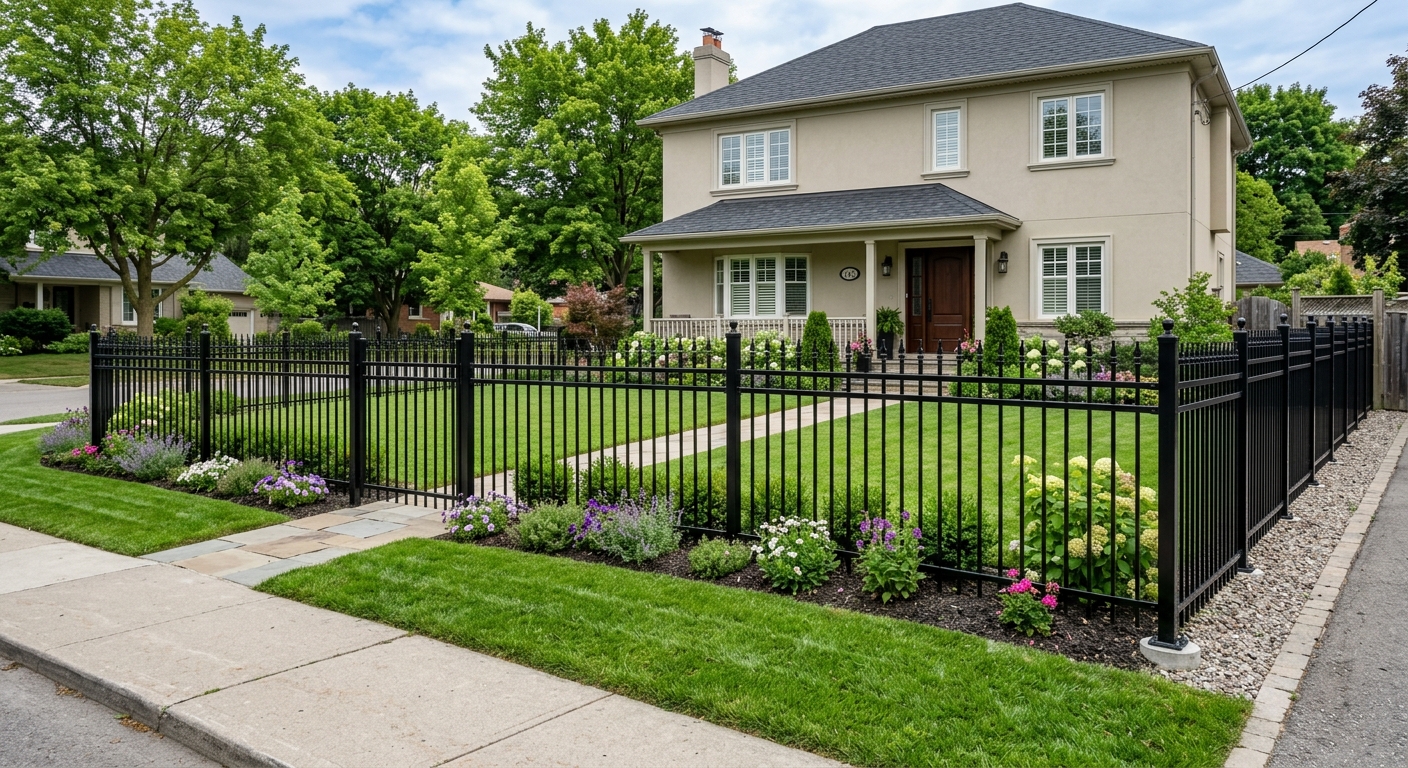
Fencing options and costs in Southdale
Southdale is a neighbourhood where fencing needs to look good year-round and stand up to Toronto-area freeze-thaw cycles. With a 2021 population of 5,267 (Statistics Canada, 2021 Census), demand is driven less by big-box development and more by day-to-day homeowners maintaining backyards and adding privacy along side yards. The strongest predictor of fencing activity is simply that detached properties are common in the GTA—each one represents a frequent upgrade opportunity when kids, pets, or privacy concerns come up. In practice, Southdale’s fence installs are especially busy around the older residential pockets where homeowners replace tired boards or upgrade from chain-link to privacy.
In the Toronto economic region, the main cost drivers are labour intensity and post stability. Frost is typically considered around 42"–48" in Southern Ontario, so post holes are usually deeper than a casual “drive and go” approach. For 6–8 ft privacy fences, that generally means concrete-set posts, heavier hardware, and slightly more material than customers expect. Access also matters: narrow driveways, landscaped front yards, and nearby trees can slow crews and increase footing prep time. For many Southdale homeowners near Byron Avenue and the surrounding residential streets, privacy upgrades are particularly in demand—often paired with gates for side access.
Below is a practical comparison of common options. Use it to sanity-check your quote before you compare installer details in the next section.
| Material |
Lifespan |
Maintenance |
Privacy Rating |
Price per Linear Foot |
| Pressure-treated pine (standard wood) |
10–15 years |
Stain or seal every 2–3 years; periodic board replacement |
Medium–High (solid/close boards) |
$15 – $25 |
| Cedar (natural rot resistance) |
15–25 years |
Light re-stain every 2–4 years; watch for warping in freeze-thaw |
High (solid/close boards) |
$18 – $30 |
| Vinyl / PVC (no-maintenance) |
20–30 years |
Rinse as needed; inspect for impact cracks |
High (solid panels) |
$18 – $35 |
| Chain-link (galvanized steel) |
20–35 years |
Occasional wash; tighten hardware |
Low–Medium (add privacy slats if desired) |
$11 – $18 |
| Aluminum ornamental |
25–40 years |
Minimal; rinse and inspect posts/hardware |
Low (open pickets) |
$20 – $40 |
| Composite / recycled material |
20–30 years |
Low; periodic cleaning; avoid abrasive scraping |
Medium–High (board style) |
$22 – $38 |
Prices are estimates only and vary by project scope, site access and material selection.
What affects the price of fencing in Southdale
Even when two neighbours in the Toronto region request the “same fence,” quotes can differ by 30–50% because the job rarely has identical realities on the ground. Contractors price for stability, not just the visible fence line: in Southdale, frost depth and local soil conditions strongly influence post depth, concrete use, and labour time. On top of that, Toronto-area crews plan around access constraints (stored materials, equipment reach, and landscaping protection), and material availability can change lead times and installation scheduling.
Here’s the real driver: Southern Ontario frost is commonly treated at about 42"–48", so post holes are typically dug deeper—often roughly 4–6 inches below the design frost depth—to reduce heaving risk. That usually means posts set around 1.5–2.0 m into the ground, especially for 6–8 ft privacy fences. Concrete-set posts and longer materials increase both material cost and labour. For wind, the GTA isn’t like the Prairies’ open exposure, but panel style still matters. Taller solid fences need heavier posts and closer spacing (commonly 6–8 ft centres) to prevent racking and uplift during gusts.
Two concrete examples I see in Southdale: (1) a clay-heavy back corner with poor drainage often requires deeper, more consistent concrete footing to keep posts from shifting over freeze-thaw; this can move a job toward the $65 – $120 backbone wood range or push vinyl toward the higher end if additional posts and hardware are upgraded. (2) a long run with two gates and a stepped grade may require raked/stepped rails and extra labour—sometimes making a “basic” chain-link estimate look less appealing compared to privacy materials in the $75 – $130 vinyl band.
With older housing stock and frequent backyard renovations, replacement work is also common: removing an old fence, hauling it away, and locating property lines can add time even before the first post is set.
| Price Factor |
Why It Matters |
Cost Impact |
| Fence length in linear feet |
Most pricing scales directly with how much fencing you’re building. |
High (primary driver) |
| Post depth required |
Frost line determines hole depth and how long posts must be. |
High (more concrete + longer posts) |
| Post setting method |
Concrete-set posts cost more than gravel pack or driven posts, but resist heaving. |
Medium–High (often the stability premium) |
| Material choice |
Vinyl and cedar generally cost more than pressure-treated pine or chain-link. |
Medium–High (big swing in material cost) |
| Gate count and type |
Double driveway gates require heavier frames, hinges, and often bigger footings. |
Medium–High (often underestimated) |
| Grade and terrain |
Slopes require stepped or raked sections and additional labour for alignment. |
Medium |
| Old fence removal and disposal |
Demolition, post extraction, and hauling add time and equipment use. |
Medium |
| Permit fees and survey / property line locate |
Some higher fences trigger permits; accurate line location prevents costly disputes. |
Low–Medium (can rise on complex lots) |
Permits & regulations in Ontario
In Ontario, fence permitting is usually tied to height and location. As a practical rule of thumb in the Southdale area, fences above a common threshold—often around 2.0 m (6.5 ft) at the rear and 1.0–1.2 m (3–4 ft) near the front or corner—may require a building permit. Regardless of height, you still must respect property lines and any municipal setback requirements. Because setback rules can vary by area and lot configuration, I strongly recommend you confirm the requirements with your municipality before digging.
Before any post holes are dug, always arrange utility locates through Ontario One Call. This is non-negotiable: hitting buried services can stop the job and create major costs. Next, get a survey or at least verify property pins/locates so your fence doesn’t encroach. In Ontario, shared fence responsibilities are influenced by provincial line-fences legislation, but the exact “who pays what” can depend on which side is maintained, the condition, and agreements with neighbours.
To verify your contractor in Southdale, ask for: (1) an Ontario business registration/licence or proof they’re authorized to perform the work; (2) liability insurance certificate naming you as additional insured if your contract requires it; and (3) workers’ safety coverage (WSIB/WCB) confirmation. You can typically check licensing and clear insurance status by reviewing the contractor’s certificate of insurance paperwork and, where applicable, searching the applicable provincial business registry online. A clearance letter (or account proof) for coverage is another request I recommend before work begins.
Choosing the right fence material for Southdale
The right material for Southdale is about balancing privacy, low maintenance, and long-term performance through Toronto’s freeze-thaw cycles and winter snow. Pressure-treated pine is often the budget starter, but it typically needs staining or sealing every 2–3 years to prevent grey weathering and to slow surface checking. Cedar looks great and resists rot better than pine, so it’s a strong choice if you want improved appearance and a natural look. Vinyl/PVC is the “set it and forget it” option, but it can crack if hit by lawn equipment or if panels are poorly supported in extreme cold—so correct post spacing and solid hardware still matter. Chain-link is the longest-lived, lowest-cost option in many cases, but it won’t provide privacy without slats or an added screen. Aluminum ornamental offers durability and a clean look with minimal rust risk, but it’s usually not privacy-focused.
For post depth in Southdale, plan on concrete-set posts because frost and mixed/clay soils can shift posts over time if they’re too shallow. The commonly used frost line assumption in Southern Ontario (about 42"–48") means holes are often dug deeper—roughly 4–6 inches past the design line—so posts typically need to be set around 1.5–2.0 m. That stability requirement is one reason privacy fences (wood or vinyl) usually land toward the higher end of the regional bands compared with chain-link. Wind and snow loads also influence framing: taller solid fences need sturdier posts and closer spacing to reduce racking.
Example pricing justification: if you’re comparing a cedar privacy fence versus pressure-treated pine on the same linear footage, the cedar material and lifespan premium can be worth it when you expect long-term ownership. In many Southdale budgets, wood installs often sit in the $65 – $120 band, while vinyl pricing commonly lands in the higher $75 – $130 corridor depending on height, gate count, and post/footing upgrades.
| Material |
Cold Tolerance |
Lifespan |
Annual Maintenance |
Best For |
Price Band |
| Pressure-treated pine |
Good when properly sealed; can split/warp if not maintained |
10–15 years |
Low–Medium (inspection; re-stain/seal every 2–3 years) |
Budget privacy with willing upkeep |
$65 – $120 |
| Cedar |
Very good; stable with correct fasteners and post setting |
15–25 years |
Low–Medium (light re-stain every 2–4 years) |
Appearance + rot resistance |
$75 – $130 |
| Vinyl / PVC |
Good in cold; may crack if impacts are frequent or support is weak |
20–30 years |
Very low (occasional wash/inspection) |
Low maintenance privacy |
$75 – $130 |
| Chain-link |
Excellent; cold doesn’t affect steel structure significantly |
20–35 years |
Low (tighten hardware; rinse) |
Security and long service life |
$45 – $85 |
| Aluminum ornamental |
Excellent; doesn’t rust like steel |
25–40 years |
Low (wash; inspect fasteners) |
Front yard curb appeal with visibility |
$90 – $160 |
| Composite / recycled |
Good; performs well when installed with correct clearance and support |
20–30 years |
Low (cleaning; occasional hardware checks) |
Privacy with minimal upkeep |
$75 – $130 |
How to choose a fencing contractor in Southdale
Choosing a contractor in Southdale comes down to verifying they’re set up to do stable, code-minded work—not just build panels quickly. Start with licensing and coverage. In Ontario, you should ask for proof of the company’s authorization to operate and then request: (1) liability insurance certificate (confirm your address is included if required in your contract); and (2) WSIB/WCB coverage documentation showing they have workers’ safety coverage for employees. How to check: review the certificate of insurance for active dates and policy limits; then confirm WSIB/WCB status through the documentation they provide, and request the clearance letter or account proof before any digging begins. If the contractor can’t produce these documents promptly, walk away.
Next, get 2–3 itemised written quotes. You want a breakdown that separates labour, materials, post depth/footings, and extras (gates, demolition, disposal). Avoid lump sums where the scope is vague. Read what’s excluded: is permit pulling included, is removal of old posts included, and are you getting straight line installation or stepped/raked sections for grade? A proper quote will also list the fence style, height, post spacing, and the fasteners/hardware grade.
Warranty matters too. Ask for (1) a workmanship warranty (for example, how long they cover installation issues); (2) the manufacturer warranty for product defects; and (3) whether warranties are transferable if you sell your home. For payments, never pay more than 10–15% upfront. Hold back final payment until the work is complete, gate operation is tested, and debris is cleared. Finally, require a written timeline: start date and an estimated completion window tied to weather and access constraints common in Southdale winters.
- Provide proof of Ontario authorization/licence (ask for the exact business name matching the quote).
- Show active liability insurance and confirm additional insured wording if required.
- Provide WSIB/WCB clearance or coverage documentation before work starts.
- Quote includes post depth and setting method (concrete-set versus driven/gravel pack).
- Itemised labour and materials breakdown (not a single lump number only).
- Clear scope for demolition: old fence removal, post extraction, and disposal/hauling.
- Permit pull and survey/property line locate: specify who handles it and whether it’s included.
- Gate hardware spec and whether gates are self-closing or latch-controlled (if requested).
- Step/rake plan for sloped yards (not “we’ll figure it out on site”).
- Fastener and hardware corrosion protection listed (especially for wood privacy fences).
- Workmanship warranty duration and what it covers (posts, rails, alignment, sagging).
- Payment schedule that keeps upfront to 10–15% and includes a holdback for completion.
Common red flags in Southdale: they won’t discuss post depth/frost setting; their quote is missing gate or footing details; they ask for a large deposit (over 10–15%) without a schedule; they can’t show WSIB/WCB and insurance paperwork; and they refuse to put start/completion dates in writing.
Frequently asked questions — fencing in Southdale
Should I repair or replace my old fence in Southdale?
In Southdale, repair makes sense when the fence posts are still solid and only a section of boards/rails are failing. If you notice wobbling posts, gaps widening at the base, or rail sagging that lines up with frost-heave movement, replacement is usually the more cost-effective route because new concrete-set posts restore the fence’s structure. For wood, grey weathering and surface checking often mean you’re past “minor fixes,” especially after winters with repeated freeze-thaw. If your old fence is chain-link, you may be able to retain the framework and swap slats for privacy. If you share the fence line, discuss who pays for which portion—Ontario’s line-fences approach can guide expectations. As a ballpark, privacy fence installs often sit around the $65 – $120 range for wood or higher for vinyl, so decide based on whether the costly part—post stability—needs renewal.
How do I handle a fence dispute with a neighbour in Ontario?
Fence disputes in Ontario usually come down to property line location, shared responsibility, and whether the fence was built with the correct setbacks. Start by documenting everything: photos of the current fence, any agreed-upon measurements, and dates when issues began. Next, verify the property line using survey information or by checking property pins (a proper locate is far better than “my memory says it’s here”). In Southdale, small shifts can happen when older fences were installed without modern locating or after yard grading changes. Then communicate in writing—calm, factual, and focused on resolution. If you need to adjust, ask your contractor for a plan that respects the line and the appropriate fence height thresholds that may require permits. If you can agree on a shared portion, outline payment responsibility clearly. If not, seek advice through the appropriate dispute-resolution channels; keeping paperwork organized is what makes any process smoother.
What fence style offers the best wind resistance in Southdale?
For wind performance in Southdale, a “solid wall” fence can rack if it’s underbuilt, while an overly open fence may be more vulnerable to uplift forces depending on height and panel design. The best balance is usually a properly framed privacy fence with sturdy posts, correct post spacing (commonly 6–8 ft centres for tall solid sections), and solid hardware. Concrete-set posts are important because frost movement can weaken the fence’s ability to resist wind-driven forces. If you’re in a more exposed spot—near an open corner, landscaped swale, or anywhere the fence is subject to frequent gusts—consider heavier rails, larger posts, and a design that reduces sail effect (for example, strong panel anchoring). Chain-link is naturally flexible and can handle wind better than flimsy solid panels, but it doesn’t provide privacy. If privacy is your priority, don’t just choose “taller.” Choose the right framing so the fence stands up through Ontario winters.
How much does a fence cost in Southdale?
Fence cost in Southdale depends mostly on linear feet, post stability requirements, gate count, and whether you need demolition and disposal. In the Toronto region, typical installed price bands commonly used by contractors place wood fencing around $65 – $120, vinyl/PVC around $75 – $130, chain-link around $45 – $85, and aluminum/metal around $90 – $160. Those ranges reflect real-world differences in labour time for concrete-set posts and the extra hardware needed for taller privacy fences. If your yard has a slope, you may also pay more for stepped/raked rails. A double gate can raise the total even for modest fence lengths because of heavier frames and footing requirements. Your best estimate comes from an itemised quote that specifies post depth, setting method, and the exact fence height and style.
How deep should fence posts be for Southdale's frost?
For Southdale and the broader Southern Ontario climate, fence post depth is driven by the commonly used design frost line of roughly 42"–48". Best practice is to set posts deeper than the frost line—typically by about 4–6 inches beyond the design depth—to help prevent frost heave from shifting posts over time. That usually lands around 1.5–2.0 m into the ground for many privacy fence builds, particularly for 6–8 ft heights. With clay and mixed soils, concrete-set posts are often the recommended approach because they create a stable footing and reduce movement during freeze-thaw cycles. If a contractor proposes shallow holes or “driven only” posts for tall privacy fences, ask how they’re addressing frost and soil conditions. A detailed quote should state your post depth and show the setting method—concrete versus gravel pack—so you know you’re buying long-term stability, not just materials.
Wood vs vinyl vs aluminum fence — which is best?
“Best” depends on your priorities. Wood (pressure-treated pine or cedar) is often the most flexible for privacy styles and can fit a range of budgets, commonly landing around the $65 – $120 band for typical wood installs. However, wood usually needs maintenance—staining/sealing every few years—to reduce weathering and checking. Vinyl/PVC is typically the lowest-maintenance for privacy: it’s popular when homeowners want minimal annual work, and it commonly falls in the $75 – $130 corridor. The key is proper post spacing and impact-aware design so it doesn’t crack from knocks. Aluminum is best for curb appeal and durability with minimal rust risk, but it’s generally not a privacy solution because of open pickets. In Southdale’s freeze-thaw winters, your long-term outcome is strongly tied to post setting depth and hardware quality across all three materials, so choose the installer details as much as the product.